Welcome FPGA engineers to join the official WeChat technical group
Clickthe blue textto follow us at FPGA Home – the best and largest pure FPGA engineer community in China
The Xilinx PYNQ framework enables comprehensive support and integration of the Python language and runtime in the Zynq product family. By leveraging the productivity advantages of Python directly on the Zynq SoC architecture, users can fully exploit the strengths of programmable logic and microprocessors, making it easier to design applications for artificial intelligence, machine learning, and information technology.
Abstract
The open-source programming language Python has become an unwritten standard in various applications, ranging from engineering design, scientific research, data science, machine learning, information technology to artificial intelligence.
When using modern System-on-Chip (SoC) in embedded applications, Python can execute complex analytical algorithms with performance close to that of desktop workstations, but with significantly smaller form factors and lower power requirements. By preprocessing data read from sensors, the Xilinx® Zynq product family significantly enhances performance and determinism while reducing latency.
This solution, known as the PYNQ framework, effectively offloads a large number of important but repetitive operations that unnecessarily occupy processor bandwidth from the application processor. This offloading capability is crucial for meeting the increased intelligence demands in edge applications of the Industrial Internet of Things (IIoT).
A New Paradigm in Embedded Computing
A recent IEEE survey reported that the two most popular programming languages in 2017 were Python and C. In the field of embedded computing, C has always been a mainstay. Traditionally, we have used Python for web or desktop computing, but it has never been used as an embedded computing language; however, this situation is changing. (For more details, please click “Read Original” to download the white paper)
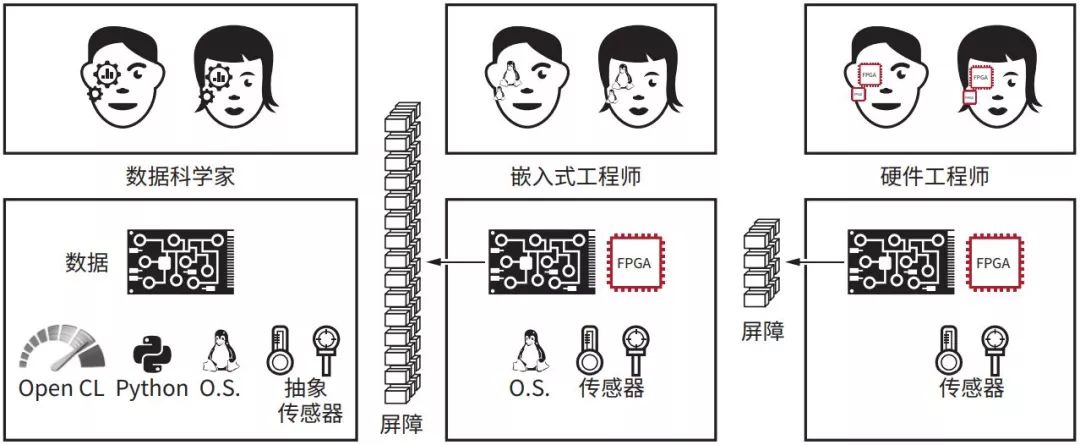
Figure 1 – Different abstraction levels on the same platform
Searching for Machine Learning in IIoT
Industrial Internet of Things solutions are increasingly incorporating embedded intelligence at the edge. For many applications, this means the implementation of machine learning inference. Once implemented, ML algorithms draw conclusions based on a set of input data using their experience. In ML, experience is acquired through a learning process known as training. Training ML applications can be performed using one of two methods: (1) supervised learning or (2) implementing judgment functions. Both methods require the application of a large dataset composed of positive and negative examples to the ML network. Once the ML algorithm is adequately trained, it can be deployed at the edge of the Industrial Internet of Things to infer based on new and unknown inputs. (For more details, please click “Read Original” to download the white paper)
The PYNQ Framework
The Xilinx Zynq-7000 SoC includes a dual-core Arm Cortex-A9 processor system (PS) and programmable logic (PL) that provides unwritten standard features for modern SoCs, while also offering unique highly differentiated flexibility to offload critical tasks to the PL. The Zynq UltraScale+ MPSoC and Zynq UltraScale+ RFSoC further extend this model using a quad-core Arm Cortex-A53 PS, PL, and other specific component processing blocks. (For more details, please click “Read Original” to download the white paper)
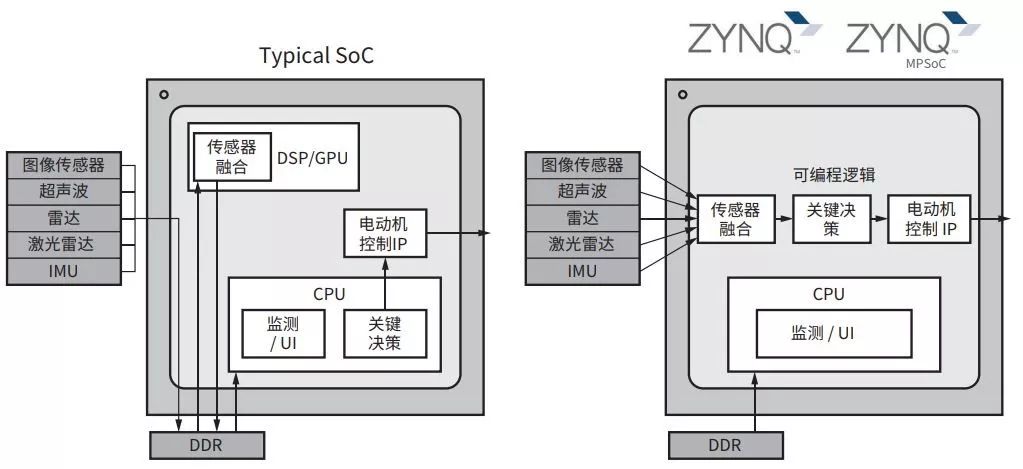
Figure 2 – Advantages of the Zynq product family compared to typical SoCs
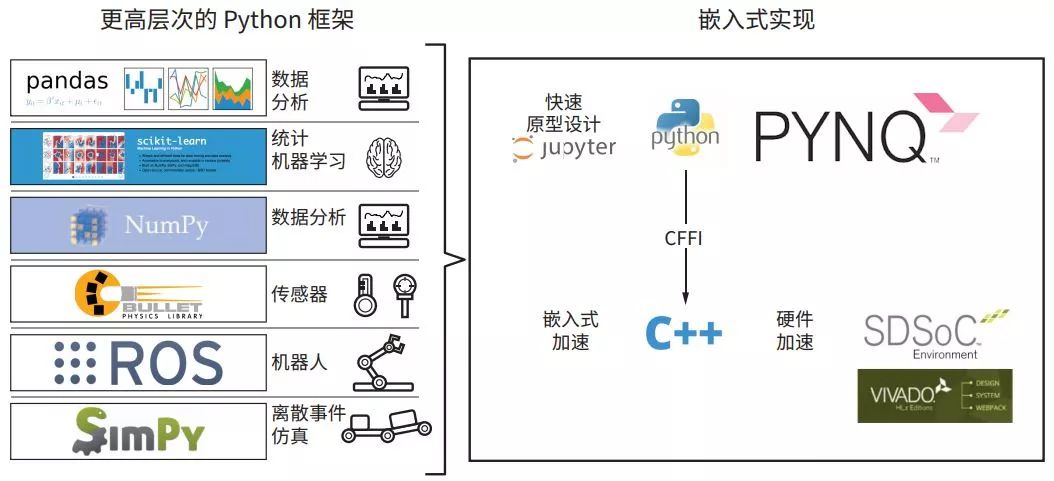
Figure 3 – Increasing abstraction levels in the PYNQ framework
Sensors and Measurement Systems
Sensors are a critical component of any industrial system, especially in Industrial Internet of Things solutions. From simple temperature-measuring thermocouples to complex sensor fusion that combines multiple heterogeneous sensors to measure specific physical quantities, Industrial Internet of Things solutions utilize various sensor modalities. Implementing ML in Industrial Internet of Things solutions helps developers maximize the performance of a given sensor while enhancing the efficiency of the following operations.
Sensor Diagnostics
Due to aging, sensor performance can change throughout their operational lifetime. This is especially true when sensors are used in harsh environments, where aging can affect reliability and lead to drift and bias issues. Additionally, if sensors are used in safety applications, sensor diagnostic capabilities are also extremely useful; in such cases, the correct diagnostic process is also part of the safety system. (For more details, please click “Read Original” to download the white paper)
Predictive Maintenance Case
Ball Bearing Fault Detection for Diagnostics and Safety
The packaging materials industry has recognized the importance of a “total productive maintenance” approach to improve equipment reliability. Gradual bearing failures are one of the leading causes of industrial faults. Therefore, early detection of these faults is crucial to ensuring reliable and efficient operations. A single packaging machine often has more than eight motors and numerous spindles, presenting multiple potential sources of faults that could lead to production line downtime. (For more details, please click “Read Original” to download the white paper)
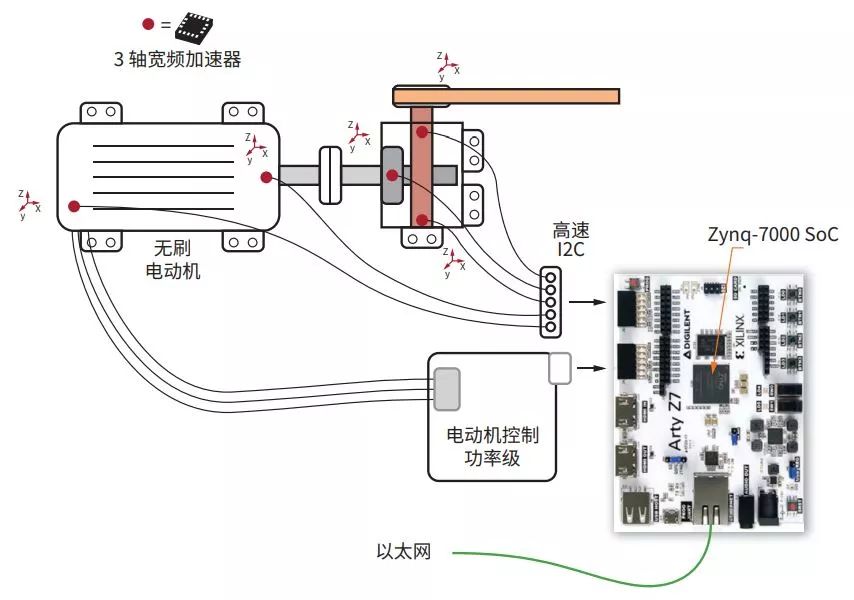
Figure 4 – Fault detection and motor control
PYNQ Getting Started Materials
-
PYNQ framework can be found at http://www.pynq.io
-
The Arty Z7 board series introduced in this white paper is provided by Digilent, see: store.digilentinc.com
-
For the Arty Z7 board, motor control power module, and BLDC motor kit, see: https://shop.trenzelectronic.de/en/TEC0053-04-K1-EDDP-Motor-Control-Kit-with-Motor-Power-Supplies

Welcome communication engineers and FPGA engineers to follow our public account

The Largest FPGA WeChat Technical Group in the Country
We welcome everyone to join the national FPGA WeChat technical group, which has tens of thousands of engineers, a group of technology-loving engineers who help and share with each other, creating a strong technical atmosphere!Hurry up and invite your friends to join!!

Press and hold to join the national FPGA technical group
FPGA Home Component City
Advantage component services, please scan the code to contact the group owner: Jin Juan Email: [email protected] Welcome recommendations to procurement
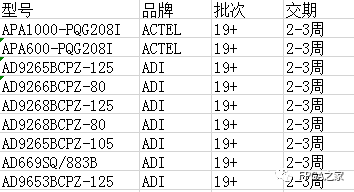
ACTEL, AD part advantage orders (operating the full series):
XILINX, ALTERA advantage stock or orders (operating the full series):
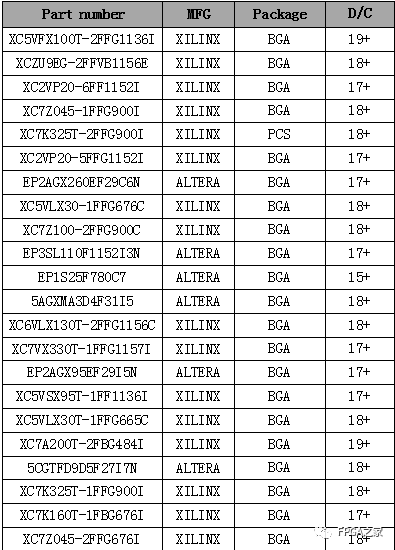
(The above components are part models, for more models please consult group owner Jin Juan)
Service philosophy: FPGA Home Component City aims to facilitate engineers to quickly and conveniently purchase components. After years of dedicated service, our customer service covers large domestic listed companies, military research units, and small and medium-sized enterprises. Our greatest advantage is to emphasize the service-first philosophy and achieve fast delivery and favorable prices!
Directly operated brands: Xilinx, ALTERA, ADI, TI, NXP, ST, E2V, Micron and over a hundred other component brands, especially good at components under US embargo against China. We welcome engineer friends to recommend us to procurement or consult us directly! We will continue to provide the best service in the industry!

Official acknowledgment of FPGA technology group brands: Xilinx, Intel (Altera), Microsemi (Actel), Lattice, Vantis, Quicklogic, Lucent, etc.