Recently, AMD stated to local media at the IFA 2025 in Berlin, Germany, that x86 is making a strong comeback, and Arm has no advantages compared to x86.
In the past, Arm and x86 were often compared, especially in terms of energy efficiency where Arm excelled. With the rise of the Windows on Arm ecosystem and Qualcomm’s Snapdragon X Elite processors, Arm chips rapidly gained popularity, seemingly poised to replace x86.
However, now, laptops equipped with either AMD Ryzen or Intel Core processors can provide longer battery life while fully utilizing the x86 ecosystem. Overall, x86 still offers a superior user experience.
According to ComputerBase, Arm’s influence in recent years has primarily come from Apple’s M-series SoCs and Qualcomm’s Snapdragon X laptop processors, particularly praised for their energy efficiency. However, as Intel and AMD accelerate their efforts in the mobile processor market, Arm’s relative advantages are gradually diminishing.
Last year, Intel launched the new Lunar Lake processors, and AMD released the next-generation Strix Point/Halo APU, which match or exceed the performance and battery life of Qualcomm’s Snapdragon X Elite products.
Among them, AMD’s flagship product, the Ryzen 9 AI MAX+395, can provide up to 126 TOPS of computing power, far surpassing current Arm solutions, proving that x86 has completely eliminated the brief lead of Windows on Arm.
Of course, this does not mean that the era of Arm in the PC market is over, but AMD emphasizes that x86 will continue to dominate the consumer hardware market for a considerable time.
In the future, new products like Intel’s Panther Lake and AMD’s Medusa Point will further reinforce this trend.
 Today, AMD also released its latest Software Adrenalin driver version 25.9.1, with the highlight being the ability to enable FSR 4 in DirectX 12 games that support FSR 3.1.
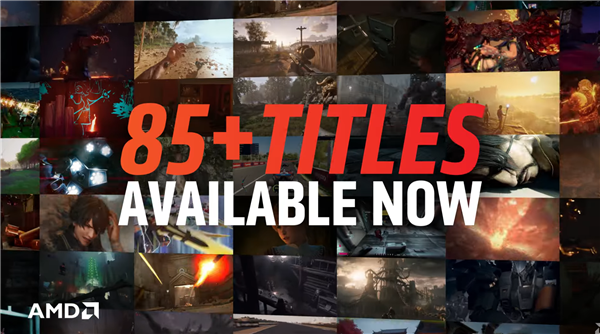
According to AMD’s official news, over 85 games currently support FSR 4 technology, and this number continues to grow.
The highlights of the new driver update are as follows:
New game support:
Borderlands 4
Hell is Us
Most games that support FSR 3.1 and DirectX 12 can enable FSR 4.
Fixed issues and improvements:
Playing “Brothers: A Tale of Two Sons” on Radeon RX 6600 series graphics cards may cause graphical anomalies.
Enabling FSR 4 while playing “The Last of Us: Part II” on Radeon RX 9000 series graphics cards may result in intermittent crashes or driver timeouts.
SteamVR may not detect the PlayStation VR controller.
Playing “Monster Hunter: World” with ray tracing enabled and using AMD software recording on Radeon RX 7600, 7700, and 7800 series graphics cards may cause intermittent application crashes or driver timeouts.
Known issues:
Playing “The Last of Us: Part II” on Radeon RX 7900 series graphics cards may cause intermittent crashes.
Playing “Call of Duty: Black Ops 6” on Radeon RX 9000 series graphics cards may cause intermittent application crashes.
Running NBA 2K25 in MyCareer mode with Radeon RX 9070 series graphics cards may cause intermittent application crashes. AMD is actively researching solutions and will release them as soon as possible.
Playing FBC: Firebreak on certain AMD Ryzen processors may cause intermittent application crashes.
Using certain AMD Radeon graphics cards with VR headsets at 80Hz or 90Hz refresh rates may cause stuttering; users experiencing this issue are advised to change the refresh rate as a temporary solution.
Playing GTFO on Radeon RX 7000 series graphics cards may cause missing images.
Loading saved games in “Cyberpunk 2077” with path tracing enabled may cause intermittent crashes or driver timeouts.
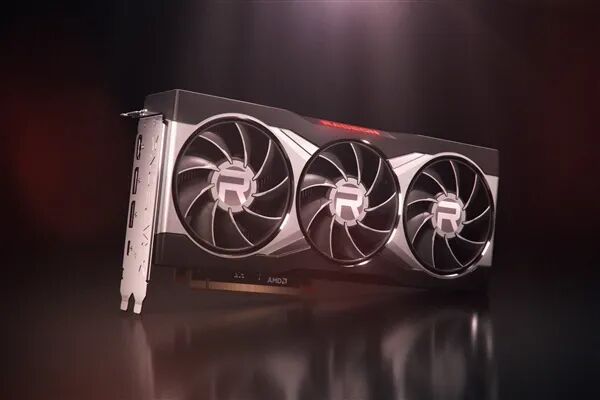
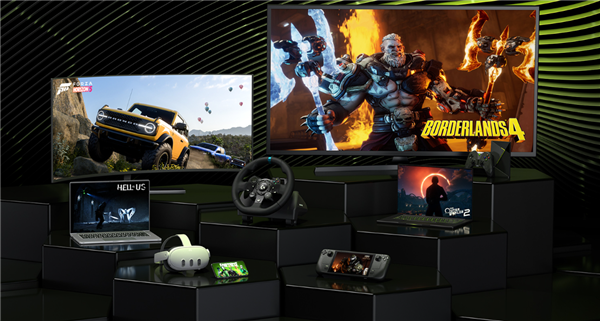
As one of NVIDIA’s main competitors, AMD has to compete with NVIDIA in various fields such as gaming cards, AI graphics cards, and laptop graphics cards, but there is one area where it does not.
That is cloud gaming. NVIDIA has the Geforce Now cloud gaming platform, while AMD has never had a corresponding platform. There were rumors about launching Radeon Now to compete with NVIDIA, but AMD has denied this possibility.
In an interview at the IFA exhibition, AMD’s Senior Vice President and General Manager of Computing and Graphics, Jack Huynh, stated that AMD is not very interested in cloud gaming and has never directly competed with NVIDIA in this area; they are more focused on establishing partnerships with Sony and Microsoft in the gaming market.
In summary, AMD’s statement indicates that there will be no Radeon Now, at least not for a long time.
Of course, this is not a big deal; AMD currently does not have the resources to develop its own cloud gaming platform, and it may not be a good business.
NVIDIA’s Geforce Now cloud gaming platform has been available for many years, currently offering over 2000 games for players to choose from, and starting in September, it has been fully upgraded to the Blackwell platform, allowing high-end players to choose RTX 5080, enjoying powerful gaming performance without having to buy a card, along with features like DLSS4.
However, NVIDIA’s cloud gaming business, compared to its graphics cards, lacks accurate figures on how much revenue and profit it contributes, and AMD’s decision not to enter this business is clearly based on this consideration.