Smart Home: The New Battlefield in the Tech Wave
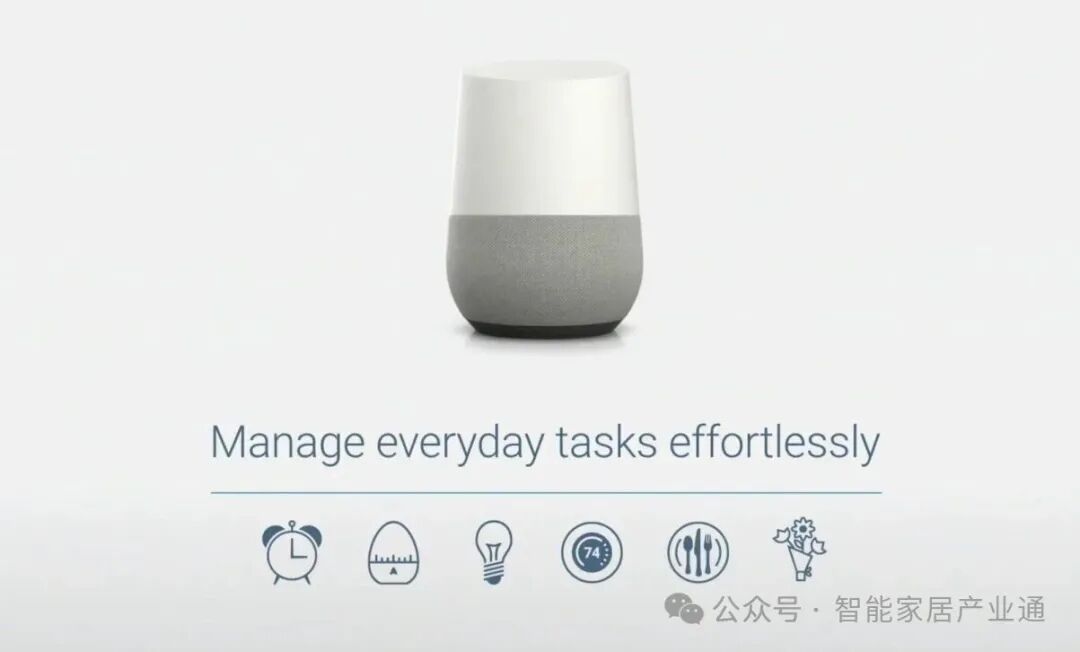 In today’s rapidly advancing technology landscape, smart homes have transitioned from the realm of science fiction into the homes of countless families. According to market research agencies, the global smart home market is growing at an astonishing rate, expected to reach new heights in the coming years. This rapidly expanding market has attracted the attention of many tech giants, with Apple, Google, and Amazon fiercely competing and positioning themselves in the smart home sector due to their strong technological capabilities and resource advantages.
Apple: Building an Ecological Closed Loop with HomeKit
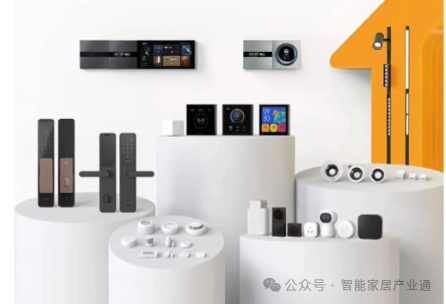
Hardware Product Layout
Apple has a unique layout in the smart home hardware space. In addition to the well-known HomePod smart speaker, which offers excellent sound quality and convenient voice control for smart home devices, recent news has emerged that Apple is developing a series of new smart home devices.
One particularly noteworthy device is a smart home display similar to an iPad, which is likely to run on a new homeOS operating system. It is expected to control appliances, facilitate video calls, and serve as a central hub for smart home management, providing users with a more intuitive and convenient interface for controlling their smart home. Additionally, Apple is developing an indoor security camera equipped with a battery that can last for months, or even up to a year. Besides security monitoring, it can detect human activity and sense motion to enable home automation features, such as automatically turning off lights when someone leaves a room or playing music based on specific family members’ preferences. It also includes facial recognition and infrared sensors to identify individuals in the room.
Advantages of the HomeKit Platform
HomeKit is the core platform of Apple’s smart home strategy, offering numerous significant advantages. In terms of device connectivity, it provides a set of rules and interfaces for smart home device manufacturers, allowing various compatible smart devices, such as lights, thermostats, outlets, and locks, to be easily added to Apple’s built-in “Home” app. Users can achieve unified control of different devices within this single app, eliminating the need to switch between multiple applications, with a straightforward and intuitive operational logic.
Privacy protection has always been a priority for Apple, and HomeKit is no exception. Communication between devices employs end-to-end encryption, and home data is stored locally on the home hub device by default, not easily uploaded to Apple’s servers unless users actively use iCloud to back up home settings or enable specific iCloud features (such as subscribing to iCloud storage for HomeKit security camera recordings), fundamentally ensuring user privacy and security.
Siri voice control is deeply integrated with HomeKit, allowing users to easily control devices with simple voice commands, such as “Hey Siri, turn on the living room light” or “Hey Siri, I’m home” (triggering a preset home scene). Siri’s accuracy in responding to complex scenarios is high, capable of understanding and executing intricate commands like “show a picture on the TV when someone rings the doorbell,” providing users with a natural and smooth interaction experience.
Google: Combining Software and Hardware to Create a Smart Ecosystem
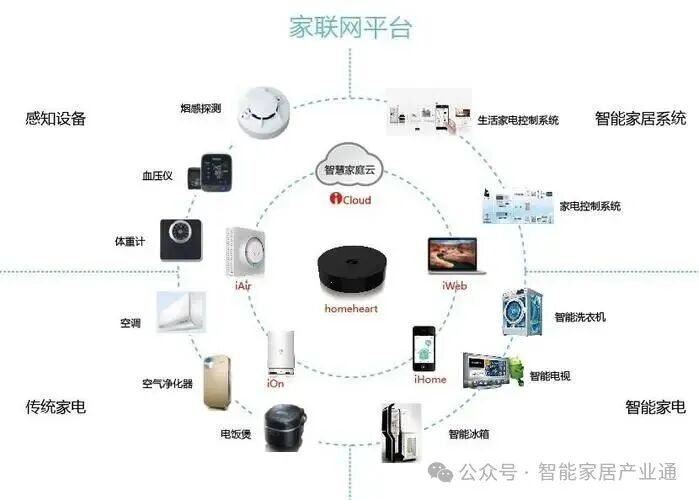 Strategic Acquisitions to Expand Hardware Portfolio
Google’s layout in the smart home hardware sector largely relies on a series of strategically visionary acquisitions. In 2014, Google made a significant move by acquiring Nest Labs for $3.2 billion, marking an important milestone in its entry into the smart home market. Nest Labs’ smart thermostat, the Nest Learning Thermostat, has received acclaim for its ability to learn users’ daily habits through deep learning and automatically adjust indoor temperatures, effectively enhancing energy efficiency. For instance, it can lower heating or cooling power during times when users are frequently away from home, ensuring comfort while avoiding energy waste. The Nest Protect smart smoke detector not only accurately detects smoke but also verbally informs users of the specific location of danger, greatly enhancing home safety.
In the same year, Nest also acquired the cloud camera company Dropcam for $555 million. Dropcam’s products are based on wireless networks, capable of recording real-time footage and storing content on cloud servers via WiFi. When abnormal situations are detected, it immediately alerts users via their mobile phones, allowing them to monitor their home dynamics from anywhere, providing strong security for the household.
Additionally, Google acquired Revolv, which focuses on the interoperability of smart home devices. Its core product is a small red box that connects various smart home devices through multiple standards such as Wi-Fi, Bluetooth, ZigBee, and Z-Wave, enabling unified management of smart homes. Although Nest ceased the development of this hardware product after the acquisition, it absorbed the development team, leveraging their expertise in wireless communication to create a more comprehensive smart home ecosystem. Through these acquisitions, Google rapidly expanded its footprint in the smart home hardware sector, gaining a rich product line and professional technical talent.
Deep Integration of Software Platforms and Voice Assistants
In terms of software platforms, Google possesses a powerful smart home operating system that provides a stable operating foundation for various smart devices. It is deeply integrated with Google Assistant, offering users a convenient and efficient smart home control experience. Users can execute simple voice commands, such as “Hey Google, turn on the bedroom light” or “set the living room air conditioning to 26 degrees,” and Google Assistant quickly understands and performs the corresponding actions.
Google Assistant also features robust scene mode settings. For example, users can create a “Homecoming Mode” that automatically turns on the lights, adjusts indoor temperatures, plays soothing music, and activates air purifiers when triggered, allowing users to enjoy a comfortable environment as soon as they enter their home. In terms of compatibility, Google actively collaborates with numerous third-party smart home device manufacturers, enabling a wide range of devices from different brands and types to connect to Google’s smart home ecosystem, achieving unified control and management through Google Assistant, effectively breaking down barriers between devices and making smart home living smoother and more convenient.
Amazon: Alexa Leading the Voice Interaction Era
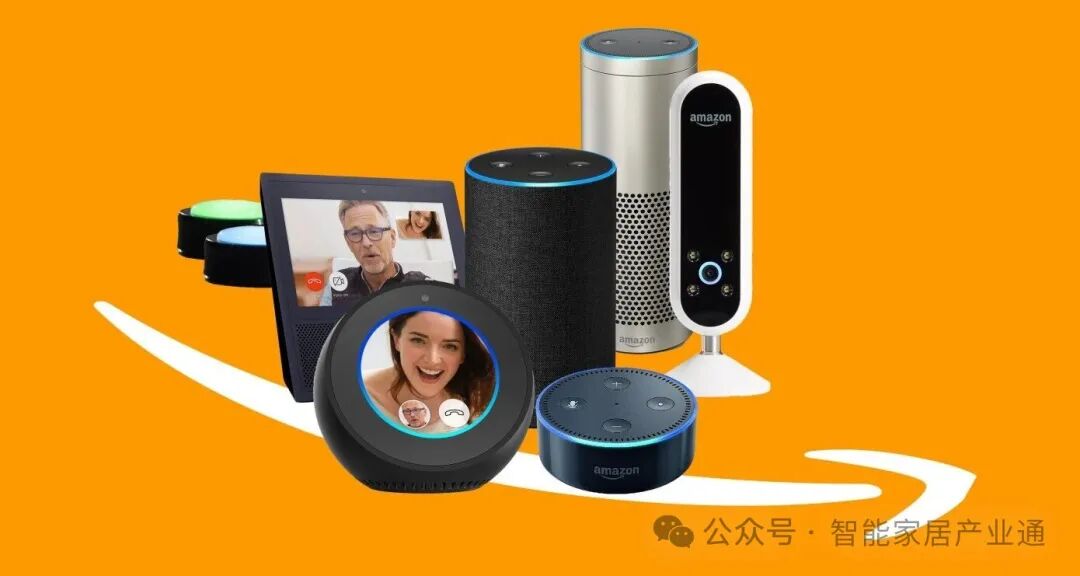 First-Mover Advantage of Echo Smart Speakers
Amazon’s strategy in the smart home sector has been spearheaded by the Echo smart speaker, achieving significant first-mover advantages. Since the launch of the first-generation Echo smart speaker in 2014, Amazon has seized the initiative in the smart voice interaction market. With an array of seven microphones, Echo can accurately capture user voice commands in complex environments, responding quickly even during music playback or in noisy surroundings. For instance, when a user shouts “Alexa, pause the music” while music is playing, Echo can quickly recognize and execute the command.
In terms of market share, the Echo series of smart speakers has long held a significant position in the smart speaker market. According to market research firm CIRP, as of 2023, Amazon Echo still ranks among the top in the U.S. smart speaker market, with a share exceeding 40%. Its product line is diverse, covering various price ranges and functional characteristics, such as the compact and portable Echo Dot and the high-quality Echo Studio, catering to different user needs. In terms of functionality, Echo not only provides basic features like music playback, information queries, and schedule reminders but also continuously expands into new application scenarios. For example, users can control compatible smart appliances through Echo, managing lights, curtains, and TV playback, truly making home life smarter and more convenient.
Open Alexa to Build a Vast Ecosystem
Alexa is the core of Amazon’s smart home ecosystem. Through an open platform strategy, Alexa has attracted numerous third-party developers and hardware manufacturers, building a vast and rich smart home ecosystem. To date, Alexa supports over 100,000 skills, covering various aspects of life, from smart home control, health and fitness, education, to entertainment and gaming. For instance, users can use meditation skills through Alexa to relax or utilize educational skills to help children learn languages, math, and more.
In terms of hardware compatibility, Alexa collaborates with thousands of hardware manufacturers worldwide, enabling Alexa to control various smart devices, including smart bulbs, smart plugs, smart locks, and smart cameras. For example, with Samsung’s SmartThings smart home devices, users can control devices within the SmartThings ecosystem using Alexa voice commands, achieving interoperability between devices from different brands. This open ecosystem model not only allows users to freely choose and combine smart devices according to their needs but also provides Amazon with a significant competitive advantage, further solidifying its position in the smart home sector and offering users a more comprehensive and convenient smart home experience.
Insights and Outlook Behind the Giants’ Layouts
Technological Innovation as the Core Driving Force
From the layouts of Apple, Google, and Amazon in the smart home sector, it is clear that technological innovation is the core driving force behind the development of smart homes. The application of artificial intelligence technology enables smart home devices to understand users’ voice commands, achieving more natural and convenient interaction methods. For example, in terms of voice recognition technology, Amazon’s Alexa, Google’s Google Assistant, and Apple’s Siri are continuously optimizing their voice recognition algorithms to improve accuracy in recognizing different accents and language habits, allowing users to easily control various smart home devices with simple voice commands.
Internet of Things (IoT) technology enables interconnectivity between devices, allowing smart home devices of different brands and types to communicate and collaborate, constructing a complete smart home ecosystem. For instance, Google connects various smart home devices through IoT technology via acquisitions and technological integration, allowing users to manage and control all devices on a unified platform, achieving inter-device linkage, such as automatically turning on lights when a smart camera detects someone entering a room. The continuous innovation and advancement of these technologies provide strong technical support for the development of smart homes, pushing the concept of smart homes closer to reality and making people’s lives smarter, more convenient, and more comfortable.
Ecological Construction Determines Future Patterns
In the competition of the smart home market, the importance of ecological construction is becoming increasingly prominent. Apple has built a relatively closed but highly integrated ecological closed loop through the HomeKit platform, emphasizing seamless collaboration between devices and strict protection of user privacy, attracting many users seeking high-quality and secure smart home experiences. Google adopts a strategy that combines software and hardware, expanding its hardware portfolio through acquisitions while leveraging deep integration of software platforms and voice assistants, actively collaborating with third-party device manufacturers to create an open smart ecosystem, aiming to cover a broader user base. Amazon, leveraging the first-mover advantage of the Echo smart speaker and the open Alexa platform, has constructed a vast smart home ecosystem, attracting numerous developers and hardware manufacturers, offering a rich array of skills and compatible devices, providing users with diverse choices.
It is evident that building a complete ecosystem has become the key for tech giants in the competition of the smart home market. A well-rounded smart home ecosystem can not only provide a rich selection of devices and personalized services but also enhance user stickiness and loyalty. In the future, as the smart home market continues to develop, competition between ecosystems will become more intense. Companies that can offer more open, compatible, and intelligent ecosystems will occupy a more advantageous position in the market, leading the direction of the smart home industry.
Disclaimer: Images and materials are sourced from publicly available resources on the internet. The writing here is solely for the purpose of conveying industry information. If there are any inaccuracies, please feel free to correct them. If there is any infringement, please add the author’s WeChat to delete the article.