Warm reminder: If you have a topic you would like to study, please leave a message in the comments section, and we will select and research it for you.
Section 1: An Analysis of an Unprecedented Intervention
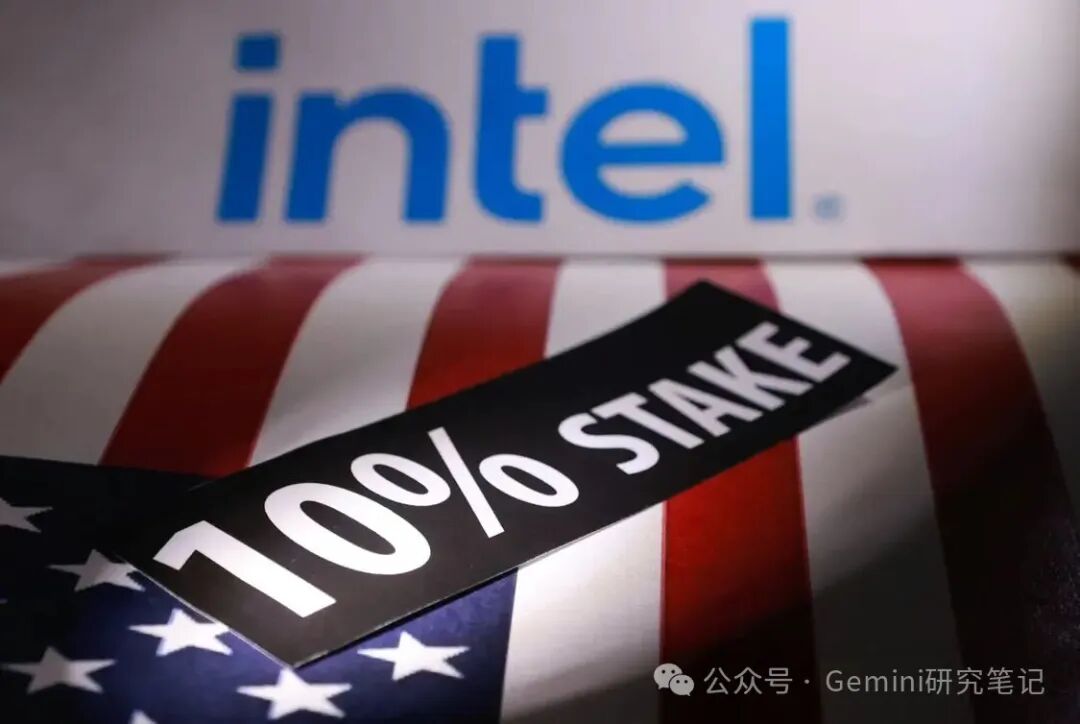
The U.S. government announced the acquisition of nearly 10% of Intel’s (Intel) shares, marking one of the most notable interventions by the federal government in private enterprises since the 2008 auto industry bailout. This event not only represents a financial lifeline for a struggling tech giant but also reflects a significant philosophical shift in U.S. industrial policy, where national security considerations increasingly overshadow traditional free market principles in an era of intensifying geopolitical competition. This section will delve into the financial structure of this equity acquisition, the political maneuvering surrounding the deal, and its direct impact on all stakeholders involved.
1.1. Financial Structure of the Transaction
This transaction is not a simple cash injection but a carefully designed financial operation aimed at converting previously committed government subsidies into potentially appreciating national assets. Its core terms highlight a new approach by the government in supporting critical industries.
-
Equity and Valuation: The U.S. government acquired 9.9% of Intel’s shares, totaling 433.3 million shares of common stock.
-
Funding Mechanism: The total acquisition cost of $8.9 billion is not new fiscal expenditure but a conversion of previously approved funds. This includes $5.7 billion from the CHIPS and Science Act, which has been granted but not yet disbursed, and $3.2 billion from the Secure Enclave project. Including previously disbursed funds, the government’s total committed investment in Intel reaches $11.1 billion.
-
Discounted Acquisition: The issuance price of the stock is $20.47 per share, significantly lower than the closing price of $24.80 on the day the transaction was announced, resulting in an immediate paper gain of approximately $1.9 billion for the government. Former President Trump succinctly summarized this operation by stating, “I paid zero for Intel,” accurately capturing the essence of this maneuver: converting subsidies into assets.
-
Governance and Control: The agreement explicitly states that the government’s equity is of a “passive” nature, without voting rights or board seats. However, a key provision is that on most matters requiring shareholder approval, the government agrees to vote in alignment with the company’s board. This effectively provides the current management with a strong ally, solidifying their position.
-
Strategic Terms and Warrants: The transaction includes a five-year warrant stipulating that if Intel sells more than 49% of its foundry business, the government has the right to purchase an additional 5% of shares at $20 per share. This provision acts as a “poison pill” to prevent this strategically important business from falling into disarray. Additionally, the agreement removes the profit-sharing and claw-back provisions originally attached to the CHIPS Act funding, providing Intel with “capital permanence.”
Table 1: Key Terms of the U.S. Government and Intel Equity Agreement
|
Indicator |
Details |
|
Equity Ratio |
9.9% |
|
Total Shares |
433.3 million shares |
|
Acquisition Price |
$20.47 |
|
Market Price at Transaction |
$24.80 |
|
Total Investment Amount |
$8.9 billion |
|
Funding Source 1 (CHIPS Act) |
$5.7 billion |
|
Funding Source 2 (Secure Enclave) |
$3.2 billion |
|
Governance Rights |
Passive holding (no board seats, votes in alignment with board) |
|
Warrant Terms |
If control of the foundry business is lost, the government has the right to increase its stake by 5% at $20/share within five years |
|
Changes to Original Subsidy Terms |
Removal of profit-sharing and claw-back provisions |
1.2. The Political and Corporate Stage Play
The process leading to this transaction was dramatic, characterized by a high-stakes game between the White House and Intel’s top executives, ultimately reshaping the relationship between politics and business in an unconventional manner.
-
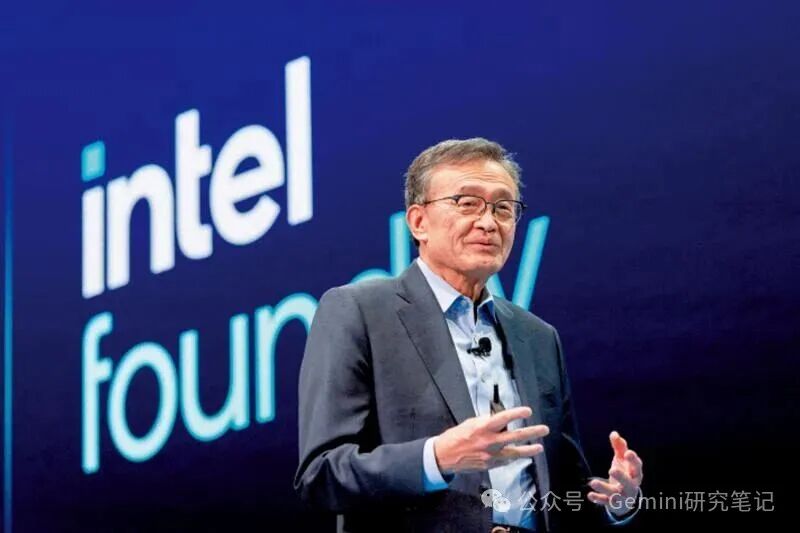
Stunning Reversal: Just before the deal was finalized, President Trump publicly demanded the resignation of Intel’s new CEO, Lip-Bu Tan, due to his past investments in Chinese companies, which strained relations between the two parties.
-
White House Meeting: However, a crucial meeting between Trump and Tan at the White House completely changed the situation. Trump’s later narrative suggested that he leveraged Tan’s desire to keep his job to secure equity for the U.S.: “He walked in wanting to keep his job, and in the end, he contributed $10 billion to America.” In contrast, Tan’s public statement was more cautious, merely expressing gratitude for the government’s trust in the company.
-
Constructing the Narrative: Commerce Secretary Howard Lutnick praised this transaction as transforming “Biden-era subsidies” into “equity for the American people,” a politically charged statement aimed at contrasting traditional industrial subsidy policies with a direct national investment model to highlight its superiority.
1.3. Market Reaction and Stakeholder Risk Analysis
Despite the market’s positive initial reaction to the government’s “backstop” actions, analysts, investors, and even Intel itself expressed deep concerns about this profound intertwining of politics and business.
-
Initial Market Optimism: Following the announcement, Intel’s stock price rose over 6%, indicating a welcome attitude from short-term investors towards government support.
-
Analysts and Investors’ Concerns: Critics such as Scott Lincicome from the Cato Institute and tech analyst Rob Enderle warned that this move is a slippery slope towards nationalization, dangerously entangling political and business decisions. Investors questioned whether taxpayers would see a return and expressed concerns about government interference in corporate strategy.
-
Intel’s Self-Disclosure (SEC Filing): Intel itself warned shareholders of significant risks in its filings with the U.S. Securities and Exchange Commission (SEC). These risks include:
-
Harming International Sales: Foreign governments may view Intel as an extension of the U.S. government, subjecting it to foreign subsidy laws or other restrictions. Given that 76% of Intel’s revenue in 2024 comes from overseas, with China alone accounting for 29%, this risk is critical.
-
Threatening Future Funding: Other government entities may be less willing to provide direct funding in the future, opting instead to follow this transaction’s model of converting grants into equity.
-
Dilution of Shareholder Rights and Influence: The discounted issuance of new shares dilutes existing shareholders’ rights, while the government, as a large voting bloc, reduces other shareholders’ influence in corporate decision-making.
The deeper significance of this intervention is that it marks a fundamental shift in U.S. industrial policy from the traditional “subsidy model” to a “state capitalism model.” The original CHIPS Act aimed to incentivize the private sector to take actions aligned with national strategic goals through traditional tools such as grants, loans, and tax credits. However, the Trump administration’s maneuver restructured this relationship. By converting a grant that was a sunk cost for the government into an asset with potential appreciation, the government’s role shifted from funder to shareholder. Lutnick and Trump’s comparison of “giving away money for free” to “securing equity for the American people” clearly articulates this shift. This is not merely a one-time transaction but could become a new policy paradigm. White House economic advisor Kevin Hassett explicitly stated that more such transactions may occur in industries like chips and artificial intelligence in the future, suggesting that the U.S. is moving towards a model closer to sovereign wealth funds, where the state directly invests in strategic industries to safeguard national interests and seek financial returns.
Moreover, although the agreement’s terms deliberately emphasize the “passive” nature of the equity, this is more of a market-soothing rhetoric at the strategic level. As an owner, the government’s fundamental interests are closely tied to Intel’s success or failure. As analyst Ben Bajarin pointed out, the key question is: “Once the government becomes a stakeholder, what measures will they take to protect their investment?” This protection could manifest in various subtle ways: granting Intel preferential treatment in government contracts (especially in defense), enacting regulations unfavorable to its competitors, or pressuring allies through diplomatic means to prioritize Intel’s foundry services. Intel’s concerns about potential scrutiny under foreign subsidy laws, as stated in its SEC filings, acknowledge this reality. Other countries will not view the U.S. government’s stake as purely a “passive investment.” Intel’s fate is now inextricably linked to U.S. foreign policy, making it no longer a neutral partner in the eyes of global customers, unlike TSMC or Samsung.
Section 2: The Fall of a Giant: A Chronicle of Strategic and Manufacturing Failures
Intel’s need for direct government intervention did not arise overnight. Its decline is not the result of a single event but a chain reaction of interconnected failures. The roots of these failures are deeply embedded in the very foundations of its past success: a dominant business model, excellent manufacturing capabilities, and a unique corporate culture. This section will delve into this history, revealing how a tech giant gradually lost its undisputed leadership position.
2.1. The Golden Age and the Aftermath of the “Wintel” Alliance (1990s – Early 2000s)
During the rise of personal computers (PCs), Intel was the undisputed king. Its partnership with Microsoft formed the “Wintel” alliance, defining the entire PC industry’s ecosystem.
-
Dominance Era: The “Wintel” duopoly dominated the PC era, with Intel’s market share in PC processors reaching as high as 80-90%. This alliance created a virtuous cycle: Microsoft continuously released operating systems and software with higher hardware requirements, driving consumer demand for faster Intel CPUs.
-
Moore’s Law as a Business Strategy: Intel’s entire corporate identity was built on the steadfast execution of Moore’s Law— the number of transistors that can be accommodated on an integrated circuit doubles approximately every two years. This was not just a technical observation but became a self-fulfilling prophecy, driving the entire industry and Intel’s own business model.
-
“Tick-Tock” Rhythm: From 2007 onwards, this strategy was concretized into the “Tick-Tock” model. In a “Tick” cycle, Intel would launch chips using smaller, newer manufacturing processes; in the subsequent “Tock” cycle, it would introduce a new microarchitecture on a mature process. This predictable innovation rhythm, occurring approximately every two years, left competitors struggling to catch up.
2.2. The Mobile Revolution: A Trillion-Dollar Blunder (2007-2015)
As the focus of computing shifted from desktops to handheld devices, Intel’s strategic inertia caused it to miss an entire era.
-
The iPhone Turning Point: A well-known historical blunder was Intel’s refusal to produce chips for the first-generation iPhone. Then-CEO Paul Otellini deemed the deal financially unattractive. This decision epitomized Intel’s broader strategic failures.
-
Architectural Mismatch (x86 vs. ARM): Intel’s x86 architecture was optimized for high-performance computing, making it inherently unsuitable for mobile devices in terms of power efficiency. In contrast, the ARM architecture, based on a simpler RISC instruction set, had unparalleled advantages in battery life.
-
Business Model Mismatch (High Profit vs. High Volume): Intel’s entire economic model, from wafer fabrication operations to product pricing, was built around high-profit PC and server chips. The company was reluctant to pivot to the lower-margin but high-volume mobile SoC (system on chip) market, fearing it would erode profits from its core business.
-
Failure of Atom Processors and “Contra-Revenue”: Intel attempted to compete with its Atom processor line, but this product line was under-resourced and failed to gain market acceptance. Ultimately, the company adopted a disastrous “contra-revenue” strategy, subsidizing tablet manufacturers to use Intel chips. This approach led to massive financial losses without establishing a sustainable market position.
2.3. Manufacturing Collapse: The Stoppage of the “Tick-Tock” Clock (2014-2019)
If missing the mobile market was a strategic blunder, then failures in manufacturing processes were a fatal blow to Intel’s foundation.
-
The 10nm Node Disaster: The transition to 10nm manufacturing technology turned into a multi-year disaster. This process was initially slated for production in 2016, but due to yield issues, mass production was repeatedly delayed until 2019. This was the longest and most challenging technological transition in the company’s history.
-
Technological Arrogance: Intel’s engineers set overly aggressive “hyper-scaling” goals for the 10nm node, attempting to introduce too many innovations at once (such as using cobalt and complex multi-patterning techniques) instead of timely embracing EUV (extreme ultraviolet lithography) technology like competitor TSMC. This technological gamble ultimately ended in catastrophic failure, leading to persistent yield issues.
-
The End of “Tick-Tock”: The delay of the 10nm process completely shattered the “Tick-Tock” model. In 2016, Intel was forced to abandon this model, shifting to a slower “Process-Architecture-Optimization” three-step approach, which effectively meant that its 14nm process was repeatedly optimized and used across multiple product generations (such as Coffee Lake). This ended Intel’s predictable innovation rhythm.
-
Handing Leadership to TSMC: While Intel stagnated at 14nm, TSMC successfully mass-produced its 7nm process in 2019 (comparable to Intel’s 10nm) and advanced to 5nm in 2020. This allowed fabless competitors like AMD and Apple to access more advanced manufacturing technologies, enabling them to surpass Intel in product performance. Intel, once a process leader, decisively fell behind.
2.4. Inertia Culture and Leadership Deficiency
Behind the technological and strategic missteps lie deeper cultural and leadership issues.
-
Complacency from Monopoly: Decades of market dominance fostered a culture of arrogance and resistance to change. There was a widespread belief within the company that “foundries and fabless companies could not keep up with Intel,” a notion that ultimately proved to be a catastrophic error.
-
Cognitive Bias and Groupthink among Executives: Analysis indicates that Intel’s culture failed to translate early-career technical talent into strategic vision at the executive level. Overconfidence, cognitive inertia, and groupthink led leadership to overlook critical market signals such as the rise of the ARM architecture and the feasibility of the fabless model.
-
Erosion of Agility and Collaborative Spirit: Despite the company’s proclaimed values, employee feedback and cultural analysis reveal that Intel scored low on agility and collaboration. Reports from former employees depict a toxic environment filled with frequent reorganizations, office politics, and a lack of psychological safety, severely stifling innovation and honest feedback. This starkly contrasts with the company’s official narrative of a flat, risk-encouraging culture.
Table 2: Timeline of Key Strategic and Manufacturing Failures at Intel (2007-2024)
|
Year |
Key Events/Decisions |
Category |
Consequences/Impact |
|
2007 |
Refusal to produce chips for the first-generation iPhone |
Mobile Strategy |
Handed the mobile market to the ARM ecosystem, missing an era of opportunity. |
|
2013 |
Apple signs A8 processor production agreement with TSMC |
Customer Loss |
Key customers begin to shift to competitors’ manufacturing ecosystems. |
|
2014-2019 |
Repeated delays in 10nm manufacturing process |
Manufacturing |
Loss of process leadership to TSMC; collapse of the “Tick-Tock” model. |
|
2016 |
Official abandonment of the “Tick-Tock” model |
Strategy |
Ended predictable innovation rhythm, opening a window for AMD’s resurgence. |
|
2017 |
Failed to invest in OpenAI |
AI Strategy |
Missed a key opportunity for strategic positioning in early AI development. |
|
2020 |
Apple announces transition of Mac product line to self-developed M1 chips |
Customer Loss |
Loss of significant revenue and industry reputation; validated the feasibility of ARM architecture in the PC space. |
|
2024 |
Gelsinger resigns as CEO |
Leadership |
Under pressure from massive losses and declining stock prices, the leadership aimed at revival undergoes another change. |
Intel’s failures are systemic. Its core advantages—the IDM (Integrated Device Manufacturer) model, the execution of Moore’s Law, and the dominance of the Wintel alliance—ultimately became rigid shackles that hindered its adaptation to new computing paradigms. The IDM model was once Intel’s most powerful weapon, allowing it to perfectly optimize chip design and manufacturing in a closed loop. This was an unparalleled advantage for the singular PC market. However, the mobile revolution required a completely different model: low-power, low-cost, highly integrated system on chips (SoCs). This is precisely the domain where the “fabless design + specialized foundry” ecosystem led by ARM and TSMC excels. In this context, Intel’s IDM model became a heavy burden. Its fabs were optimized for high-performance, high-profit CPUs and could not economically produce low-cost SoCs. Its corporate culture was addicted to high margins, unable to accept the reality that the mobile business was “financially unattractive.” Thus, it was that very vertical integration capability that had allowed Intel to dominate in the PC era that caused it to lose competitive will and ability in the mobile era. Its advantages turned into its fatal weaknesses.
The failure of the 10nm manufacturing process was not merely a technical delay; it was the moment when all of Intel’s strategic liabilities converged. It destroyed the company’s business model and left it completely exposed to resurgent competitors. The “Tick-Tock” model was the engine of Intel’s dominance, ensuring predictable performance and efficiency leaps every two years, keeping competitors perpetually chasing. The years-long delay of the 10nm process completely obliterated this rhythm. For the first time, Intel’s roadmap became unpredictable and stagnant. This provided a clear and stable target for AMD, which was reorganizing under Lisa Su’s leadership. AMD knew that Intel would be trapped in the 14nm process for the coming years, allowing it to confidently plan the use of TSMC’s predictable and more advanced 7nm process for its new Zen architecture, ensuring a performance advantage at product launch. Therefore, the failure of the 10nm process acted as a catalyst, bringing together all of Intel’s other issues—uncompetitive architecture, talent loss, and the rise of competitors—into a total explosion. This was a single point of failure that led to the systemic collapse of its competitive advantage.
Section 3: The Competitive Noose: How Rivals Redrew the Semiconductor Landscape
Intel’s decline did not occur in a vacuum; it was amplified by the exceptional execution of its competitors. Four key rivals—AMD, NVIDIA, TSMC, and ARM—each excelled in a specialized business model, and their combined force ultimately dismantled Intel’s integrated hegemony.
3.1. AMD’s Resurgence: The Masterstroke of the “Zen” Architecture
Under the leadership of CEO Dr. Lisa Su (who took office in 2014), AMD staged one of the greatest corporate turnarounds in Silicon Valley history. She inherited a company burdened with debt, a product line (the “Bulldozer” architecture) that was uncompetitive, and almost zero market share in the server space.
-
The Bet on “Zen”: Su concentrated the company’s R&D resources on a scalable new architecture: “Zen.” Launched in 2017, the Zen architecture achieved an astonishing IPC (instructions per clock) improvement of over 50%, giving AMD the capability to compete with Intel for the first time in a decade.
-
Leveraging the Fabless Model: Crucially, AMD is a fabless company. It fully leveraged TSMC’s superior manufacturing capabilities. While Intel struggled with its 10nm process, AMD’s Ryzen (desktop) and EPYC (server) chips were already utilizing TSMC’s more advanced 7nm process, surpassing Intel in core count, energy efficiency, and performance.
-
Market Share Erosion: With product advantages, AMD steadily eroded Intel’s share across all segments, especially in the high-margin server market, where its share skyrocketed from less than 1% to over 25%, and it even dominated retail and gaming channels for a time.
3.2. NVIDIA’s AI Dominance: The Power of Ecosystems
NVIDIA’s success lies in its redefinition of the use of its core products and the construction of an almost insurmountable moat around it.
-
Transformation of GPUs: NVIDIA successfully transformed graphics processing units (GPUs) from a niche component primarily used for gaming into the core engine for parallel computing, which is the foundational workload for artificial intelligence (AI) and machine learning.
-
CUDA Moat: NVIDIA’s true genius was the launch of CUDA in 2007. This software platform and programming model greatly simplified the process for developers to leverage the parallel processing capabilities of its GPUs. This created a sticky ecosystem with millions of developers and thousands of applications.
-
Dominating Data Centers: With the explosion of the AI revolution, data centers transformed into “AI factories.” Supported by the CUDA ecosystem, NVIDIA’s GPUs became the undisputed industry standard, capturing about 80-85% of the AI accelerator market. This brought explosive revenue growth to its data center business.
-
Intel’s Missed Opportunity: Intel essentially missed the turning point for AI hardware, focusing on CPUs and abandoning early GPU development. Its subsequent products, such as Gaudi, have yet to pose a substantial challenge to NVIDIA’s stronghold.
3.3. TSMC: The King of Foundries and the Fabless Revolution
TSMC’s success is the foundation for the reshaping of the entire semiconductor industry landscape.
-
Pure Foundry Model: TSMC’s business model is very pure: it manufactures chips for other companies without designing products or competing with customers. This neutrality has earned it the trust of the entire fabless industry, with loyal customers ranging from Apple to AMD to NVIDIA.
-
Manufacturing Dominance: Through intense focus and massive capital investment, TSMC surpassed Intel in manufacturing processes around 2018-2019 with its 7nm node. Its predictable, robust, and reliable execution starkly contrasted with Intel’s chaos at the 10nm node.
-
Economies of Scale: By serving hundreds of customers, TSMC achieved enormous economies of scale that a single IDM like Intel could not match, allowing it to spread R&D and capital expenditures, thereby lowering the cost per wafer.
-
Enabler: TSMC’s success is the cornerstone of the success of companies like AMD, NVIDIA, Apple, and Qualcomm. It has empowered the prosperity of the entire fabless ecosystem and ultimately challenged Intel’s integrated model.
3.4. ARM Holdings: The Shift to Efficient Architectures
ARM’s business model demonstrates the immense power of intellectual property (IP) in the modern tech industry.
-
IP Licensing Model: Like TSMC, ARM does not manufacture chips. It designs energy-efficient processor architectures (based on RISC) and licenses this intellectual property to hundreds of companies, including Apple, Qualcomm, and Samsung.
-
Winning the Mobile Market: ARM’s focus on low power made it the obvious standard for the smartphone revolution, a market Intel completely failed to penetrate. 95% of smartphones globally use ARM-based designs.
-
Challenging the Desktop Market: Designs based on ARM architecture have made significant strides in performance and efficiency, now beginning to challenge the x86 duopoly in PCs and laptops. Notably, Apple has replaced Intel processors with its self-developed M-series chips, and Qualcomm has launched the Snapdragon X Elite. This indicates that the performance advantage of x86 is no longer absolute.
Table 3: Comparative Analysis of Semiconductor Business Models: Intel vs. Competitors
|
Company |
Business Model |
Core Advantages |
Main Weaknesses/Challenges |
|
Intel |
IDM (Integrated Device Manufacturer) |
(Historical) Design and Manufacturing Synergy |
High costs, inflexibility, conflicts of interest |
|
TSMC |
Pure Foundry |
Manufacturing excellence, customer neutrality, economies of scale |
Dependent on customers’ design success |
|
AMD |
Fabless Design |
Architectural innovation (Zen), agility |
Dependent on foundry partners (TSMC) |
|
NVIDIA |
Fabless Platform (Hardware + Software) |
CUDA software ecosystem creates a deep moat |
Dependent on foundry partners (TSMC) |
|
ARM |
IP Licensing |
Low-power architecture, broad ecosystem, low R&D costs for licensees |
Lower revenue per chip, dependent on licensees’ success |
The semiconductor industry ultimately bifurcated into two successful ecosystems that excluded Intel: one centered around high-performance parallel computing (NVIDIA/TSMC) and the other around high-efficiency mobile computing (ARM/TSMC). Intel’s Wintel ecosystem was built for the singular purpose of general computing on PCs and servers. The rise of AI created a new paradigm: large-scale parallel computing. NVIDIA built a decisive ecosystem for this with its GPUs (hardware) and CUDA (software), manufactured by TSMC. Intel’s CPUs were relegated to a supporting role. Meanwhile, the rise of mobile devices created another new paradigm: high-efficiency computing. ARM built a decisive ecosystem for this by allowing companies like Apple and Qualcomm to design SoCs manufactured by TSMC. Intel’s x86 architecture was completely excluded. Thus, Intel was not only defeated by individual competitors but was locked out by the two most important new computing paradigms of the 21st century, both dominated by a new, specialized, collaborative ecosystem that rendered Intel’s singular, closed integration model obsolete.
The success of the “fabless” model eloquently demonstrates that the most critical competitive advantage in the industry has shifted from vertical integration (owning factories) to horizontal leadership (dominating a specific layer of the technology stack). Intel’s historical advantages allowed for tight synergy between design and manufacturing. However, TSMC proved that a focused manufacturer can achieve superior process technology and production scale that no single IDM can match. At the same time, NVIDIA demonstrated that leadership in a software ecosystem (CUDA) can create a deeper and more enduring moat than mere hardware leadership. ARM showed that a licensable architecture IP can create a broader and more diverse ecosystem than proprietary architectures. In this new landscape, the winners are those who dominate a specific horizontal layer—manufacturing (TSMC), AI software/architecture (NVIDIA), or low-power CPU architecture (ARM)—and collaborate with other horizontal leaders. Intel’s attempt to control the entire vertical stack ultimately led to its loss of leadership at every level.
Section 4: The Geopolitical Chessboard: Industrial Policy in an Era of Great Power Competition
The intervention in Intel is not an isolated corporate bailout but is situated within a broader geopolitical context, particularly the U.S.-China tech competition and the global struggle for semiconductor supply chain security. This is not just a business decision but a high-stakes geopolitical chess move.
4.1. The CHIPS and Science Act: A New Era of U.S. Industrial Policy
The passage of the CHIPS Act marks a shift in U.S. industrial policy from decades of free-market faith to a more proactive stance.
-
Core Objectives: The $52.7 billion CHIPS Act aims to achieve three main goals: 1) reduce the vulnerability of supply chains to foreign shocks; 2) enhance U.S. economic competitiveness; 3) safeguard national security by relocating semiconductor manufacturing back to the U.S. The share of U.S. domestic semiconductor manufacturing capacity has declined from nearly 40% in 1990 to just 12% today.
-
Countering China: The act has clear geopolitical intentions, aiming to consolidate U.S. leadership in semiconductors and curb China’s rise. The act includes “guardrail” provisions that prohibit funded companies from expanding advanced semiconductor production in China.
-
Supply Chain Security: The COVID-19 pandemic and geopolitical tensions exposed the vulnerabilities of concentrating advanced manufacturing in East Asia, particularly Taiwan (home to TSMC, which produces 90% of the world’s advanced chips). The CHIPS Act is a direct response to this vulnerability.
4.2. The U.S.-China “Chip War”
The two largest economies in the world are engaged in fierce competition in the semiconductor field, reshaping the global tech industry landscape.
-
U.S. Strategy: “Run Faster While Slowing Down the Opponent”: The U.S. policy is two-pronged: on one hand, enhancing domestic capabilities through the CHIPS Act, and on the other, imposing strict export controls to prevent China from acquiring advanced chips (such as NVIDIA’s AI GPUs) and manufacturing equipment (like ASML’s EUV lithography machines).
-
China’s Strategy: Self-Reliance: In response, China is investing massive state funds to develop its domestic semiconductor industry through strategies like “Made in China 2025,” aiming for technological self-sufficiency and reducing reliance on foreign technology. In 2020, China’s chip imports reached $350 billion.
-
The Battlefield of Competition: This competition is giving rise to a bifurcated global tech ecosystem, with parallel technology standards and supply chains forming. This forces multinational companies to navigate complex geopolitical alliances and regulations.
4.3. Intel as a “National Champion”
In this geopolitical chess game, Intel is assigned a special role.
-
Strategic Importance: As the leading IDM in the U.S., Intel is crucial for achieving the goal of relocating cutting-edge logic chip R&D and manufacturing back to the U.S. Its success or failure directly impacts U.S. national and economic security.
-
Equity as a Geopolitical Tool: Converting grants into equity gives the U.S. government a more direct and lasting interest in the success of its “national champion.” The warrant provisions in the agreement to prevent the sale of the foundry business further underscore the strategic intent to keep this critical asset under U.S. control.
On a deeper level, the U.S. government’s stake in Intel is a necessary extension of the national security logic of the CHIPS Act, and can even be seen as its extreme manifestation. The fundamental premise of the act is that market forces alone cannot ensure the semiconductor supply chain, which is critical to national security. Intel, as the primary U.S. vehicle for executing this policy, is in a precarious financial and competitive position, having lost $22 billion since 2023. In this context, merely providing funds to a struggling company carries the significant risk of wasting resources without achieving strategic objectives. The company could fail, be acquired, or sell off its strategic assets. Therefore, adopting an equity investment approach, especially with warrants for control over the foundry business, is a more robust mechanism to ensure the realization of national strategic goals. It transforms the government’s role from a generous funder to a stakeholder with actual leverage, ensuring that the nation’s core asset (i.e., cutting-edge wafer manufacturing capability) is preserved. This marks a shift in industrial policy towards a state ownership model driven by national security.
Section 5: An Uncertain Future: Assessing Intel’s Transformation and the Precedent of National Intervention
The final part of this report will provide a forward-looking assessment of Intel’s strategic transformation and the likelihood of its success, as well as the long-term implications of this milestone government intervention.
5.1. The Gamble of IDM 2.0: Can Intel Remake Itself?
Faced with a crisis, Intel has proposed an ambitious revival plan, but this path is fraught with challenges.
-
Strategic Core: Announced by CEO Pat Gelsinger in 2021, the IDM 2.0 strategy includes three pillars: 1) continue to manufacture most products in-house; 2) expand the use of external foundries (like TSMC) to produce some components to restore product competitiveness; 3) launch Intel Foundry Services (IFS) to become a major foundry for global customers.
-
Challenges of the Foundry Business: This is the riskiest part of the strategy. Intel’s previous attempts at foundry services have all ended in failure. According to the company’s own forecasts, the new foundry business is expected to be in the red until mid-2030, with operational losses projected to peak in 2024. As of mid-2025, Intel acknowledged in its 10-Q filing that it has no “significant customers” for its foundry business.
-
Conflicts of Interest: The core challenge lies in trust. Fabless companies like NVIDIA and Qualcomm are unlikely to willingly entrust their most advanced designs to a foundry that is also a major competitor for their products. Intel must overcome this deeply ingrained conflict of interest.
-
Path to Profitability: Intel aims to achieve breakeven for its foundry business by 2030 and ultimately reach a 40% non-GAAP gross margin. This is a long and capital-intensive road that requires the company to execute flawlessly on its technology roadmap (five nodes in four years).
5.2. The Risks of “Golden Shares”: Long-Term Implications of Government Ownership
While the government’s stake has stabilized the situation in the short term, it may sow long-term pitfalls for Intel and the entire industry.
-
Distorted Competition: Government support, even if passive, may distort the market. It could delay necessary but painful corporate restructuring, effectively subsidizing failure and putting more efficient competitors at a disadvantage.
-
Politicization of Decision-Making: Corporate strategy may yield to political objectives. Decisions regarding factory locations, hiring, or international cooperation may be influenced by political factors rather than market logic.
-
Moral Hazard: This intervention sets a precedent that strategically important but poorly managed companies can expect government bailouts. This may reduce the incentive for other critical industries to engage in sound long-term planning.
5.3. Strategic Outlook and Recommendations
In the face of a complex situation, all parties need to take prudent and decisive actions.
-
For Intel: The company must execute its technology roadmap at all costs to rebuild market credibility. To make the foundry business viable, it must establish a truly independent operational and financial structure and adopt transparent “fair trade” pricing principles to win customer trust. Additionally, as value increasingly concentrates in software ecosystems (like NVIDIA’s CUDA), Intel must find competitive ways to engage in AI beyond manufacturing.
-
For Policymakers: They must exercise extreme restraint in managing their stake in Intel, avoiding interference in its business operations. Future industrial policies should focus on nurturing a competitive ecosystem rather than merely propping up a single “national champion.” This includes investing in R&D, workforce development, and simplifying regulations to lower domestic manufacturing costs for all participants.
The IDM 2.0 strategy itself is a paradoxical attempt to save its integrated model by forcing an integrated company to act like its fabless competitors, creating significant friction both internally and externally. The strategy acknowledges the superiority of specialized models, thus establishing internal foundries (mimicking TSMC) and beginning to use external foundries (mimicking fabless companies). However, this has created a profound identity crisis within the company. Product divisions, long accustomed to the advantages of exclusive foundries, must now compete for capacity and adopt industry-standard design tools, effectively becoming customers of the internal foundry services (IFS). Conversely, IFS must prove its neutrality to the outside world, treating its internal sibling division—the Intel Product Division—as just another customer. This has forcibly created cultural and operational divides within a company whose entire history is built on seamless integration. The success of IDM 2.0 depends on Intel’s ability to manage this self-imposed “disintegration,” which poses a significant challenge to its corporate culture and may be difficult to navigate. The government’s stake complicates this situation further, as it raises external customers’ vigilance regarding the ultimate loyalty of this foundry. Ultimately, Intel’s path to revival is not just a race of technology and business but a profound cultural transformation. Whether this historic government intervention is a masterstroke to turn the tide or the key to opening Pandora’s box remains to be seen over time.