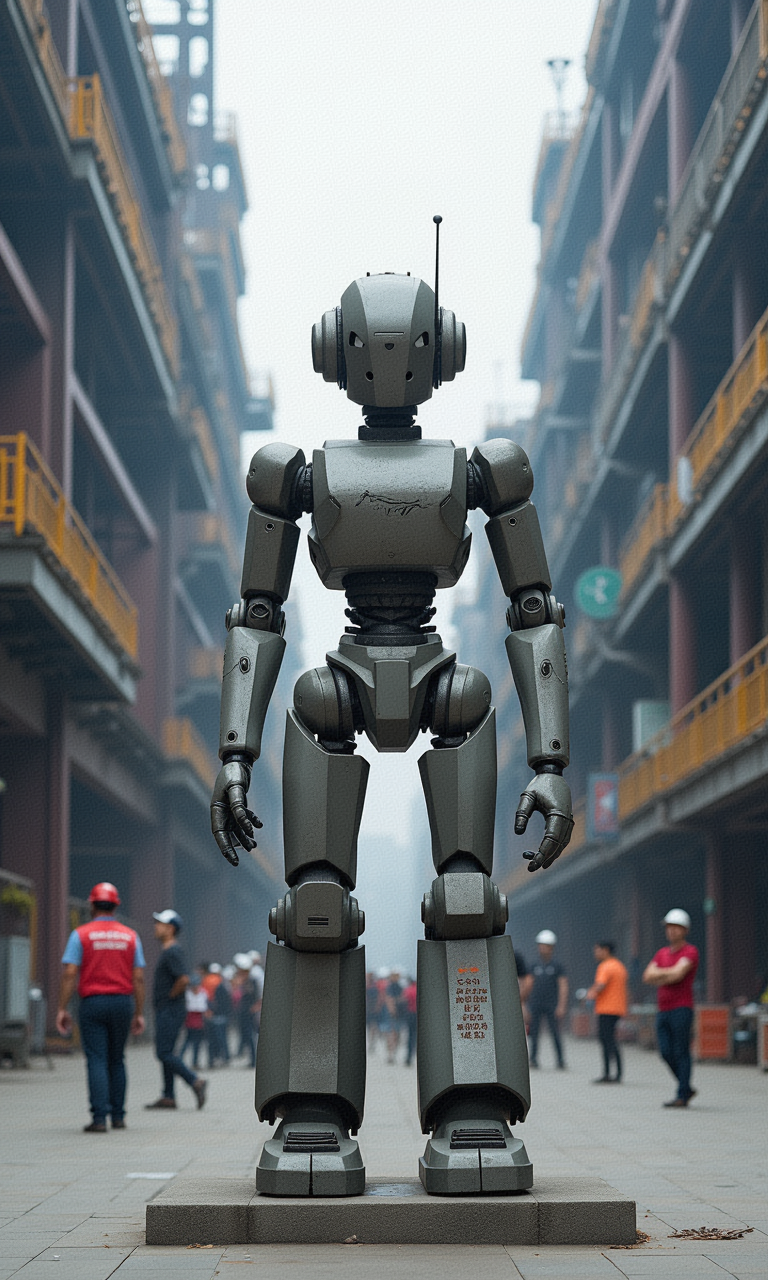
In recent years, China’s robot industry has experienced explosive growth, driven by technological innovation and policy support that have propelled rapid development in the sector. From the stunning performance of humanoid robots at the Beijing Yizhuang Half Marathon to the rapid expansion of robot companies nationwide, the industrial ecosystem is maturing at an accelerated pace. This article will comprehensively analyze the current state and prospects of the robot industry from aspects such as market size, technological progress, talent supply and demand, regional distribution, and future trends.
According to data from Tianyancha, as of 2025, there are over 891,000 existing robot-related companies in China, with approximately 91,000 new registered companies in 2025. In terms of regional distribution, Guangdong and Jiangsu provinces rank at the top of the country in terms of the number of companies, accounting for a combined 31.3%, demonstrating a significant industrial agglomeration effect. Shandong, Zhejiang, and Shanghai follow closely, forming three major robot industry clusters in the Yangtze River Delta, Pearl River Delta, and Beijing-Tianjin-Hebei regions.
Recently, Jiangsu Province released the “Robot Industry Innovation Development Action Plan,” which proposes that by 2025, the scale of the robot industry chain will reach 200 billion yuan, with the core industry scale exceeding 25 billion yuan, and the cultivation of five internationally competitive leading enterprises. This goal reflects the local government’s high regard and long-term planning for the robot industry.
The world’s first humanoid robot half marathon event held in Beijing Yizhuang in 2025 became an important milestone for testing robot technology. The participating robot “Tiangong Ultra” completed the race in 2 hours, 40 minutes, and 42 seconds, showcasing significant breakthroughs in dynamic balance, environmental perception, and energy management. This event not only validated the technological maturity of humanoid robots but also laid the foundation for future applications in industries such as manufacturing, healthcare, and home services.
Currently, humanoid robot technology is developing towards greater intelligence and flexibility. The integration of AI large models with robot technology has significantly enhanced the autonomous decision-making capabilities of robots. For example, the “Tiangong Ultra” is equipped with the “Wisdom Open Object” intelligent platform, demonstrating the powerful potential of artificial intelligence in robot control. At the same time, the localization process of core components is accelerating, which is expected to gradually reduce dependence on imported key components such as reducers and servo systems.
With the rapid development of the industry, the demand for talent in the robot field has exploded. Data shows that in 2025, the number of job postings in the robot industry will increase by 6% year-on-year, while the number of job seekers will grow by 32%. Among them, the demand for jobs in the humanoid robot field has surged by 409%, with the number of job seekers increasing by 396%, making it the hottest sub-sector.
In terms of job structure, technical positions account for as much as 62%, with the highest demand for positions such as algorithm engineers and mechanical structure design engineers. Algorithm engineers with more than five years of experience can earn a monthly salary of up to 38,000 yuan, while top AI scientists can earn as much as 112,000 yuan per month, reflecting the strong demand for high-end technical talent in the market.
The talent structure also shows a clear trend towards youth and higher education levels. Those under 35 account for over 70%, and individuals with a bachelor’s degree or higher make up 66%. Prestigious science and engineering universities such as Shanghai Jiao Tong University and Jilin University are the main sources of talent for the industry. Notably, competition for algorithm positions is particularly fierce, with the supply-demand ratio for large model algorithms and autonomous driving algorithms falling below 0.8, leading to an increasingly heated talent competition among companies.
In terms of regional distribution, first-tier cities such as Beijing, Shanghai, and Shenzhen, with their strong economic foundations and R&D resources, remain the main gathering places for robot talent. Meanwhile, emerging tech cities like Hangzhou and Suzhou are also accelerating their catch-up, forming distinctive robot industry clusters.
To promote balanced industrial development, local governments have introduced various support policies. In addition to Jiangsu Province’s action plan, Beijing has planned application scenarios for 10,000 robots in the Yizhuang Economic Development Zone, with nearly 1,000 of them being humanoid robots, aiming to promote technological innovation and industrial upgrading through practical applications. These policy measures not only provide strong support for industry development but also create more market opportunities for enterprises.
Despite the strong development momentum, the robot industry still faces many challenges. Technically, humanoid robots still have room for improvement in motion control, energy efficiency, and environmental adaptability. Issues such as component wear and increased energy consumption exposed during the Beijing Yizhuang Marathon indicate that key technologies still need further breakthroughs. At the industrial level, the localization rate of core components needs to be improved, and the integrity and security of the industrial chain need to be strengthened.
Looking ahead, the robot industry will exhibit the following development trends:
1. Accelerated technological integration: The combination of AI large models and robot technology will become closer, promoting the development of embodied intelligence;
2. Expansion of application scenarios: Extending from industrial fields to more scenarios such as healthcare, home services, and emergency rescue;
3. Innovation in business models: New models such as short-term leasing and shared services will facilitate rapid product deployment;
4. Diversification of talent demand: Composite talents who understand algorithms and possess engineering capabilities will be more favored.
The Chinese robot industry is currently in an unprecedented period of development opportunities. Driven by technological innovation, talent reserves, and policy support, the industrial ecosystem is becoming increasingly complete, and international competitiveness is continuously strengthening. In the future, with breakthroughs in key technologies and the expansion of application scenarios, the robot industry is expected to become an important engine driving the transformation and upgrading of China’s manufacturing industry. Enterprises should seize opportunities to strengthen core technology research and development and talent team building; government departments need to continue optimizing industrial policies to create a favorable development environment, jointly promoting the Chinese robot industry to move towards the high end of the global value chain.