Like and follow👆
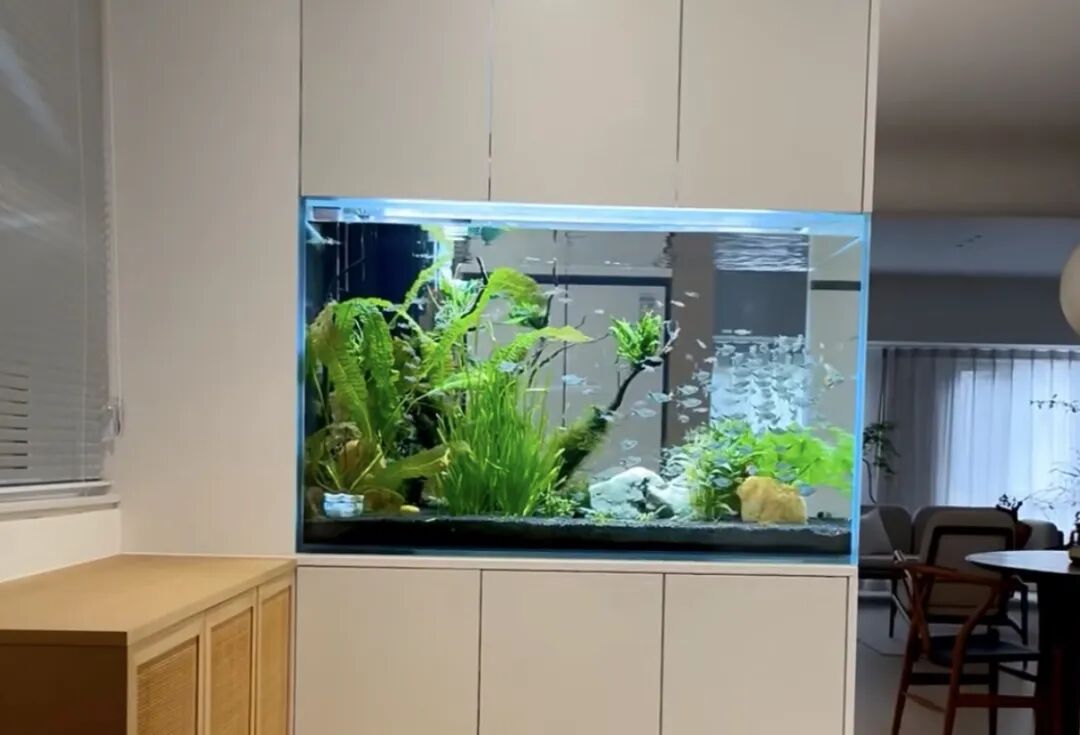
If you want to perfectly embed an aquarium into a cabinet, it looks beautiful, but when it comes to actual implementation, don’t just focus on aesthetics! There are several critical points that must be communicated clearly with your designer during the design phase; otherwise, it could lead to significant issues later. The main aspects are:
1. How to hide the filtration system? An aquarium is not just a decorative item; it needs to ‘function’! Where will the filter (whether it’s an internal bucket, external bucket, or bottom filter) be placed? How can it fit into the cabinet without affecting its operation? How much space should be reserved for it? How should the inlet and outlet pipes be routed to be both discreet and easy to maintain? If these are not planned in advance, you might regret it when you have to dismantle the cabinet for repairs later.
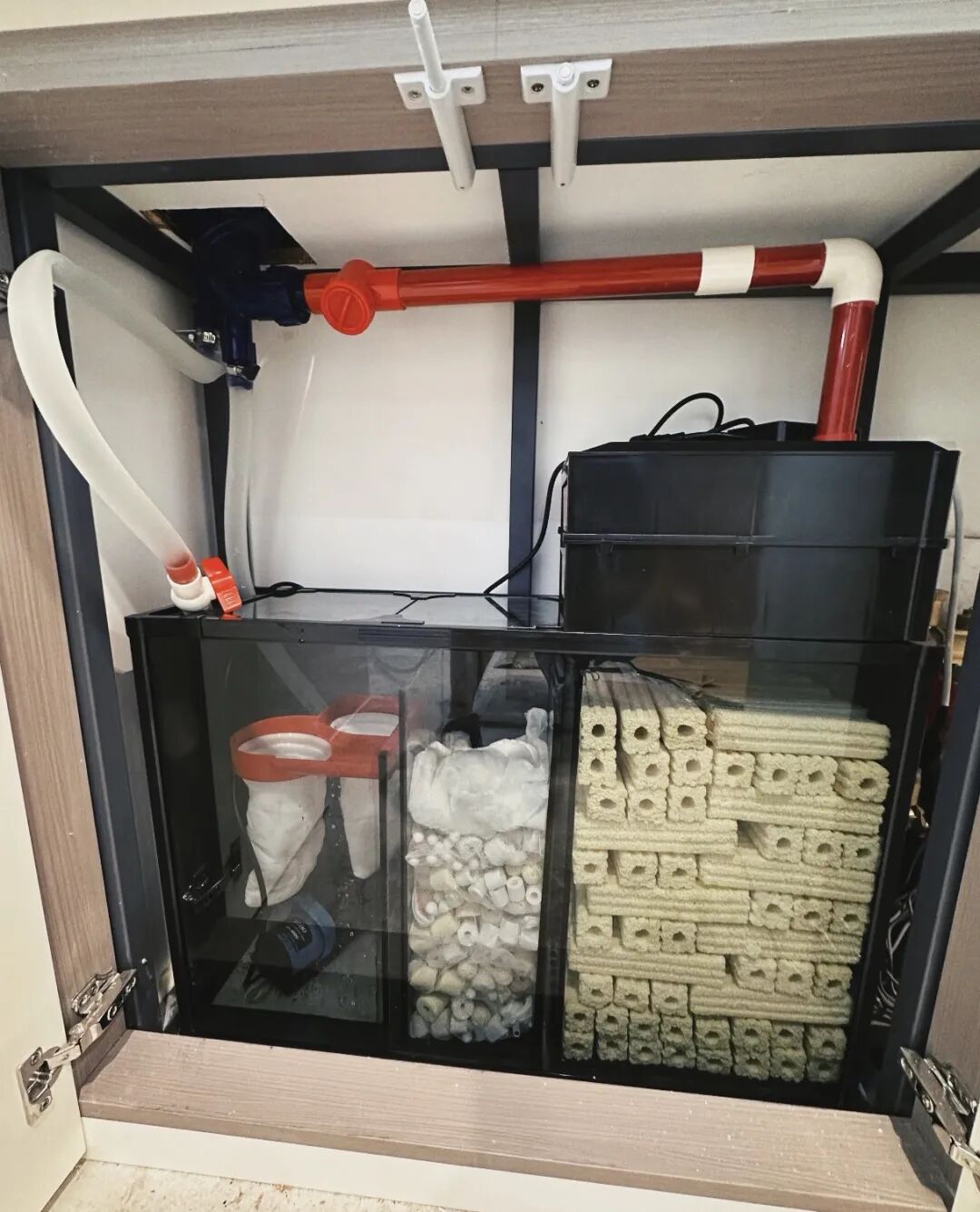
2. Is water change convenient? One of the most annoying tasks in fishkeeping is changing the water. When designing the cabinet, you must consider how to connect the water pipes (for both inflow and outflow). Is there a nearby water source (like a faucet) and a floor drain? If not, how far will the water pipe need to reach? Is there a convenient position in the cabinet for you to plug and unplug the water pipe? Don’t create a perfectly sealed cabinet that makes every water change feel like a battle.
3. How does the water circulate? The water pump and oxygen pump in the aquarium require electricity. Where will the power outlet be located? Is it sufficient? Is it easy to plug and unplug? Will the cabinet be too humid, leading to short circuits? It’s best to plan for waterproof and moisture-proof outlets in advance; safety comes first.
4. Is the cabinet itself durable enough? The environment around the aquarium is humid and wet, and ordinary cabinets will mold and deform in no time. It is essential to emphasize the use of waterproof and moisture-proof materials, such as specialized waterproof boards or stainless steel frames. Ideally, the interior should also have a waterproof coating, and the seams should be tightly sealed. Don’t let moisture ruin the cabinet or even affect the walls.
5. Safety! Safety! Safety! This is of utmost importance! The load-bearing structure must be absolutely reliable, and the designer must accurately calculate based on the total weight of the aquarium when filled with water (water + tank + substrate and decorations, etc.). Is the cabinet stable? Is the floor level? Don’t create a ‘tofu dregs project’ that could collapse one day, leaving you in despair. Additionally, electrical safety must be given special attention, as the risk of electrical hazards is greater in humid environments.
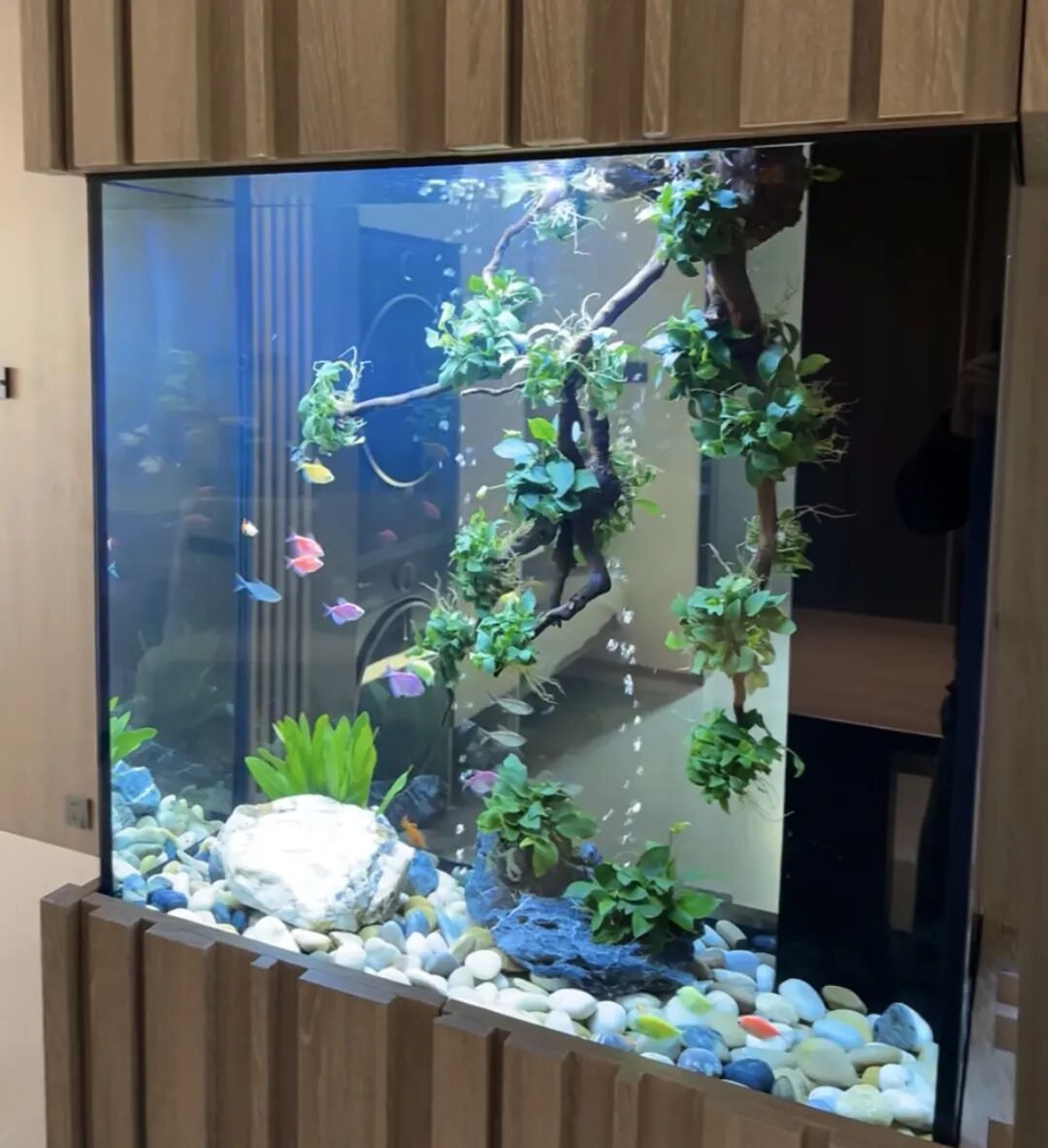
In summary, when customizing an embedded aquarium cabinet, don’t just focus on how ‘invisible’ or ‘high-end’ it looks when embedded. Consider how you will feed the fish, clean, change water, repair equipment, and ensure safety in your daily operations. These practical operational needs and safety hazards must be clearly communicated with the designer from the outset and included in the design drawings to create a beautiful, worry-free, and safe aquarium cabinet. Don’t let a beautiful aquarium become a ‘nightmare source’ in your home.
Friendly reminder: It’s best to provide your designer with the dimensions of the aquarium you plan to buy, the type of filtration, the power of the water pump, and other information in advance so that they can plan the space and water/electricity locations more accurately.