We are at a watershed moment in the development of smart homes. The past decade has been one of connectivity; the next decade will be one of perception and understanding.
Written by / Da Xiang Talks Smart
In my definition, a true smart home should not merely be about the convenience of remote switches, but rather a “smart living entity” that understands user health and resonates with user emotions. To achieve this vision, we must complete two major leaps: first, on a physical level, achieve an exponential increase in the number of sensors, allowing the home to possess “super-sensory”; second, on an interaction level, integrate emotions and culture, giving the home a “soul”.
As a “pioneer in health smart homes” with over twenty years of deep industry experience, I have always focused on the areas of smart home innovation, business models, and investment mergers and acquisitions. As the author of “Smart Homes: The Next Game for Giants” and an advocate for health smart homes, I believe that now is a critical window for companies to break free from homogenized competition and seize the high ground of the next generation of products.
01 Source of Perspective: Why “Tenfold Sensors”? A Profound Comparison with Automobiles
To understand the necessity of “tenfold sensors”, we can turn our attention to another highly intelligent mobile space—automobiles.
A typical modern family car is equipped with over 100 sensors. Each serves its purpose: tire pressure sensors ensure safety, oxygen sensors control emissions, radar and cameras enable assisted driving, accelerometers sense collisions, and even pressure sensors in the seats can detect the presence of occupants to optimize airbag deployment strategies. It is this vast, multidimensional real-time data that collectively constructs the safety, efficiency, and comfort of modern vehicles.
In contrast, the homes we currently live in, where we spend the most time each day, have a painfully poor “sensory”.
A typical so-called “smart home” usually has fewer than 10 sensors: a few door and window sensors, a motion sensor, a temperature and humidity sensor, and perhaps an air quality monitor. This rudimentary sensing system can only achieve the most basic security alarms and rough environmental adjustments, leaving it almost completely unaware of the occupants’ health status, emotional changes, and deep needs.
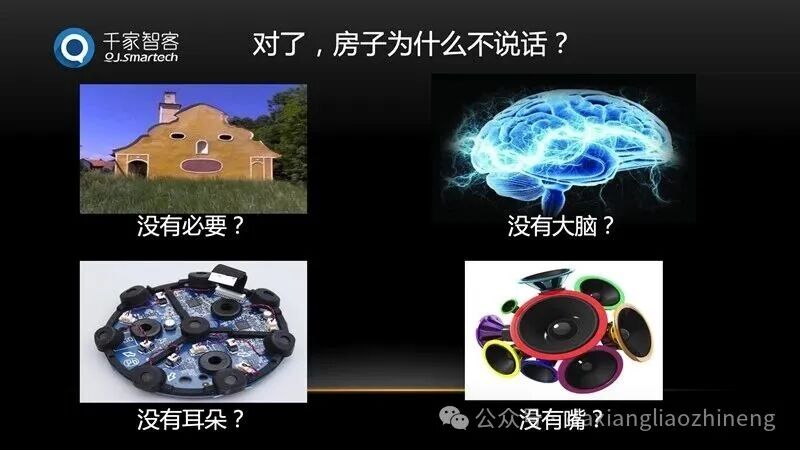
In the future, smart homes will not have sensors counted in “units”, but rather in “groups”, reaching thousands. They will be as ubiquitous and meticulous as the human neural network:
· On the environmental health level: monitoring PM0.3, formaldehyde, carbon dioxide, volatile organic compounds, light spectrum, noise spectrum, electromagnetic radiation, etc.
· On the human health level: non-intrusive monitoring of heart rate, respiratory rate, body movement, sleep stages, temperature changes, etc.
· On the safety and energy consumption level: monitoring water pipe leaks, abnormal current, device energy consumption, structural health, etc.
Only with the holographic data provided by these “tenfold sensors” can smart homes truly evolve from “passive control” to “active care”, providing a solid data foundation for healthy living.
02 Market Core: Millimeter-Wave Radar——The Golden Key to Unlocking Non-Intrusive Health Monitoring
Among various sensor technologies, millimeter-wave radar is becoming the core engine and a significant market opportunity for realizing the vision of “health smart homes”.
Compared to traditional sensors, millimeter-wave radar has three unique advantages:
1. High-precision micro-motion sensing: capable of penetrating clothing and thin blankets to accurately capture the micro-movements caused by the rise and fall of the human chest, thus calculating breathing and heart rate without the need for wearable devices.
2. Privacy protection: it does not collect optical images, only processes point cloud signals, perfectly avoiding the privacy leakage risks associated with cameras.
3. Strong environmental robustness: unaffected by light, temperature, humidity, and other environmental factors, it operates stably 24 hours a day.
These characteristics make millimeter-wave radar the best choice for continuous health monitoring in private spaces such as bedrooms and bathrooms.
The application scenarios are full of imagination:
· Home care for the elderly: can monitor in real-time if a solitary elderly person stays too long in the bathroom, falls in the bedroom, or experiences abnormal breathing or heart rate, and automatically alert children or community healthcare personnel. This is no longer a simple “moving or not moving”, but can determine “whether the state is normal”.
· Sleep quality analysis: without wearing a wristband, it can monitor the user’s sleep onset time, deep sleep/light sleep/REM cycles, nighttime body movements, and breathing pause events, and interact with air conditioning, fresh air, and fragrance devices to actively optimize the sleep environment.
· Preliminary inference of emotional state: by monitoring changes in breathing rate and heart rhythm, the system can preliminarily infer whether the user is in a tense, calm, or excited state, providing data support for subsequent emotional interactions.
It can be said that whoever first successfully applies millimeter-wave radar in products holds the key to unlocking the trillion-dollar market of health smart homes.
03 Cultural Empowerment:“Interactive Laboratory of Chinese Character Elements” and the Practice of Emotional Interaction
Once the home environment possesses the “super-sensory” capability to perceive health, the next question is how to interact with it in a natural, comfortable, and emotionally rich manner. This is precisely the original intention behind my establishment of the “Interactive Laboratory of Chinese Character Elements”.
The core mission of the laboratory is to inject the cultural genes accumulated over five thousand years of Chinese history into the interaction logic of modern smart homes, addressing the current interaction methods’ “coldness” and “cultural barriers”.

(1) Patent Applications and Practical Cases of Chinese Character Element Control
As an inventor, I have laid out patents in multiple directions, transforming the highly pictographic beauty and philosophical connotation of Chinese characters into intuitive interaction commands.
· Case 1: Air Conditioning Control (patent involves a control panel and method for air conditioning based on Chinese character elements)
o Implementation Example: On the air conditioning panel, we designed scenario buttons such as “warmth”, “refreshing”, and “sleep”. Clicking the “warmth” button automatically sets the air conditioning to 26℃ with a gentle breeze, simulating the warmth of spring; clicking the “sleep” button puts the system into sleep mode, dimming the lights, reducing the wind speed to the lowest, and slowly adjusting the temperature to the most suitable 24℃ for sleep. This is much more intuitive and elegant than having users manually set specific temperatures, wind speeds, and modes.
· Case 2: Lighting Control (patent involves a lighting scenario control system based on Chinese character elements)
o Implementation Example: On the lighting panel, we preset scenarios such as “joy”, “reading”, “rest”, and “meeting”. Pressing the “joy” button changes the living room lights to bright 4000K neutral light, with the highest color restoration, creating a pleasant atmosphere; pressing the “rest” button switches to 2700K warm yellow light, reducing brightness to 30%, helping family members relax. Each Chinese character encapsulates a complex set of optical parameters and a complete life scenario.
(2) Systematic Construction from Emotion Perception to Emotional Interaction
Furthermore, we are exploring how to enable the system not only to “understand Chinese characters”, but also to “understand emotions”.
This requires building a complete closed-loop system:
1. Perception: through millimeter-wave radar (breathing/heart rate), microphones (voice tone analysis), cameras (facial micro-expression analysis, requiring authorization and ensuring privacy), and other multimodal data, comprehensively judging the user’s current emotional state (such as anxiety, calmness, joy).
2. Understanding: the system understands the user’s deep needs based on emotional tags combined with context (e.g., late at night in the bedroom), such as “the user is anxious and needs help sleeping”.
3. Execution: the system automatically executes preset “emotional regulation” scenarios. For example, when it senses the user is anxious, it automatically plays calming music, adjusts the lighting to soothing blue tones, and releases sleep-inducing fragrances.
This “emotion perception and regulation system” has also undergone related patent applications. It marks the true beginning of smart homes transitioning from the “functional machine” era to the “smart machine” era.
Conclusion
“Tenfold sensors” are the physical foundation for smart homes to possess “super-sensory” capabilities, a necessary path towards health smart homes; while “emotional interaction and cultural integration” injects a “soul”, establishing deep user engagement and brand differentiation as core strategies.
This transformation requires companies to invest in research and innovation with unprecedented determination. It is not only a race of technology but also a test of the ability to deeply understand user needs. As I have always advocated, the future home will no longer be a cold architectural container, but a wise companion that understands health, has emotions, and can empathize.

(Author: Da Xiang Talks Smart)【Personal Profile】Xiang Zhonghong, known in the industry as “Da Xiang”, a pioneer in health smart homes, focusing on smart home innovation, business models, and investment mergers and acquisitions. Author of “Smart Homes: The Next Game for Giants”, and an advocate for health smart homes.