
Recently, the second reading class for education bureau directors in Quanzhou and the fifteenth reading class for principals were held. This reading class, themed “AI Empowering Educational Development,” gathered top experts in the field of artificial intelligence and frontline education specialists to jointly outline new paths for educational reform in the intelligent era of Quanzhou. This high-level intellectual feast not only brought about a collision of cutting-edge ideas but also anchored the practical coordinates for the digital transformation of education in Quanzhou.

Leading the Exploration of AI Educational Pathways



In recent years, Quanzhou has placed great emphasis on the construction of AI-empowered education. Currently, our city has established the “Quanzhou Online Integrated Education Platform,” achieving “one login, multiple networks available,” breaking the data island problem, with 559,900 teachers, students, and parents registered, sharing 15 million educational resources. It is reported that the “5G + Special Delivery Classroom” has conducted a total of 31,000 classes, allowing 1,789,000 students to share quality teaching across urban and rural divides; 126 educational intelligent agents cover all educational stages, promoting a qualitative change in teaching from “experience-driven” to “digitally empowered.”
“Experiments that should allow children to do hands-on work in class cannot be replaced by animations, and issues that should be discussed face-to-face cannot rely solely on online chats.” At the opening ceremony, Liu Shufang, Secretary of the Quanzhou Municipal Education Work Committee and Director of the Education Bureau, stated that digitalization in education is not merely a simple addition of technology, but rather a search for balance in maintaining integrity and innovation. In the face of the rapidly developing new landscape of artificial intelligence, she hopes that schools will anchor their educational direction with the assistance of AI technology, construct a layered and progressive AI general education system; deepen teacher training by co-establishing a national-level training base with the Ministry of Education’s Educational Technology and Resource Development Center to enhance teachers’ digital literacy; adhere to application supremacy, promote STEM education practice platforms and the “Quanzhou Family Education” mobile platform; and maintain a bottom-line mindset, building a healthy ecosystem in data security and humanistic care.
At the event, expert lectures were exciting and varied. Professor Li Yushun from Beijing Normal University presented on “AI Empowering High-Quality Development of Classroom Teaching,” vividly demonstrating how AI technology promotes students’ deep learning and interdisciplinary integration, profoundly explaining the core value of technology empowering high-quality classroom teaching, providing a clear practical framework for the managers present. Director Yang Jinyong from the Ministry of Education’s Resource Center interpreted the “Digital Empowerment of Teacher Development Action” policy in real-time, emphasizing that “teachers’ digital literacy is not an option, but a compulsory course,” suggesting that Quanzhou rely on local practices to create a “digital model” for teacher development.
Dr. Da Ting from Beijing Normal University focused on the application of educational large models, sharing empirical research on “AIGC Empowering Human-Machine Collaborative Teaching.” She showcased through cases how frontline teachers can effectively use AI tools to simplify lesson preparation processes from multiple dimensions, significantly improving efficiency and ensuring the quality of lesson preparation. Pan Jiang, Section Chief of the Education Bureau of Hangzhou’s Shangcheng District, brought the experience of “Digital Intelligence Governance” from Hangzhou, whose “vertical integration and horizontal collaboration” educational data system provides valuable references for Quanzhou to solve the problem of educational inequality between urban and rural areas.
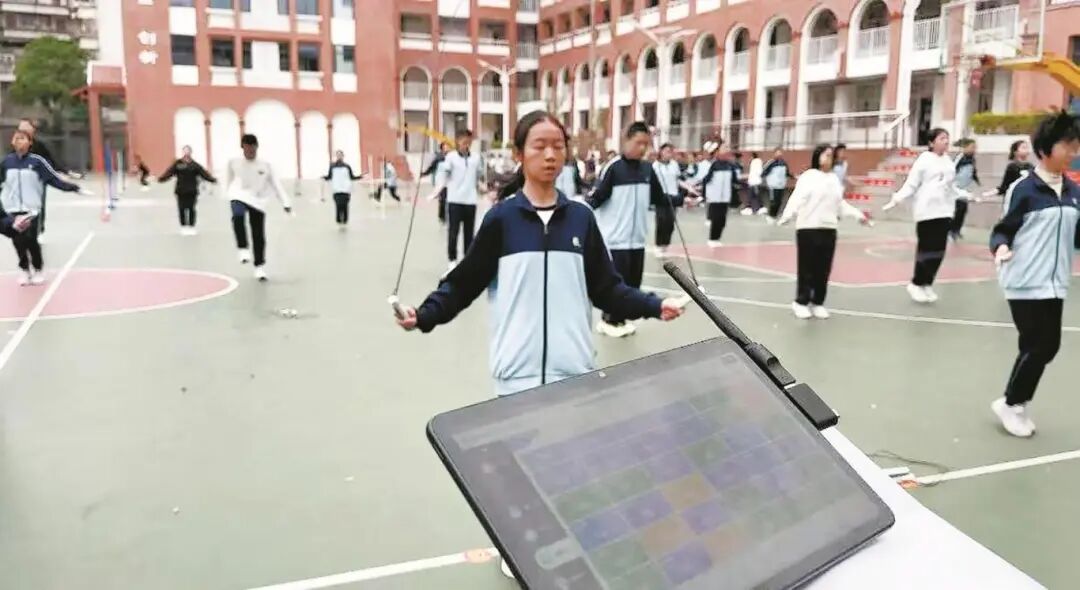
AI Intelligent Testing (School Provided)

Inter-School Practice ShowcasingRevitalizing Intelligent Classrooms



As a core part of the reading class, the inter-school experience exchange session became a “showcase of achievements” for AI education practices in Quanzhou. The city’s education departments and primary and secondary schools vividly demonstrated the vibrant picture of the deep integration of digital intelligence technology with education and teaching through their unique practical paths.
In recent years, the Dehua County Education Bureau has used artificial intelligence as an engine to continuously promote integrated construction, forming a distinctive smart education model. The area has taken the lead in building a smart education platform, achieving full coverage of “5G + Special Delivery Classroom”; through the issuance of special bonds across the region and the establishment of smart campus projects throughout the system, it has realized full-scene empowerment of “five educations in parallel”; at the same time, it has established “smart resources” and “smart training” platforms, activating classrooms to build smart classrooms and introducing AI tools, leading to multiple research projects winning awards.
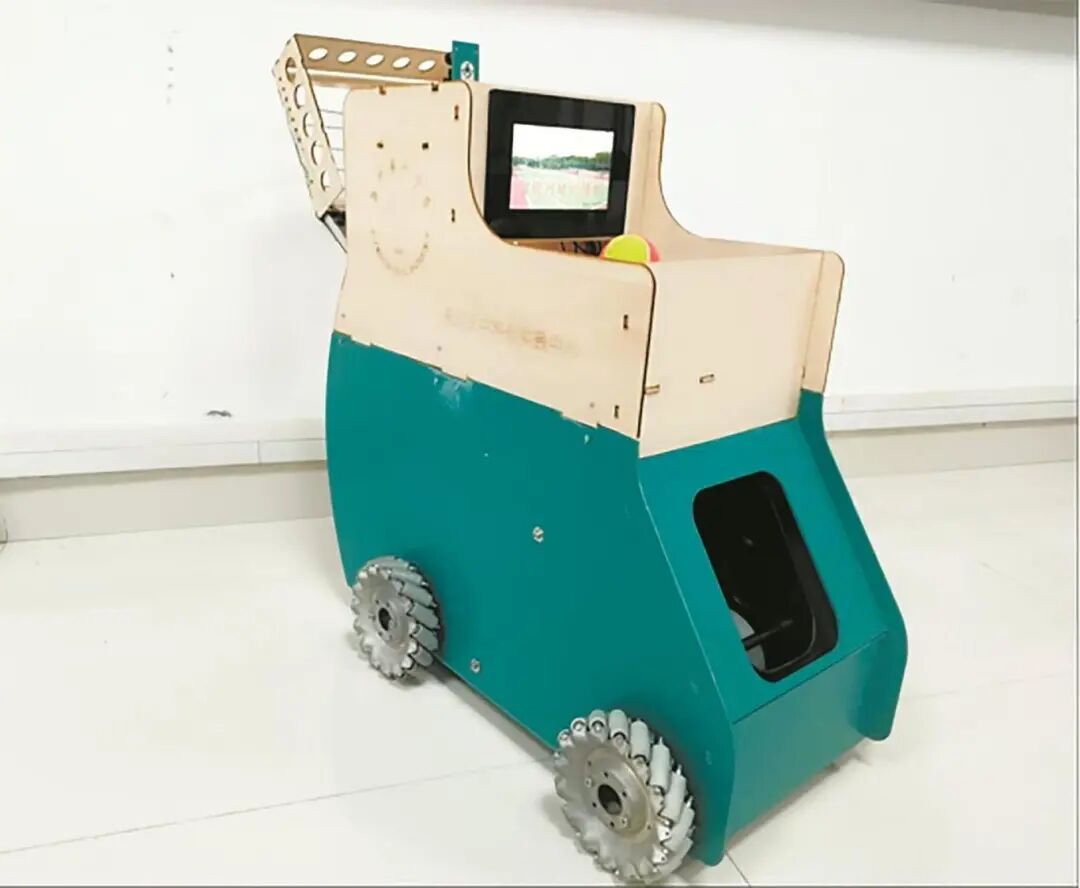
Intelligent Tennis Serving Machine (School Provided)
Quanzhou No. 5 Middle School’s “Trinity” model has set a benchmark for the transformation of prestigious schools. The school’s independently developed “Smart Campus Central Platform” integrates real-time data from nine categories, including academic management and teaching behavior, constructing a closed-loop system of “data collection – intelligent analysis – precise intervention.” By integrating large model services such as DeepSeek, the “AI Quanzhou No. 5 Smart Learning Cloud Platform” enables teachers to prepare lessons more efficiently and correct assignments more time-effectively. Notably, the school has built a tiered AI literacy system of “perception – understanding – application”: developing 12 cutting-edge courses such as “Intelligent Robotics” and “Introduction to Arduino Programming,” co-establishing innovation laboratories with Xiamen University and Huaqiao University, and inviting five academicians and 37 university professors to give technology lectures. In 2024, the school expects a 37% year-on-year increase in provincial-level awards for five major subject competitions, and a significant improvement in the problem-solving accuracy rate in informatics competitions, confirming the significant enhancement of educational quality through digital intelligence empowerment.
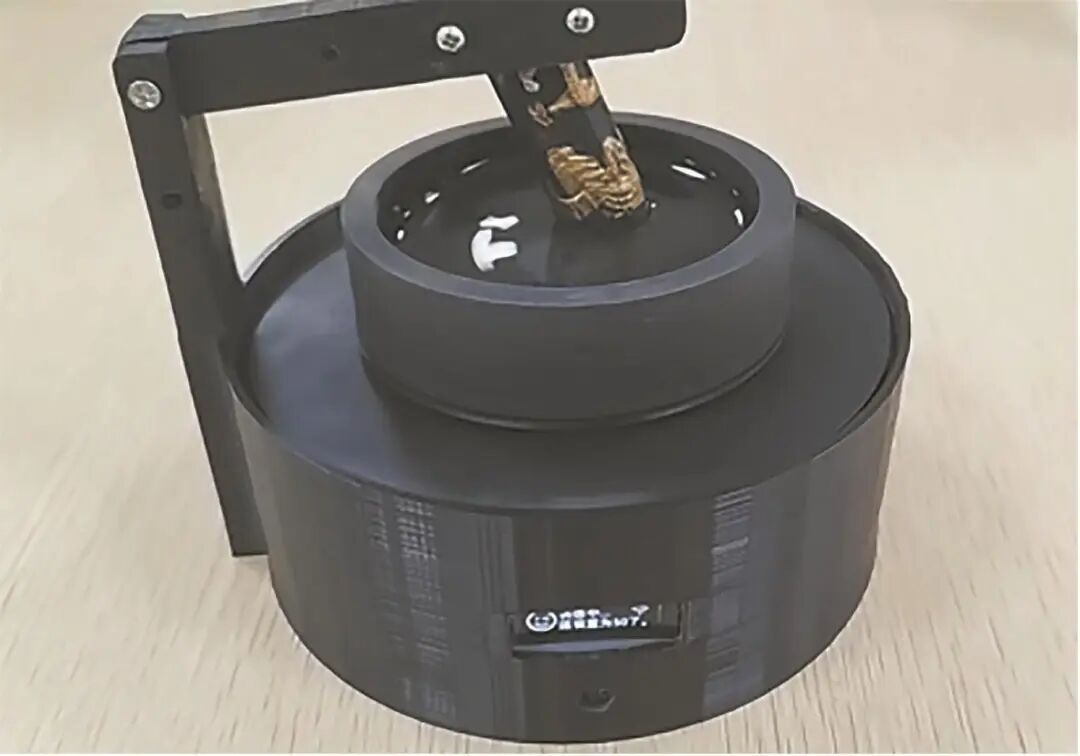
AI Intelligent Ink-Mixing Machine (Quanzhou No. 5 Middle School Provided)
As a century-old school, Quanzhou No. 6 Middle School has achieved an intelligent renewal of traditional education through the “1+2+N” system. The “1” school-level smart education central platform integrates core functions such as learning situation analysis and resource push; the “2” types of intelligent systems cover pre-class preview and post-class expansion; in the “N” innovative scenarios, 118 educational intelligent agents showcase their capabilities—AR situational dialogues bring English classes to life, and intelligent assignment analysis systems provide precise tutoring. The school, in conjunction with the “5G + Special Delivery Classroom” technology, shares 68 intelligent agent modules with paired schools, continuously increasing the output of quality lesson examples.
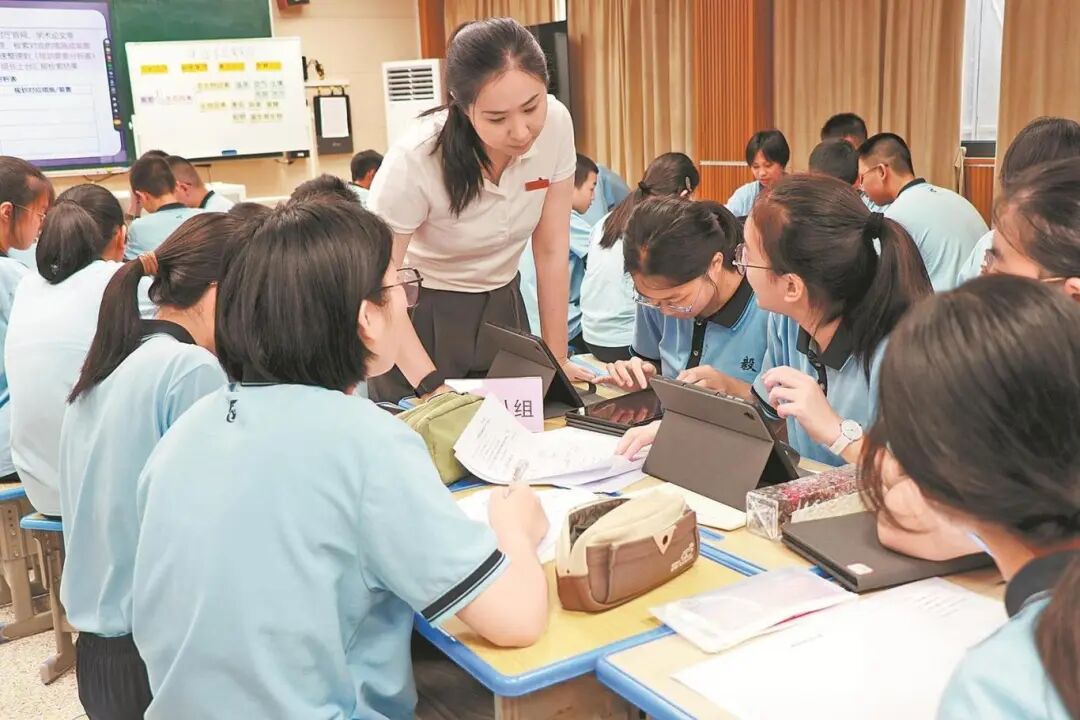
AI Empowered Collaborative Learning Model in Biology (Quanzhou No. 6 Middle School Provided)
Jinjiang Fourth Experimental Primary School relies on a locally built computing power platform to achieve deep implementation in four major scenarios: precise learning situation diagnosis, AI research assistant, AI class companions, and smart home-school collaboration, innovatively integrating the school-based knowledge base with AI interactive intelligent agents to create campus-specific “digital teachers” and “AI companions,” enhancing the level of personalized and intelligent education.
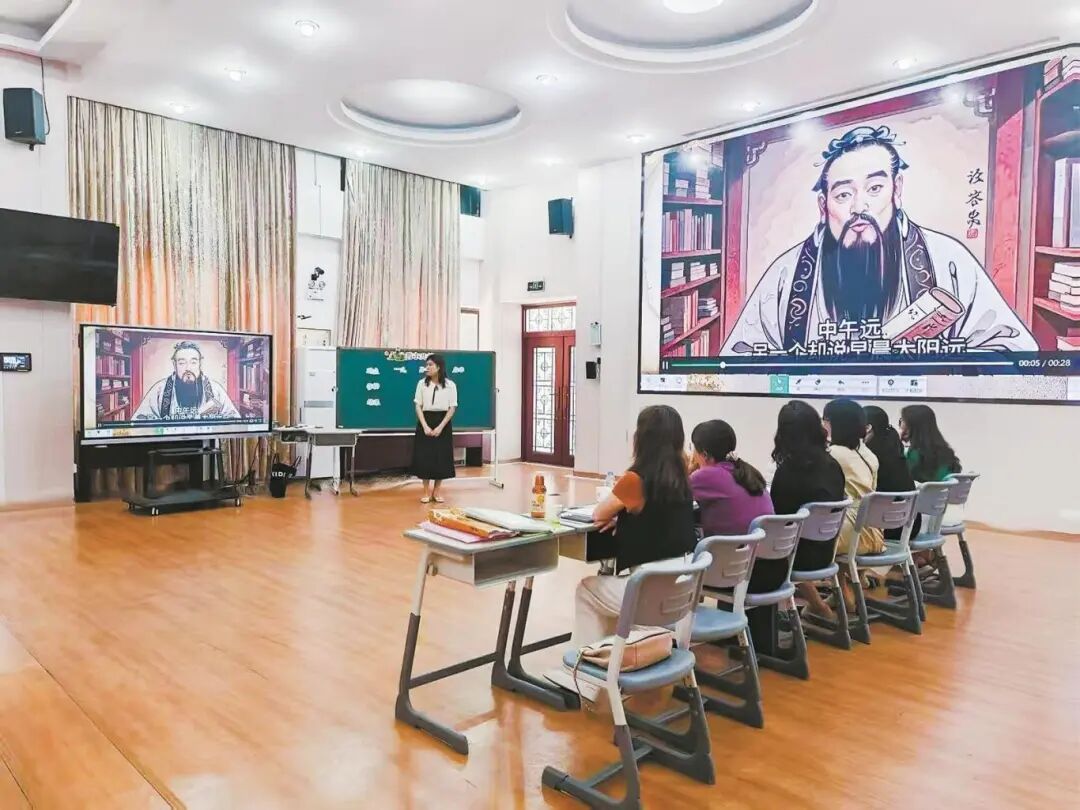
Teachers use digital Confucius to dialogue in teaching, vividly restoring historical backgrounds to help students quickly understand the context of the text. (Jinjiang Fourth Experimental Primary School Provided)

Voices of Students ResonatingForming Consensus on Nurturing Virtuous Education

The two-day reading class was not only a transmission of concepts and experiences but also sparked deep reflections among educational managers on the “essence of education in the AI era.” From directors to principals, from researchers to frontline teachers, a collision of ideas about “technology and education” resonated throughout the Quanzhou education community.
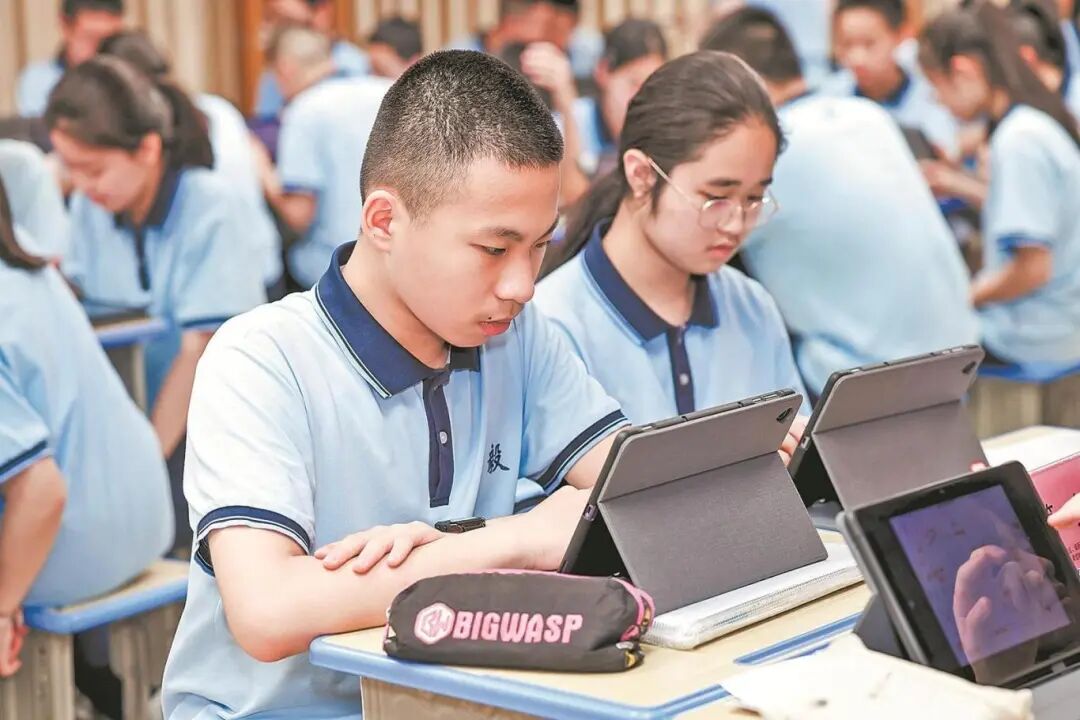
Smart Classroom (School Provided)
“Principals must be the operators of digital transformation, not bystanders,” said Su Junxian, Vice Principal of the Nan’an Teacher Training School, emphasizing that in promoting AI-empowered teaching supply, schools must adhere to the original intention of nurturing students, focusing on cultivating students’ abilities to ask and solve problems, and not allowing technology to replace interpersonal communication and basic skill development. On one hand, intelligent analysis systems should assist teachers in precise lesson preparation, while on the other hand, the thinking collision in collective lesson preparation should be preserved.
According to Pan Yiping, Principal of Quanzhou Jin Guang Primary School, technology should serve as a carrier for cultural inheritance, rather than a cold tool. As a principal, one must embrace technological change with an open mindset, becoming the operator of educational digitalization; yet, one must also uphold the essence of education, ensuring that AI always serves the core goal of “cultivating well-rounded individuals.” She will use this training as a starting point to plan comprehensively, take small steps quickly, and actively explore the implementation paths of AI in classroom teaching, moral education management, and home-school collaboration while balancing technology and humanity.
“The reading class not only allowed me to systematically understand the cutting-edge developments and practical paths of artificial intelligence in the field of education but also clearly touched upon its unique application value in preschool education scenarios,” said Lai Yiyi, Principal of Shuangyang Central Kindergarten in Luojiang District. In the next step, the school will focus on the AI large model “Inspiration Library” and “Auxiliary Tools” to help teachers design activity plans that are both educational and engaging, thereby better promoting each child’s continuous development based on respecting their subjectivity. Chen Jianfeng, Principal of Hui’an Wenbi Middle School, also stated that in the future, the school will explore the construction of an “AI + Layered Teaching” model, using intelligent analysis technology to accurately identify students’ learning situations and optimize teaching design. At the same time, they will attempt to incorporate AI ethics and algorithmic thinking into the school-based curriculum system to enhance the effectiveness of smart campus construction.
From the cutting-edge insights of experts and scholars to the practical explorations of prestigious schools, and the deep reflections of educational managers, the reading class outlines a clear blueprint for AI education in Quanzhou. Educators in Quanzhou are embodying the spirit of “dare to win” as they seek balance between technological innovation and the essence of nurturing, allowing artificial intelligence to truly become a powerful lever for promoting educational equity and quality improvement, injecting continuous digital intelligence power into the construction of a strong educational city.
Recommended Reading
●Dehua Open University 2025 Autumn “Open Education” Undergraduate and Associate Degree Enrollment Guidelines
● Come and Join! The Third “Beautiful Campus” Photography Competition in Dehua County is Here
Source丨Quanzhou Evening News

Light Up and
and