 First, let’s define the concept of an “ordinary FPGA engineer“:
Their core job is implementation, not definition. That is, they can complete a predefined functional module or subsystem with high quality, but are usually not responsible for the overall system architecture, cutting-edge technology research, or final chip selection decisions.
Skill Set: Proficient in Verilog/VHDL, familiar with the FPGA development process (simulation, synthesis, layout, routing, debugging), and able to use mainstream tools like Vivado/Quartus. They should have some debugging capabilities (able to use ChipScope/SignalTap).
Ability Level: They can solve 90% of common technical problems, but when faced with that 10% of extreme performance bottlenecks, complex cross-clock domain issues, or entirely new technical fields, they may need to rely on senior experts or team collaboration.
Work Content: They are the “main force” driven by projects, serving as the core execution power of the company’s R&D projects. Tasks usually stem from project requirements, such as “implementing this video interface” or “completing the processing of that communication protocol.”
Their focus is on ensuring functional correctness, timing closure, and resource compliance. They are key figures in “problem-solving,” but not necessarily the source of “new solutions.”


*Scan the code to add the teacher and learn about career options
This article will discuss the career development and income limits of an “ordinary FPGA” from the perspective of an average person, for reference only.
As mentioned earlier, an ordinary FPGA engineer has a solid foundation and can complete assigned tasks. However, they may not be the kind of genius who can independently create an entirely new field. Their career path generally follows a standard promotion trajectory without any special “fortuitous encounters.” For such individuals, their career ceiling is typically as a “technical expert” or “team leader.”
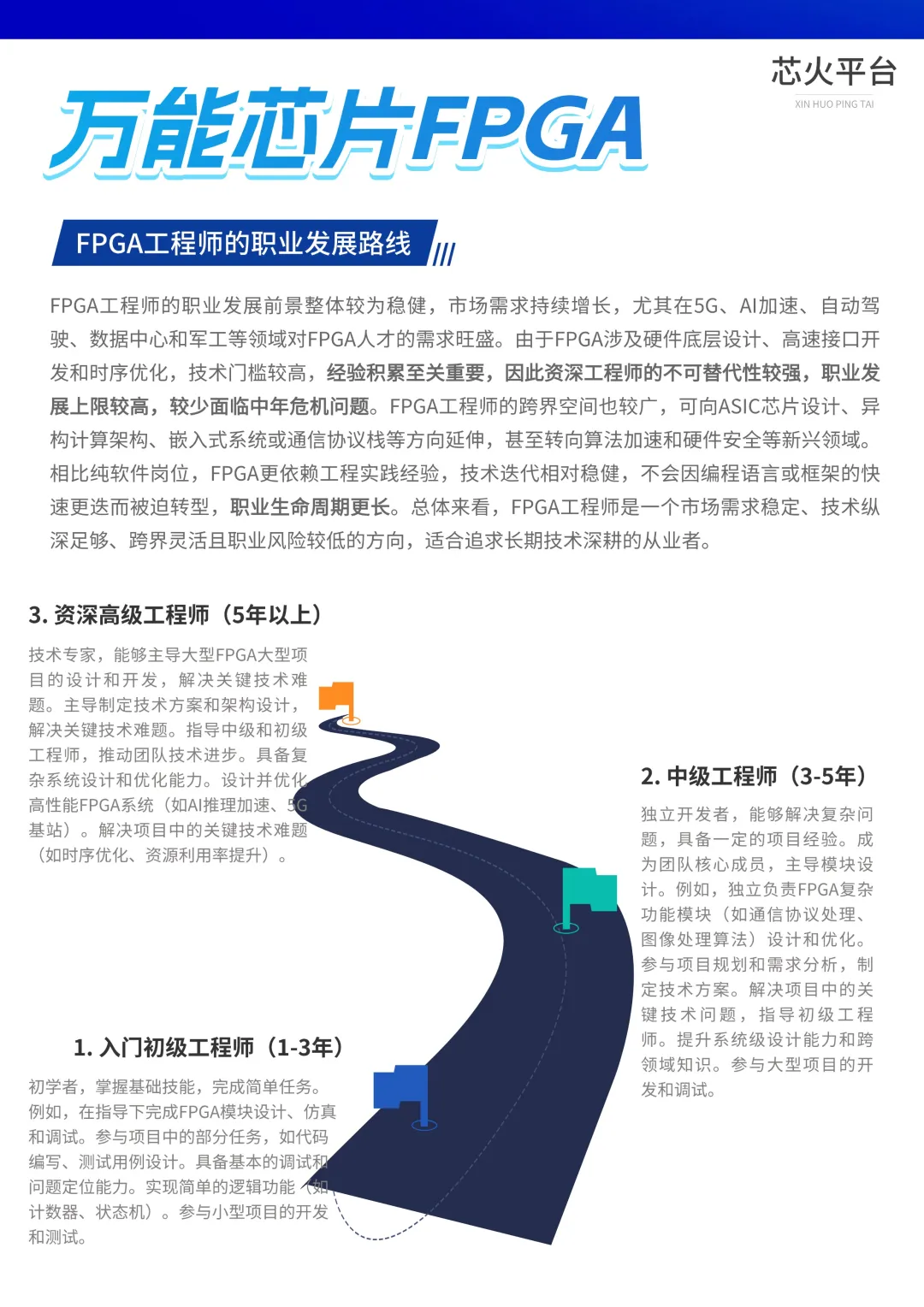
1. Development Limits (Position and Ability)
Junior Stage (0-3 years): “Screw-tightening” Engineer
Work Content: Mainly engaged in specific, module-level tasks. For example, writing a specific interface (like PCIe, DDR controller) or implementing an algorithm module. The focus is on understanding requirements and completing tasks.
Ability Requirements: Proficient in using Verilog/VHDL, familiar with simulation tools, and able to debug basic issues.
Intermediate Stage (3-8 years): “Independent” Engineer
Work Content: Can be responsible for a complete subsystem. For example, independently completing all FPGA logic design for an image processing board. They begin to consider more complex issues such as system architecture, timing closure, and resource balancing.
Ability Requirements: In addition to coding, they need to understand the system. They should know how to partition modules most reasonably, how to ensure timing is acceptable, and how to collaborate with software engineers.
Senior Stage/Ceiling (8+ years): “Solution-defining” Expert or “Team-leading” Leader
Path One: Technical Expert
Position: Senior Engineer, Chief Engineer, Architect.
Work Content: No longer writing a lot of code themselves, but rather formulating technical plans for new products, selecting chips, and solving the most challenging technical problems (such as timing issues in high-speed designs). They are the technical anchor in the team.
Path Two: Team Leader
Position: Project Manager, Technical Manager, Team Leader.
Work Content: Responsible for task breakdown, mentoring newcomers, project planning, negotiating with other departments, and ensuring timely project delivery. Their focus shifts from “doing work” to “managing people and tasks.”
Why is this the ceiling?
Because going further, such as becoming a company CTO or top scientist, requires strong technical foresight, business acumen, networking, and opportunities, which exceeds the scope of an “ordinary” engineer. For most ordinary individuals, being able to secure a position as an “expert” or “small leader” in their career is already a significant success.
2. Income Limits (Salary)
Income is closely related to the city and industry you are in, so we will discuss a general range (based on the market around 2024).
Junior Stage: Annual salary is approximately 150,000 – 300,000 RMB.
In first and second-tier cities, fresh graduates typically earn around 150,000 – 200,000. With 2-3 years of experience, they can reach 250,000 – 300,000.
Intermediate Stage: Annual salary is approximately 300,000 – 600,000 RMB.
This is the range that most ordinary engineers can strive to achieve. With solid technical skills and the ability to work independently, earning 400,000 – 500,000 in good industries (such as communications, chips, and automotive) is quite common.
Senior Stage/Ceiling: Annual salary is approximately 600,000 – 1,000,000+ RMB.
Technical experts: In core chip companies or top manufacturers, senior architects can earn 800,000 – 1,000,000.
Team leaders: With added management responsibilities, total compensation (salary + bonuses + stock) exceeding 1,000,000 is also possible.
Consultation on career entry issues–Job seeking–Understanding training coursesWelcome to scan the code for more information▽

*Scan the code to add the teacher and learn about job opportunities in large companies
Career Development in FPGA
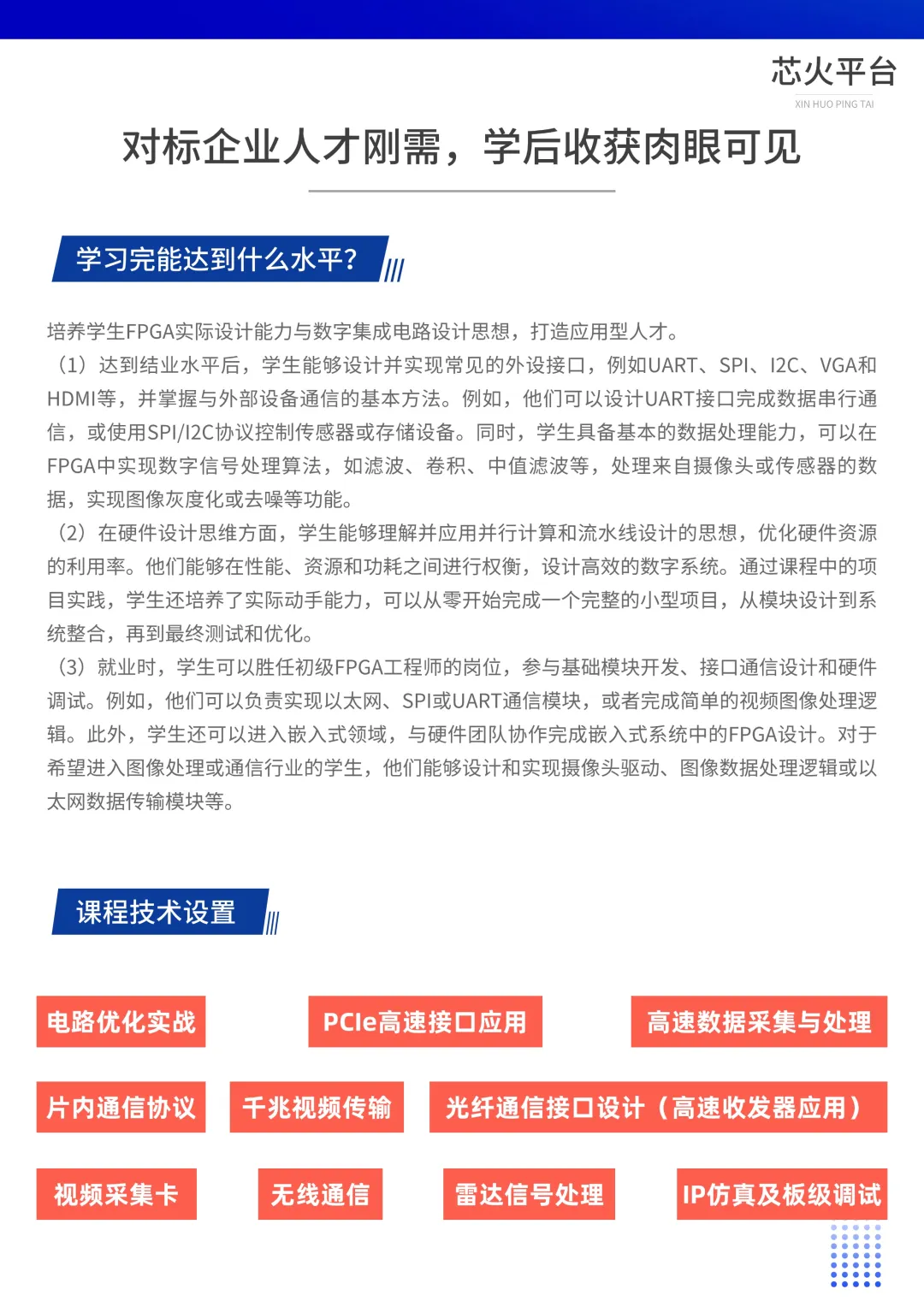
Education should be tailored to maximize individual learning potential. How should we choose the right direction for ourselves? Based on students’ personalized needs for advanced learning, the Chip Fire platform has developed different project enhancement plans.
[Target Audience]☑ Beginners who want to take a shortcut☑ Self-learners who always hit bugs☑ Professionals needing systematic improvement
Click the image below to jump to the page for course details
 Note: Some of the content above is sourced from the internet. If there is any infringement, please contact us for removal.
 Click “Read the original text” for 1v1 career guidance#FPGA #FPGA Chips #Digital Integrated Circuits #Logic Chips #FPGA Engineer