
In the previous article, we discussed the “competition among heroes” in the RISC-V landscape, which seems quite lively, as if RISC-V is about to “unify the world.” However, just like the glamorous front stage of a star, there are troubles behind the scenes. RISC-V is currently burdened with three major issues: ecological fragmentation, hidden patent risks, and a shortage of talent.
If these three “pits” are not filled, it will be difficult to compete with x86/ARM, let alone maintain the current market position. For example, an AI startup developed a program for a certain RISC-V chip, but it crashed when run on another RISC-V chip; another manufacturer wants to create RISC-V automotive chips but is afraid to proceed due to potential patent risks; and finding a suitable RISC-V architect is challenging even with high salaries. Today, we will explore how difficult it is to fill these “pits” and what “filling strategies” exist in the industry.
PART.01 Ecological Fragmentation: From “Customization” to “Incompatible Dialects”
The “customization” of RISC-V was originally a great advantage—companies can add extended instructions as needed, just like installing exclusive apps on a smartphone. But the problem arises: you add your “Sichuan dialect instructions,” and I add my “Cantonese dialect instructions,” resulting in programs that “cannot understand dialects” and fail to run on different manufacturers’ RISC-V chips. This is the “ecological fragmentation,” which has become the most troublesome issue for RISC-V.
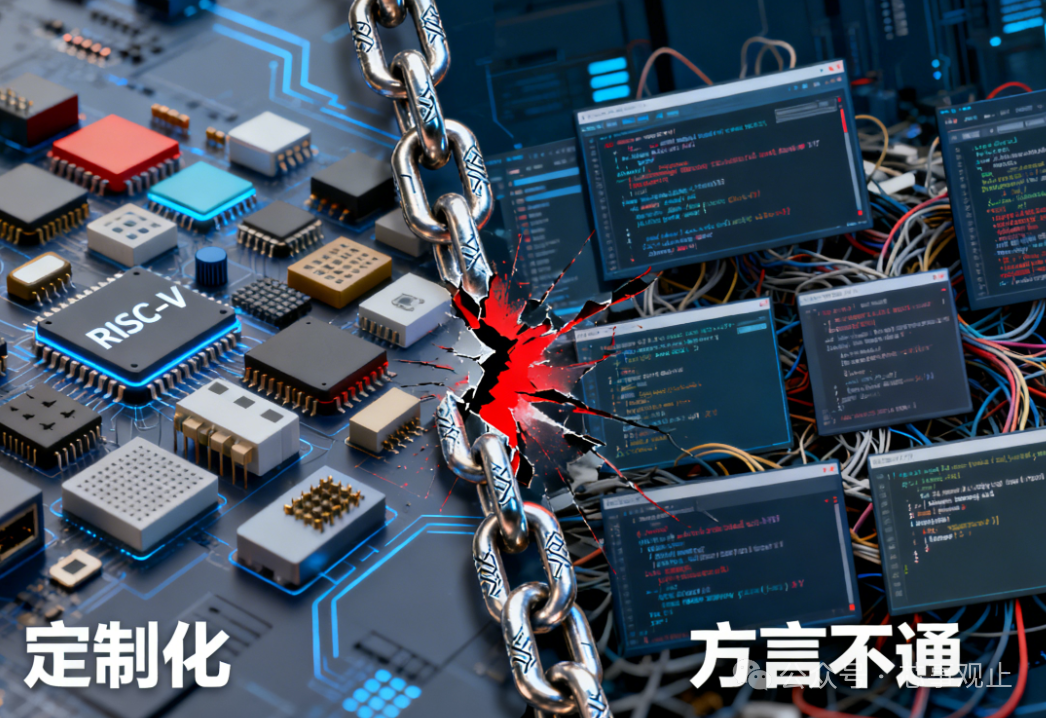 Fragmentation “Pit”: Increased Adaptation Costs for Enterprises
Let’s consider a practical example: a company that makes smart cameras wants to create a product that supports AI facial recognition and chooses two RISC-V chip manufacturers:
💡 Using Chip A (with “self-developed AI extension”), the facial recognition program runs smoothly;
💡 Switching to Chip B (with “standard V vector extension”), the program directly reports an error, because Chip B does not recognize Chip A’s “self-developed instructions”;
Ultimately, engineers may need to write separate programs for both chips, significantly increasing development time and costs.
There’s an even bigger problem: industrial equipment is expected to last 10 years. If the RISC-V chip manufacturer chosen goes out of business, switching to another manufacturer’s chip may require rewriting the original program—this could result in substantial losses for the company.
Why is this happening?Because the flexibility of RISC-V is like a double-edged sword: manufacturers can freely add extended instructions, but without a unified standard, compatibility issues are likely to arise.
Breaking the Deadlock: Promoting Standardization and Establishing Compatibility Systems
The RISC-V International Foundation is actively promoting solutions aimed at establishing a unified standard system:
✅Standardization of Core Extensions: For commonly used functions such as vector extensions and encryption extensions, manufacturers are encouraged to implement them according to unified standards to improve compatibility;
✅Establishing Certification Mechanisms: Through compatibility testing and certification programs, help ensure interoperability between different implementations;
✅Promoting Ecological Collaboration: Encourage manufacturers to consider compatibility needs when adding custom extensions, promoting a more open ecological construction.
These measures are beginning to show results: the industry has made progress in improving the compatibility of RISC-V chips, helping manufacturers reduce development costs.
PART.02 Patent Risks: Open Source is Not a “Get Out of Jail Free” Card
Many people believe that “RISC-V is open source, so there are no patent issues,” but this is a major misconception—what is open source is the “code and architectural design,” not the “patents.” It’s like you open-sourced a recipe, but if the recipe uses someone else’s “exclusive seasoning formula” (patent), you still need to pay attention to intellectual property issues.
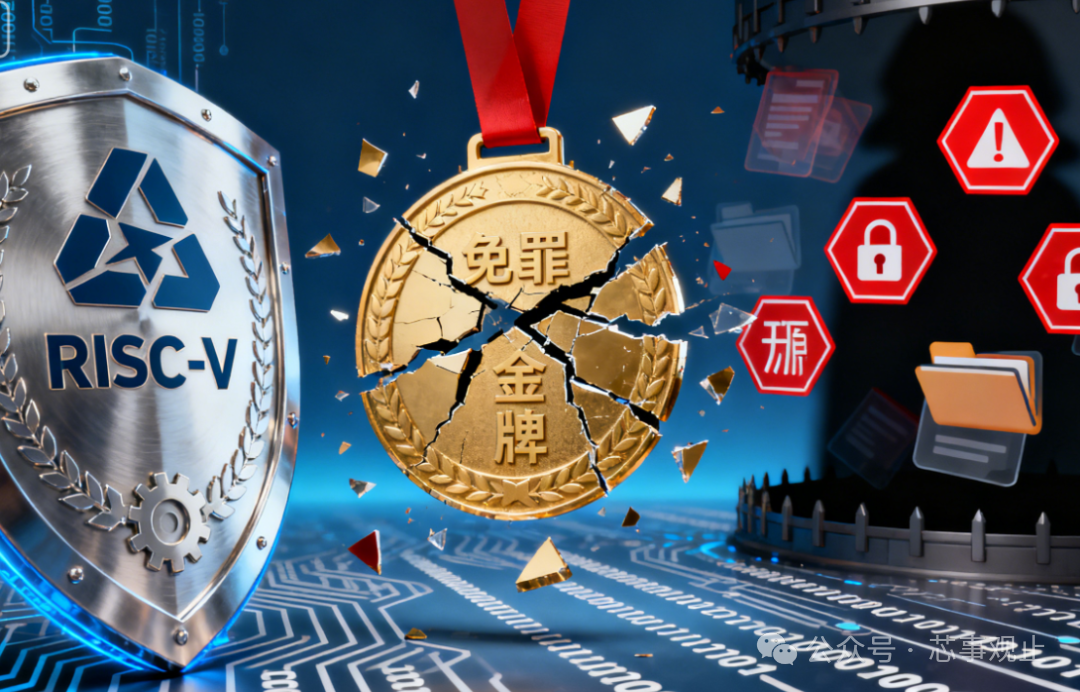 Patent “Landmines”: Intellectual Property Risks Cannot Be Ignored
In the development of the RISC-V ecosystem, patent issues are indeed a challenge that needs attention. Although the RISC-V base instruction set is open source, specific implementations and extensions may involve patented technologies.
Companies, especially small and medium-sized enterprises, may face difficulties in patent investigation capabilities and limited professional resources when developing RISC-V products, requiring extra caution regarding intellectual property.
Breaking the Deadlock: Establishing Patent Cooperation Mechanisms to Enhance Risk Response Capabilities
The industry is exploring various ways to address patent challenges:
✅Building a Patent Sharing Ecosystem: By establishing patent cooperation mechanisms, help companies, especially small and medium-sized enterprises, reduce patent risks;
✅Promoting Cross-Licensing: Encourage companies to promote technology sharing and innovation through patent cross-licensing;
✅Providing Professional Support: Develop professional patent analysis and service capabilities to help companies better avoid patent risks.
These measures help build a healthier intellectual property ecosystem, supporting the sustainable development of the RISC-V industry.
PART.03 Talent Shortage: Engineers Familiar with RISC-V are “Hard to Find”
Currently, the RISC-V industry is facing a serious talent shortage—engineers familiar with RISC-V are in high demand, and many companies find it difficult to recruit suitable talent even with generous offers.
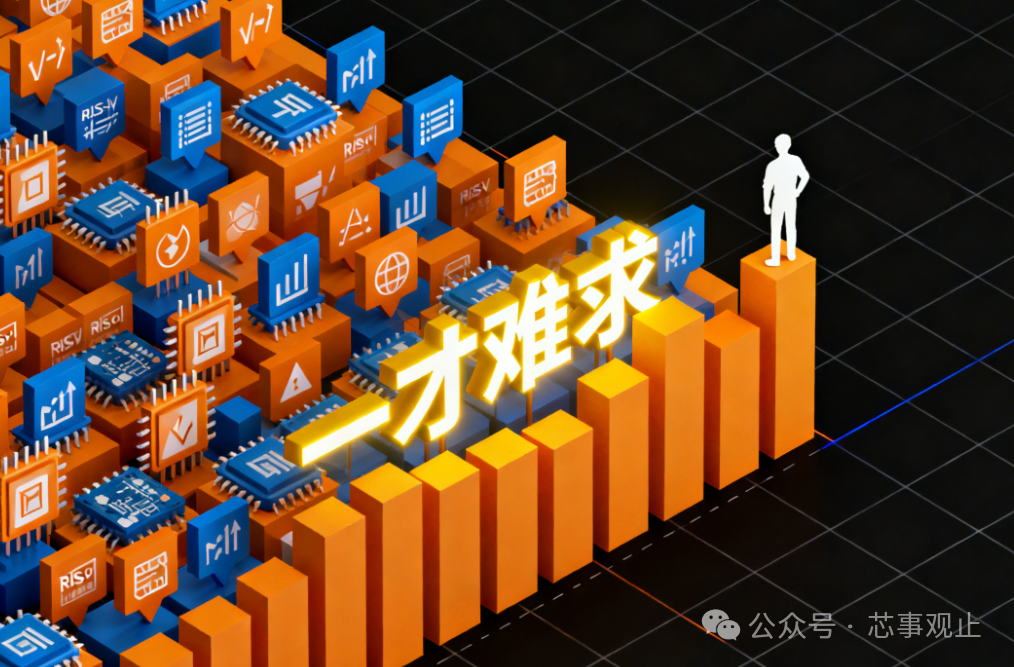 Talent “Panic”: Supply-Demand Imbalance, Scarcity of Professionals
As a relatively new architecture, RISC-V does face some challenges in talent cultivation:
💡 University Courses Lag Behind: Compared to traditional architectures, there are relatively few universities offering specialized RISC-V courses;
💡Practical Experience is Lacking: The number of engineers with extensive RISC-V practical experience is limited;
💡High Professional Knowledge Requirements: Excellent RISC-V engineers need to understand both architectural design and software adaptation, which requires a long training period.
Breaking the Deadlock: Collaborative Efforts to Accelerate Talent Development
Currently, the industry and education sectors are working together to address the talent issue:
✅Universities Strengthening Course Development: More and more universities are beginning to offer RISC-V related courses to cultivate students’ understanding and design capabilities for this architecture;
✅Companies Promoting Practical Training: Through certification systems, internship bases, and other means, provide practical opportunities for students and engineers;
✅Industry Ecosystem Collaboration: Leading companies promote knowledge sharing and talent development through open-source projects and technical communities.
These efforts are gradually showing results, and the RISC-V talent ecosystem is improving, providing better talent support for enterprise development.
Summary:Growing Pains are Not Scary, What’s Scary is Not Solving Them
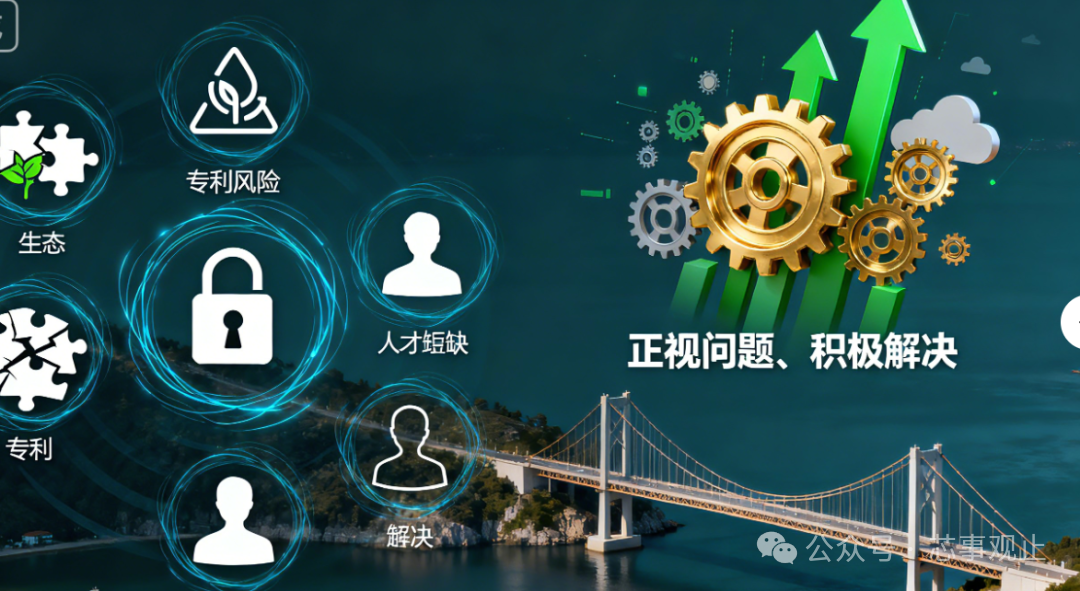
As we discuss this, you will find that these three “pits” of RISC-V are actually “growing pains”—just like the development process of any new technology, various challenges will always arise.
Looking at it now, each problem has a response direction:the fragmentation issue is improving through standardization efforts, patent risks are being mitigated through cooperation mechanisms, and talent shortages are being alleviated through educational systems.Although these issues cannot be completely resolved immediately, at least they are moving in a positive direction.
However, we must also be clear: these problems require time to resolve, ecological construction requires continuous investment, and talent cultivation requires long-term persistence. But as long as the industry remains focused and continues to work hard, these challenges will eventually be overcome—after all, no technology rises without challenges, and the key is to keep moving forward while solving problems.