
Jicui Network · Love Jicui APP, available for download in major mainstream app stores

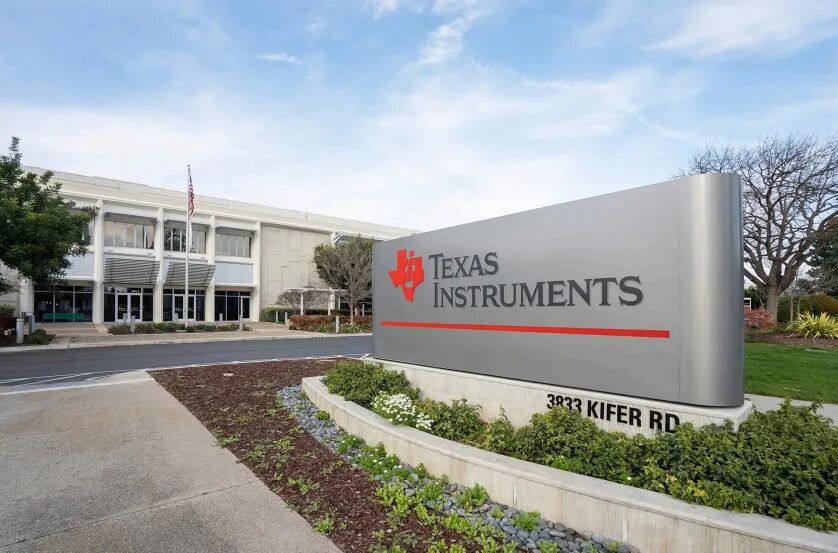
Recently, Texas Instruments (TI) announced an investment of over $60 billion (approximately 430.8 billion RMB) in the construction of seven wafer fabs in Texas and Utah, marking the largest investment in the U.S. semiconductor manufacturing industry in history and seen as a driving force for the return and expansion of semiconductor manufacturing. TI will invest $46 billion in Texas and approximately $15 billion in Utah, with these fabs expected to produce hundreds of millions of American-made chips daily, although no specific investment timeline has been provided.
This massive investment plan is primarily distributed across three manufacturing bases in Sherman, Richardson, Texas, and Lehi, Utah.
At the Texas Sherman site, TI will build two new wafer fabs, SM3 and SM4, to meet future demand, while expanding the existing SM1 and SM2 plants (the buildings are already completed). SM1 is expected to start production in 2025, providing stable supplies of analog chips for U.S. automotive companies used in engine control units and in-vehicle infotainment systems. This “snowballing” expansion model positions Sherman to potentially become the world’s largest analog chip production base within the next five years.
At the Texas Richardson site, following the launch of the world’s first 300mm analog wafer fab RFAB1 in 2011, TI is also committed to a “dual-track expansion” that upgrades the capacity of its second 300mm wafer fab RFAB2 to meet the demand for high-performance embedded processor chips from communication equipment manufacturers.
Additionally, at the Lehi site in Utah, TI will accelerate the construction of two wafer fabs, LFAB1 and LFAB2, with the first mass production factory LFAB1 already in the debugging phase, and the steel structure of LFAB2 is rising. The chips produced at this site will help industrial automation equipment manufacturers enhance the stability and efficiency of their factory automation control systems.
As the largest basic semiconductor manufacturer in the U.S., TI is planning to build reliable, low-cost 300mm capacity to provide essential analog and embedded processing chips for nearly all electronic systems, including smartphones, automobiles, data centers, and satellites. The capacity construction at these three major bases reflects a strategic depth characteristic, forming a structure of “scale cost reduction (Sherman) – product iteration (Richardson) – technology validation (Lehi)” and creating geographical supply chain resilience.
However, can TI’s financial situation support this massive investment plan? Its financial performance for the first quarter of 2025 shows that the company achieved revenue of $4.07 billion, an 11% year-on-year increase and a 2% quarter-on-quarter increase, with an operating profit of $1.324 billion and a net profit of $1.18 billion, resulting in a diluted earnings per share of $1.28, and an operating cash flow of $849 million. This marks the first positive year-on-year revenue growth for TI since the fourth quarter of 2022.
It is evident that even with positive growth now, TI has not operated steadily for a considerable period.
In the face of skepticism regarding high capital expenditures, TI seems to have some “answers.” On one hand, under the “CHIPS Act,” TI has received a $1.6 billion subsidy from the U.S. government to support the construction of three new semiconductor factories in Utah and Texas. Additionally, the 25% R&D tax credit policy promoted by the Trump administration is expected to save over $800 million annually. Based on “counter-cyclical investment,” it can strengthen cost control capabilities through vertical integration.
On the other hand, it has been reported that TI plans to raise prices on some product lines, although no final price increase notice has been issued yet. Currently, downstream customers are also observing the outcome of this price increase. Huatai Securities research indicates that the implementation of TI’s price increase needs to be tracked, as local manufacturers have not yet made significant price increases. TI’s price increase logic is based on the continuous growth trend in the global analog chip market, its massive capital expenditure plan, and the higher costs of domestic production in the U.S.
Clearly, TI’s expansion plan is not an isolated action but connects the upstream and downstream collaboration of the U.S. technology industry.
In response, industry giants such as Apple, Ford, Medtronic, NVIDIA, and SpaceX have expressed their support. Apple stated that its chip products will help “revitalize” the industry, while 80% of Ford’s domestically assembled models will benefit from the domestic supply chain; Medtronic’s medical devices rely on TI’s chips to overcome performance bottlenecks, especially ensuring continuity in R&D during chip shortages. NVIDIA’s collaboration with TI to develop the next-generation AI architecture will promote the integration of mature processes with advanced technologies; SpaceX uses TI’s SiGe technology for its Starlink satellites, with the daily production of tens of thousands of Starlink kits relying on a crucial domestic supply chain.
This “design-manufacture-application” closed loop reveals a deeper logic: the U.S. is reconstructing the power structure of the semiconductor industry through vertical integration of domestic manufacturing capabilities. As TI President Haim Ilan stated, this plan is part of a recent wave of large-scale semiconductor manufacturing investments in the U.S., highlighting the importance of domestic chip manufacturing capabilities in the context of global supply chain restructuring, and will better serve customers while strengthening the security of the U.S. supply chain in basic semiconductors.
This vertical integration model may trigger a butterfly effect. According to Boston Consulting Group predictions, by 2030, the U.S. self-sufficiency rate in basic chips is expected to rise from the current 19% to 45%, forming an industry cluster with an annual output value exceeding $200 billion. Currently, besides TI, companies like Micron and GlobalFoundries have also announced significant domestic expansion plans, while TSMC has announced an additional $100 billion investment in the U.S. to expand its capacity layout. This also means that the global supply chain pattern will gradually be reshuffled.
Furthermore, TI’s $60 billion “bet” also implies a strategic game of supply chain autonomy in technological competition, marking a stage where basic chip manufacturing has entered a certain degree of “heavy asset competition.” Its advantage lies in vertical integration, which can strengthen cost control and ensure supply chain security, but the downside is that it takes an average of 3.2 years for a wafer fab to be built to full production, much longer than TSMC’s “fast production model” (18 months), and the risk of sunk costs is high. Therefore, this model also has a “double-edged sword” effect.
Regardless, TI’s significant move will create new challenges and opportunities for the Chinese supply chain. On one hand, TI and other Western companies hold a monopoly position in the industry, making it difficult for local companies to shake off their advantages in the short term. As their production lines reach mass production, cost advantages may expand, squeezing the profit margins of domestic mid-to-low-end chips while driving a fierce competition for global talent. On the other hand, this will also force independent innovation and ecological restructuring, with strategic responses including national funds + market-oriented financing to accelerate the domestic substitution process, seeking to establish vertical integration capabilities in specialized processes, while maintaining Fabless flexibility in emerging fields like AI chips.
It is foreseeable that the future global semiconductor landscape may present a dual-track pattern of “TI-style heavy assets” coexisting with domestic “light asset 2.0.” Industry analysis suggests that the U.S. government is currently taking a series of measures to accelerate the migration of global semiconductor capacity back to the U.S. This is both a pressure and a driving force; domestic wafer capacity is steadily increasing, but only by tackling core technologies and achieving breakthroughs in high-end analog chips and automotive-grade certification systems can we gain more initiative in the global supply chain restructuring.
END
*Welcome to join the “Jicui Daily IC Semiconductor Exchange Group” (if in group ①, no need to join again), you can scan the codeor searchzhaoyueyue0829 to add the editor’s WeChat, and note “join group,” the editor will invite you to join.

Popular Articles:
1.Domestic 5nm chip company established! Former Huawei/Xiaomi executives take charge
2.Debt of 47 billion! Chip company to declare bankruptcy
3.Under U.S. pressure, Vietnamese tech companies accelerate decoupling from China
4.Chip giant suddenly lays off 20%! Ten thousand unemployed!
5.Listing dream shattered! 80% of chip startups die from betting?
6.Another giant, 40,000 layoffs!
7.1.783 billion! Chinese chip giant sells overseas wafer factory!
8.A chip team in Shanghai almost entirely laid off! Compensation N+3
Warm Reminder:
According to the latest rules of the WeChat public platform, it is recommended to click “like, view,” etc., to become a regular reader and get the latest industry dynamics first. Also, recentlyChina-U.S. hot topics have been frequent, welcome to set the “Daily IC” public account as★starred to receive push notifications in a timely manner. At the same time, feel free to leave comments to exchange ideas, treating this as a platform for expressing opinions and discussing the industry.If you find our content good, feel free to share it, thank you~ Scan to follow the latest news Get it now For more heavyweight news please click to enter the Love Jicui mini program or download the Love Jicui APP to read
Click to download the Love Jicui APP
Open a new way to read semiconductor news