
1. Reshaping the Semiconductor New Cold War: Texas Instruments’ $43 Billion Strategy to Reshape the Global Supply Chain
2. Aqara Smart Camera G100: Deep Integration of Product Innovation and Chip Technology
3. Masayoshi Son of SoftBank Seeks Partnership with TSMC to Establish an AI Industrial Park in Arizona
4. NVIDIA Collaborates with Foxconn: Houston Factory to Deploy Humanoid Robots for AI Server Production
5. SK Group and Amazon Invest $5.1 Billion to Build an AI Data Center in Ulsan, South Korea
1. Reshaping the Semiconductor New Cold War: Texas Instruments’ $43 Billion Strategy to Reshape the Global Supply Chain
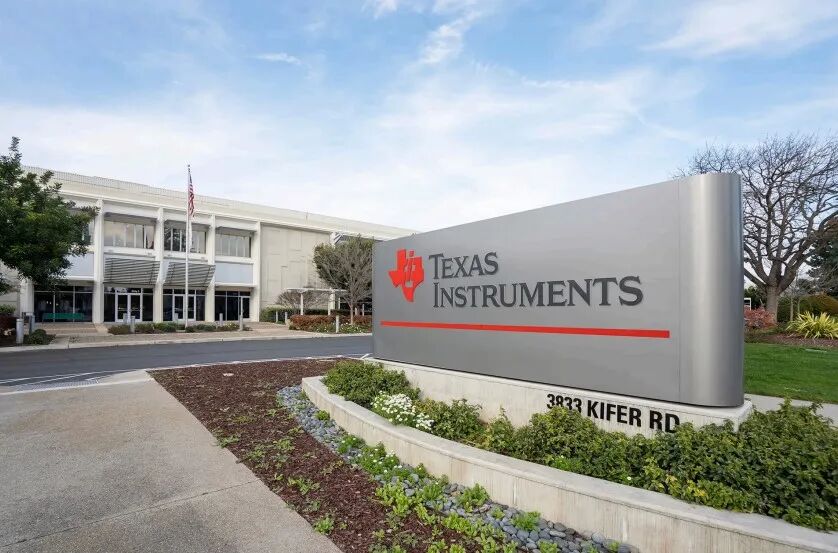
Recently, Texas Instruments (TI) announced an investment of over $60 billion (approximately 430.8 billion RMB) to build seven wafer fabs in Texas and Utah, marking the largest investment in the foundational semiconductor manufacturing industry in U.S. history and seen as a driving force for the return and expansion of semiconductor manufacturing. TI plans to invest $46 billion in Texas and about $15 billion in Utah, with these fabs expected to produce hundreds of millions of American-made chips daily, although no specific investment timeline has been provided.
This massive investment plan is primarily distributed across three manufacturing bases in Sherman, Richardson, Texas, and Lehi, Utah.
At the Sherman base in Texas, TI will build two new wafer fabs, SM3 and SM4, to meet future demand, while expanding the existing SM1 and SM2 plants (the buildings are already completed). SM1 is expected to start production in 2025, providing stable supplies of analog chips for engine control units and in-vehicle infotainment systems for American automakers. This “snowballing” expansion model positions Sherman to potentially become the world’s largest analog chip production base within the next five years.
At the Richardson base, following the launch of the world’s first 300mm analog wafer fab RFAB1 in 2011, TI is also committed to a “dual-track expansion” that upgrades the capacity of its second 300mm wafer fab RFAB2 to meet the demand for high-performance embedded processor chips from communication equipment manufacturers.
Additionally, at the Lehi base in Utah, TI will accelerate the construction of two wafer fabs, LFAB1 and LFAB2, with the first mass production factory LFAB1 already in the debugging phase, and the steel structure of LFAB2 is rising. The chips produced at this base will help industrial automation equipment manufacturers enhance the stability and efficiency of their factory automation control systems.
As the largest foundational semiconductor manufacturer in the U.S., TI is planning large-scale construction of reliable, low-cost 300mm capacity, aiming to provide essential analog and embedded processing chips for nearly all electronic systems, including smartphones, automobiles, data centers, and satellites. The capacity construction at these three major bases reflects a strategic depth characteristic, forming a structure of “scale cost reduction (Sherman) – product iteration (Richardson) – technology validation (Lehi)” and creating geographical supply chain resilience.
However, can TI’s financial situation support this massive investment plan? Its financial performance for the first quarter of 2025 shows that the company achieved revenue of $4.07 billion, an 11% year-on-year increase and a 2% quarter-on-quarter increase, with an operating profit of $1.324 billion and a net profit of $1.18 billion, resulting in a diluted earnings per share of $1.28 and an operating cash flow of $849 million. This marks the first positive year-on-year revenue growth for TI since the fourth quarter of 2022.
It is evident that even with positive growth now, TI has not been operating steadily for a considerable period.
In the face of skepticism regarding high capital expenditures, TI seems to have some “answers.” On one hand, under the “CHIPS Act,” TI has received a $1.6 billion subsidy from the U.S. government to support the construction of three new semiconductor factories in Utah and Texas. Additionally, the 25% R&D tax credit policy promoted by the Trump administration is expected to save over $800 million annually. Based on “counter-cyclical investment,” it can strengthen cost control capabilities through vertical integration.
On the other hand, it has been reported that TI plans to raise prices on some product lines, although no final price increase notice has been issued yet. Currently, downstream customers are also observing the outcome of this price increase. Huatai Securities research points out that the implementation of TI’s price increase remains to be tracked, and local manufacturers have not yet made significant price increases. TI’s price increase logic is based on the continuous growth trend in the global analog chip market in recent years, its massive capital expenditure plan, and the higher costs of domestic production in the U.S.
Clearly, TI’s expansion plan is not an isolated action but connects the upstream and downstream collaboration of the U.S. technology industry.
In this regard, industry giants such as Apple, Ford, Medtronic, NVIDIA, and SpaceX have expressed their support. Apple stated that its chip products will help “revitalize” the industry, while 80% of Ford’s domestically assembled models will benefit from the domestic supply chain; Medtronic’s medical devices rely on TI’s chips to overcome performance bottlenecks, especially to ensure continuity in R&D during chip shortages. Meanwhile, NVIDIA’s collaboration with TI to develop the next-generation AI architecture will promote the integration of mature processes with advanced technologies; SpaceX utilizes TI’s SiGe technology for its Starlink satellites, with the daily production of tens of thousands of Starlink kits relying on a crucial domestic supply chain.
This “design-manufacture-application” closed-loop reveals a deeper logic: the U.S. is reconstructing the power structure of the semiconductor industry through vertical integration of domestic manufacturing capabilities. As TI’s president, Haviv Ilan, stated, this plan is part of a recent wave of large-scale semiconductor manufacturing investments in the U.S., highlighting the importance of domestic chip manufacturing capabilities in the context of global supply chain restructuring, and aims to better serve customers while strengthening supply chain security in the foundational semiconductor field.
This vertical integration model may trigger a butterfly effect. According to Boston Consulting Group, by 2030, the U.S. self-sufficiency rate for foundational chips is expected to rise from the current 19% to 45%, forming an industry cluster with an annual output value exceeding $200 billion. Currently, besides TI, companies like Micron and GlobalFoundries have also announced significant domestic expansion plans, while TSMC has announced an additional $100 billion investment in the U.S. to expand its capacity layout. This also means that the global supply chain structure will gradually be reshuffled.
Furthermore, TI’s $60 billion “bet” also implies a strategic game of supply chain autonomy in technological competition, marking a certain degree of entry into the “heavy asset competition” stage of foundational chip manufacturing. Its advantage lies in vertical integration, which can strengthen cost control and ensure supply chain security, but the downside is that it takes an average of 3.2 years for a wafer fab to reach full production, much longer than TSMC’s “fast manufacturing model” (18 months), and the risk of sunk costs is high. Therefore, this model also has a “double-edged sword” effect.
Regardless, TI’s significant move will create new challenges and opportunities for the Chinese supply chain. On one hand, TI and other Western companies hold a monopoly position in the industry, making it difficult for domestic companies to shake their advantages in the short term. As their production lines reach mass production, cost advantages may expand, potentially squeezing the profit margins of domestic mid-to-low-end chips and driving a heated competition for global talent. On the other hand, this will also force independent innovation and ecological reconstruction, with strategic responses including national funds + market-oriented financing to accelerate the domestic substitution process, seeking to establish vertical integration capabilities in specialized process areas, while maintaining Fabless flexibility in emerging tracks like AI chips.
It is foreseeable that the future global semiconductor landscape may present a dual-track pattern of “TI-style heavy assets” coexisting with domestic “light asset 2.0.” Industry analysis suggests that the U.S. government is currently taking a series of measures to accelerate the migration of global semiconductor capacity back to domestic shores. This is both a pressure and a driving force; domestic wafer capacity is steadily increasing, but only by tackling core technologies and achieving breakthroughs in high-end analog chips and automotive-grade certification systems can more initiative be gained in the global supply chain restructuring.
2. Aqara Smart Camera G100: Deep Integration of Product Innovation and Chip Technology
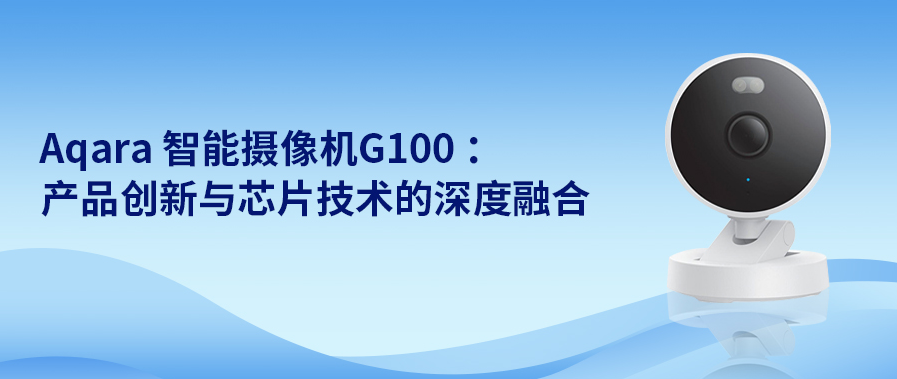
In the fierce competition of the smart home security market, the Aqara Smart Camera G100 stands out with its precise product positioning and cutting-edge technology, redefining industry technical standards through deep collaboration with the Junzheng T31X chip.

1. Aqara G100: A Benchmark of Performance and Value
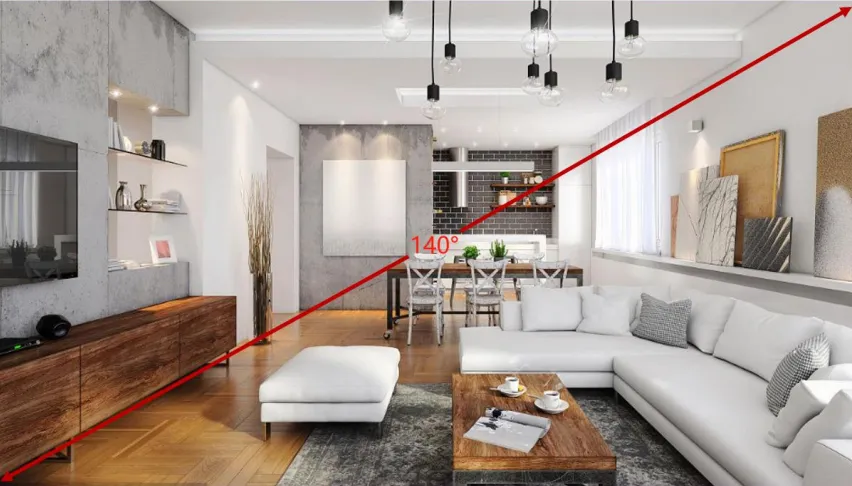
As a “high-value benchmark camera in the HomeKit ecosystem,” the G100 achieves dual leadership in performance and value. With a 3-megapixel resolution and a 140° ultra-wide-angle lens, it significantly reduces monitoring blind spots compared to competitors; the classic dual-mode night vision system uses infrared lights for black-and-white night vision, while full-color night vision can be achieved through scheduled lighting or smart lighting modes via automation, suitable for all-weather monitoring scenarios.
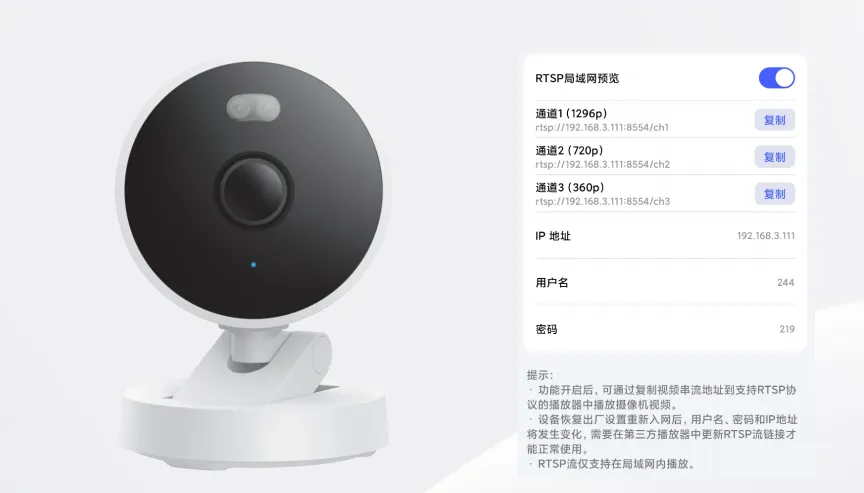
With an IP65 protection rating and a wide operating temperature range of -10℃ to +40℃, its reliability in complex environments far exceeds that of similar products. Local AI motion detection and human shape recognition, combined with edge computing, achieve millisecond-level response times, reducing false alarm rates by over 80% compared to traditional solutions. Additionally, it supports RTSP stream transmission and NAS storage functions, appealing to geek users, along with WiFi 6 high-speed transmission and multi-ecosystem compatibility, creating a technological moat.
2. Junzheng T31X Chip: The Technical Engine Breaking Performance Boundaries
The Junzheng T31X chip achieves smooth operation of the HomeKit SDK on a 1Gbit DDR platform through a heterogeneous computing architecture, improving memory utilization to 1.8 times that of traditional solutions. Its multi-core video processing unit supports real-time encoding of 1080p, 720p, and 360p three-stream formats, combined with H.265+ technology to reduce bandwidth requirements by 40%, ensuring low-latency, high-quality video transmission across all terminals.
Based on the Magik computing power platform, it provides algorithm support for local intelligence, with deep learning algorithms improving object and human shape recognition accuracy by 65%, effectively enhancing security reliability.
The Aqara Smart Camera G100, through collaborative innovation between product and chip, achieves comprehensive superiority over competitors in terms of performance and value, injecting new vitality into the smart home security field.
3. Masayoshi Son of SoftBank Seeks Partnership with TSMC to Establish an AI Industrial Park in Arizona
Masayoshi Son, founder of SoftBank, is seeking to collaborate with TSMC to establish an industrial park in Arizona, USA, with an investment scale of up to $1 trillion, focusing on the manufacturing of robotics and AI products.
According to industry experts, this industrial park plan differs from Son’s previous “Stargate” initiative, which primarily focused on data centers, while the new industrial park targets AI terminal applications, aiming to seize opportunities in the return of manufacturing to the U.S.
Experts point out that differences in regulations regarding environmental protection, waste management, and public safety between the U.S. and places like Taiwan, along with labor shortages, are major challenges facing the return of manufacturing to the U.S. These issues are expected to be addressed through the introduction of AI robots and increased automation.
In March of this year, TSMC announced an additional $100 billion investment in the U.S., planning to build three new wafer fabs, two advanced packaging plants, and a research center. The automation level of these new facilities will be higher than that of TSMC’s plants in Taiwan, making TSMC a potential customer for AI robot manufacturers within Son’s industrial park.
On the other hand, companies within the park may also become customers for AI chips from TSMC’s Arizona factory, although the order scale is expected to be smaller than that for data centers and smartphones.
Based on TSMC’s past investment patterns, industry experts believe that TSMC is unlikely to directly invest in this industrial park. Son is more likely to leverage TSMC’s brand effect and resources as a powerful tool for attracting investment to enhance the park’s appeal and visibility.
4. NVIDIA Collaborates with Foxconn: Houston Factory to Deploy Humanoid Robots for AI Server Production
Foxconn and NVIDIA are negotiating the deployment of humanoid robots at a new factory in Houston, which will produce NVIDIA AI servers. According to two insiders, this will be the first time NVIDIA products are manufactured with the assistance of humanoid robots, and it will also be Foxconn’s first AI server factory using humanoid robots on the production line.
These humanoid robots are expected to be deployed within the next few months, with both companies aiming to have them operational before the first quarter of 2025, at which point Foxconn’s new Houston factory will begin producing NVIDIA’s GB300 AI servers. This initiative marks an important milestone in the adoption of humanoid robots to change manufacturing processes.
It is currently unclear what type of humanoid robots will be used at the Houston factory, their specific appearance, and how many will be deployed initially. It is reported that Foxconn is working with NVIDIA to develop its own humanoid robots while also trialing humanoid robots manufactured by China’s UBTech.
According to Foxconn’s company introduction in May, the company has been training humanoid robots to perform tasks such as picking and placing objects, inserting cables, and assembly work. One insider indicated that Foxconn’s Houston factory is well-suited for deploying humanoid robots due to its new construction, providing more space than other existing AI server manufacturing plants.
Foxconn’s Industrial Internet Robot Division General Manager Guo Rui revealed last month at an industry event in Taipei that Foxconn plans to showcase two versions of its developed humanoid robots at the company’s annual technology conference in November. One will have legs, while the other will use a wheeled autonomous mobile robot base, which will be less expensive than the legged version.
NVIDIA announced in April of this year that it plans to build an AI supercomputer manufacturing plant in Texas, collaborating with Foxconn in Houston and Wistron in Dallas. These two factories are expected to increase production within 12 to 15 months. For NVIDIA, using humanoid robots to manufacture its AI servers represents a further push for this technology, as the company has already provided platforms for humanoid robot manufacturers to build such robots.
NVIDIA CEO Jensen Huang predicted in March of this year that it would be less than five years before humanoid robots are widely used in manufacturing facilities. Currently, automotive manufacturers like Mercedes-Benz and BMW in Germany are already testing the use of humanoid robots on production lines, and Tesla is also developing its own humanoid robots. Meanwhile, China is vigorously supporting the development of humanoid robots, betting that many factory tasks will ultimately be completed by such robots.
5. SK Group and Amazon Invest $5.1 Billion to Build an AI Data Center in Ulsan, South Korea
The South Korean Ministry of Science announced on Friday that SK Group will invest approximately 7 trillion won ($5.1 billion) to build a large data center in Ulsan, South Korea, which includes a $4 billion investment from Amazon Web Services (AWS).
According to the ministry’s statement, this AI data center will become the largest data center in South Korea, with construction expected to begin in September and full operation anticipated by 2029. The initial capacity of the center will be 100 megawatts, with plans for future expansion.
At a meeting attended by President Lee Jae-myung and executives from the technology industry, SK Group Chairman Choi Tae-won stated his plan to expand the data center’s capacity to 1 gigawatt in the future, making it a global center for addressing domestic AI demand in South Korea. Choi emphasized that AI is crucial for South Korea’s economic growth. President Lee Jae-myung noted that this project will set an example, demonstrating that South Korea’s high-tech industry can thrive not only in metropolitan areas but also in provinces.
Following this news, South Korean AI-related stocks continued to rise on Friday, with SK Hynix up over 3%, Kakao soaring 11%, and LG CNS rising 9%. These gains propelled the South Korean benchmark index KOSPI to break the 3,000-point milestone for the first time in three and a half years.
Earlier this month, media reports indicated that SK Group and Amazon Web Services were collaborating to build a data center in South Korea, and this official announcement confirmed the specific details and investment scale of this large data center project, which is seen as an important measure for South Korea to strengthen its AI infrastructure and enhance its technological competitiveness.
Hot Topics:
1.Major U.S. Chip Manufacturer Announces 20% Layoffs, 10,000 Unemployed!2.Dream of Going Public Shattered! 80% of Chip Startups Fail Due to Betting3.30% Tax Credit for Semiconductors, Trump Tax Reform Draft Released4.Domestic Major Manufacturers Expand AI Talent Recruitment by Over 60%5.Reports: Chip Giants Cut 20% of Employees in China! Global Layoffs in July6.Breaking News! Employees Block Access for Wages, Nezha Auto CEO: Will Announce Bankruptcy!7.Market Share Approaching Samsung! SMIC Grows Against the Trend8.Ren Zhengfei: No Need to Worry About Chip Issues, the U.S. Exaggerates Huawei’s Achievements


Share

Like

Watching