 This is the 266th issue shared by the platform.
According to the latest “Global Wearable Device Market Quarterly Tracking Report” released by the International Data Corporation (IDC), in 2024, global shipments of wrist-worn devices are expected to reach 190 million, a year-on-year decline of 1.4%. The shipment volume of wrist-worn devices in China is 61.16 million, a year-on-year increase of 19.3%, making China the largest wrist-worn device market in the world, accounting for 32.0% of global shipments.
The wrist-worn device market includes smartwatches and fitness bands. Among them, the global shipment volume of smartwatches in 2024 is expected to be 150 million, a year-on-year decrease of 4.5%; while the shipment volume of smartwatches in China is 43.17 million, a year-on-year increase of 18.8%.
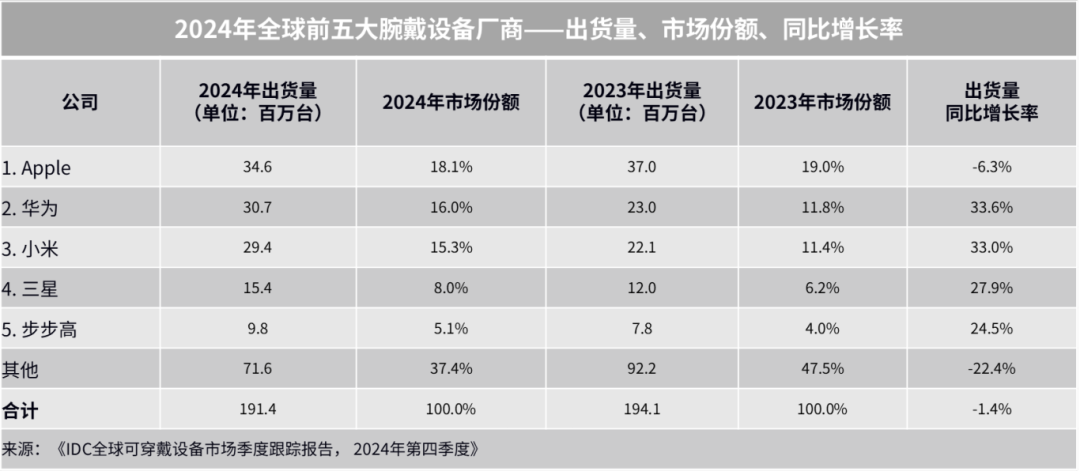
(Image source: Internet)
SAMSUNG Galaxy Watch 6 smartwatch supports functions such as bioimpedance analysis, electro-biological sensing, and optical biological sensing. It can detect body fat percentage, metabolic status, electrocardiogram, heart rate, and other health conditions, providing comprehensive measurements of various body data to track health progress.
From the disassembly diagram below, we can see the important chip that enables these functions: AFE4500.
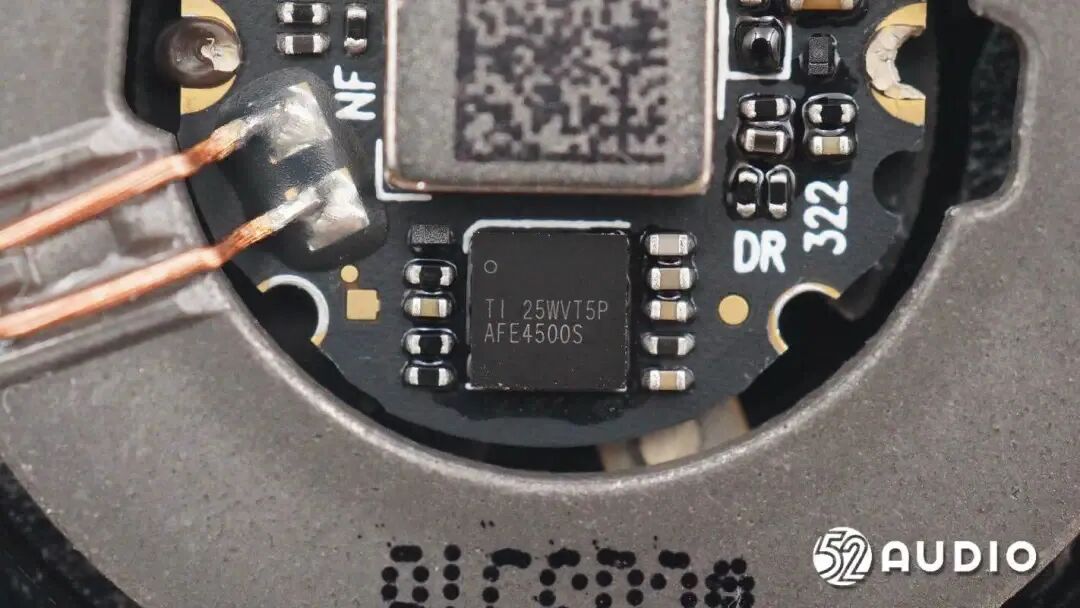
SAMSUNG Galaxy Watch 6 disassembly diagram (Image source: Internet)
AFE4500👈Analog Front End(AFE) is a multifunctional signal acquisition system that supports three signal chains. The impedance measurement signal chain with integrated excitation and detection functions can be used for applications such as bioimpedance analysis(BIA), electrodermal activity analysis(EDA), and impedance spectroscopy.
Let’s first understand the basic parameters based on the competitive information card.
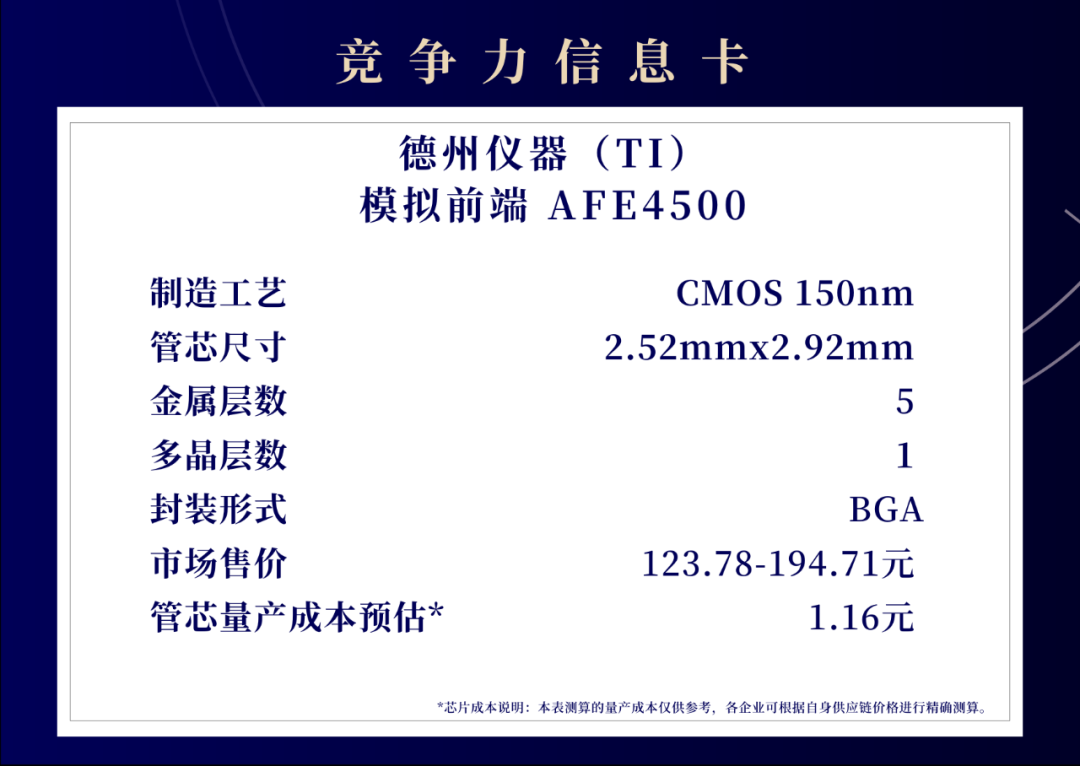


Chip Overview
01 Chip Overview

TI Texas Instruments AFE4500 is a super small, integrated AFE suitable for bioimpedance analysis, electro-biological sensing, and optical biological sensing, integrating Bio-Z, EDA, ECG and PPG signal chains, synchronizing ECG and ECG to achieve blood pressure based on PTT.
-
Bio-Z (monitoring body fat percentage, energy metabolism, etc.): Mainly used to measure the impedance characteristics of the body. Bio-Z technology calculates the impedance value by applying a small alternating current to the body surface and measuring the voltage changes as the current passes through different tissues in the body.
-
ECG (monitoring electrocardiogram signals): Used to record the time points and intensity of the electrical signals that trigger heartbeats.
-
PPG (monitoring heart rate signals): Most wearable devices use photoplethysmography (PPG) to measure heart rate and other biometric indicators.
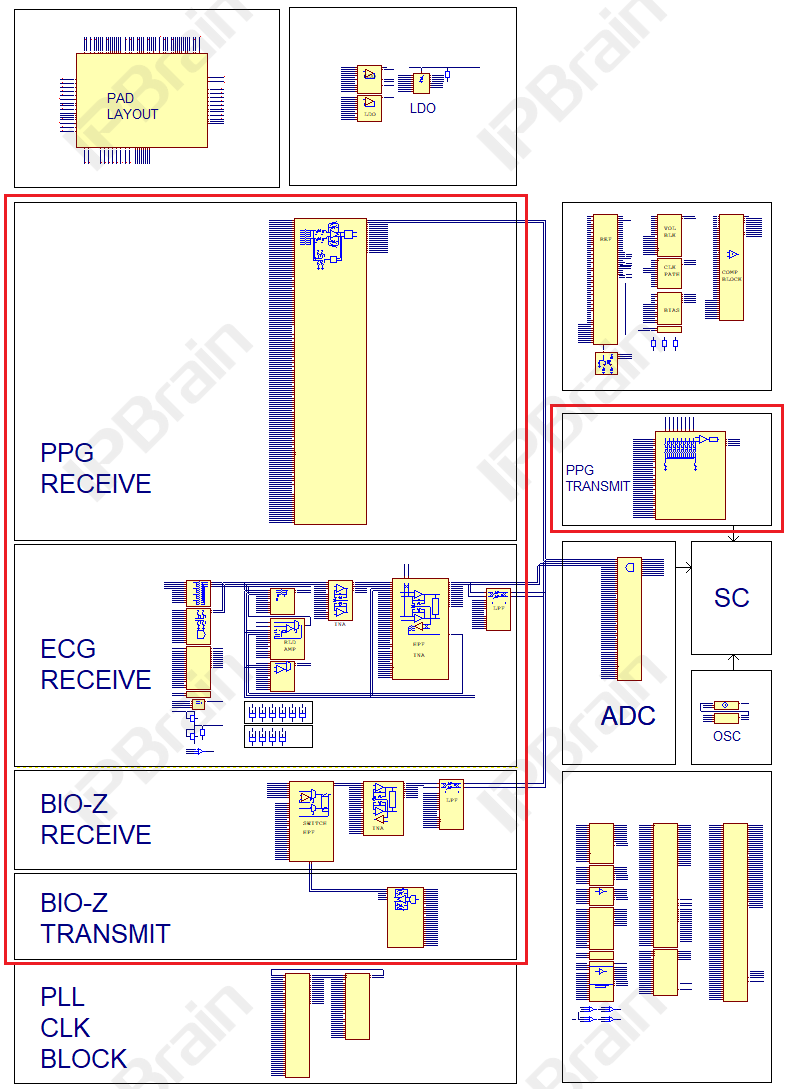
The modules outlined in red in the overview diagram correspond to the three signal chains we introduced above.
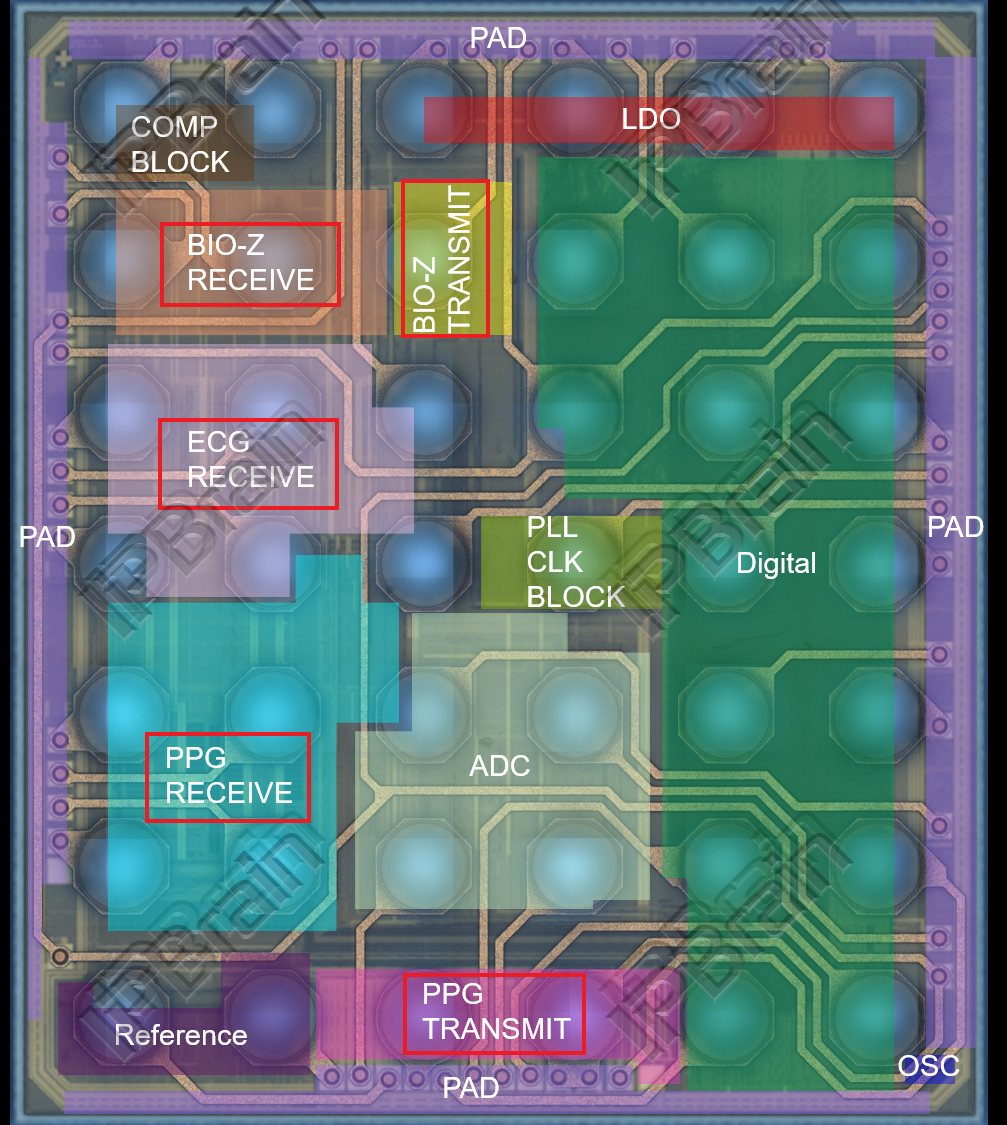
Overview diagram (Image source: IPBrain platform)
AFE4500 chip is manufactured using a CMOS 150 nanometer process, with a die size of 2.52mmx2.92mm, featuring 5 layers of metal wiring, 1 layer of polycrystalline wiring, and the metal material used is Alloy, with a packaging form of BGA.
According to the top-level circuit diagram of the chip below, we can see the circuit conditions corresponding to the three signal chains.
Top-level circuit diagram (Image source: IPBrain platform)
Module Introduction
02 Module Introduction
ADC (Analog-to-Digital Converter) typically converts analog signals into digital signals. Since everything in nature is an analog signal, but the devices we process are digital signals, an analog-to-digital conversion device is needed.
According to the simplified schematic, the outputs of the three signal chains in AFE4500 are digitized by a general-purpose ADC and stored in a FIFO, which can be read out via SPI or I2C interfaces.
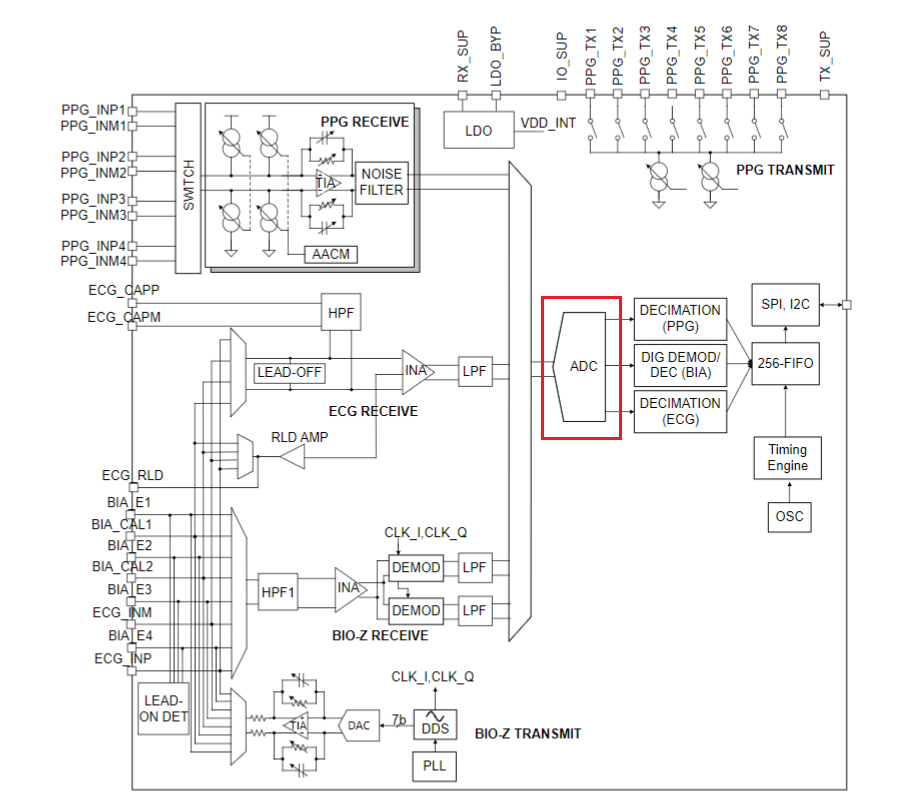
Functional block diagram (Image source: chip specification)
The ADC circuit diagram is as follows.
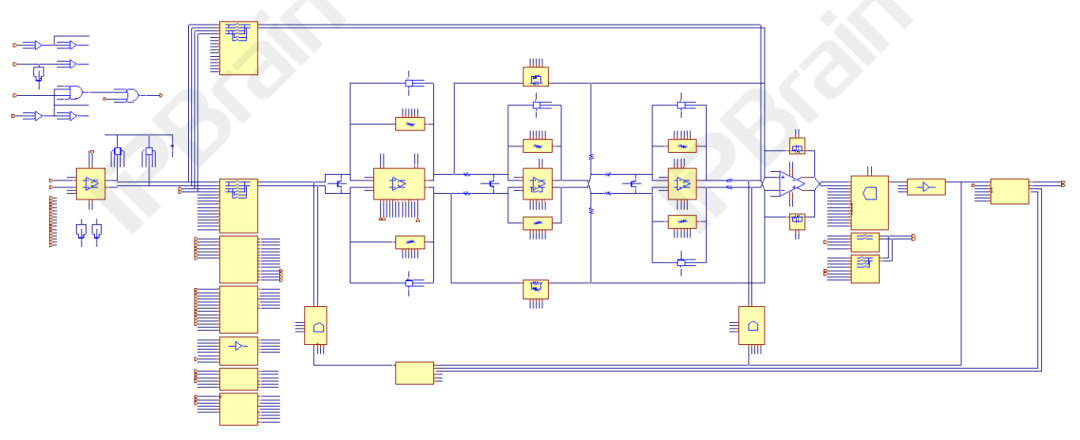
ADC circuit diagram (Image source: IPBrain platform)
For those who want to learn more about ADC, you can check the in-depth analysis article below.
 In-Depth Analysis | Simulation Analysis of the SAR ADC Conversion Process in ARM Cortex-M4 Core High-Performance Microcontroller STM32F407
Chip Details and Applications
03 Chip Details and Applications
AFE4500👈 chip has a wide range of applications. In addition to being used for Bio-Z, ECG, PPG, EDA, and BP on wearable devices, it is also used in scales that can measure body composition; current, voltage, and resistance sensing; impedance spectrum analysis, etc. Below, the platform shares some device detail images of this chip.
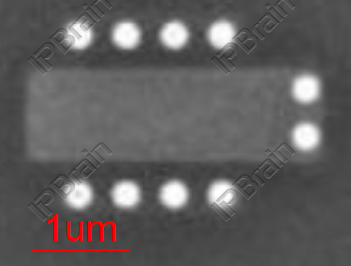
MOS (Image source: IPBrain platform)

Capacitor (Image source: IPBrain platform)
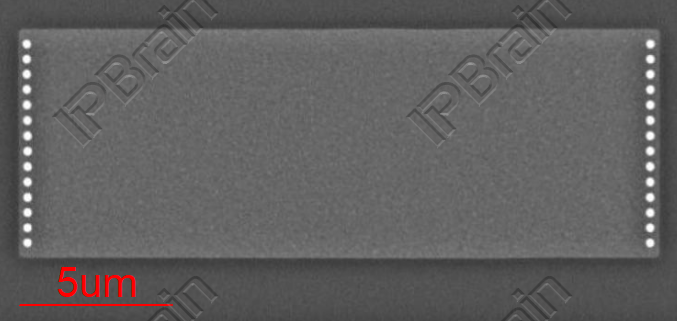
Resistor (Image source: IPBrain platform)

Transistor (Image source: IPBrain platform)
According to the logo on the chip image, this chip was produced in 2020, model number AFE4500AA.

Logo (Image source: IPBrain platform)
Finally, the platform hopes everyone pays attention to their health while working hard!
Previous Recommendations >
Previous articles Car manufacturers held an emergency meeting! With the new national standard, TI directly provides solutions, revealing the answers for BQ769x0
 Protecting 330 million heart health! How does TI’s 24-bit precision AFE chip ADS1292 achieve zero distortion ECG signals??
 Priced at a thousand, performance worth ten thousand, how does the RF chip “transform” to play with wireless communication? Unveiling the secrets of the high-end ADRV9009 from Analog Devices
 What secrets does the 12-bit SAR ADC NCD98010, loved by portable devices, hold? Let’s explore!