Recently, the first perovskite component network microgrid at Qinghai Oilfield has been successfully implemented. This project has a total installed photovoltaic capacity of 101.8 kWp, marking another technological breakthrough for Qinghai Oilfield in the field of green and low-carbon transformation.
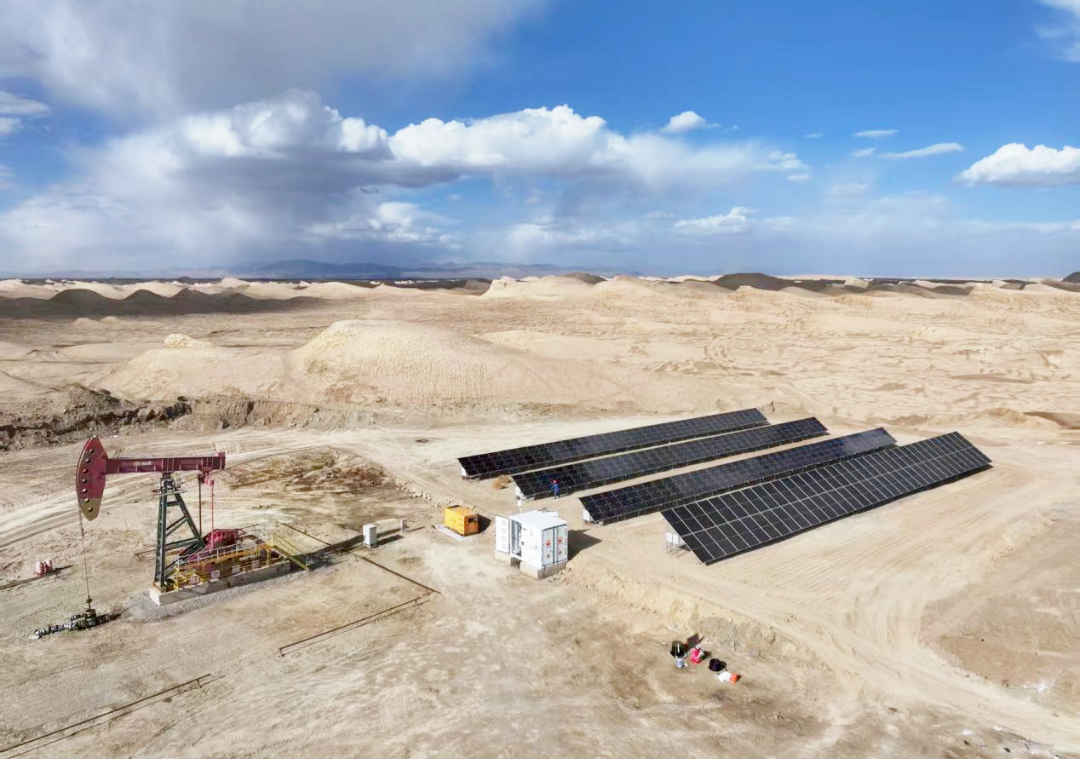 Currently, the project integrates 72 monocrystalline silicon photovoltaic modules with an installed capacity of 51.4 kW, and 480 perovskite photovoltaic modules with an installed capacity of 50.4 kW. Additionally, the project is equipped with lithium iron phosphate energy storage batteries and diesel generator equipment, constructing a photovoltaic-storage-diesel direct current microgrid that can efficiently utilize the plateau’s solar resources, providing a new energy supply solution for remote well sites.The perovskite photovoltaic modules have been certified by the National Photovoltaic Industry Measurement and Testing Center, with a laboratory steady-state photoelectric conversion efficiency of 27.32%. The weak light response speed is three times faster than that of traditional monocrystalline silicon modules, and the spectral absorption range is broader.After the project is put into operation, based on a system lifespan of 25 years, the average annual power generation can reach 180,900 kWh, which can reduce diesel consumption by 36 tons and cut carbon dioxide emissions by 113.22 tons annually, resulting in significant economic and environmental benefits.Source: Workers’ Daily, Qinghai Oilfield