The Principle of Cameras
A camera, also known as a photographic camera, is a device that records images using optical imaging principles.
The light reflected from the object is transmitted to the lens, focused onto the image sensor chip. The image sensor accumulates corresponding charges based on the intensity of light, periodically discharges to generate electrical signals representing images, converts these signals into digital signals through analog-to-digital conversion, and processes the digital signals with an image processing chip, ultimately generating digital images that can be stored on a disk or displayed on a screen.
Applications of Cameras
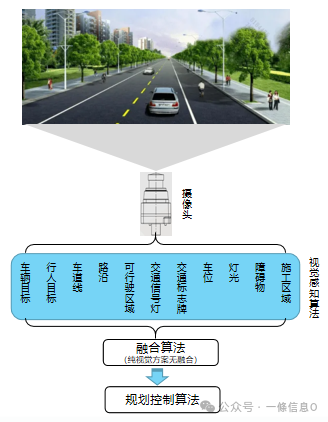
Cameras have a wide range of applications. In intelligent driving systems, cameras are primarily used to capture visual information about the road environment and traffic participants around the vehicle, transmitting this information to perception algorithm modules to achieve awareness of the external environment, outputting perception results of the road environment and traffic participants, and supporting multi-sensor fusion algorithms or pure vision planning control algorithms for intelligent driving.
Currently, mainstream intelligent driving camera perception algorithms can detect vehicles, pedestrians, lane markings, curbs, traffic lights, traffic signs, parking spaces, lights, obstacles, construction areas, and more.
Based on the installation position and perception purpose of the cameras on the vehicle, intelligent driving cameras can be classified into four types: front-view cameras, surround-view cameras, side-view cameras, and rear-view cameras.
Additionally, vehicles may also use driver monitoring cameras, electronic rearview mirror cameras, streaming media rearview mirror cameras, and dashcam cameras. Some cameras may serve two or more functions simultaneously.
Camera Structure, Core Components, and Key Parameters
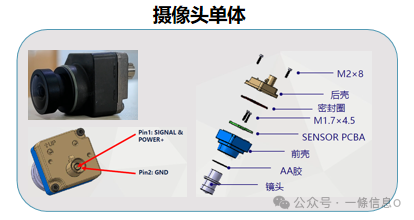
Camera units typically use FAKRA type connectors, which are standard RF connectors in the automotive industry, powered and data-transmitted via coaxial cables, generally serving as pure visual sensors.
The camera transmits images via coaxial cables (Coaxial Cable) in low-voltage differential signaling (LVDS) format to the image processing module of the domain controller (DCU). The perception algorithm software running on the SoC chip in the domain controller processes the data to obtain perception results for objects such as vehicles, lane markings, and traffic signs, which serve as inputs for fusion perception algorithms or pure vision planning control algorithms.
Main Suppliers: Hikvision Automotive, Zongmu Technology, Zhejiang Dahua, Yihang, Tongzhi, Electronic Hengrun
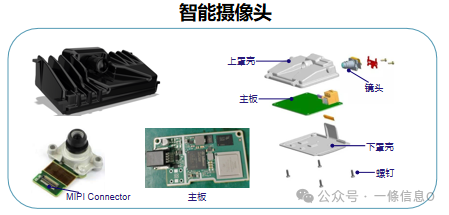
Intelligent cameras typically appear as front-view cameras. Compared to camera units, intelligent cameras generally integrate SoC chips and MCU chips on the mainboard, possessing both sensor and controller functionalities.
The camera directly transmits images to the SoC chip on the mainboard via the Mobile Industry Processor Interface (MIPI). The perception algorithm software running on the SoC processes the data to obtain perception results. These results are then transmitted to the MCU via the Serial Peripheral Interface (SPI) as inputs for the planning control algorithm software running on the MCU. Perception results can also be fused with other controllers via CAN bus or Ethernet.
Main Suppliers of Intelligent Cameras: Hirain, Desay SV, Valeo, Huawei
The Core Component of the Camera – Lens
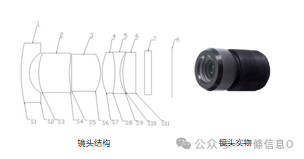
The lens is composed of multiple lens elements. The spacer and lens are sequentially placed into the lens barrel, with the spacer fixed to the side wall of the barrel using adhesive, and the last lens element secured with glue or a retaining ring, completing the lens assembly.
Automotive lenses have extremely high performance requirements, needing to meet a series of reliability testing requirements: high and low temperature shock tests, corrosion resistance tests, vibration tests, IPX9K waterproof rating requirements, salt spray tests, abrasion tests, ultraviolet exposure tests, etc. Therefore, the structural design and material selection for automotive lenses have higher demands.
Main Suppliers: Sunny Optical, Fujifilm, Kyocera, LCE, Ricoh, Maxell, Lianchuang Electronics, OFILM, LIDAR, JiuZhou Optical, Yutong Optical, United Optoelectronics, Phoenix Optoelectronics, Chengrui Optical.
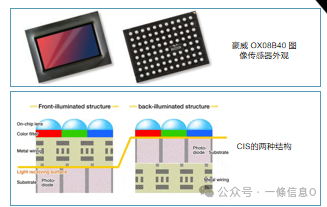
The Core Component of the Camera – CIS
CIS stands for CMOS Image Sensor, which is a type of image sensor based on CMOS technology.
The image sensor uses the photoelectric conversion function of optoelectronic devices to convert light images on the photosensitive surface into electrical signals proportional to the light images. There are two main types of image sensors: CCD and CMOS. Due to its high integration, low power consumption, fast speed, and low cost, and rapid development in wide dynamic range and low light conditions, CIS has become the mainstream image sensor widely used in the intelligent driving field.
Main Suppliers of CIS: OmniVision (OV), OnSemi, Sony, Fulhan, SmartSens, etc.
The Core Component of the Camera – ISP
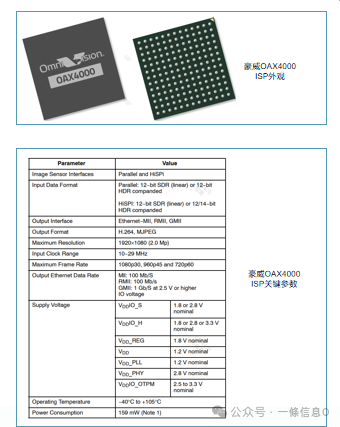
ISP stands for Image Signal Processor. The ISP primarily uses hardware structures to preprocess the RAW format data of image video sources input from the image sensor, converting it into various formats, and can perform image scaling, automatic exposure, automatic white balance, automatic focus, etc., which are key to determining the imaging effect of the camera. Some SoC chips come with built-in ISP.
Main Suppliers of ISP: Fulhan, Infineon, STMicroelectronics, NXP, OnSemi, OmniVision, Qualcomm, etc.
The Core Component of the Camera – PMIC
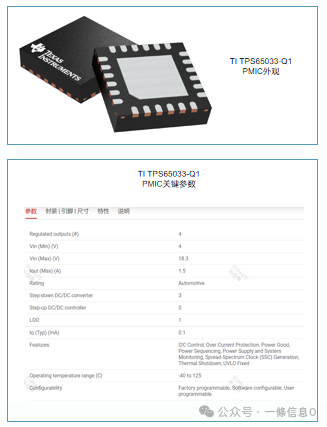
PMIC stands for Power Management IC, which is a specific-purpose integrated circuit designed for power management of the main system. The intelligent driving camera PCBA typically contains multiple chips, which may operate at different voltages, thus requiring a PMIC.
Main Suppliers of PMIC: Texas Instruments (TI), Qualcomm, Analog Devices (ADI), Maxim, Infineon, Sanan Optoelectronics, Weir Electronics, Mingwei Electronics, etc.
The Core Component of the Camera – Ser/Des
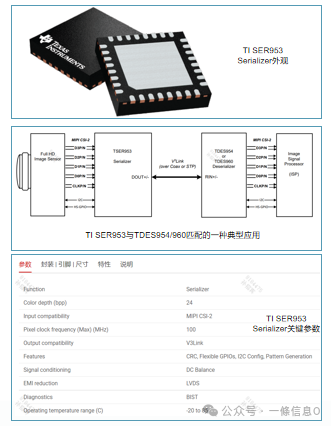
Ser/Des stands for Serializer/Deserializer, which is an interface circuit in high-speed serial data communication, typically appearing in pairs. Cameras generate a large amount of data during operation, and the serializer converts parallel data into serial data (and vice versa), enabling faster communication between devices using lower-cost cables and connectors, while also providing stronger anti-interference capabilities.
Main Suppliers of Ser/Des: Texas Instruments (TI), Maxim, OnSemi, STMicroelectronics, NXP, etc.
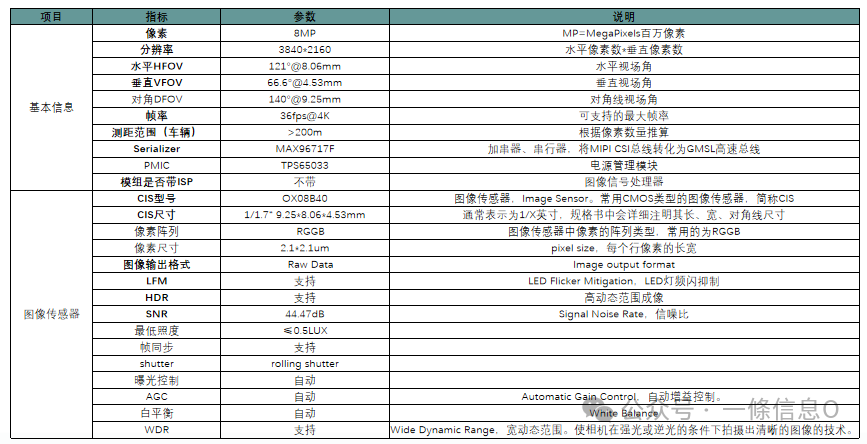
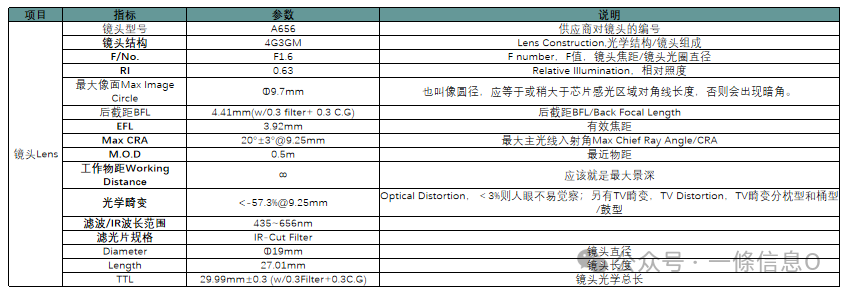
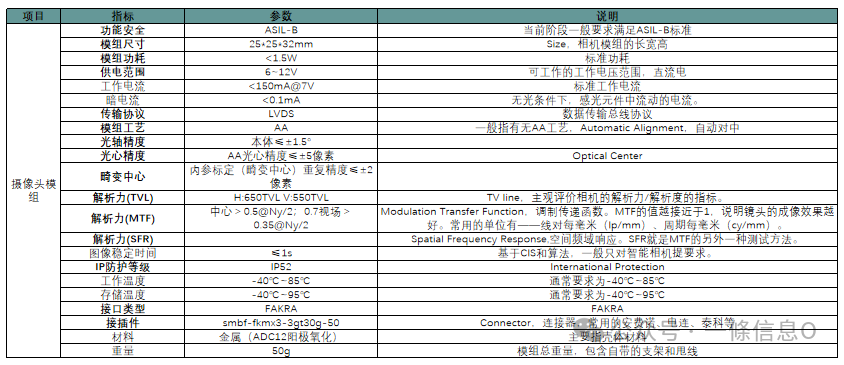
Key Parameters of Cameras
Knowledge Summary
Camera Principle: Light -> Lens -> Sensor -> Analog Signal -> Digital Signal -> Image.
Camera Classification: Front-view (Intelligent/Unit), Surround-view, Side-view, Rear-view, etc.
Camera Structure and Core Components: Lens, CIS, ISP, Ser/Des, PMIC, Housing, etc.
Key Parameters of Cameras: Resolution, FOV, Focal Length, RI, Distortion, CRA, F-value, Pixel Array, Image Output Format, Resolution, Assembly Process, Protection Level, etc.