
Click the blue text above to follow us



1 Overview
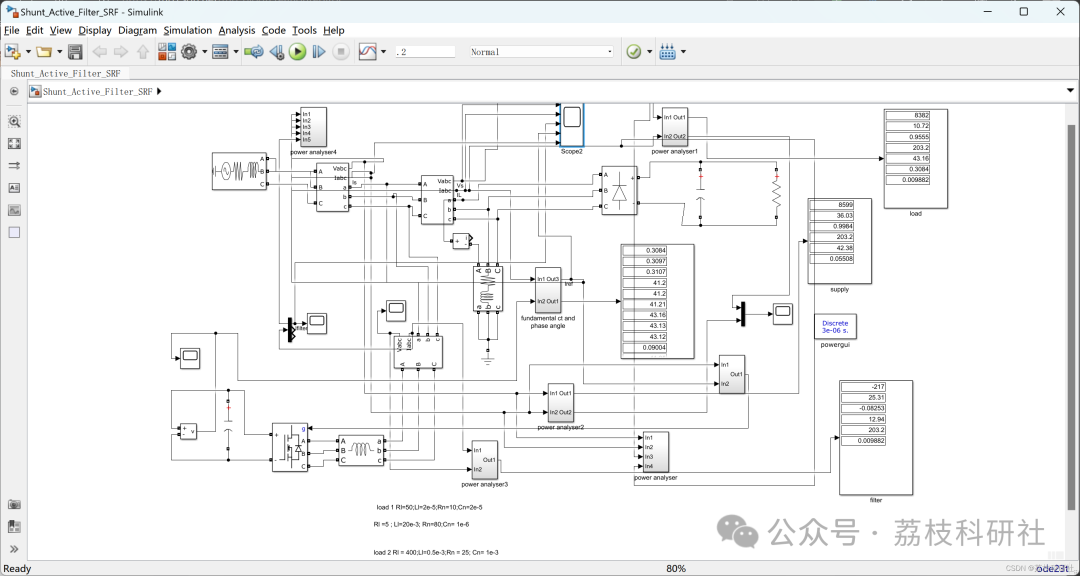
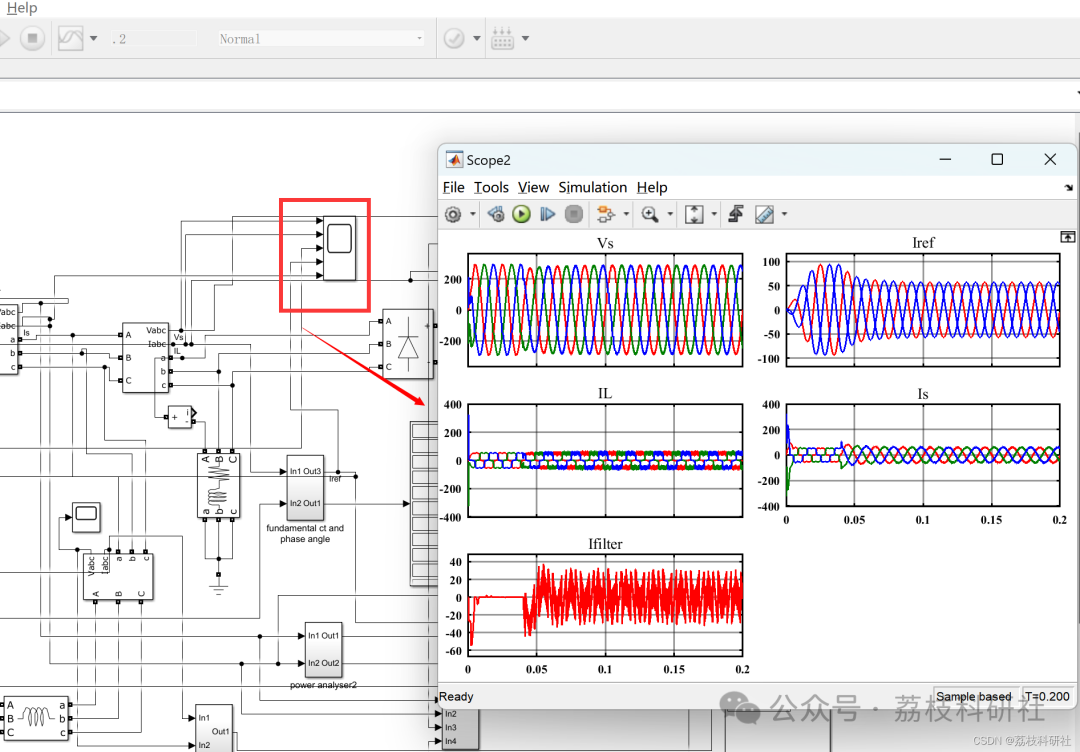
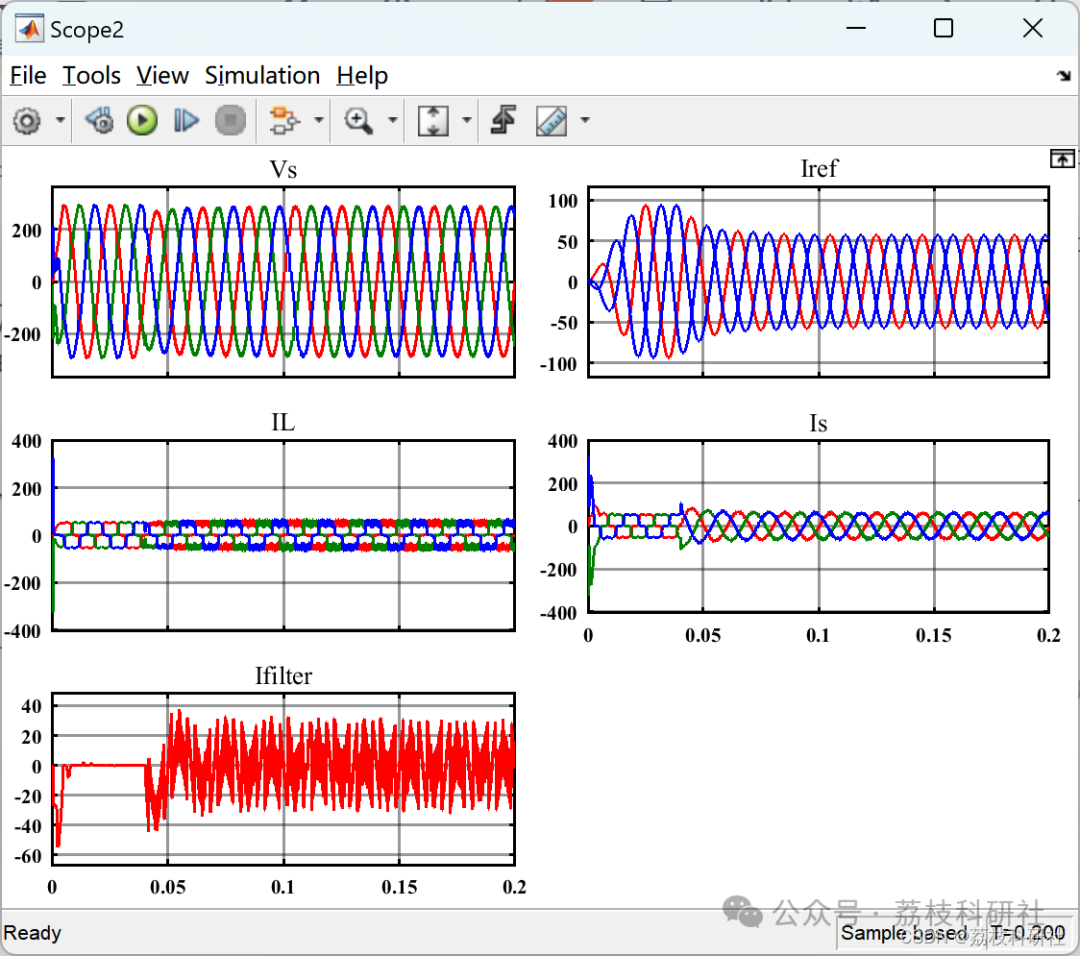
Non-linear and linear loads are connected to a three-phase power supply. The supply current is non-sinusoidal. The shunt active filter switches at 0.08 seconds. Now the supply current is sinusoidal and in phase with the supply voltage. The power factor approaches unity, and THD is reduced to 5%
Load parameters can be changed to study different types of load characteristics
An active filter is a device capable of actively eliminating harmonics and reactive power in power systems. In active filters, the SRF (Selective Harmonic Reduction Filter) algorithm is a commonly used control strategy that effectively selectively eliminates specific harmonic components.
The shunt active filter is a common topology of active filters that can shunt part of the current to achieve compensation for harmonics and reactive power. The shunt active filter using the SRF algorithm can intelligently adjust the filter’s operating state based on the harmonic components and power factor requirements of the grid, thus achieving more precise compensation for harmonics and reactive power.
The simulation circuit of the shunt active filter typically includes current sensors, voltage sensors, controllers, inverters, and other components on the grid side. By establishing models of these components in simulation software and writing control programs for the SRF algorithm, the performance of the shunt active filter can be simulated and analyzed to verify its effectiveness in actual power systems.
In summary, the shunt active filter using the SRF algorithm can effectively reduce harmonics and reactive power in power systems, improving the stability and reliability of the system, making it an important power quality improvement technology.
Research Document on Shunt Active Filter Using SRF Algorithm
Abstract
This paper discusses the application of the shunt active filter using the SRF (Selective Harmonic Reduction Filter) algorithm in parallel circuits, aiming to reduce harmonics and reactive power in power systems and improve system stability and reliability. Through the design and analysis of the simulation circuit, the effectiveness of this filter in three-phase power supply systems is verified.
Introduction
In modern power systems, the widespread use of non-linear loads has led to increasingly serious problems of harmonics and reactive power. These issues not only affect the stability of the power system but also increase equipment losses and reduce system efficiency. Therefore, developing effective harmonic and reactive power compensation devices is particularly important. Shunt active filters, as devices capable of actively eliminating harmonics and reactive power in power systems, are widely used to improve power quality.
Introduction to SRF Algorithm
The SRF algorithm is a commonly used control strategy that effectively selectively eliminates specific harmonic components. In active filters, the SRF algorithm precisely controls the output current of the filter to cancel out the harmonic currents in the system, thus achieving harmonic elimination. Additionally, the SRF algorithm can intelligently adjust the filter’s operating state based on the harmonic components and power factor requirements of the grid to achieve more precise compensation for harmonics and reactive power.
Topology of Shunt Active Filter
The shunt active filter is a common topology of active filters that compensates for harmonics and reactive power by shunting part of the current. The simulation circuit of this filter typically includes current sensors, voltage sensors, controllers, inverters, and other components on the grid side. By monitoring the current and voltage waveforms in real-time, the controller calculates the harmonic and reactive currents that need to be compensated based on the SRF algorithm and outputs the corresponding compensation current through the inverter.
Design and Implementation of Simulation Circuit
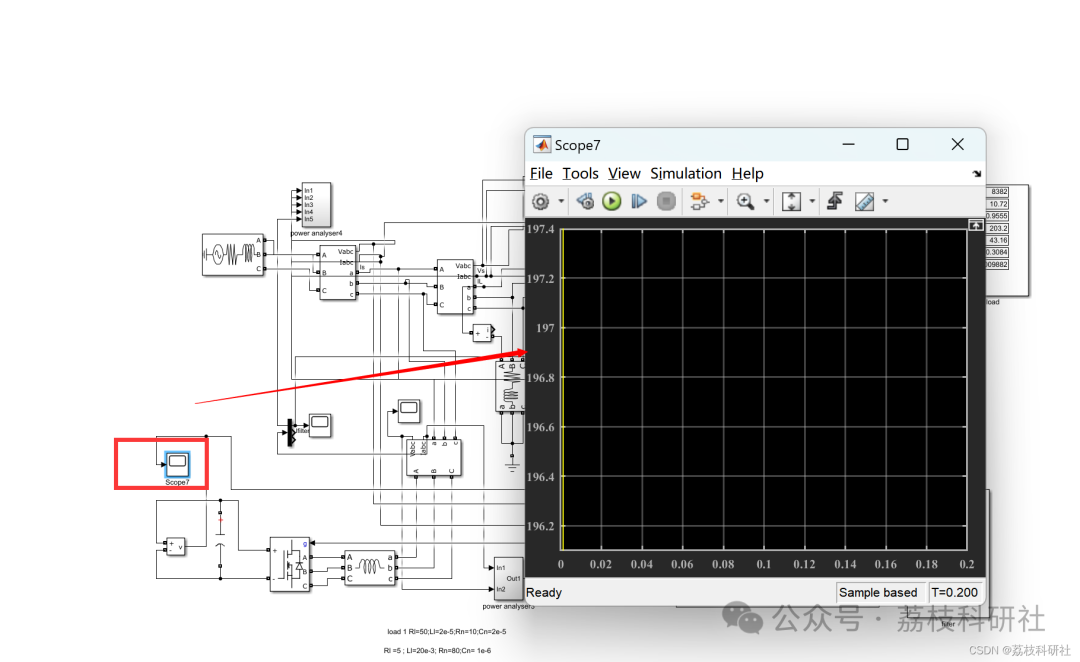
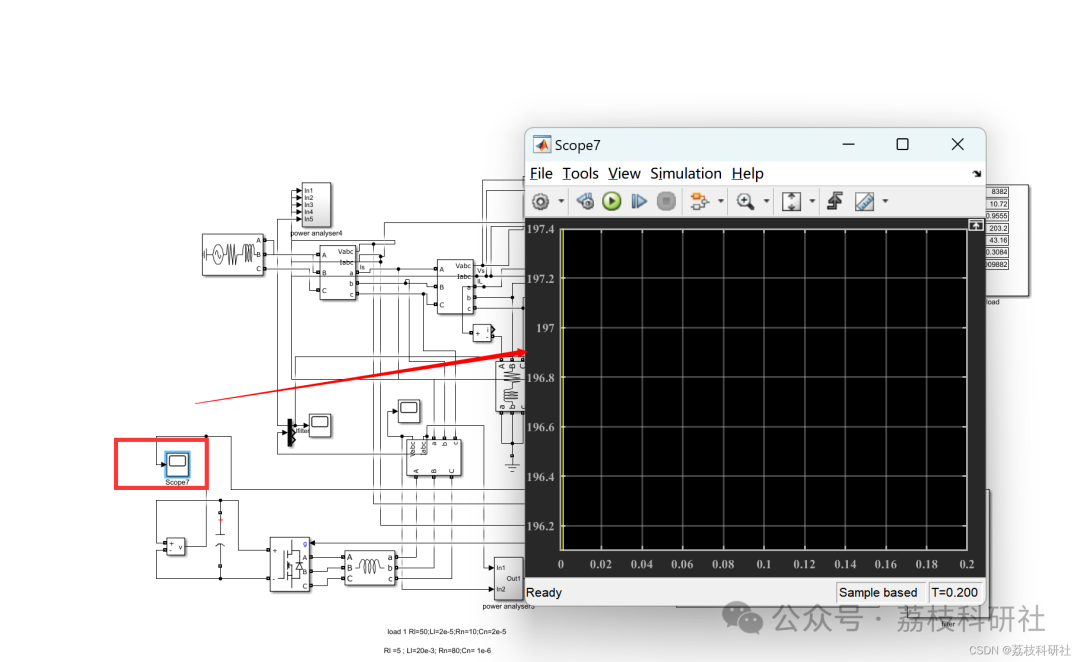
To verify the effectiveness of the shunt active filter using the SRF algorithm, we built a simulation circuit using Simulink simulation software. In the simulation, we simulated the connection of non-linear and linear loads to a three-phase power supply system, where the supply current was a non-sinusoidal waveform. At 0.08 seconds, we switched on the shunt active filter and applied the SRF algorithm for harmonic and reactive power compensation.
The simulation results showed that after the shunt active filter was activated, the supply current quickly became sinusoidal and in phase with the supply voltage. The power factor approached unity, and the total harmonic distortion was reduced to below 5%. This result indicates that the shunt active filter using the SRF algorithm can effectively reduce harmonics and reactive power in power systems, improving the power factor and thus enhancing the stability and reliability of the power system.
Impact of Load Parameter Changes on System Performance
To further study the impact of different types of load characteristics on system performance, we adjusted the load parameters in the simulation circuit. By simulating the system performance under different load conditions, we found that changes in load parameters had a certain impact on the compensation effect of harmonics and reactive power. However, the shunt active filter using the SRF algorithm maintained good compensation performance under different load conditions, demonstrating its strong adaptability and stability.
Conclusion
This paper verifies the effectiveness of the shunt active filter using the SRF algorithm in reducing harmonics and reactive power in power systems through the design and analysis of the simulation circuit. This filter can quickly respond to changes in harmonics and reactive power in the grid and achieve effective compensation through precise control of the output current. Furthermore, by adjusting load parameters, we can study the impact of different types of load characteristics on system performance, further optimizing the design and algorithm parameters of the filter. Overall, the shunt active filter using the SRF algorithm is an important power quality improvement technology with broad application prospects.


2 Operating Results


3References
Some theories are sourced from the internet; please contact us for removal if there is any infringement.

[1] Zeng Li, Zeng Qingjun, Xu Han. Research on a New SRF-PLL Design for Harmonic Detection in Active Power Filters [J]. Software, 2020, 41(04): 14-19.
[2] Ju Xingbao. Research on Harmonic Current Detection Control of Parallel Three-Phase Active Filters [D]. Huazhong University of Science and Technology, 2005.


4 Simulink Simulation Implementation