April 18, 2022 / eMedClub News / — Gene therapy typically consists of vectors or delivery systems containing engineered gene constructs, with active components such as DNA, RNA, genetically modified viruses, bacteria, or cells. Based on the characteristics of the gene vector types, gene therapy products can be mainly classified into viral vector gene therapy products, plasmid DNA vector gene therapy products, RNA-based gene therapy products, and bacterial microbial vector gene therapy products, with viral and plasmid DNA vector gene therapy products being more common.
With the development of mRNA drugs, cell and gene therapy, plasmid DNA has been widely used. However, the biggest challenge in plasmid production processes is large-scale production and purification, which must maintain a high proportion of supercoiled plasmids while ensuring high purity. These two points significantly impact the efficiency and quality of both DNA vaccines and downstream viral production (such as reducing empty capsid rates).
Common purification methods for plasmid production include chromatography or chromatographic techniques, with varying quality requirements for plasmids depending on the development stage and usage level. The purpose of plasmid purification is to remove host DNA, RNA, proteins, and endotoxins, as well as non-supercoiled plasmid variants, to meet the usage requirements for the target product. Optimizing the purification process can enhance plasmid yield and reduce costs. To ensure safety, the identification and detection cycle for endotoxins, microbial contamination, and mycoplasma residues typically takes about 30 days, determining the release period for plasmid production batches. This article will focus on endotoxin detection.

Common Methods for Endotoxin Detection
Endotoxins are a complex of lipopolysaccharides (LPS) and proteins found on the cell walls of Gram-negative bacteria and are released when bacteria die or undergo autolysis. Endotoxins are located on the outermost layer of the cell wall, covering the peptidoglycan. The toxic effects of endotoxins from various bacteria are relatively weak and similar, potentially causing fever, microcirculatory disturbances, endotoxin shock, and disseminated intravascular coagulation.
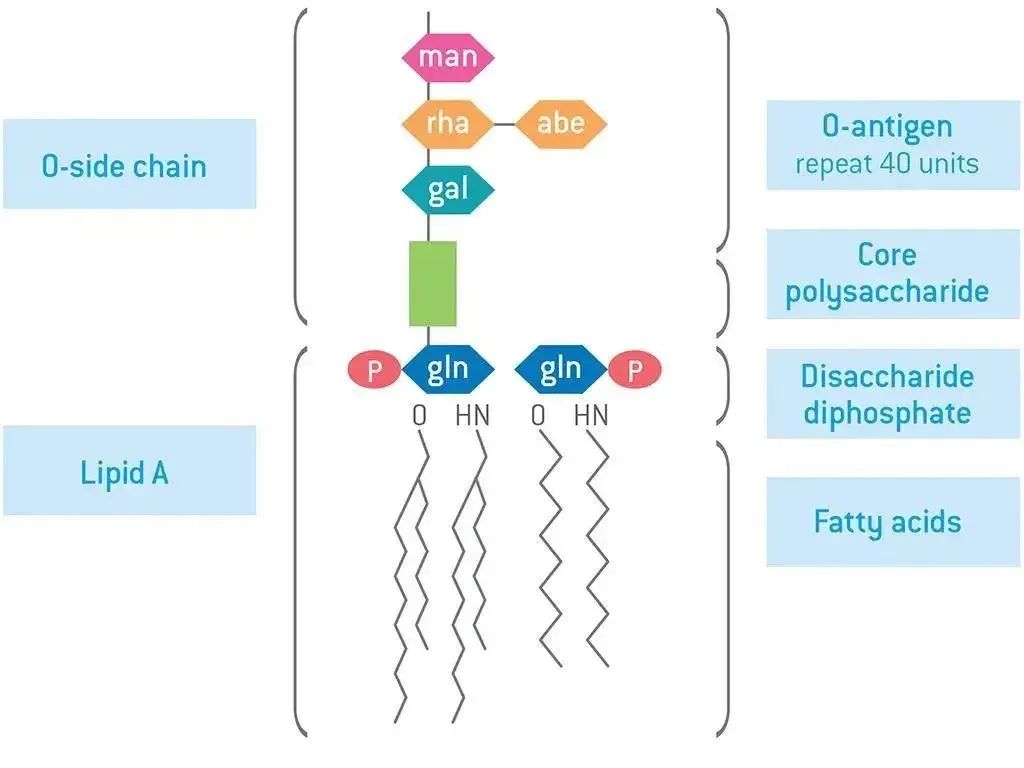
There are two types of bacterial endotoxin detection methods: gel method and photometric method. The former uses the principle of aggregation reaction between the horseshoe crab reagent and bacterial endotoxin to detect or semi-quantify endotoxin, while the latter includes turbidity and colorimetric methods, which measure the turbidity changes during the reaction between the horseshoe crab reagent and endotoxin and the amount of colored groups released by the specific substrate due to the produced coagulase.
- Gel Method
The gel method mixes the sample with the horseshoe crab reagent in a test tube and incubates it at 37±1°C for 60±2 minutes without shaking. After heating, the tube is immediately tilted 180°. If a gel has formed and maintains its integrity without deformation or collapse, the result is positive; if no gel forms, it is negative. During detection, a series of samples should be diluted multiple times (usually 2-fold) to check whether each sample’s result is positive. The highest effective dilution factor or minimum concentration determined to be positive is referred to as the endpoint.
- Photometric Method
The photometric method (including turbidity and colorimetric methods) can quantitatively detect the amount of endotoxin, accurately assessing the relative risk of contamination during product production. The quantitative detection data not only aids in tracking product quality trends but also serves as a risk warning, meeting data integrity requirements. The photometric method can determine interference trends through recovery rates, especially advantageous for research-type samples (e.g., new products). The detection limit range of the photometric method is broader than that of the gel method, allowing samples with interference to have greater dilution factors. For some samples where interference cannot be eliminated using the gel method, the photometric method can be attempted to establish bacterial endotoxin detection methods.
Recombinant C Factor Endotoxin Detection Method
Due to national policy influences, the raw materials used in endotoxin detection reagents, horseshoe crabs (Chinese horseshoe crabs and Atlantic horseshoe crabs), have been classified as nationally protected animals, meaning that the raw materials for endotoxin detection reagents will be strictly controlled. With the gradual reduction of horseshoe crab resources and the development of recombinant technology, the new generation recombinant C factor endotoxin detection method has emerged. The 2020 edition of the pharmacopoeia has officially introduced the recombinant C factor method, effective from December 30, 2020. Lonza PyroGeneTM recombinant C factor reagent kit is a result of the development of endotoxin detection methods. Through the first component of the in vitro recombinant horseshoe crab coagulation cascade reaction: C factor, the recombinant C factor method requires only one reaction, superior to the traditional LAL method and does not rely on animal-derived components – horseshoe crab blood. PyroGeneTM recombinant C factor method activates the C factor to directly cleave a fluorescent substrate, and the generated signal is recognized by a fluorescent enzyme marker. Due to the large dynamic range of the fluorescent signal, compared to the traditional dynamic LAL method, PyroGeneTM recombinant C factor method requires only one reaction, achieving a detection range of 5.0 EU/ml – 0.005 EU/ml. 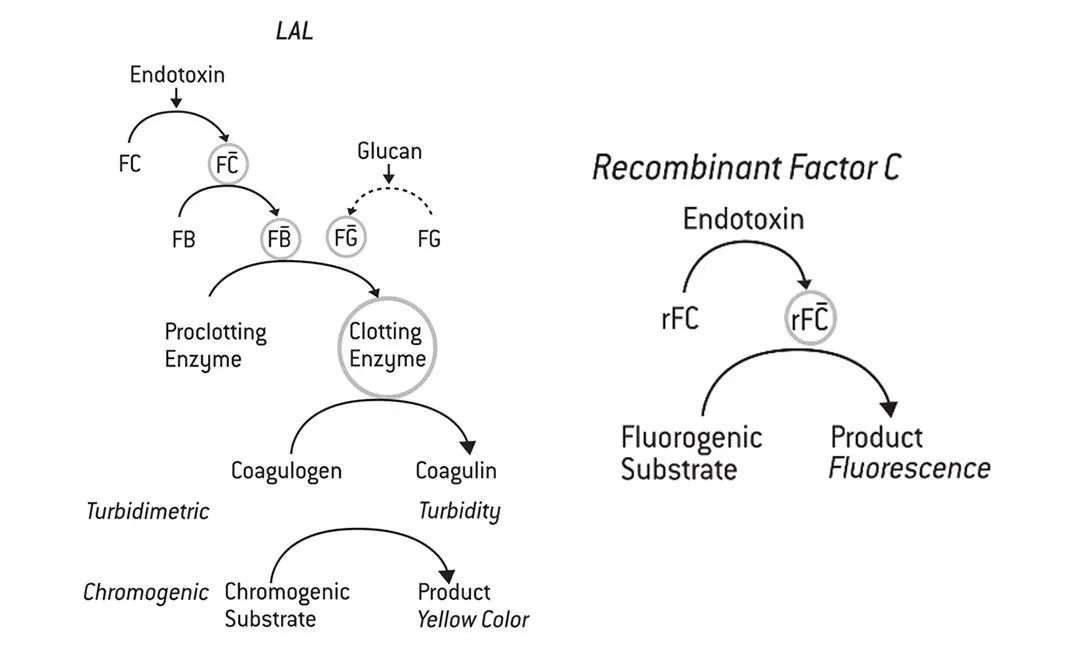
▲ The above image shows the kinase cascade reactions of PyroGeneTM recombinant C factor compared to traditional LAL methods, such as dynamic colorimetric and dynamic turbidity methods.
Compared to the classical horseshoe crab reagent endotoxin detection methods, the recombinant C factor endotoxin detection method has higher specificity, better specificity, precision, accuracy, linear range, and quantification limits. It is currently an improved method for horseshoe crab reagent endotoxin detection with the following advantages:
- Endotoxin specificity, as recombinant technology eliminates the interference of β-1,3-glucan in the horseshoe crab reagent on detection results, leading to potential false positives.
- Does not rely on animal-derived components, providing higher supply safety.
- Recombinant expression production, good consistency between product batches.
- Endpoint fluorescence measurement, comparable to other quantitative horseshoe crab reagent methods.
- Sensitivity range from 0.005 to 5 EU/ml.
- Eliminates dependence on animal-derived reagents, complying with the 3R replacement principle.
- Pharmacopoeia recommended.
Can replace traditional horseshoe crab reagents for endotoxin detection in human and animal injectable drugs (such as chemical drugs, radioactive drugs, antibiotics, biological products, etc.) and medical devices (such as dialysis fluids, implantable devices, etc.) for raw materials, intermediate products, and released products.
History of Compliance Approval for Recombinant C Factor
In June 2012, the U.S. Food and Drug Administration (FDA) issued the “Guidance for Industry on Pyrogen and Endotoxin Testing” document, listing the recombinant C factor method as an alternative endotoxin detection method to the LAL method. In July 2015, the European Pharmacopoeia included the recombinant C factor method as an alternative endotoxin detection method to the LAL and rabbit pyrogen tests in a newly drafted chapter 5.1.10. On July 1, 2016, chapter 5.1.10 officially came into effect. The U.S. FDA has allowed the use of PyroGeneTM recombinant C factor method for endotoxin release testing in drug clinical applications under 510(k). In September 2018, the U.S. FDA first approved the use of the recombinant C factor method for bacterial endotoxin release testing in a monoclonal antibody drug for treating adult migraines. In December 2018, the European Pharmacopoeia drafted a new chapter 2.6.32 for bacterial endotoxin testing using the recombinant C factor method. In January 2019, after the European Pharmacopoeia (EP), Japanese Pharmacopoeia (JP), and United States Pharmacopeia (USP), the fourth version of the Chinese Pharmacopoeia listed the recombinant C factor method as a bacterial endotoxin detection method, effective in 2020. Currently, the recombinant C factor has been recognized by regulations in various countries, and pharmacopoeias have successively introduced the recombinant C factor. The European Pharmacopoeia explicitly states that the recombinant C factor can be used for endotoxin detection and is formally included in chapter 2.6.32. The U.S. and Japanese pharmacopoeias have also incorporated the recombinant C factor into their respective guideline chapters. The 2020 version of the Chinese Pharmacopoeia also officially reflects this in the guidance principles for bacterial endotoxin testing. Recently, Lonza developed a dataset at the request of the United States Pharmacopeia (USP) for the formal inclusion of the recombinant C factor endotoxin detection method in the United States Pharmacopeia.
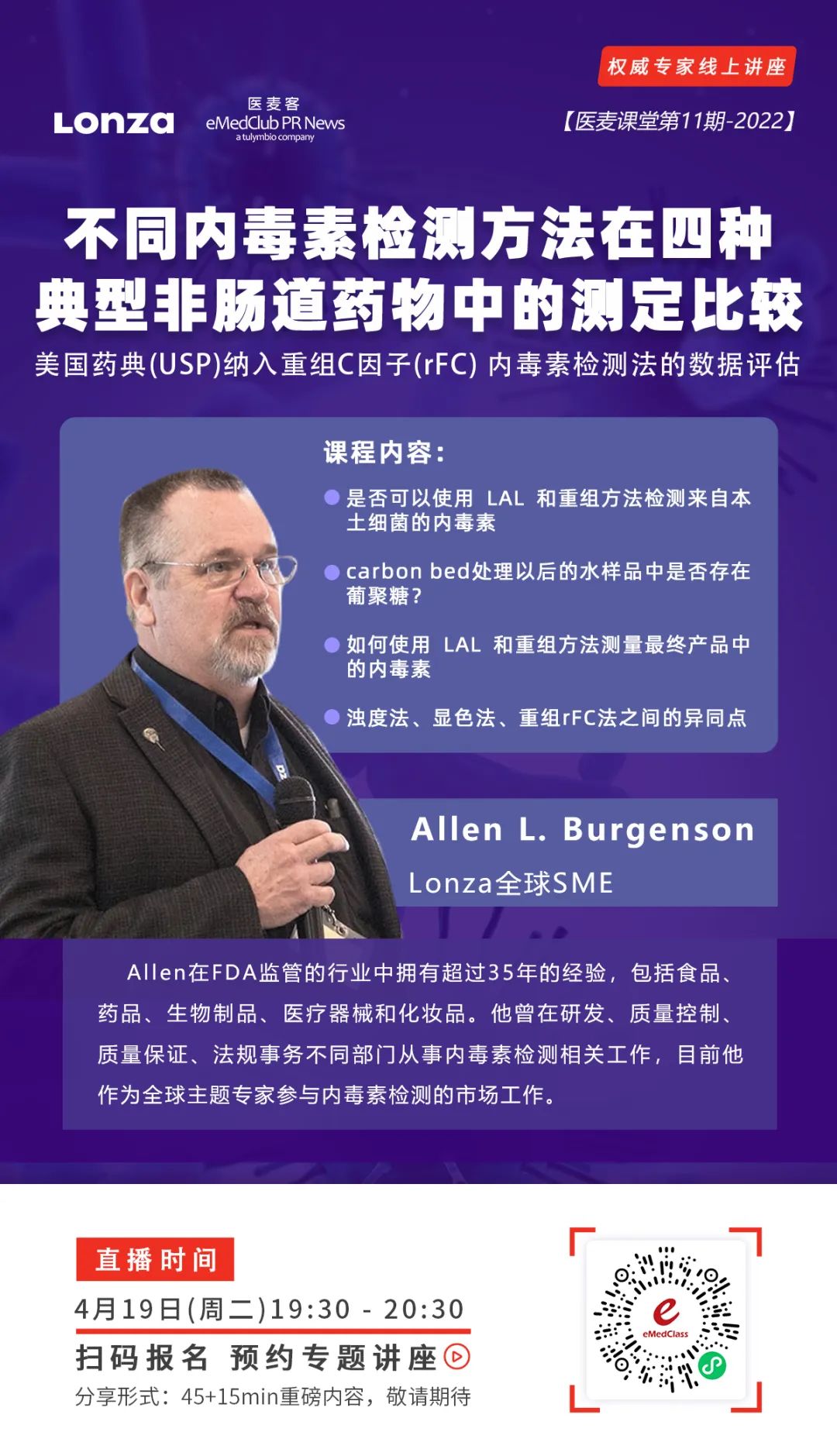
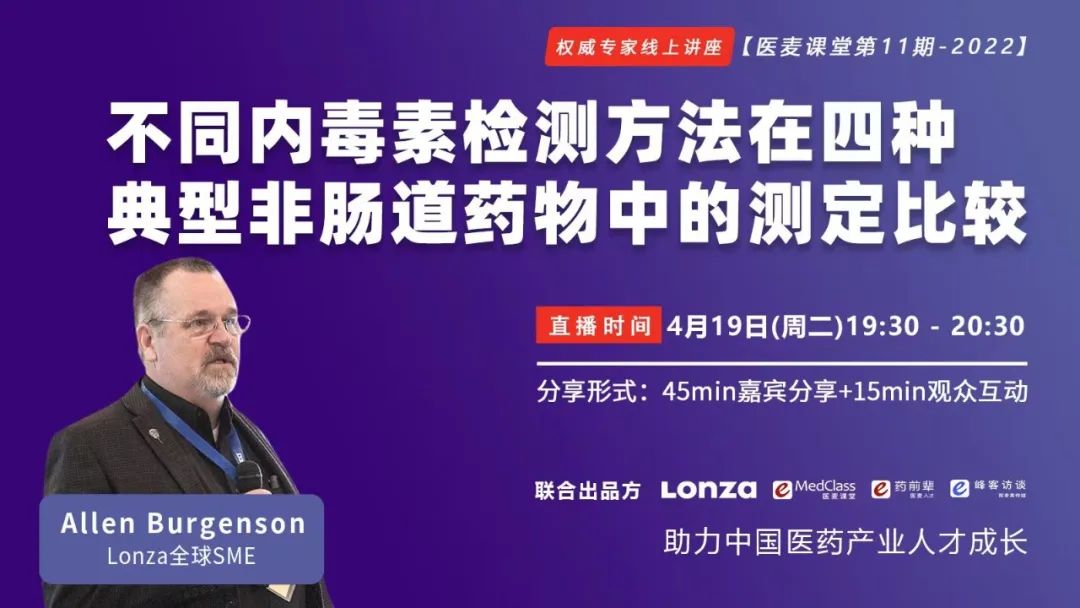
eMedClub invites Lonza global expert Allen L. Burgenson to host an online live course on April 19, 2022 (Tuesday) from 19:30 to 20:30, titled “Comparison of Different Endotoxin Detection Methods in Four Typical Non-Intestinal Drugs“. Global expert Allen L. Burgenson will share these latest data with Chinese audiences.
eMedClub Classroom
Live Topic: Comparison of Different Endotoxin Detection Methods in Four Typical Non-Intestinal Drugs
Live Time: April 19, 2022, from 19:30 to 20:30
Course Topics:
➤ Can LAL and recombinant methods be used to detect endotoxins from indigenous bacteria?
➤ Is there glucan present in water samples treated with carbon bed?
➤ How to measure endotoxins in final products using LAL and recombinant methods
➤ Similarities and differences between turbidity, colorimetric, and recombinant rFC methods
Bilingual PPT, with translation during the Q&A session, exciting content, welcome to register!
Click the image below to register for the mini-program ☟
Note
1. There will be SMS or email reminders before the live broadcast starts, please ensure to fill in the correct phone number and email address when registering.
2. Course content summaries will be published on the “eMedClub” subscription account (WeChat ID: eMedClub), and more course announcements will be released in a timely manner. If you don’t want to miss it, please follow us quickly!
eMedClub Classroom 
To support the growth of talent in China’s biopharmaceutical industry, eMedClub proudly launches the “eMed Classroom” column, inviting senior authoritative experts in the biopharmaceutical industry to focus on various issues in the new drug development process, providing exciting courses for pharmaceutical industry talents to learn instantly. More than forty sessions have been launched, with over 75,000 online views, receiving high praise!
About Lonza Bioscience Solutions
Lonza Bioscience Solution provides research and disease discovery tools for innovative research at academic and industrial research institutions, offering solutions for biopharmaceuticals and emerging technologies, including research and production in fields such as cell and gene therapy, antibody drugs, and vaccines, fully supporting the commercialization pathway of products. For more information, please visit: https://bioscience.lonza.com