The latest Insta360 GO Ultra sports camera can be seen as a significant innovation in the brand’s ultra-portable product line. It continues the modular design of its predecessor, the GO 3S, while incorporating some advanced features from the Ace Pro series, targeting the mainstream action camera market. After extensive testing in various scenarios, including underwater, daily, and dynamic shooting, its overall performance has significantly improved, but there are also some trade-offs to consider.
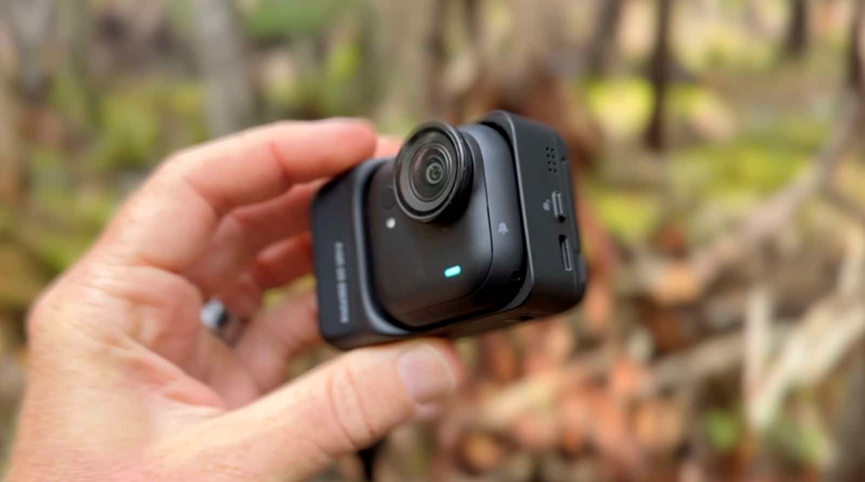
The GO Ultra features a magnetic modular structure, allowing the main unit to be independently removed for shooting and returned to the charging case for recharging. The overall design is more squared compared to the GO 3S, with the weight increasing from 39 grams to 53 grams, still within the lightweight category. The package includes an adjustable angle magnetic mount and a safety strap, enhancing practicality. Its starting price is 2598 yuan, a noticeable increase from the previous generation, officially placing it in the competitive price range with GoPro, DJI Action, and others.
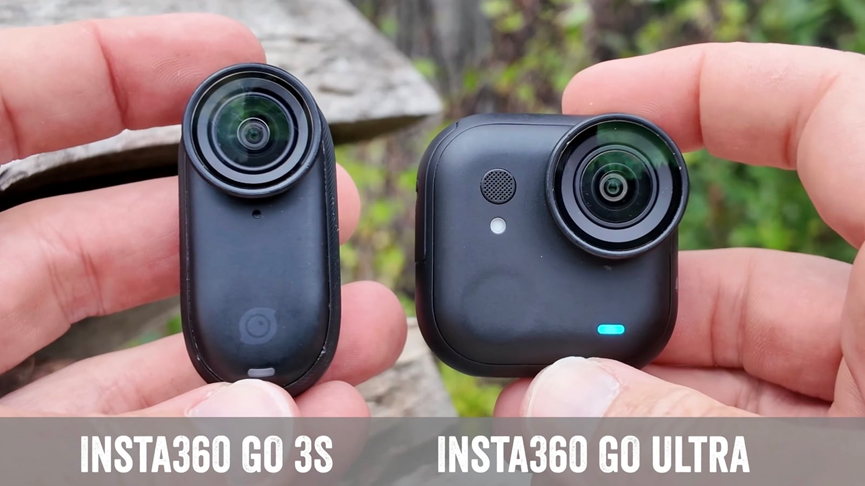
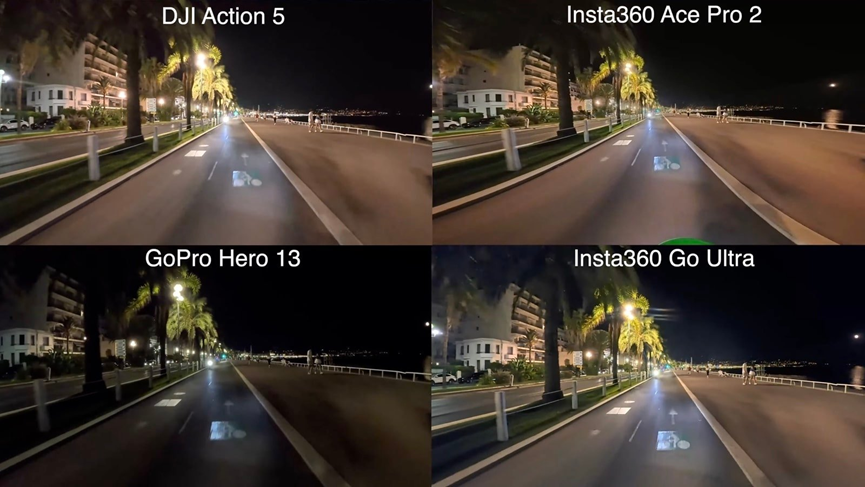
The most notable hardware upgrade is the sensor, which has increased in size to 1/1.28 inches, a 221% improvement over the GO 3S, and supports 4K/60fps video recording (the previous generation supported 4K/30fps). The official claim states a 200% improvement in low-light performance, and in actual tests, its performance in low light is indeed better than its predecessor. However, compared to its sibling, the Ace Pro 2, or competitors like the DJI Action 5, there is still a gap in image clarity and detail, especially in complex lighting environments, where the Ultra occasionally exhibits jitter and loss of detail.
The addition of a microSD card slot is a significant practical improvement, eliminating the previous reliance on built-in storage and reducing the risk of data loss. The camera module itself is waterproof, requiring no additional waterproof housing, but its charging base is not waterproof, and the USB-C port remains exposed, necessitating extra caution during use. Notably, for underwater shooting, the original round lens produces somewhat blurry images, requiring the purchase of a dedicated Aqua Lens for clear footage, which may be inconvenient for frequent underwater users.
The battery life has significantly improved, with the camera’s single recording time extended from 38 minutes to 70 minutes, and charging the case to 80% takes only 12 minutes, with a full charge also controlled within 18 minutes, a substantial improvement over the previous 47 minutes for a full charge. The field of view has expanded from 150° to 156°, which is more beneficial for first-person and wide-angle recording. The newly added 2x zoom option and 50-megapixel photo mode also expand creative possibilities, although in practical use, capturing frames from 4K video remains a more practical high-quality solution.
On the other hand, the GO Ultra still has some design decisions that may be unsatisfactory. It has added an ambient light sensor but has not implemented automatic switching to low-light mode, requiring users to adjust manually. Although it supports active HDR, the resolution is limited to 4K/30fps in this mode. More notably, Insta360 has adopted a new mounting system for the GO Ultra, which is not compatible with older accessories from the Ace Pro series and X5, increasing costs and reducing usability.
Overall, the Insta360 GO Ultra has achieved a leap in sensor, recording performance, storage flexibility, and battery life, while its modular design and magnetic mounting continue to maintain unique advantages. However, at the price of 2598 yuan, it must directly compete with established products like the Ace Pro 2, DJI Action 5, and GoPro Hero 13 Black. Most of these competitors perform more robustly in image quality, stability, and system compatibility. If users highly value the camera module’s detachable design and microSD expansion, the GO Ultra is a choice worth considering. However, if top-notch image quality, a more complete accessory ecosystem, and stronger low-light performance are sought, careful comparison is recommended before making a decision.
Previous Exciting Articles Review↓ ↓ ↓DJI Mic 3 leaks, will it reshape wireless audio standards on August 28?Price increase again this month! Fujifilm announces a second price adjustment for all products starting August 30Nikon Z 24-70mm f/2.8 S second generation may be released this week, with a significant price increase expectedFujifilm’s new king tops the list! MapCamera’s July camera sales ranking in Japan is out249 grams packed into a 1-inch sensor! DJI Mini 5 Pro real machine leaksHasselblad X2DII with LiDAR focusing and new 35-100mm lens scheduled for August 26, will Panasonic follow suit?ARRI seeks to sell! Canon’s acquisition of ARRI will rewrite the high-end imaging landscape?Camera battle over 10,000 yuan! Which of these 6 models will be the king of cost performance in 2025?Global shutter revolution! Sony A9 III leads the way, the 7 Sony mirrorless cameras worth buying in 2025Parameter enthusiasts face a reality check! Fujifilm X-E5 tests show low-resolution screens outperforming Sony’s flagship, film dials excite photographersFollow + star mark,to receive article push notifications in real-time, thank you for reading;If you like it, please click 【like】+【to see】 in the lower right corner, and share it with more people around you.