There are many types of PLCs, and brands are mostly divided into European, Japanese, and American systems. The German PLCs are primarily represented by Siemens, while the Japanese brands include Mitsubishi, Omron, Panasonic, and so on. The American brands include Rockwell (A-B), General Electric (GE), and Modicon.
The PLC technologies in the United States and Europe were developed independently in isolation, resulting in significant differences between American and European PLC products. In contrast, Japanese PLC technology was introduced from the United States, inheriting certain aspects of American PLC products, but Japanese products primarily focus on small PLCs. The US and Europe are known for medium to large PLCs, while Japan is renowned for small PLCs.
Due to differing ways of thinking, the problem-solving approaches of various PLC series also differ, so beginners should ideally understand the distinctions between different brands of PLCs.
Learning PLCs involves not only acquiring some basic programming knowledge and concepts but also understanding the problem-solving approaches of various manufacturers. Different individuals have different perspectives on the same issue, especially when comparing two PLCs from regions with such significant differences. During usage, one can experience how these two types of PLCs solve the same problem: why they solve it this way, what the benefits are, and which solution you prefer (or which is more convenient). Learning to think critically will lead to faster progress!
1. Different Programming Concepts
Mitsubishi PLCs are Japanese brands with intuitive and easy-to-understand programming, making them relatively easy to learn, but they have more instructions. Siemens PLCs, being German, have more abstract instructions and are more challenging to learn, but they have fewer instructions, so the learning cycle for both Mitsubishi and Siemens is about the same.
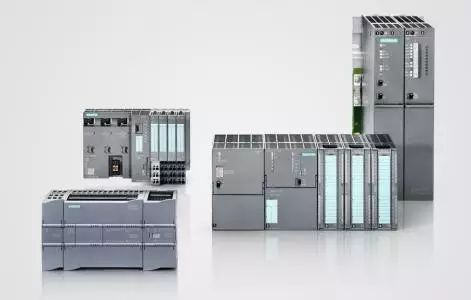
▲ Siemens
In my opinion, Mitsubishi (a mid to high-end Japanese brand) PLC software is at least 5 years behind Siemens. Not to mention medium to large systems, even when comparing Mitsubishi’s relatively advantageous small FX series to Siemens’ S7-200 series, Siemens has the following advantages:
1. Mitsubishi’s programming software has evolved from the early FXGPWIN to the recent GX Developer 8.8, and like all Japanese brands, its programming approach is a single top-down vertical structure, whereas Siemens’ Micro-WIN features both vertical and horizontal structures, and subroutines support local variables. The same functionality can be programmed once, greatly reducing development difficulty and time.
2. The S7-200 has always supported powerful floating-point operations, with the programming software directly supporting decimal input and output, while Mitsubishi only introduced this functionality in the recent FX3U series; the earlier FX2N series had fake floating-point capabilities.
3. The S7-200’s analog input and output programming is very simple and convenient, allowing AD and DA values to be accessed directly without programming, whereas Mitsubishi’s FX2N and earlier series require very cumbersome FROM TO instructions. The FX3U now supports this function, but it is at least five years late.
4. Of course, Mitsubishi’s FX2N series also has its own advantages: first, its high-speed counter instructions are more convenient than S7-200, and second, its 422 port is more robust than Siemens’ PPI port (as the 200 series PPI port is not optically isolated, non-standard operations and imitation programming cables may damage the serial port).
The above comparison only pertains to small machines; as for Siemens’ 300 and 400 series and larger TDC series, there is no need to elaborate here. Learning PLCs is easy with Mitsubishi due to its straightforward approach, but from a learning perspective, Siemens is undoubtedly better.
I personally believe that for beginners, learning Siemens is relatively easier, especially for those with a weak foundation, as learning Mitsubishi can be challenging. Siemens’ programming software is user-friendly.
2. Different Chips
This mainly reflects in capacity and processing speed. The Siemens CPU226 has a program capacity of 20K and a data capacity of 14K, while Mitsubishi’s FX2N only has a total of 8K, although the later FX3U series has improved.
Siemens’ CPU226 and CPU224XP come standard with 2 485 ports (PPI ports), with a maximum communication speed of 187.5K, while all previous series of Mitsubishi’s FX3U only have one 422 port, with a speed of 9.6K. If you need to connect intelligent instruments, you must purchase special modules like FX2N0-485BD. Furthermore, the two communication ports can allow one to connect a data download cable and the other to connect a touchscreen for program debugging; otherwise, you have to unplug and replug the touchscreen data cable, which is cumbersome.
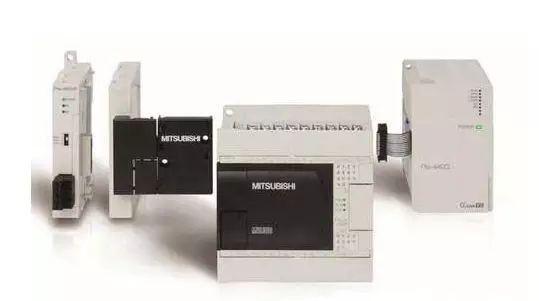
▲ Mitsubishi
As mentioned earlier, the 200 series’ PPI port is not optically isolated, and non-standard operations and imitation programming cables may damage the serial port. Users should be very cautious; it’s best not to connect or disconnect while powered. The S7-200’s communication port is indeed very delicate and definitely not as robust as Mitsubishi’s.
3. Different Strengths in Control
Siemens excels in process control and communication control, with inexpensive analog modules and simple programming, while Mitsubishi’s analog modules are expensive and complex, and Siemens makes communication easy with simple programming, while Mitsubishi is weaker in this area.
Mitsubishi’s strengths lie in discrete control and motion control, with rich instructions and dedicated positioning commands, making it easier to control servos and stepper motors. Achieving certain complex motion controls is also a strength of Mitsubishi, while Siemens is weaker in this regard, lacking dedicated commands, making servo or stepper positioning control possible but complicated and less precise.
For example, for devices that require only motion control, such as robotic arms, one can choose Mitsubishi’s PLC. For devices that require servo or stepper positioning control, Mitsubishi’s PLC is also preferable. For applications such as central air conditioning, wastewater treatment, and temperature control, which involve many analog signals, Siemens’ PLC is more appropriate, especially for devices requiring data collection from many instruments via communication.
Therefore, for different devices and control methods, we should reasonably select PLCs, leveraging their strengths and avoiding their weaknesses.
Source: Automation Manufacturing
Business Cooperation: 010—88379790 ext. 822, 802
Disclaimer: This article is a network reprint, and the copyright belongs to the original author. However, due to numerous reprints, the true original author cannot be confirmed, so only the source of the reprint is indicated. If the videos, images, or text used in this article involve copyright issues, please notify us immediately, and we will confirm the copyright based on the proof materials you provide and pay remuneration according to national standards or delete the content immediately! The content of this article reflects the original author’s views and does not represent the views of this public account or take responsibility for its authenticity.