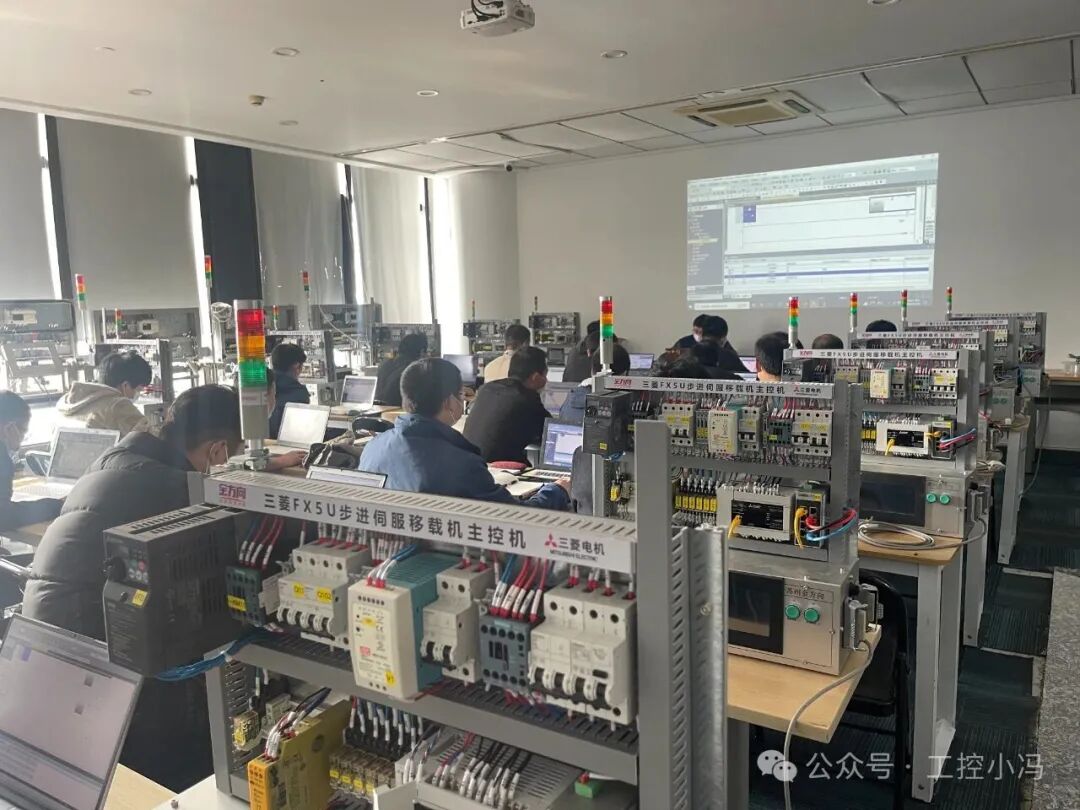
This case study presents three programming methods for achieving sequential startup of three motors using Mitsubishi PLCs, focusing on timing control and multi-device coordination:
1. Control Requirements
- 1.Functional Requirements:
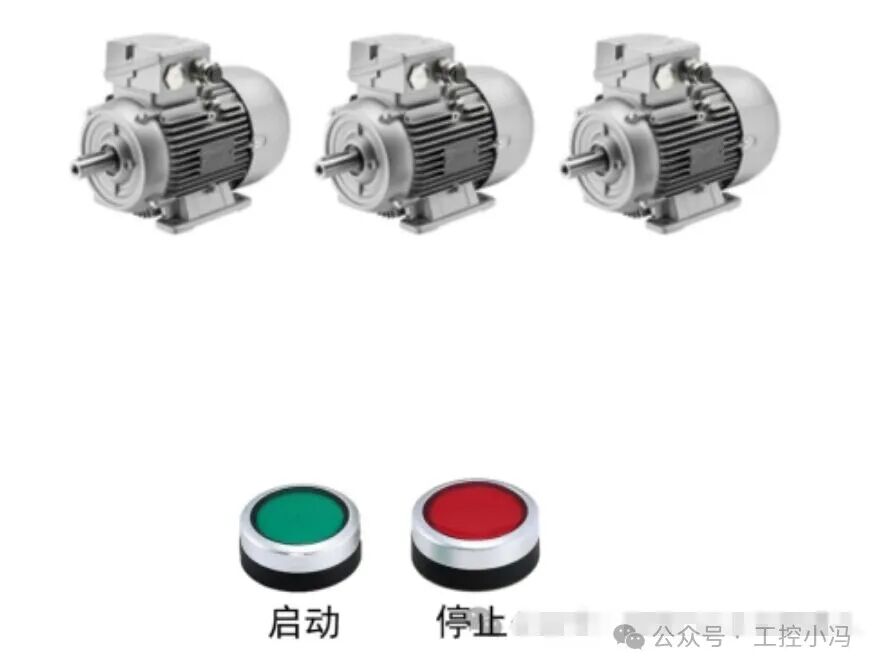
- •Start button X0 triggers: Y0 starts after 2 seconds → Y1 starts after 4 seconds → Y2 starts after 6 seconds
- •Stop button X1 immediately stops all motors
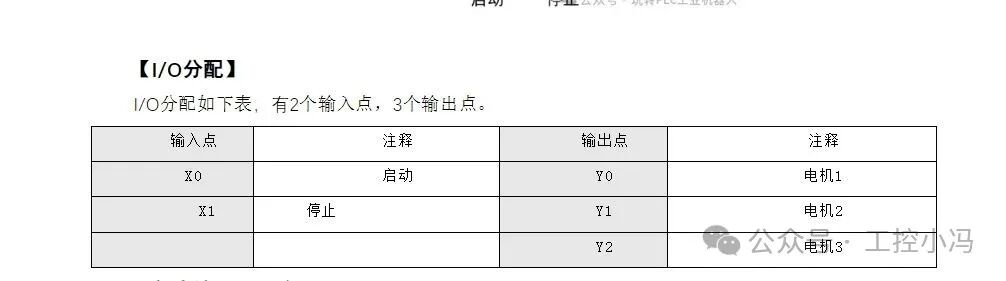
- •Inputs: X0 (Start), X1 (Stop)
- •Outputs: Y0-Y2 (Motors 1-3)
2. Comparison of Programming Solutions
- 1.
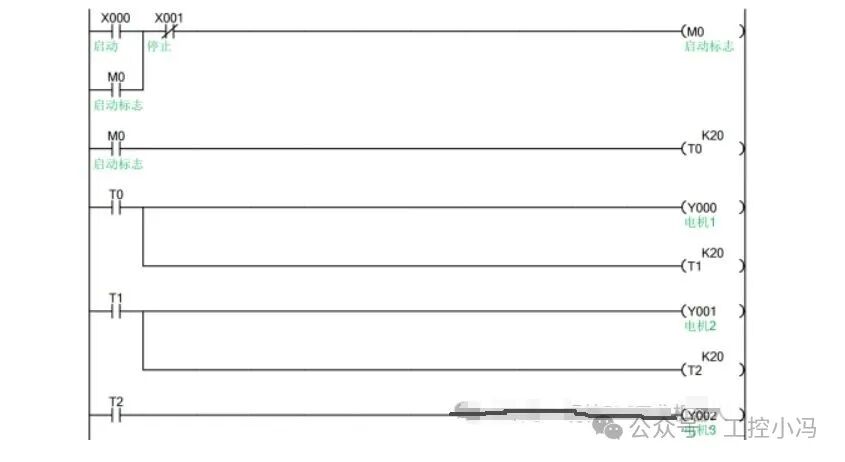
Multiple Timer Solution
- •Logic: M0 latches, T0 → T1 → T2 three-level timers in series (each level 2 seconds)
- •Features: Intuitive and easy to understand, but consumes more timer resources (3 timers)
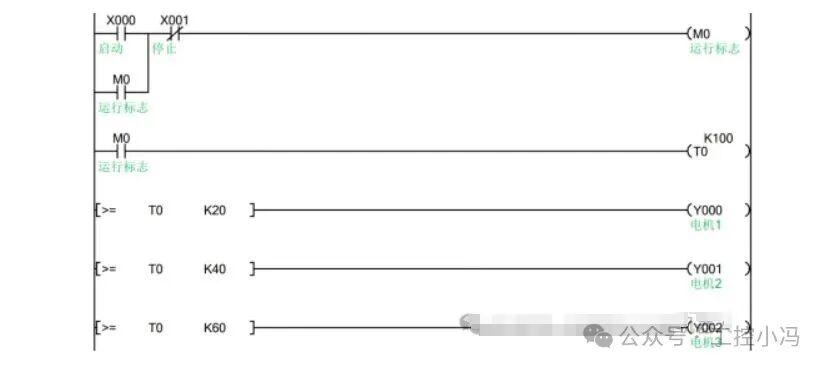
Single Timer + Comparison Instruction
- •Logic: T0 is set for a total duration of 10 seconds, triggering corresponding motors through ≥K20/K40/K60 comparisons
- •Advantage: Only uses 1 timer, saving PLC resources
- •Note: Timer set value must be >6 seconds (case takes K100=10 seconds)
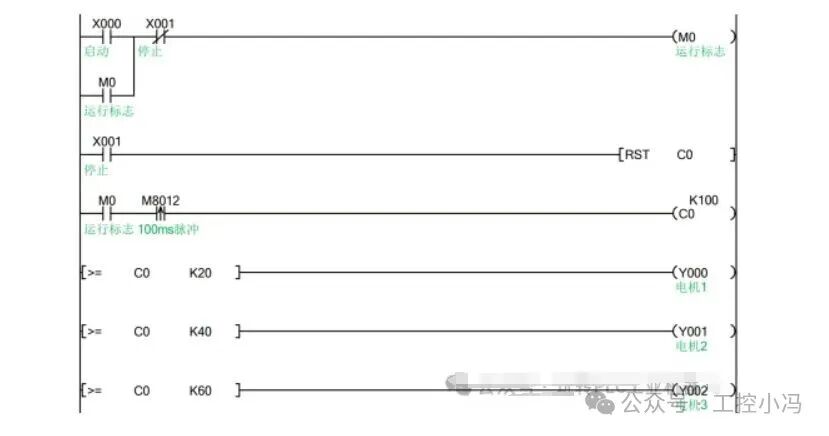
Pulse Counter Solution
- •Logic: M8012 (100ms pulse) drives C0 counting, comparing count value to trigger output
- •Highlight: Avoids timer usage, suitable for high-frequency pulse scenarios
- •Key: Must reset the counter with RST when stopping
3. Engineering Practice Recommendations
- 1.For simple projects, prefer the multiple timer solution (intuitive debugging)
- 2.Use the single timer solution when resources are tight (recommended for FX series PLCs)
- 3.The counter solution is suitable for high-frequency control scenarios (if millisecond-level precision is required)
- 4.Common Points:
- •Must configure M0 running flag to implement emergency stop function
- •Timer/counter parameters must match the actual device startup delay
This case reveals typical design patterns for industrial timing control. All three methods comply with IEC61131 standards, and the actual selection should comprehensively evaluate PLC models, project complexity, and maintenance costs.