For automation beginners, it is inevitable to face some PLC programming questions during job interviews. Although they are not difficult, analyzing tasks and writing programs according to requirements in a short time can be quite stressful. Below are several typical PLC cases for your reference!
(1) Traffic Signal Arrangement at an Intersection
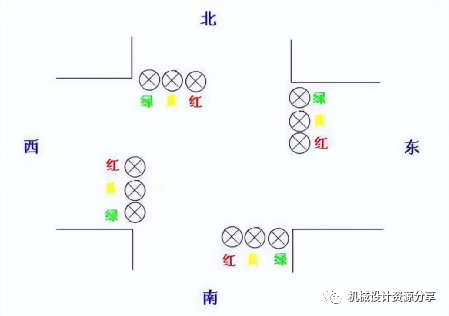
1. Control Requirements
(1) The signal light system is controlled by a start switch. When the start switch is turned on, the signal light system begins to operate. When the start switch is turned off, all signal lights go out.
(2) The north-south green light and the east-west green light cannot be on at the same time. If they are on simultaneously, the signal light system should be shut down and an alarm should be triggered.
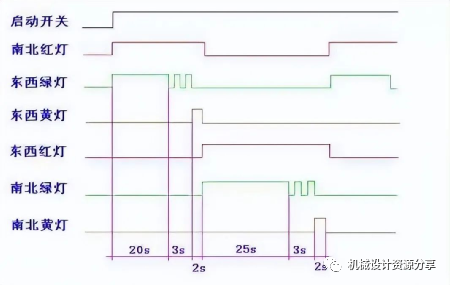
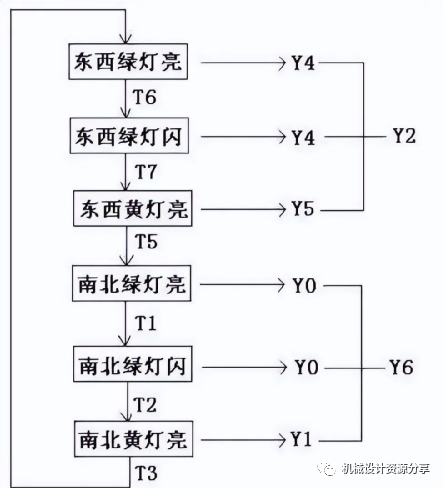
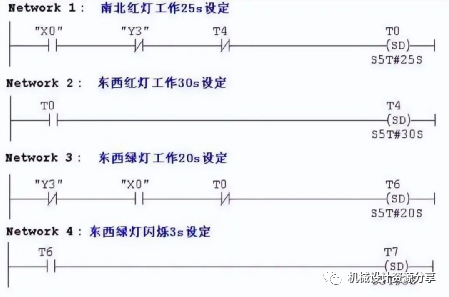
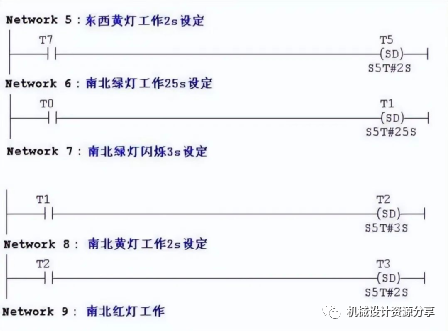
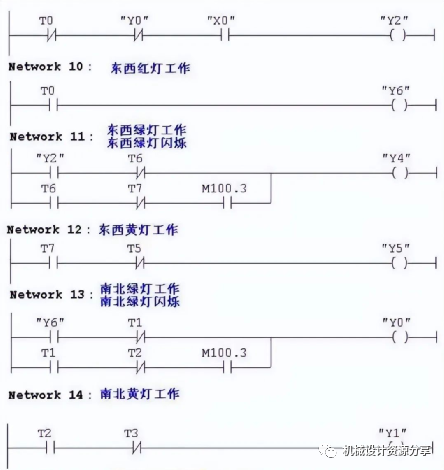
(3) The north-south red light remains on for 25 seconds. While the north-south red light is on, the east-west green light is also on and remains on for 20 seconds. After 20 seconds, the east-west green light flashes for 3 seconds and then goes out. At this time, the east-west yellow light turns on and remains on for 2 seconds. After 2 seconds, the east-west yellow light goes out, and the east-west red light turns on. Meanwhile, the north-south red light goes out, and the north-south green light turns on.
(4) The east-west red light remains on for 30 seconds. The north-south green light remains on for 25 seconds, then flashes for 3 seconds before going out. At the same time, the north-south yellow light turns on and remains on for 2 seconds before going out. At this point, the north-south red light turns on, and the east-west green light turns on.
(5) The above north-south and east-west signal lights alternate in a cyclical manner, directing traffic at the intersection. The sequence is as follows:
2. PLC Wiring
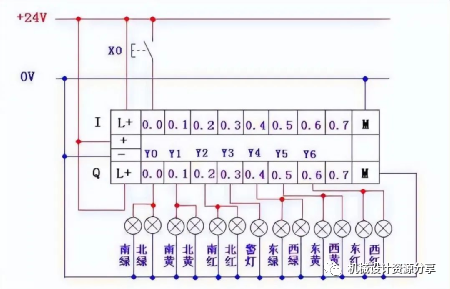
3. Define Symbol Addresses
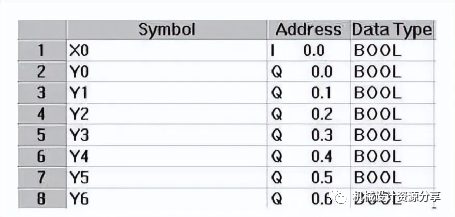
4. Ladder Diagram Program

(2) Control of Elevator in a Three-Story Building
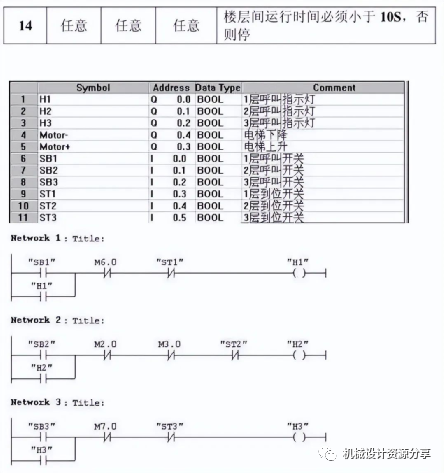
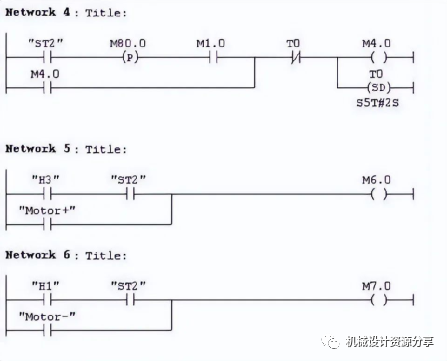
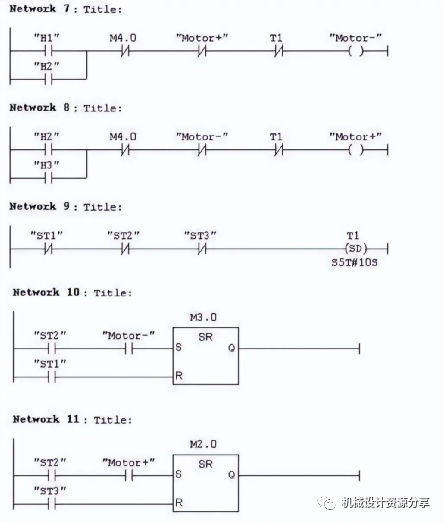
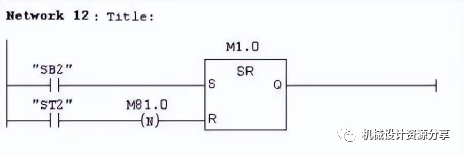
The elevator’s ascent and descent are controlled by a motor; it ascends when the motor rotates forward and descends when it rotates in reverse. Each floor is equipped with a call switch (SB1, SB2, SB3), a call indicator light (H1, H2, H3), and a position limit switch (ST1, ST2, ST3).
1. Control Requirements:
(1) The call switches on each floor are push-button switches. SB1, SB2, and SB3 are all momentary switches (i.e., they are effective only when pressed momentarily).
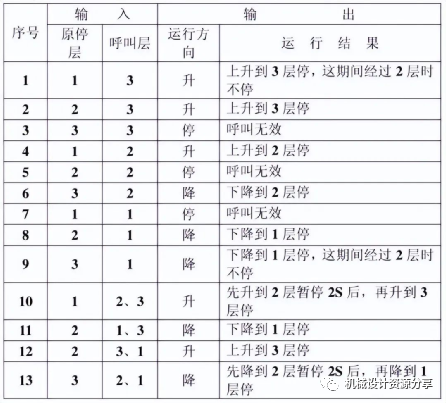
(2) The elevator should only respond to the upward call when it is ascending and to the downward call when it is descending. Any calls in the opposite direction are invalid, referred to as irreversible calls. Specific operational requirements are shown in the table below.
(3) The effective running time between floors should be less than 10 seconds; otherwise, it is considered a fault, and the motor should stop automatically.
(3) PLC Control of a Multi-Liquid Mixing Device
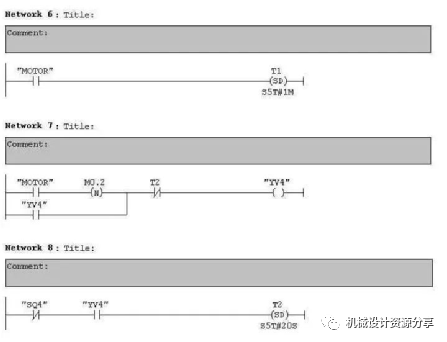
As shown in the figure, this is a mixing device for three types of liquids. SQ1, SQ2, SQ3, and SQ4 are liquid level sensors. When the liquid level is submerged, they are activated. Liquids A, B, and C are controlled by solenoid valves YV1, YV2, YV3, and YV4, and M is the stirring motor. The control requirements are as follows:
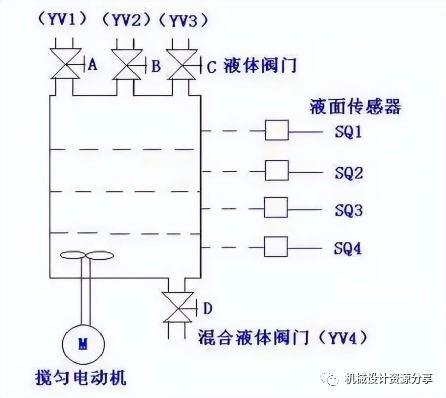
1. Initial State
When the device is put into operation, the valves for liquids A, B, and C are closed, and the mixing valve is opened for 20 seconds to empty the container before closing.
2. Start Operation
Press the start button SB1, and the device begins to operate according to the following rules:
① The valve for liquid A opens, and liquid A flows into the container. When the liquid level reaches SQ3, SQ3 is activated, the valve for liquid A closes, and the valve for liquid B opens.
② When the liquid level reaches SQ2, the valve for liquid B closes, and the valve for liquid C opens.
③ When the liquid level reaches SQ1, the valve for liquid C closes, and the stirring motor starts stirring.
④ The stirring motor operates for 1 minute before stopping, the mixing valve opens, and the mixed liquid is released.
⑤ When the liquid level drops to SQ4, SQ4 is deactivated. After 20 seconds, the container is emptied, the mixing valve closes, and the next cycle begins.
3. Stop Operation
Press the stop button SB2, and the current mixing operation must be completed before stopping (returning to the initial state).
Reference Program:
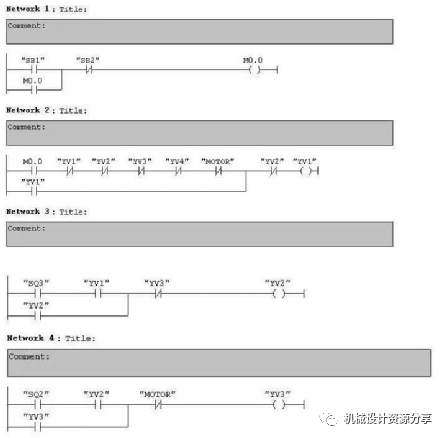
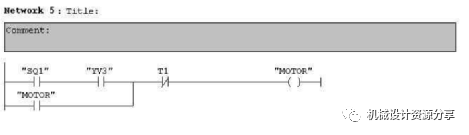
(4) Design of Neon Light Advertising Screen Controller
Using PLC to control the neon light advertising screen, the specific requirements are as follows:
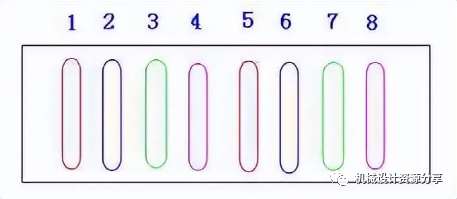
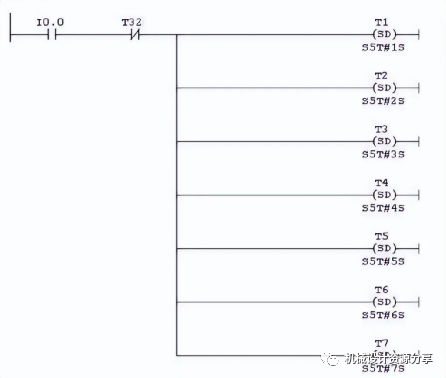
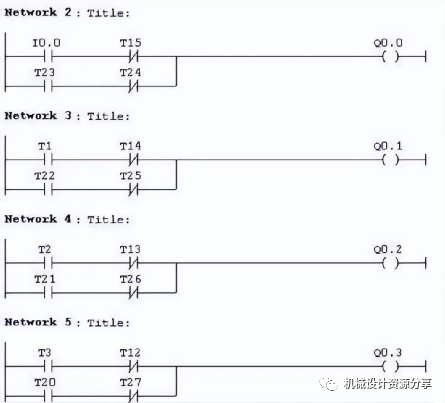
In this advertising screen, the sequence of 8 tubes lighting up and going out is as follows: the 1st tube lights up → the 2nd tube lights up → the 3rd tube lights up → … → the 8th tube lights up, with a time interval of 1 second. After all are lit, they remain on for 10 seconds, then go out in reverse order from 8 → 7 → … → 1. After all are out, they remain off for 2 seconds, then start lighting up from the 8th tube, lighting up in order 7 → 6 → … → 1, with a time interval of 1 second, remaining on for 20 seconds, then going out in reverse order from 2 → … → 8. After all are out, they remain off for 2 seconds, then start running from the beginning, repeating indefinitely.
Reference Ladder Diagram Program:

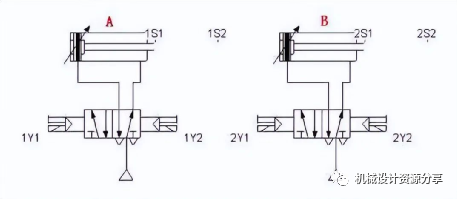
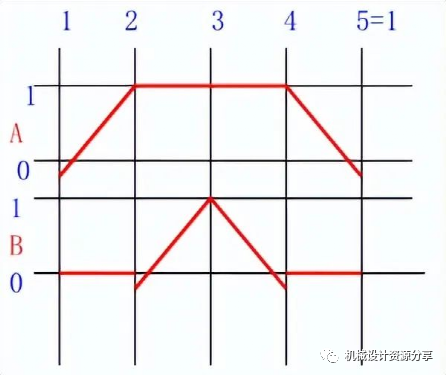
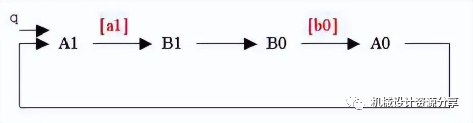
(5) Design a Program to Operate Two Cylinders in Sequence: A1B1B0A0
(1) Pneumatic Control Circuit
(2) Displacement-Step Diagram
(3) Type I Fault Signal Analysis
(4) PLC Wiring
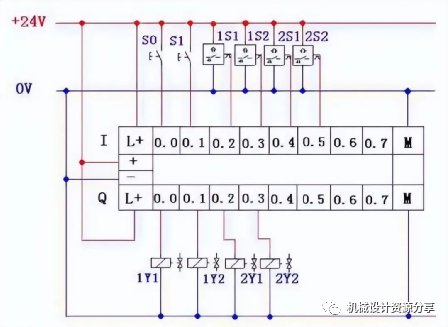
(5) Define Symbol Addresses
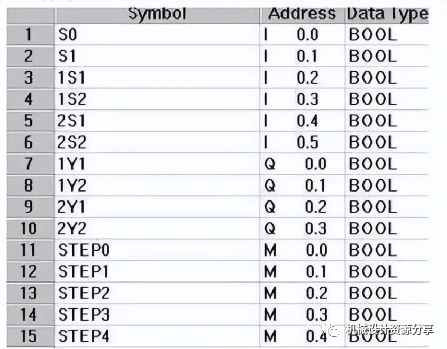
(6) Ladder Diagram Program
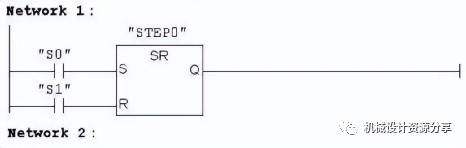
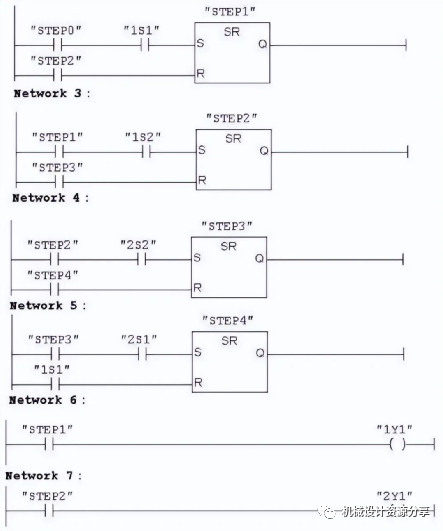
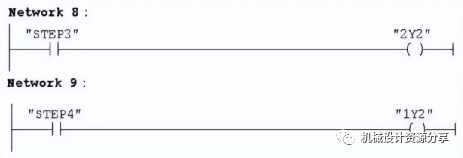
(6) PLC Control of an Automatic Vending Machine
As shown in the diagram, the working requirements for the vending machine are as follows:
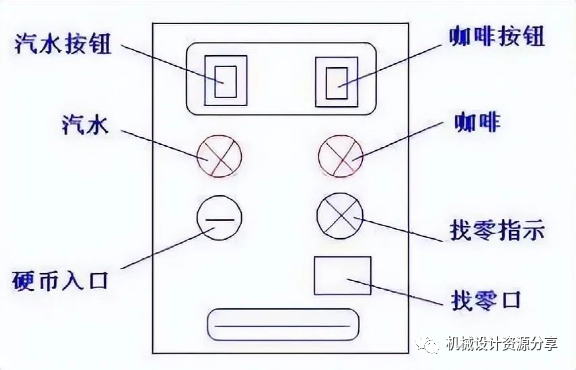
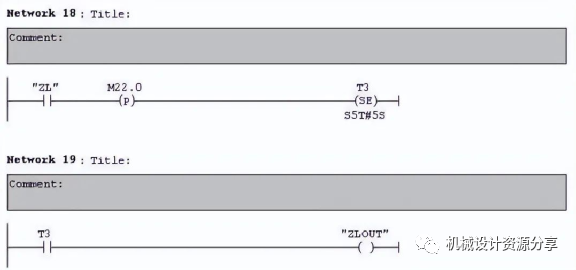
1. This vending machine accepts 1 yuan, 5 yuan, or 10 yuan coins.
2. When the total value of the inserted coins exceeds 12 yuan, the soda button indicator lights up; when the total value exceeds 15 yuan, both the soda and coffee button indicators light up.
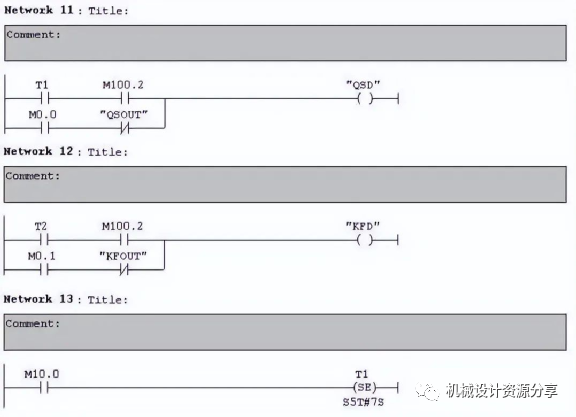
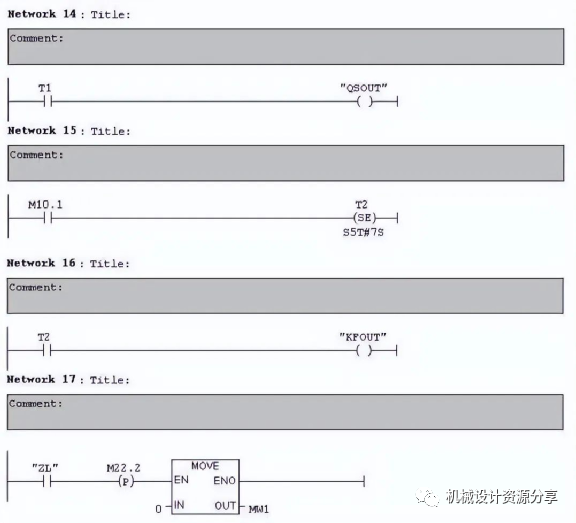
3. When the soda button indicator lights up, pressing the soda button dispenses soda for 7 seconds before stopping automatically. During this time, the soda indicator flashes.
4. When the coffee button indicator lights up, pressing the coffee button dispenses coffee for 7 seconds before stopping automatically. During this time, the coffee indicator flashes.
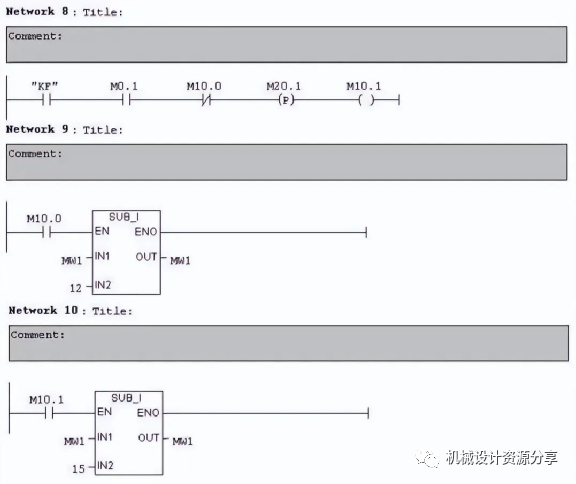
5. If the total value of the inserted coins exceeds the required amount for the button (soda 12 yuan, coffee 15 yuan), the change indicator lights up, indicating that change is being dispensed, and excess money is returned.
Reference Answers:
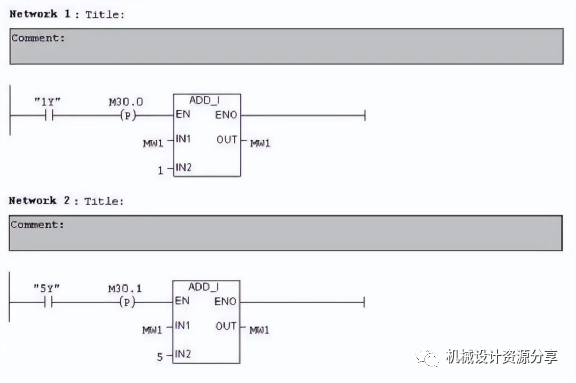
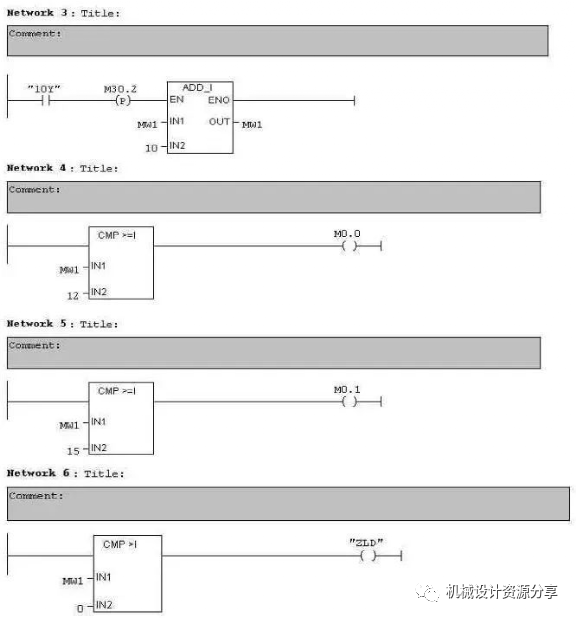
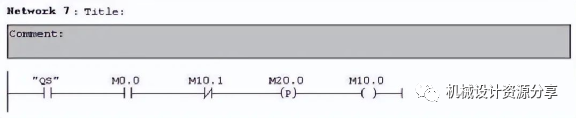
Disclaimer: This article is a network reprint or adaptation, and the original author could not be found. Copyright belongs to the original author. If there are any copyright issues, please contact for deletion.