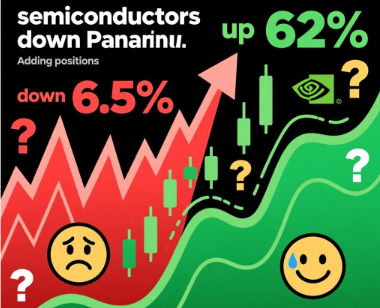
Recently, the debate over whether “AI is a bubble” has heated up again. On one side, stock prices are correcting and market sentiment is cooling, while on the other side, NVIDIA has just delivered an astonishing earnings report—revenue for the third quarter of fiscal year 2026 reached $57.01 billion, a year-on-year increase of 62%, with the data center business soaring to $51.2 billion, a year-on-year increase of 66%!
This inevitably raises the question: If this is a bubble, how is it getting bigger?
1. NVIDIA: Not Just Exceeding Expectations, But Surpassing Standards
According to research reports from various institutions such as CMB International, China Galaxy, and Dongguan Securities, NVIDIA’s performance this quarter can be summarized in three words: Strong, Clear, Forward-looking.
• Quarter-on-quarter revenue growth of 22%, with an additional $10 billion in a single quarter, far exceeding the historical average of $4-5 billion;• Fourth quarter guidance raised directly to $65 billion, nearly 5% higher than market expectations;• Gross margin steadily increased to 73.6%, and is expected to reach 75% by the end of the year;• More importantly, management clearly stated on the conference call: The Blackwell platform is sold out, and the Rubin platform is progressing as planned, with potential demand exceeding $500 billion for 2025-2026.
Behind these numbers are not hollow PPT stories, but real orders and capacity ramp-ups. For example, a new AI factory in Saudi Arabia is set to purchase 400,000 to 600,000 GPUs, and Anthropic has also turned to NVIDIA’s architecture for the first time—these are tangible demands.
2. Why is the Market Still Worried About a “Bubble”?
Despite the impressive performance, the semiconductor sector has recently seen continuous corrections. The Shenwan Semiconductor Index has dropped 6.54% in the past two weeks, underperforming the broader market. Why?
The main reasons are:
Short-term gains have been too large: since 2025, the semiconductor index has risen by **38.5%**, prompting some funds to take profits;Institutional holdings are concentrated: public funds’ allocation to the electronics sector has reached **12.66%**, making it prone to volatility;Geopolitical and supply chain pressures: for instance, export restrictions to the Chinese market and H20 chip sales of only $50 million have indeed brought uncertainty.
However, it is important to note: Correction ≠ Bubble Burst. As NVIDIA CEO Jensen Huang said, “The demand for training and inference is growing exponentially.” This is not just marketing talk, but the reality of continued capital investment by global cloud vendors—TrendForce’s latest forecast predicts that capital expenditure by leading internet companies will reach $430.6 billion (+65%) in 2025, and will surge to $602 billion in 2026.
3. Domestic Substitution: Not a Backup, But a Second Engine
Interestingly, while NVIDIA is making great strides, the domestic semiconductor industry chain is also quietly accelerating.
• Analog Chips: Both SiRuipu and Naxinwei saw revenue growth rates exceeding 60% in Q3;• Wafer Manufacturing: SMIC’s capacity utilization rate reached 95.8%, with plans for further expansion in Q4;• Equipment Sector: Northern Huachuang’s quarterly revenue exceeded 10 billion, and Tuojing Technology’s growth rate was 124%;• Storage Sector: Manufacturers like Jiangbolong and Changcun are pushing for NAND price increases and production cuts to address supply-demand imbalances.
Although it is difficult to shake NVIDIA’s dominance in the short term, domestic GPUs (such as Cambricon and Haiguang Information), advanced packaging, and AI servers have formed a complete ecosystem.China and the U.S. driving together may be the true picture of future AI infrastructure.
4. My View: Don’t Be Deterred by the “Bubble”, But Stay Alert
Honestly, seeing a figure like “$500 billion in demand” can make anyone’s heart race. But as ordinary investors, we must recognize the trend while also being wary of overheating.
The reasons for optimism are solid: The demand for AI computing power is real and is spreading from “large model training” to “inference deployment + end-user applications.” Alibaba’s launch of the “Thousand Questions APP” and Google’s rollout of Gemini 3.0 indicate that commercialization for the consumer end is starting.
But risks cannot be ignored: Rapid technological iteration, intensifying competition, geopolitical friction… any variable could put pressure on high valuations.
Therefore, rather than getting caught up in whether it is a bubble, it is better to focus on two questions:
Is this company truly involved in building AI infrastructure?Does its product have irreplaceability or cost advantages?
AI is Not a Flash in the Pan, But Don’t Blindly Invest
NVIDIA has proven with its performance that AI is not just a concept hype, but a multi-year industrial revolution. However, on the road of revolution, there will be leaders and there will be laggards.
For us ordinary people, there’s no need to panic, nor to be overly enthusiastic. Keep learning and understand the logic to navigate this wave steadily.
As a friend investor said: “Bubbles never burst suddenly; they leak slowly. But if you stand at the windward side, even if it leaks a bit, you can still fly for a while.”
Feel free to leave a comment: Do you think AI is currently in a “golden period” or a “dangerous period”?
(Data source: company financial reports, public research reports, investment involves risks, for reference only~ This articledoes not constitute any investment advice, and any actions taken based on it are at your own risk)