In the field of industrial automation, communication protocols are the technical foundation for data exchange between devices.S7 protocol and Modbus protocol are the two most common communication methods in industrial control, but they have significant differences in applicable scenarios and technical characteristics.
1.Protocol Essence: Specific Ecosystem vs Open Standard

- S7 protocol: A proprietary protocol developed by Siemens, applicable only to its S7 series PLCs and Siemens’ own systems. It is deeply integrated with Siemens’ hardware and software ecosystem and requires specific tools (such as TIA Portal) for development.
- Modbus protocol: Launched by Modicon (now part of Schneider Electric) in 1979, it is an open industrial protocol standard. Due to its strong compatibility, devices from any brand can support it, making it especially suitable for cross-brand device integration.
| Differences | S7 Protocol | Modbus Protocol |
|---|---|---|
| Development Background | Siemens proprietary protocol, highly closed | Open standard, cross-brand support |
| Compatibility | Optimized for communication between Siemens devices, poor compatibility | Strong device compatibility, suitable for multi-vendor integration |
2.Communication Architecture: Flexible Bidirectional vs Fixed Master-Slave
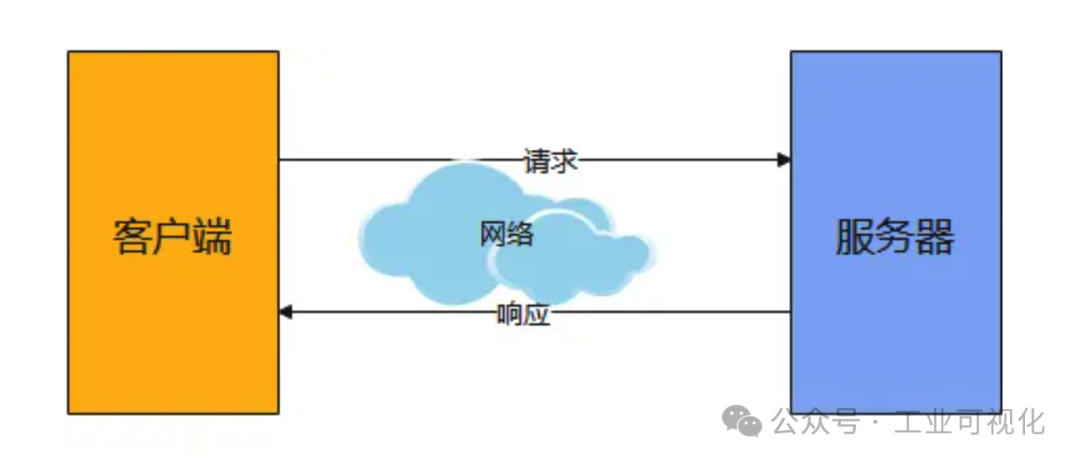
- S7 protocol supports flexible client/server (C/S) mode and peer-to-peer (P2P) mode. Devices can actively communicate with each other, making it very suitable for complex industrial scenarios.
- Modbus protocol adopts a strict master-slave mode, where the master device polls the slave devices, and the slave devices can only respond passively. This design is simple to implement but lacks flexibility and real-time performance.
| Differences | S7 Protocol | Modbus Protocol |
|---|---|---|
| Communication Mode | Supports active bidirectional communication | Unidirectional master-slave architecture, lower initiative |
| Applicable Scenarios | Complex industrial control scenarios | Simple device monitoring and data collection |
3.Data Processing Capability: Advanced Flexibility vs Simple Basics
The differences in data processing capabilities between the two are particularly evident:
- S7 protocol supports multiple data types (boolean, integer, floating-point, string, etc.) and allows efficient transmission of large volumes of data (such as DB blocks).
- Modbus protocol only supports boolean values and 16-bit integers, and cannot process data in batches during operations, making it more suitable for small-scale data transmission.
| Differences | S7 Protocol | Modbus Protocol |
|---|---|---|
| Supported Data Types | Supports multiple data types and batch read/write | Only boolean and 16-bit integers |
| Transmission Efficiency | High transmission efficiency, suitable for complex scenarios | Single operation, lower efficiency with multiple requests |
4.Communication Performance: High Real-time vs Basic Polling
S7 protocol can achieve millisecond-level real-time communication due to its optimized data compression and priority scheduling, making it very suitable for high-performance industrial operations.Modbus protocol, on the other hand, is limited by its design structure, and its real-time performance depends on the polling speed of the master station, which can easily lead to delays in multi-slave situations.
| Differences | S7 Protocol | Modbus Protocol |
|---|---|---|
| Real-time Performance | Supports high-speed real-time transmission (millisecond level) | Depends on master station speed, lower real-time performance |
5.Security: Basic Security Protection vs Plaintext Transmission
- S7 protocol supports data verification, sequence number tampering protection, and optional encryption (such as SSL/IPSec), with a relatively complete security mechanism.
- Modbus protocol has weak security design, usually transmitting data in plaintext, making it vulnerable to man-in-the-middle attacks or data tampering threats.
| Differences | S7 Protocol | Modbus Protocol |
|---|---|---|
| Security | Basic encryption and verification support | Plaintext transmission, almost no security protection |
6.Applicable Scenarios: High-performance Closed Loop vs Multi-brand Compatibility

- S7 protocol is designed for efficient communication between Siemens devices, suitable for highly integrated production systems such as automotive assembly lines and petrochemical industries.
- Modbus protocol is widely used in basic monitoring scenarios for multi-brand device integration due to its strong device compatibility, such as power monitoring and building automation.
| Differences | S7 Protocol | Modbus Protocol |
|---|---|---|
| Typical Applications | High-speed data synchronization, complex control such as factory automation | Multi-brand device collaboration, low-cost monitoring applications |
- Choose S7 protocol: When high real-time performance and complex data processing are required, primarily using Siemens devices.
- Choose Modbus protocol: When multi-brand device integration is needed, focusing on compatibility and cost-sensitive projects (such as simple monitoring systems).
In actual projects, if you need to balance the advantages of both, you can achieve a hybrid network through protocol gateways (such as S7-to-Modbus converters) to meet the needs of different scenarios. Choosing the right protocol based on specific requirements can help find the best balance between performance and compatibility.
Recent Hot Articles:
| Finally, someone clarified the Modbus bus with terminal resistance!!!After 5 years in industrial control! Still don’t understand PNP and NPN? OUT!Finally, someone clarified SCADA and PLC46 years!!! Two major fatal flawsFinally, someone clarified IoT wireless technology!!!If you don’t understand these!!! Don’t say you are proficient in C# upper computer communicationAwesome!!! MQTT directly collects PLC data??? |