
Recently, news about Imagination planning to split and sell stirred the entire electronics industry. Besides feeling helpless about this mobile GPU giant being forced to sell due to “Apple’s abandonment,” there is also regret over the renewed sale of MIPS.
As a well-known proponent of Reduced Instruction Set Computing (RISC), MIPS was established even six years earlier than its competitor ARM. However, while ARM thrives in multiple application fields and its market value continues to rise, MIPS’s decline is somewhat perplexing. The question remains: how did MIPS, which even came to market earlier, end up in such a situation? This needs to be traced back to the birth of RISC.
MIPS RISC Design Birth Changed the Processor Industry
The core microprocessors of modern appliances originated from three projects by Intel, Texas Instruments, and Garrett AiResearch in the last century. The pioneers of microprocessors they launched were Intel 4004, TMS 1000, and CADC, respectively. This marked the beginning of the microprocessor revolution.
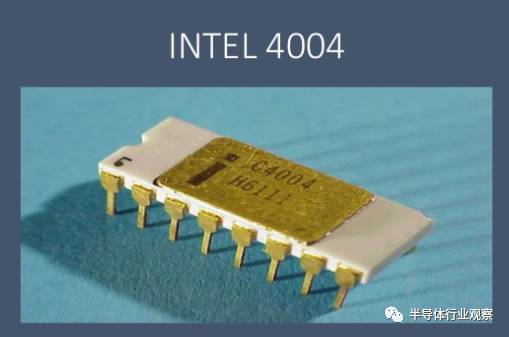
Looking back at the development history, in the early days of microprocessors, different manufacturers produced chips with different architectures (for example, Intel’s X86 series processors). Although later, under IBM’s “coercion,” Intel licensed the X86 architecture to a few other manufacturers, the mainstream at that time was still for processor manufacturers to independently develop architectures and even produce processors. This situation continued until 1980, with the birth of RISC.
The name of Reduced Instruction Set was first proposed in 1980 by David Patterson, who led the Berkeley RISC project at the University of California, Berkeley. However, before him, similar design concepts had already been proposed. The IBM 801 project, led by John Cocke, which started in 1975 and completed in 1980, might be the first system designed using the RISC concept.
Unlike Intel’s complex instruction sets, which designed many features to make coding easier, these complex features often required several instruction cycles to implement and were frequently not adopted by running programs. Furthermore, the speed difference between processors and main memory also became increasingly significant. These factors led to a series of new technologies that allowed processor instructions to be executed in a pipeline while reducing the number of times the processor accessed memory. Reduced Instruction Set simplified both the number of instructions and addressing methods, making implementation easier, improving instruction parallel execution, and enhancing compiler efficiency. The emergence of this relatively new instruction set facilitated the birth of MIPS.
After RISC gained popularity, John LeRoy Hennessy, the former president of Stanford University, and his research team developed a brand new microprocessor based on RISC, which became the predecessor of MIPS. In 1984, John LeRoy Hennessy and his team founded MIPS. Their business model was to license the completed chip design solutions to other manufacturers, allowing them to easily produce high-performance CPUs.
They did not disappoint in their R&D process. In their second year, they launched their first processor design, the R2000, and three years later, they introduced the R3000. They even released the 64-bit design R4000 in 1991. It is worth noting that their competitor ARM only widely promoted 64-bit processor designs in 2012, demonstrating the foresight of this company in design.
In its early years, MIPS also produced processors, and their self-manufactured R3000 became the first product of MIPS that gained popularity in the market, selling over a million units. The subsequent R3000A created a sales miracle of over a hundred million.
In addition to its own designs, semiconductor companies such as Pacemips, IDT, and Toshiba adopted its designs to manufacture chips in the early development of MIPS. The chips they produced were also used in terminal devices such as Sony and Nintendo game consoles, Cisco routers, and SGI supercomputers. Especially in the home router market, it is clear that MIPS held an absolute monopoly.
Missing the Smartphone Era, Unable to Turn Back
As a company founded by an old scholar, MIPS’s products have been known for their high performance since their inception. This is mainly due to their series of processors that work based on pipelining. This allows most of their instructions to follow this method of operation, achieving theoretical maximum performance. Looking at MIPS’s development history, they initially targeted Intel’s X86 products, so their high performance is understandable. However, this high-profile approach also contributed to MIPS’s current situation, which will be discussed later. We can be certain that the main reason for MIPS’s current outcome is not technical. Therefore, we need to consider it from a commercial perspective.
As mentioned earlier, this company, created by an old scholar, although its products have excellent performance, lacks sensitivity to business, leading to MIPS’s commercialization process lagging behind. For example, they took three years to launch their first chip after establishment, which gives us a glimpse into their slow commercialization. However, missing the mobile era was the real death knell for them.
As previously mentioned, MIPS initially targeted Intel and produced products for the mid-to-high-end market, achieving significant results in markets like HD boxes and routers. In contrast, its competitor ARM aimed at the low-power embedded field from the start, quietly cultivating this area for over a decade, and finally ushered in its era in the first decade of the 21st century. At that time, MIPS, which focused only on the mid-to-high-end market, had no significant advantages in power consumption, which limited its development. It is important to note that MIPS’s high performance could not be strong enough to invade markets with higher performance demands and larger capacities, leaving them trapped in a difficult position. Most importantly, MIPS’s slow response further hindered their transformation.
While ARM collaborated with Qualcomm, Apple, MediaTek, and other companies to target the smartphone market with mobile processor chips, MIPS remained immersed in niche product markets like HD boxes and printers. The subsequent explosion of the smartphone market is well known. However, it is evident that MIPS’s sluggishness caused them to lose the most critical decade (2007 to 2017). This is just one of the reasons; their licensing model and fees were also another factor in MIPS’s failure.
As a British company, compared to the well-established American semiconductor companies, ARM also suffered for several years in its early days. However, because they remained focused on the low-power embedded field, their licensing model was extremely flexible (more IP licensing, rarely architecture licensing) and had a pricing advantage, which attracted the attention of companies like TI and LSI. The relatively low price also attracted more people to experiment with ARM chips, improving the ARM tools and ecosystem, especially capturing the attention of students, which laid a solid foundation for ARM’s future explosion.
In contrast, MIPS mainly relied on architecture licensing, which lost the speed of introduction and software compatibility that the former possessed. The hardware lag led to software platform lag, creating a vicious cycle that accelerated MIPS’s decline. Various reasons led to MIPS being divided and sold by Imagination and ARM in 2012. This year, MIPS was split and sold to Tallwood Venture Capital. Once a glorious company now faces multiple transfers with no choice.
Some Reflections for Us
Regarding MIPS’s current situation, there are a thousand opinions. However, we can be certain that it is not due to technology. As emphasized earlier, MIPS’s performance has always surpassed ARM in the early stages of entrepreneurship, yet ARM ultimately succeeded, which indirectly indicates that high performance does not guarantee success; being able to meet market needs is the most important thing. This is the first lesson that MIPS teaches us.
Secondly, when facing many similar competitors, the factors that determine your victory or defeat are only your business model, luck, and your ability to adapt to changes in the terminal market. Looking back to 2007, if MIPS had quickly followed up to solve power consumption issues, improved its ecosystem, and promoted cooperation with Fabless companies, the landscape of mobile processors might have had new variables. Conversely, ARM’s shift in the licensing fee model for the Cortex-M series was a response to potential challenges. This speed of reaction is something MIPS lacked.
Thirdly, involving more beginners in your product is very important. When chatting with a senior expert in the industry, the author inquired about possible reasons for MIPS’s failure. He believed that MIPS, as a classic architecture, is often used as an example in many computer-related books. However, in the engineering field, MIPS is not very popular, and relevant application books and learning resources are relatively scarce. In contrast, ARM has done much better in this regard. The more participants that come in, the more sharing occurs, attracting more people to learn and continue sharing more content. This virtuous cycle is a prerequisite for the success of any chip or open-source system.
Fourth, one of the main reasons ARM achieved success is its combination of CPU and GPU, which made them invincible in the mobile era. In contrast, we see the fate of MIPS, which only has CPUs, and Imagination, which originally only had GPUs, exposing the current market’s integration advantages. The popularity of the foundry industry and the rise of IP suppliers have allowed manufacturers to integrate to solve most problems and provide simpler solutions, which will be very important in the future IoT era. The current integration of the semiconductor industry is fundamentally following this trend. For global, especially Chinese integrated circuit entrepreneurs, this is a great lesson.


1.New October Electronic Issue of “Microcontrollers and Embedded Systems Applications” is out!
2.Be Careful! These Nine Microcontroller Projects Are a Must Avoid!
3.If You Choose to Do Embedded Design, the Most Important Thing is the First Step!
4.Simplifying uC/OS-II This Way Will Yield Twice the Result with Half the Effort!
5.Take Note! A Decade-long Veteran Will Guide You to Master FreeRTOS!
6.Don’t Waste Time Writing Perfect Code!

Disclaimer: This article is a network reprint, and the copyright belongs to the original author. If there are any copyright issues, please contact us, and we will confirm the copyright based on the materials you provide and pay for the manuscript or delete the content.