The attitude towards semiconductors has not changed. Last month, the market was relatively optimistic, especially regarding the Federal Reserve’s potential interest rate cuts in December, which the market has fully priced in. In other words, there is a bit of over-optimism. NVIDIA’s strong Q3 performance only ensures stability for now, and it is difficult to return to the previous highs in the short term. The December interest rate cut is also uncertain; anything is possible.
After high growth, even higher growth is needed to meet market expectations and appetite, and it is normal for marginal growth to weaken after high growth.
The slowdown in growth among tech giants is highly probable. Currently, U.S. stocks are all tied to NVIDIA, creating a chain reaction. Looking at the semiconductor index, NASDAQ, and NVIDIA, they are all showing a downward trend. How much further can they decline? It’s uncertain. Can the bubble burst? It’s uncertain. At this point, the current drop cannot be said to indicate that the bubble has burst; making a conclusion would be hasty.
How does a bubble burst?
1. A fundamental change occurs.
2. The dominant force actively punctures it, such as government intervention.
3. Prices are high enough and irrational enough for the market to burst its own bubble.
None of the above conditions are fully met, and we need to continue monitoring.
As a trend speculator, setting aside the issue of bubble bursting, since a trend has emerged and both the fundamentals and technicals are developing favorably towards the trend, there is no need to miss the opportunity due to being shaken out twice before. The early stages of a trend may require multiple attempts to enter, as it could be wrong or right; only in hindsight can the complete trend be seen. Trading master Livermore once said, if I am standing on the tracks and a train is speeding towards me, I would jump off the tracks first, wait for the train to pass, and then get back on the tracks. Therefore, this week marks my third entry into the market.
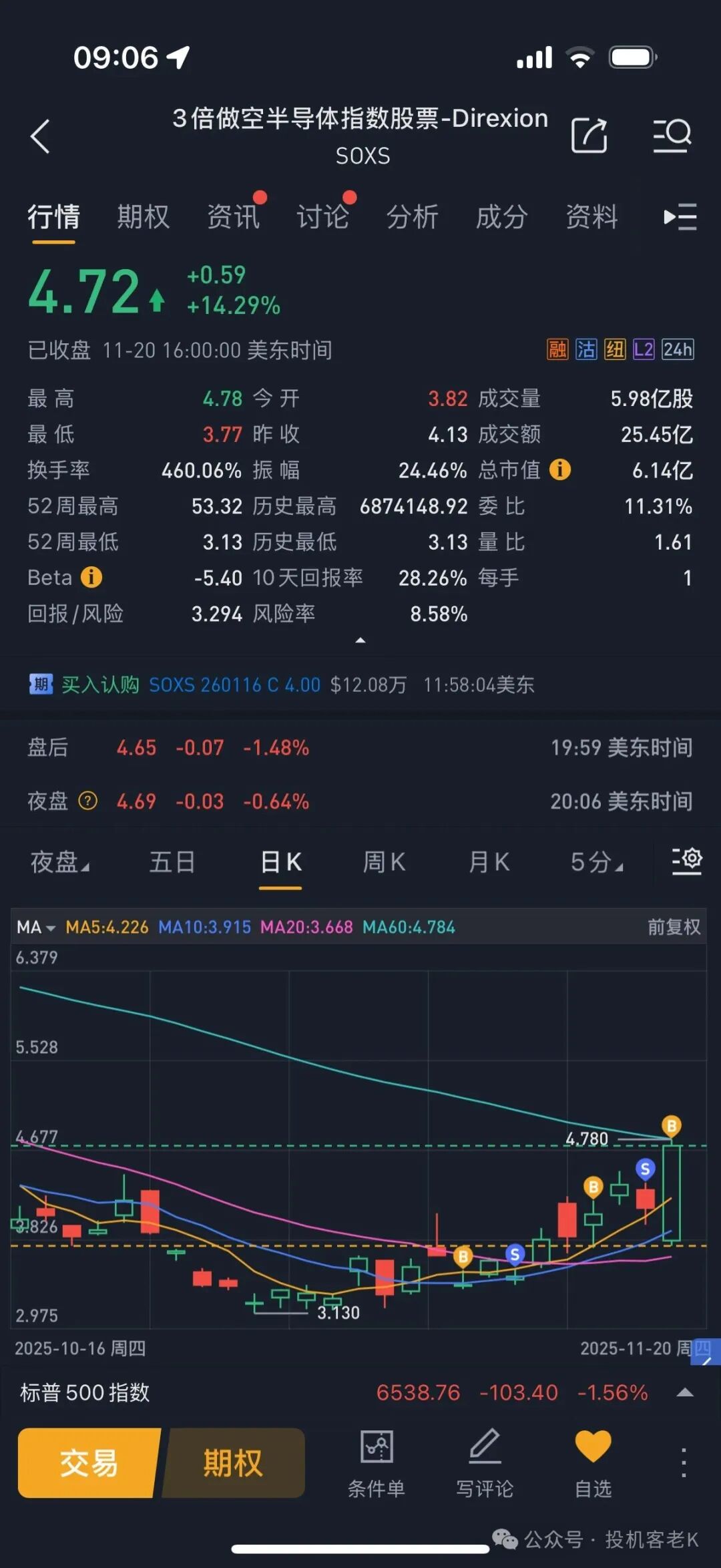
On Thursday afternoon Beijing time, which corresponds to the night session of U.S. stocks, I bought into a triple short semiconductor position again.
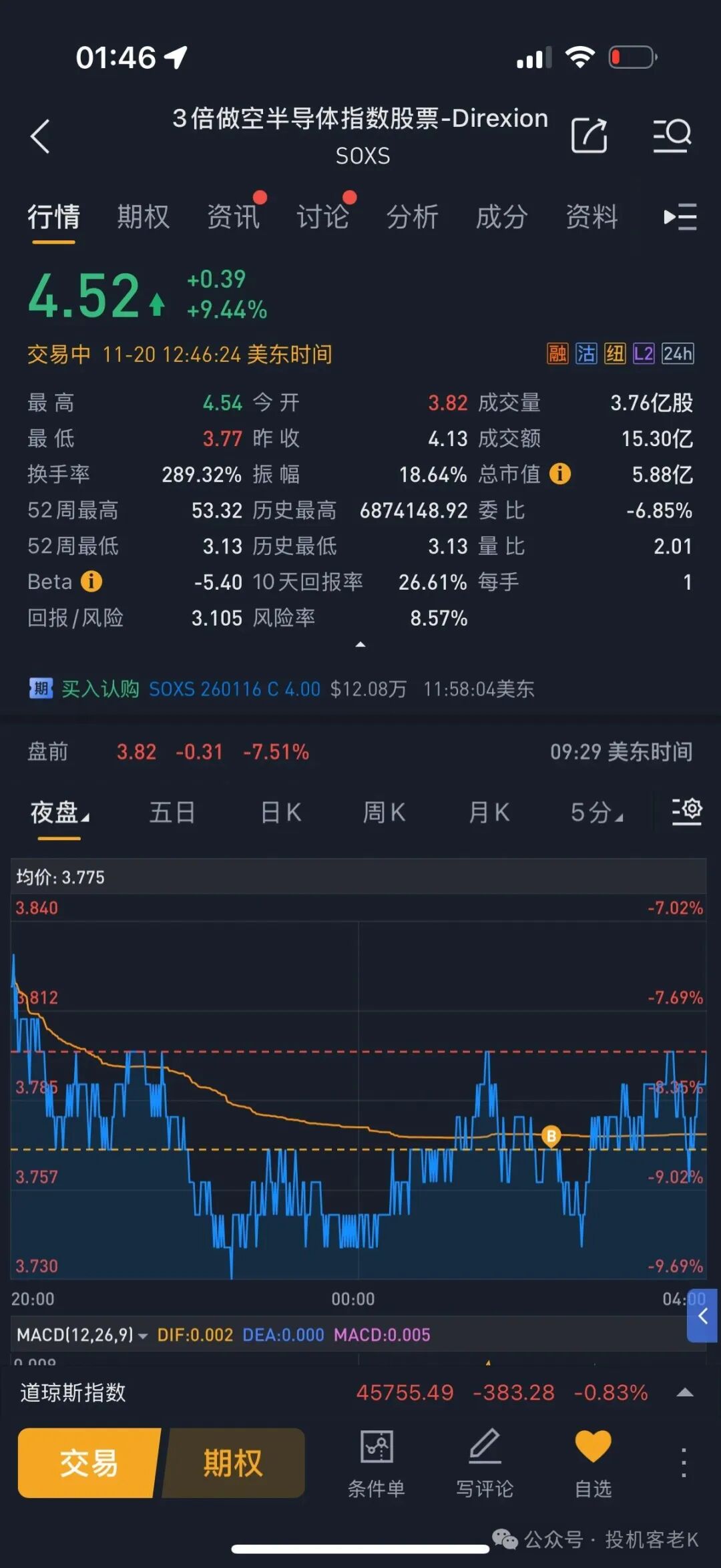
My purchase cost was 3.77, and the opening volatility exceeded 20%. When I woke up on Friday morning,
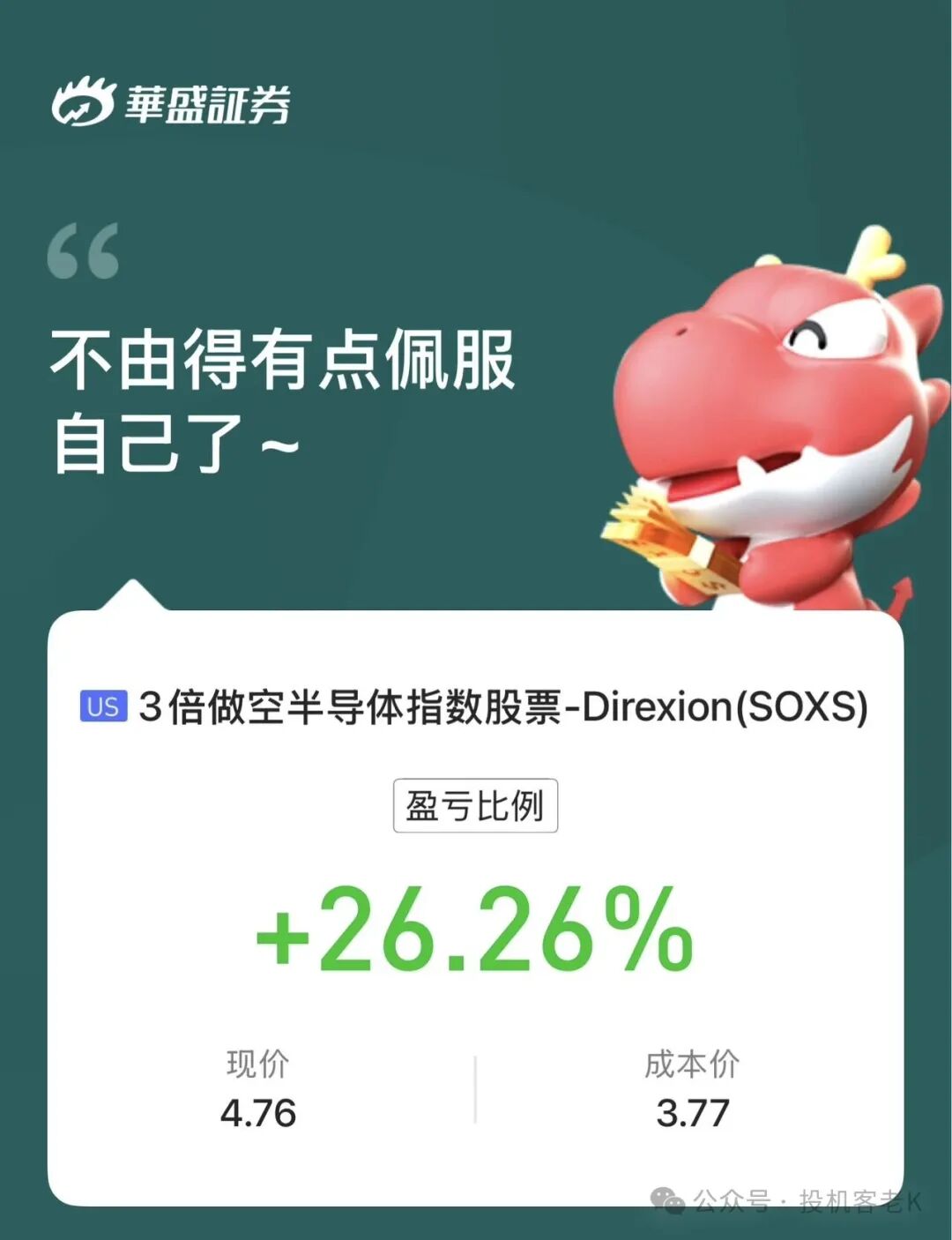
On Friday night, U.S. stocks rebounded slightly, and my current yield is 22%. As my judgment has not been disproven, I will continue to hold. Market concerns are increasing, with some well-known institutions and investors reducing positions or even going short. On Friday, at the NASDAQ’s intraday high, which was the intraday low for the triple short NASDAQ, I built a position again, currently at a loss of 0.5%.
Let’s see how the market unfolds next week.