Bright Reading Notes:
‘Chip War’ Part 2
Hello everyone, welcome to Bright’s little desk, I am Bright. We continue to share reading notes, today is the second part of ‘Chip War’.
Last time we talked about the development of the semiconductor industry from nothing to the situation in 1961. Now let’s continue to look at the subsequent industry development, without further ado, here are the images.
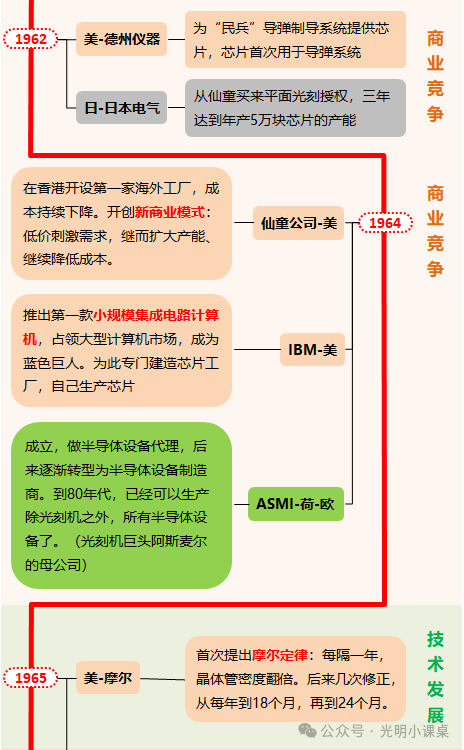
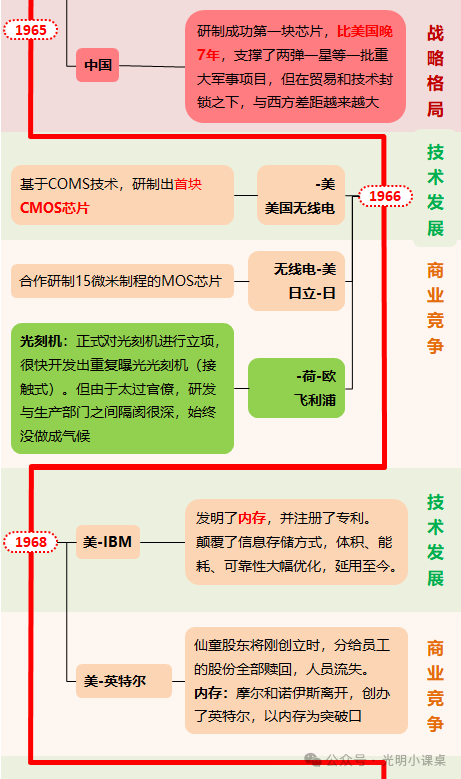
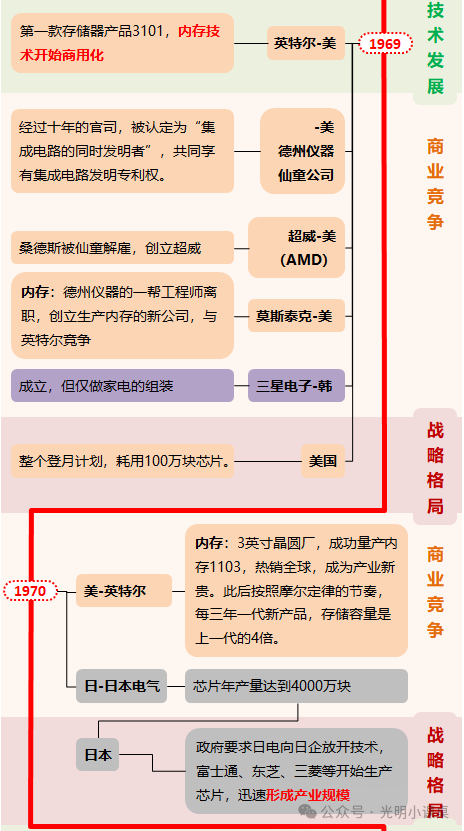
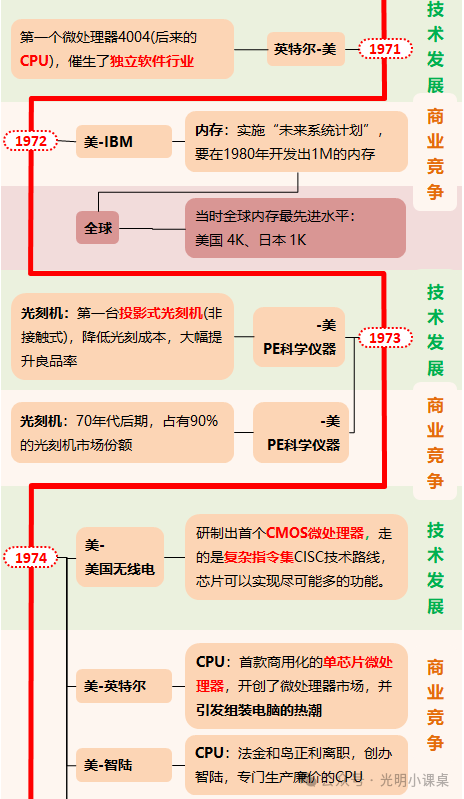
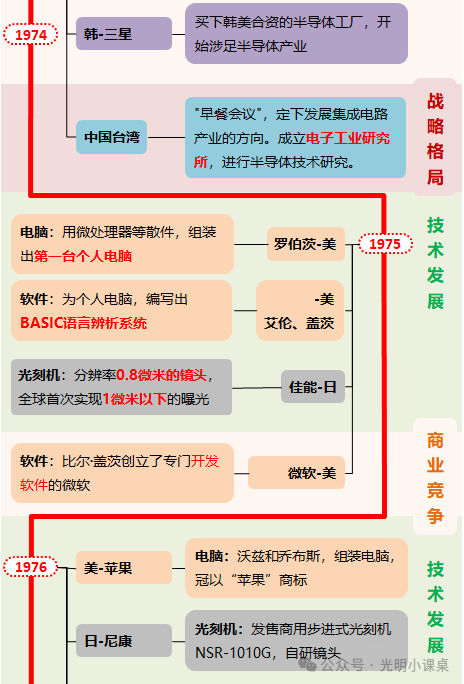
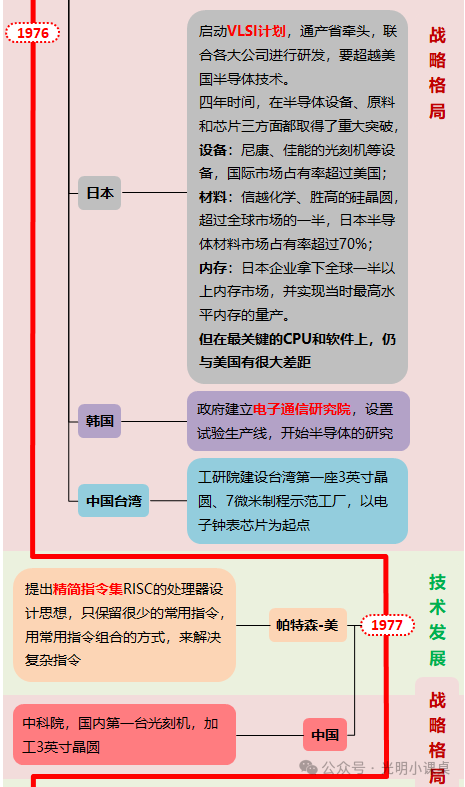
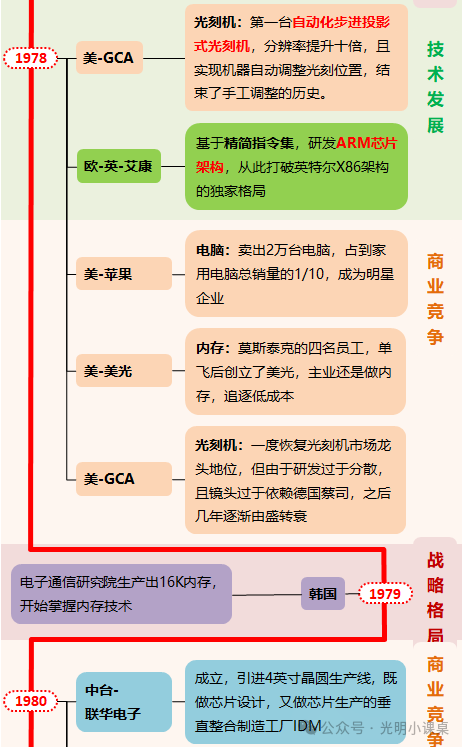
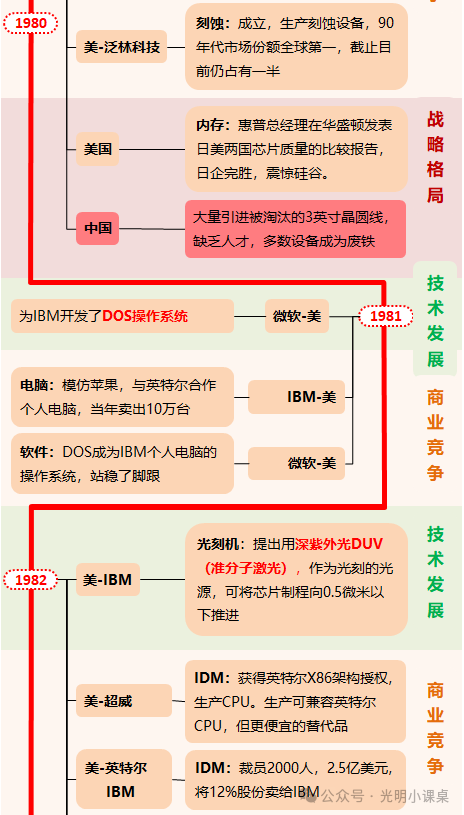
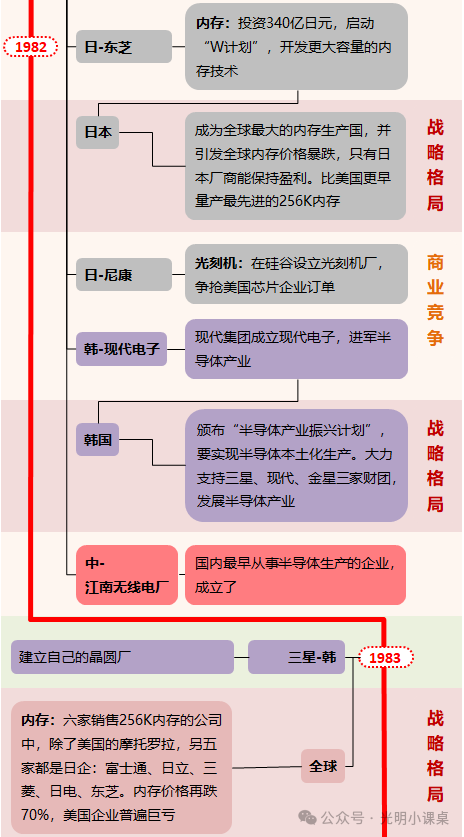
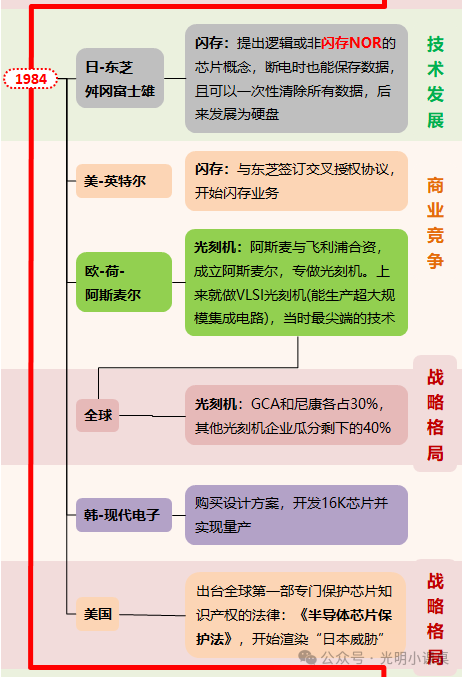
The time has moved from 1962 to 1984, and the global industrial landscape has undergone tremendous changes.
First, the number of “players” has increased significantly. In addition to Japan closely following the United States, the Netherlands, South Korea, and Taiwan, China have also joined in. The main reasons are twofold: the United States supported Western European countries, creating a high level of binding in various aspects, and American companies began to set up factories in Asia on a large scale, reducing costs while also boosting local technological levels. This cultivated strong competitors for themselves in the future; one wonders if American companies have ever regretted this.
Secondly, while American companies were fiercely competing with each other, Japanese companies quietly caught up, using memory as a breakthrough point, surpassing the United States and pushing American companies back. In areas such as photolithography and flash memory technology, they were on par with the United States, and even leading.
Thirdly, the Japanese and South Korean governments continued to enhance their support for the semiconductor industry, leading to a rapid development period for the domestic industry.
On our side, China developed its own chips during the most difficult period, seven years later than the United States, but still supported projects like the two bombs and one satellite. However, in terms of technology, it was still falling further behind foreign countries. It wasn’t until the special period after 1977 that the industry gradually recovered, and they had their own photolithography machines, but the technological level was already too far behind foreign countries. In the 1980s, they hoped to catch up by importing equipment, but due to technological blockades, they could only import outdated equipment, and with a severe lack of talent, they ultimately failed.
In the global semiconductor industry, the United States still holds the strongest position in technology, with the most core processors and architectures in American hands. However, Japan surpassed the United States in sales, and its technology in some areas was not weak. This was both the highlight of Japan’s semiconductor industry and the source of its troubles. Soon, the United States would tighten the “leash” it held in two ways.
We will continue to discuss the specifics next time.