In various industries such as chemical, pharmaceutical, and food processing, the accuracy and stability of analytical instruments play a crucial role in controlling production processes and ensuring product quality. Traditional communication methods often face issues such as signal interference and limited transmission distances in complex industrial environments. The solution of converting Profibus to fiber optic for analytical instruments by Naisun Automation is gradually becoming the key to solving these problems.
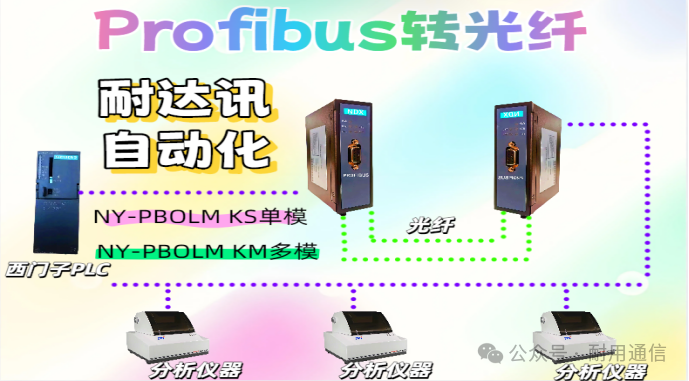
Profibus is a widely used fieldbus standard known for its high-speed and reliable data transmission capabilities. However, when the transmission distance is too long or there is strong electromagnetic interference in the field, the performance of Profibus can be significantly compromised. This is where the advantages of fiber optics become apparent. Fiber optics transmit data using light signals, which are resistant to interference, have long transmission distances, and offer high bandwidth. Converting Profibus signals to fiber optic signals allows analytical instruments to operate stably even in complex and harsh industrial environments.

Profibus to fiber optic devices typically support Profibus DP and PA protocols, with data transmission rates reaching up to 12Mbps, which can meet the data transmission needs of most analytical instruments. The fiber optic interface supports both single-mode and multi-mode fibers, with single-mode fibers capable of transmitting distances of several tens of kilometers, while multi-mode fibers can meet transmission requirements of several hundred meters. Additionally, these devices also feature good electrical isolation, effectively preventing ground loop interference and protecting analytical instruments from electrical faults.
In practical applications, Profibus to fiber optic connections for analytical instruments offer numerous benefits. They can reduce the bit error rate of signal transmission and improve the accuracy of data from analytical instruments. In some large chemical enterprises, after adopting this connection solution, the data transmission error rate of analytical instruments dropped from the original 0.1% to nearly zero. At the same time, stable connections also reduce maintenance costs and downtime, enhancing production efficiency.

In summary,
Naisun Automation’s Profibus to fiber optic connection for analytical instruments is an efficient and reliable solution that combines the versatility of Profibus with the superior performance of fiber optics, effectively addressing communication connection challenges in industrial settings. From both technical specifications and practical application results, it is a solution that enterprises should prioritize in their communication connection plans for analytical instruments.