“In response to the unreasonable layout of bus routes and insufficient capacity during peak hours, it is recommended to accelerate the construction of smart bus systems, optimizing route scheduling with big data to make it more convenient for the public to travel!” said Wang Pushen, a representative of the municipal people’s congress, during the review meeting of the draft revision of the Urban Passenger Transport Regulations in Bayannur City.“Government integrity is the ‘North Star’ of social credit, and it is suggested to incorporate government integrity construction into the hard indicators for assessment at the banner and county levels!” During the law enforcement inspection of the Inner Mongolia Autonomous Region Social Credit Regulations, Liang Shuhong proposed linking integrity construction with assessments based on issues raised by enterprises, such as the slow implementation of policies, directly addressing the ‘key minority’ in the construction of the credit system. Representative Pei Jianwei, during research on government debt management, focused on the efficiency of debt fund usage, suggesting the establishment of a full-chain supervision mechanism for ‘borrowing, using, and repaying’ to ensure that every penny is used effectively. This scene vividly illustrates the ’embedded’ duty performance of the financial and economic field representative group of the Bayannur Municipal People’s Congress.
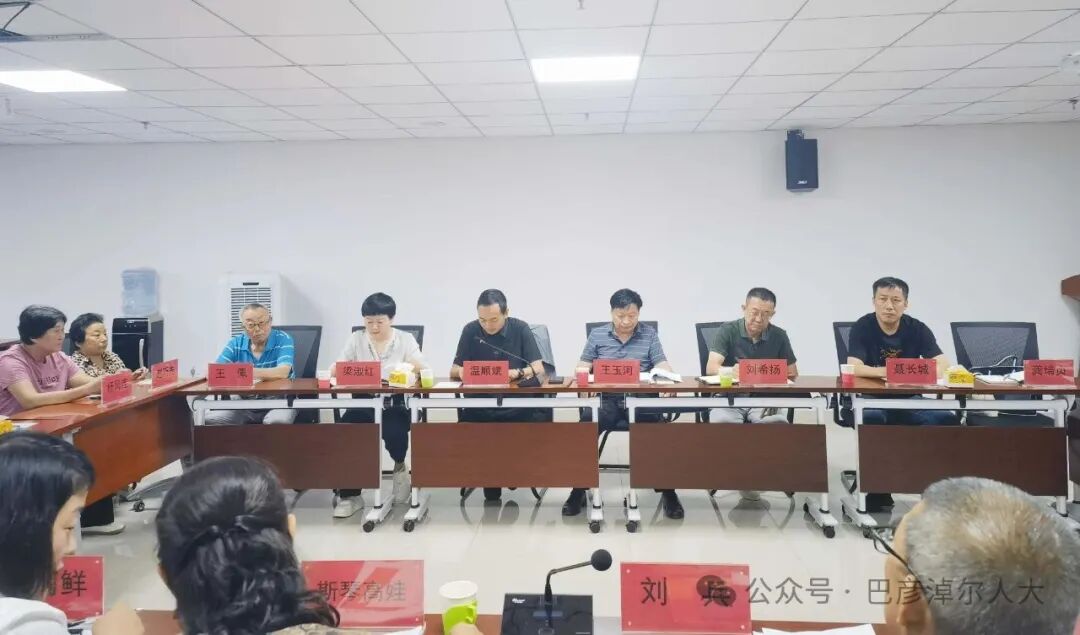
This year, the financial and economic field representative group of the municipal people’s congress has broken the traditional duty performance model, innovatively implementing the ’embedded’ activity mechanism of ‘wherever supervision work advances, representatives follow up’ to deeply integrate representative power into the entire process of financial supervision. From the overall economic and social development of the city to the details of government debt management, from the law enforcement inspection of the Inner Mongolia Autonomous Region Social Credit Regulations to the review of the draft revision of the Urban Passenger Transport Regulations, representatives are no longer ‘bystanders’ but deeply involved as ‘participants’—familiarizing themselves with supervision topics in advance, conducting field research to grasp first-hand information, and engaging in discussions that pinpoint key issues, allowing professional wisdom and grassroots voices to accurately align with supervision needs.
This kind of ’embedded’ duty performance not only provides representatives with a ‘focal point’ for their duties but also adds ‘human touch’ to the supervision work. Representatives delve into the frontline with public concerns: recording passenger flow data during peak hours at bus hubs to provide a basis for route optimization; listening to business operators’ expectations for the credit system in enterprise workshops, making law enforcement inspections more grounded; verifying the flow of funds on-site for debt projects to ensure supervision is not merely a formality. So far, more than half of the representatives from the first and second financial and economic representative groups have participated in the supervision work of the people’s congress, with 12 out of over 20 suggestions proposed being included in relevant work reports or policy and regulatory revisions, truly achieving ‘effective representative duty performance and warm supervision work.’
From suggestions in the conference room to field research in the countryside, representatives in the financial and economic field have made the ’embedded’ duty performance an innovative practice, making the supervision of the people’s congress more aligned with public sentiment and more in line with public opinion, writing a vivid footnote for the duty performance of representatives in the new era that is ‘precisely targeted and practically effective.’
Source: Budget Work CommitteeSubmitted by: Wen ShunbinEdited by: Xing XuezhenReviewed by: Liu XiyangFinal Review: Li Ningbo