Your Expert in Modified Plastics
1. Core Support: Strengthening the Foundation for Circuit Board Fixation and Positioning
The stable installation of circuit boards is a prerequisite for the normal operation of electronic devices. Reinforced nylon plays the role of a “structural framework” in this process.
-
Brackets and Slots: Serving as the “fixed base” for circuit boards, they must withstand the weight of the board over long periods while maintaining position. The high rigidity and deformation resistance of reinforced nylon effectively prevent structural displacement caused by device vibrations or long-term use, making it widely used in the assembly of circuit boards for appliances such as washing machines and air conditioners, as well as industrial control equipment.
-
Spacer Columns and Support Columns: Responsible for controlling the spacing between the circuit board and the device casing, as well as between multilayer circuit boards. Its excellent insulation properties eliminate the risk of circuit short circuits, while its dimensional stability ensures the coordinated operation of various components, making it an essential accessory in electronic device assembly.
-
Snap-Fit Fasteners: Leveraging the good toughness of reinforced nylon, these fasteners allow for quick assembly and disassembly without screws, and can be opened and closed repeatedly without breaking. This not only simplifies the production process but also reduces maintenance difficulty, significantly improving assembly efficiency.
2. Safety Protection: Ensuring Stable Transmission for Connectors and Interfaces
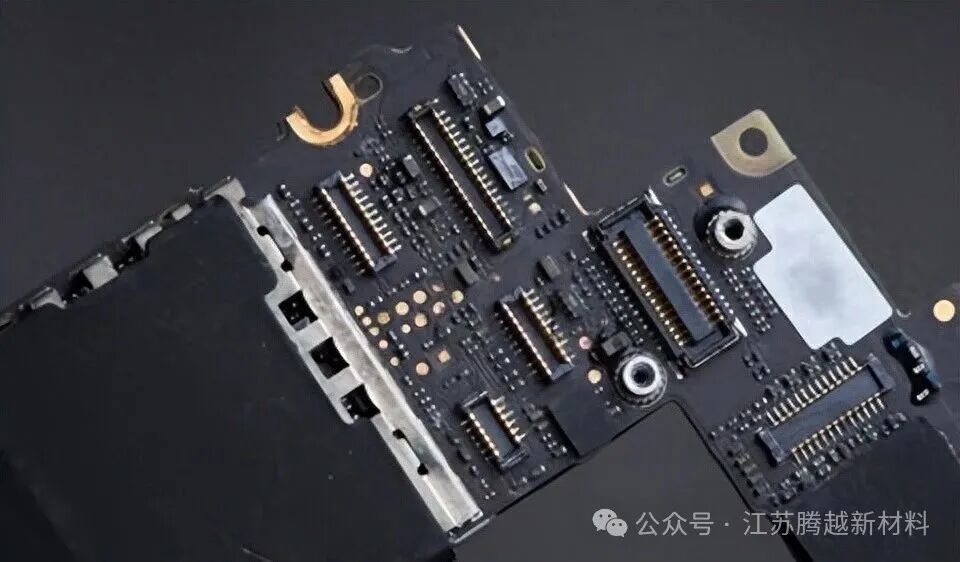
Connectors and interfaces are the “windows” for interaction between circuit boards and external devices. Reinforced nylon, with its dual characteristics of protection and insulation, provides reliable assurance for these components.
-
Connector Housings: For critical components such as power connectors and signal connectors, reinforced nylon housings can withstand external impacts, preventing damage to internal pins. Additionally, their excellent insulation properties isolate the risk of leakage and electromagnetic interference, ensuring stable transmission of current and signals.
-
Interface Protective Sleeves: For exposed interfaces such as USB and network ports, protective sleeves made from reinforced nylon possess wear resistance and anti-aging properties, effectively blocking dust and moisture intrusion, thereby extending the lifespan of the interfaces. They are especially suitable for complex usage scenarios such as outdoor surveillance equipment and industrial control terminals.

3. Functional Assistance: Supporting Safe and Orderly Heat Dissipation and Wiring
In addition to basic fixation and protection, reinforced nylon also plays an important role in optimizing heat dissipation and managing wiring on circuit boards.
-
Heat Sink Fixing Clips: When devices operate, chips generate high temperatures. Reinforced nylon, after modification, can withstand temperatures above 100°C, securely fixing heat sinks to ensure close contact with chips, while its non-conductive properties prevent safety hazards to the circuit.
-
Wiring and Insulation Accessories: Wire clips and ties can organize wires on the circuit board in an orderly manner, preventing messy wiring that could lead to short circuits. Insulating partitions and gaskets provide safe isolation for high-voltage areas, using excellent dielectric strength to prevent high-voltage discharge faults, ensuring the safe operation of the circuit.
4. Conclusion: Versatile Adaptability Driving Upgrades in Electronic Devices
From basic fixation to precise protection, and from heat dissipation assistance to wiring management, reinforced nylon, with its versatile adaptability, has become a core material for electronic circuit board components. Its performance advantages not only meet the reliability and safety requirements of electronic devices but also assist in upgrading devices towards lightweight and efficient designs, providing important material support for the continuous development of the electronics industry.