
PLC
Programmable Logic Controller

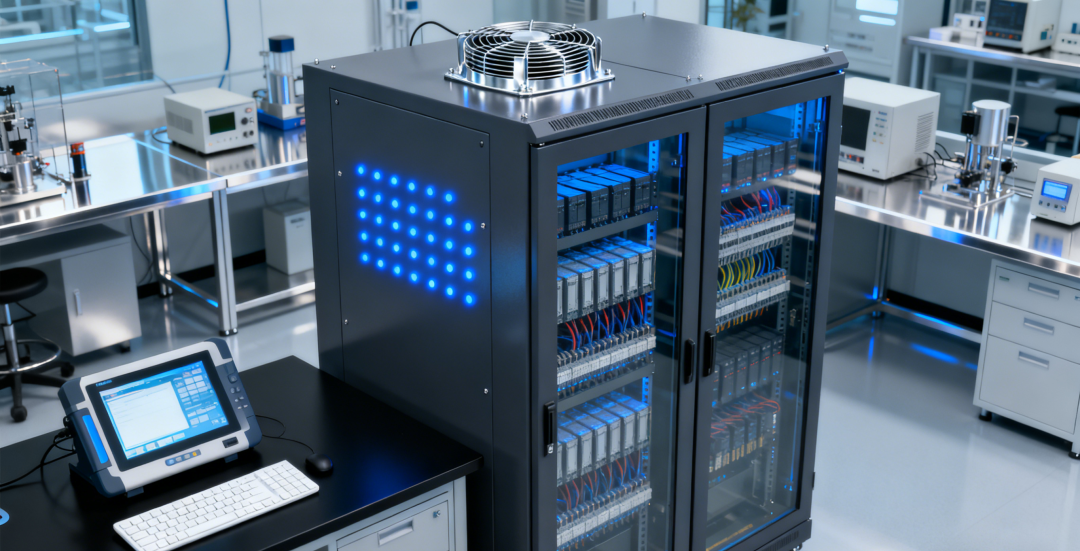
Programmable Logic Controller (PLC) is a digital electronic device with a microprocessor used for automation control, functioning as a digital logic controller that can load control instructions into memory for storage and execution at any time. The programmable controller is modularly composed of an internal CPU, instruction and data memory, input/output units, power modules, and digital-analog units.
01
Application Scope of PLC
PLC is widely used in various fields such as industrial automation, transportation, and building management, enhancing production efficiency and control accuracy.
01
Industrial Automation
PLC is most commonly applied in manufacturing, primarily for controlling automated production lines, including:
-
Automated Assembly Lines: For example, in the assembly of automobiles and electronic products, PLC can achieve automatic control of various production processes, improving production efficiency and product quality.
-
Robot Control: In automated production, PLC is used to control the actions and feedback of robots, enhancing production efficiency.
-
Process Control: In industries such as petrochemicals, PLC is used for real-time monitoring and adjustment of parameters like temperature, pressure, and liquid levels, ensuring stability and safety in production processes.
02
Transportation
PLC also has significant applications in traffic signal control, baggage handling systems at stations and airports, etc. Through PLC, precise control of traffic signals can be achieved, improving road capacity and safety.
03
Building Management
In smart building systems, PLC is used for energy management, security monitoring, lighting control, etc., achieving energy savings and a safe building environment. For example, PLC can monitor energy consumption in buildings and automatically adjust indoor temperature and lighting.
04
Environmental Protection and Culture
PLC is also applied in environmental monitoring and cultural entertainment fields, such as water quality monitoring and waste gas treatment, ensuring environmental safety and sustainable development.
05
Other Applications
-
Discrete Logic Control: PLC replaces traditional relay circuits to achieve logic and sequential control, widely used in controlling equipment like injection molding machines and printing machines.
-
Data Processing and Communication: PLC has powerful data processing capabilities, capable of performing mathematical operations, data transmission, and conversion, suitable for large control systems.
02
Main Components of PLC
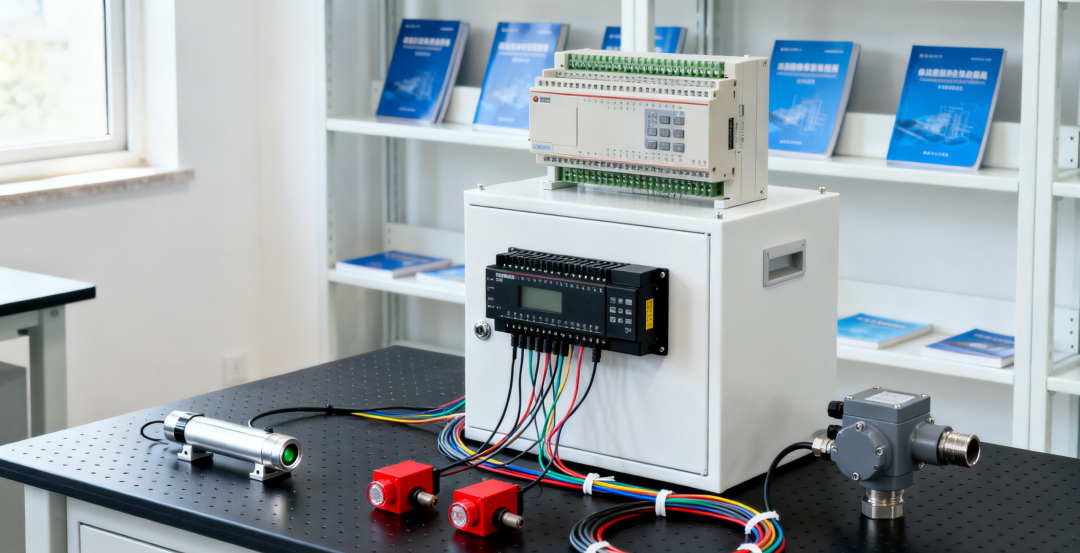
A typicalPLC system usually includes the following components:
01
Central Processing Unit (CPU)
The “brain” of the PLC, responsible for executing user programs, processing data, and managing the entire system.
02
Memory
Used to store system programs, user programs, and data.
03
Input/Output Interface (I/O)
This is the bridge connecting the PLC to the external world.
04
Input Interface
Connects various sensors (such as buttons, limit switches, temperature sensors, photoelectric sensors) to detect the status of external devices.
05
Output Interface
Connects various actuators (such as contactors, solenoid valves, motors, indicator lights) to control the actions of external devices.
06
Power Supply
Provides power to the internal circuits of the PLC.
07
Programming Device
Usually a computer with dedicated programming software used to write, debug, and download programs to the PLC.
03
How Does PLC Work?
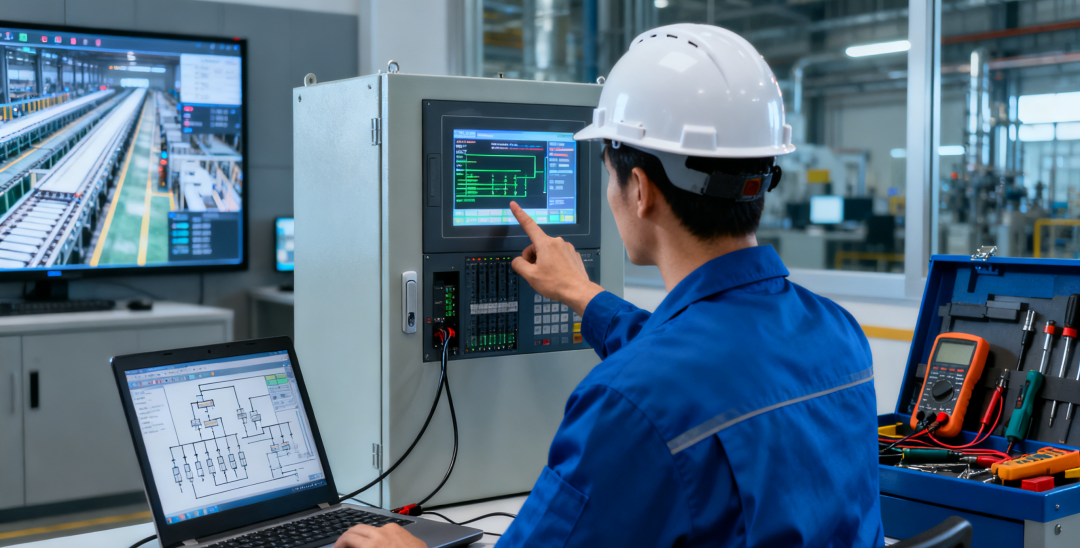
PLC operates in a continuous loop known as the “scan cycle,” which mainly includes three stages:
01
Input Sampling
The PLC reads the current status of all input terminals (connected sensors) at once (whether “on” or “off”) and stores it in the input image area.
02
Program Execution
The CPU performs calculations based on the status of the input image area according to the user-defined program logic (usually using ladder logic) to derive results and update the output image area.
03
Output Refresh
The results from the output image area are output to the physical output terminals all at once, driving the actions of contactors, solenoid valves, and other actuators.
This scan cycle repeats at a very fast speed (usually in milliseconds), enabling real-time control of devices.
04
Characteristics and Advantages of PLC
01
High Reliability and Strong Anti-Interference Ability
Designed for harsh industrial environments (such as dust, high temperatures, and electromagnetic interference), ensuring stable operation.
02
Simple Programming and Ease of Use
The most commonly used programming language, “ladder diagram,” resembles relay circuit diagrams, making it very easy for electrical engineers to learn and master.
03
Good Flexibility and Versatility
When production processes change, only the program needs to be modified without changing hardware wiring, significantly shortening debugging and upgrade cycles.
04
Powerful Functionality
Modern PLCs not only support logic control but also support motion control, process control (PID), data processing, and communication networking, among other complex functions.
05
Convenient Maintenance
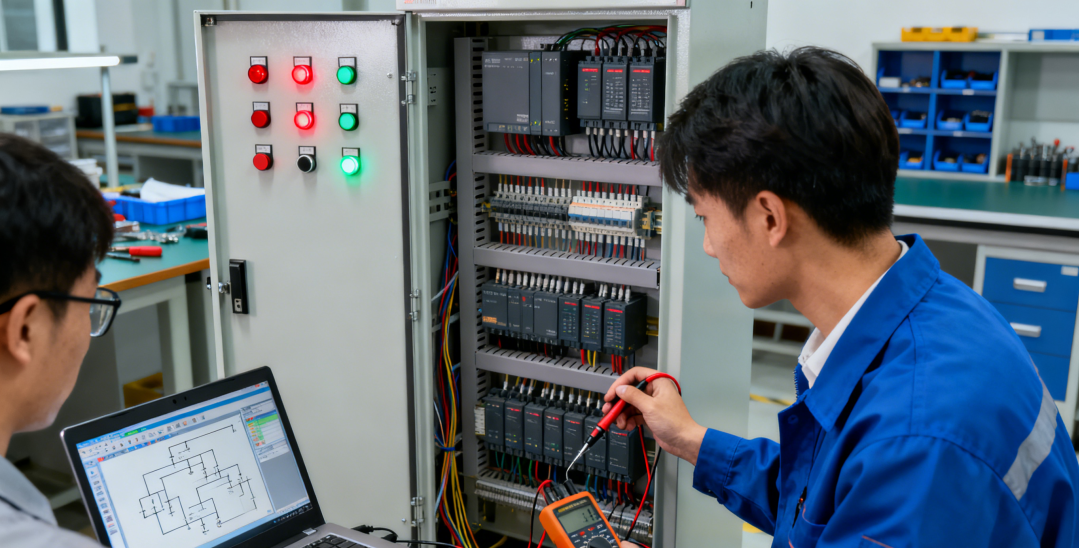
Equipped with comprehensive self-diagnostic functions, allowing for quick fault location. The modular design also makes it very easy to replace components.
05
Trends in PLC Development
With the development of Industry 4.0 and the Internet of Things, PLCs are no longer “isolated commanders” and are upgrading in three directions:
01
Intelligence
Incorporating AI algorithms, they can autonomously learn production patterns—such as predicting equipment failures (by analyzing operational data to determine if a motor is about to fail) and optimizing production processes (automatically adjusting capacity based on order volume).
02
Networking
Multiple PLCs can interconnect and also interface with cloud platforms—such as allowing factory managers to view PLC operating status on their mobile phones and remotely modify programs.
03
Miniaturization and Integration
Becoming smaller in size while increasing functionality—such as micro PLCs suitable for smart homes that can simultaneously control lighting, curtains, and air conditioning, achieving whole-house automation.
☆ END ☆

“Beckman, exploring a broader clean world with you!”