
PLC Development Background
BACKGROUND

In the wave of the Industrial Internet of Things, the accuracy of data collection, the efficiency of data analysis, and the stability of industrial control directly determine production efficiency and corporate competitiveness. As the “brain” of industrial control, PLC (Programmable Logic Controller) has always played a core role. With the iteration of technology, PLC has gradually differentiated into two camps: hard PLC and soft PLC, each with its advantages and suitable for different industrial scenarios. Today, we will delve into these two PLC technologies to help you find the control solution that best meets your needs.

PART.01

Understanding the “Traditional Powerhouse”: Hard PLC
Hard PLC, or hardware-based Programmable Logic Controller, is the traditional form of PLC that we are most familiar with. Based on a dedicated hardware architecture, it has established a foothold in the industrial control field with its stable and reliable performance since its inception.

Core Features of Hard PLC
1. Specialized Hardware: The CPU, memory, input/output interfaces, and other components of hard PLC are all dedicated chips and modules, with hardware and software deeply integrated and optimized for industrial control scenarios. This specialized architecture allows hard PLC to respond faster when handling logic control tasks, typically achieving microsecond or even nanosecond response times.
2. Extremely High Stability: Due to its fixed hardware structure and long-term validation in industrial scenarios, hard PLC exhibits excellent adaptability to harsh environments. Whether in high-temperature, high-humidity, dusty workshops, or environments with strong electromagnetic interference, hard PLC can operate stably, with an average time between failures (MTBF) often reaching tens of thousands of hours.
3. Simple Operation, Quick Learning Curve: The programming software that accompanies hard PLC is highly mature and aligns with the traditional operating habits of industrial engineers, requiring minimal learning costs to quickly complete program writing and debugging, making fault diagnosis simpler.
4. Limited Expandability: The hardware modules of hard PLC are usually designed specifically by manufacturers, leading to poor compatibility between different brands and series. If functionality needs to be expanded (such as adding motion control or vision detection), it often requires replacing with a higher-spec model or adding dedicated modules, resulting in relatively less flexibility.
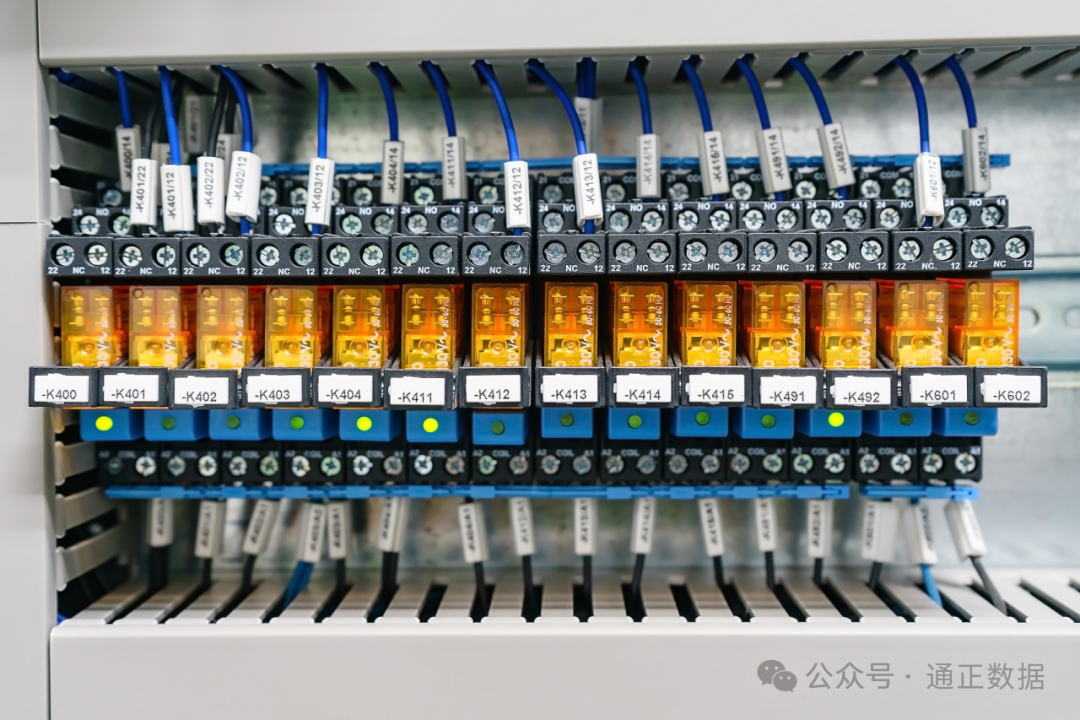
Typical Application Scenarios for Hard PLC
With its advantage of “stability above all”, hard PLC is widely used in scenarios that require extremely high reliability and relatively fixed control logic, such as:
1. Traditional manufacturing production lines: such as automotive parts assembly lines and home appliance production lines for sequential control (opening and closing valves, starting motors, detecting sensor signals, etc.);
2. Small to medium-sized automation equipment: such as packaging machines, labeling machines, and injection molding machines for standalone control;
3. Process industries: such as chemicals and power.
PART.02
Unlocking the “Innovative Expert”: Soft PLC

Soft PLC, or software-based Programmable Logic Controller, is a product of the integration of industrial control and computer technology. It breaks the limitation of hard PLC’s “hardware-bound software” by implementing the core functions of PLC (logic operations, timing control, data processing, etc.) through software, which can run on general industrial computers, embedded systems, or edge computing devices.
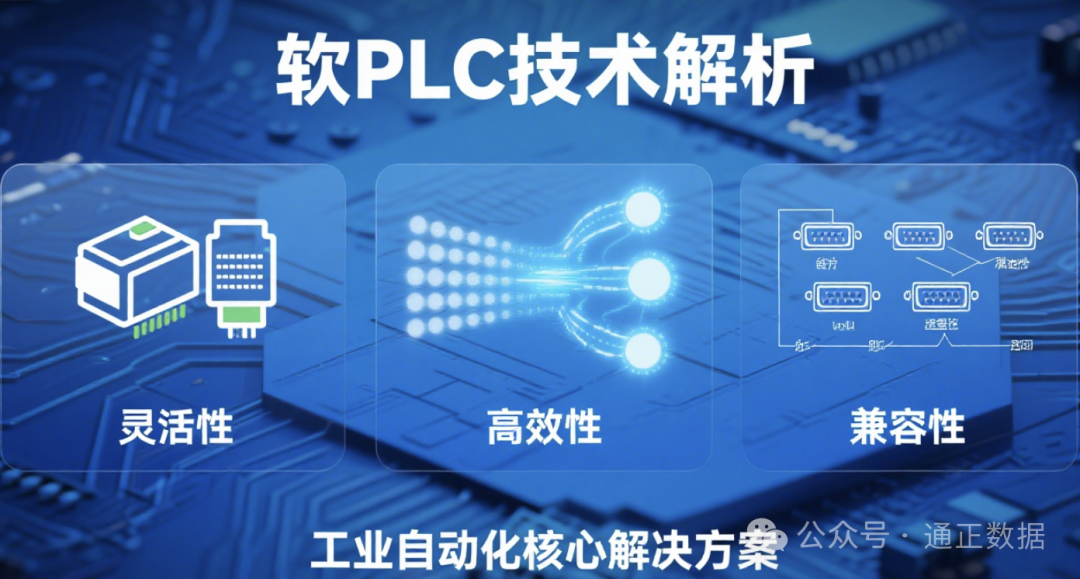
Core Features of Soft PLC
1. Generalized Hardware: Soft PLC does not require dedicated hardware and can run on industrial PCs, edge gateways, or even embedded chips based on general architectures like x86 or ARM. Users can flexibly choose hardware configurations based on their needs (such as increasing memory, expanding network ports, or pairing with AI chips), making hardware costs more controllable and enhancing expandability.
2. Highly Flexible Functionality: The core of soft PLC is software, which supports functional expansion through software modules – it can achieve traditional logic control while easily integrating data collection (such as interfacing with sensors and IoT devices), data analysis (such as real-time calculation of production efficiency and equipment failure rates), motion control (such as multi-axis linkage), machine vision (such as product defect detection), and even AI algorithms (such as predictive maintenance), truly realizing an integrated “control + data + intelligence”.
3. Multi-standard Compatibility, Easy Integration: Soft PLC typically supports internationally standardized programming languages (such as ladder diagrams and structured text ST from IEC 61131-3) and is compatible with various industrial communication protocols (such as Modbus, Profinet, EtherCAT, MQTT), allowing easy integration with enterprise MES systems, ERP systems, and IoT platforms, breaking down “data silos”.
4. Higher Hardware Environment Requirements: Due to its reliance on general hardware, the stability of soft PLC is significantly affected by hardware quality and operating environment. If using ordinary commercial computers, it may not adapt to the high temperature and high interference environments of industrial sites, thus typically requiring industrial-grade computers or edge devices to ensure operational reliability.
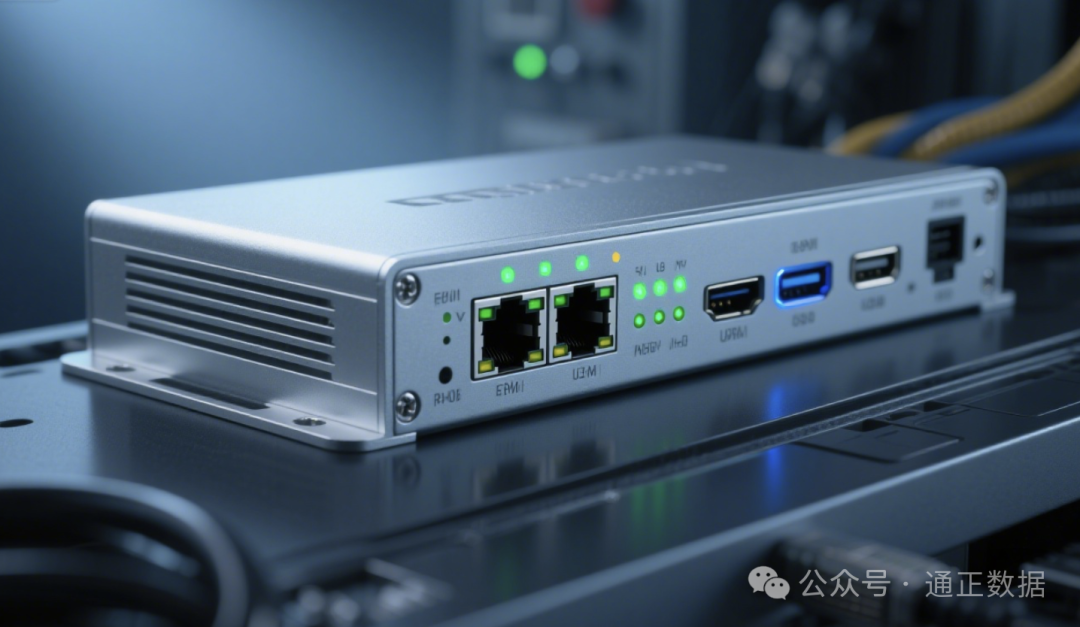
Typical Application Scenarios for Soft PLC
With its advantages of “flexible expansion + data integration”, soft PLC has become the preferred choice in Industrial 4.0 and smart manufacturing scenarios, such as:
1. Intelligent production line control: such as in high-precision manufacturing fields like new energy batteries, semiconductors, and automotive electronics (requiring simultaneous logic control, high-precision motion control for multi-process coordination; full-process data traceability; flexible production adaptation);
2. Industrial IoT edge: such as device networking monitoring in smart factories (requiring data collection from multiple devices and real-time data analysis at the edge);
3. Customized automation equipment: such as robotic workstations (requiring integration of robot control, visual guidance, and data traceability functions);
4. Predictive maintenance of equipment: Soft PLC can easily collect operational data (such as temperature, vibration, current) while performing control tasks, directly uploading it to local servers or cloud platforms. Without the need for additional data collection gateways, it can conduct big data analysis and AI algorithm processing, providing early warnings for failures.
PART.03

How to Choose: Hard PLC or Soft PLC?
There is no best technology, only the most suitable solution. Choosing between hard PLC and soft PLC is fundamentally about matching your business needs with the technical scenario:
01
Situations Favoring Hard PLC
1. Simple and long-term fixed control logic (such as switch control for standalone equipment);
2. Harsh industrial site environments (high temperature, high humidity, strong electromagnetic interference);
3. Extremely high requirements for system stability, with no allowance for frequent maintenance or upgrades;
4. Technical teams are more familiar with traditional PLC programming, with minimal software integration needs.
Situations Favoring Soft PLC
1. Intelligent production lines (such as multi-process coordination, full-process data traceability, flexible production adaptation);
2. Potential future functional expansions (such as adding AI predictive maintenance or vision detection);
3. Need to interface with IoT platforms, MES/ERP systems to break down data silos;
4. Cost-sensitive and not extremely time-critical small to medium-sized projects.
02
03
Mixed Solutions: Complementing Each Other’s Strengths
In the future, we may see more solutions that integrate hardware and software: for example, using hard PLC for real-time control of on-site equipment (ensuring stability), while deploying soft PLC at the edge to collect data from hard PLC, conduct data analysis, generate reports, and send control instructions back to hard PLC, achieving a dual guarantee of “real-time control + intelligent analysis”.
PART.04

Conclusion: Technology Knows No Boundaries, Value is King
Whether it is the “stability” of hard PLC or the “flexibility” of soft PLC, the core is to provide more efficient and reliable solutions for industrial control. With the development of Industrial Internet of Things technology, hard PLC will continue to play a role in traditional advantageous areas, while soft PLC will become the core engine of smart manufacturing with its integrated capabilities of “control + data + intelligence”.
END
Tongzheng Data, as a company focused on creating integrated industrial equipment digital intelligence system solutions combining “industrial control + IIoT data collection + AI LLM visual recognition + data analysis + edge cloud” – from hardware deployment to software integration, from data docking to intelligent applications, we assist your enterprise in improving production efficiency and digital transformation.


Add WeChat for More Communication


Like
Collect
Share