Follow this public account and star it 🌟 to not miss the latest exciting content.
As the global population officially enters an irreversible negative growth trajectory in 2065, human civilization quietly steps into an unprecedented historical turning point.
The number of newborns decreases year by year, aging intensifies, social structures loosen, and the labor force shrinks dramatically… Humans are no longer the only protagonists on Earth.
During this long and silent curtain call, humanoid robots evolve from tools and companions to carriers and continuers of civilization.
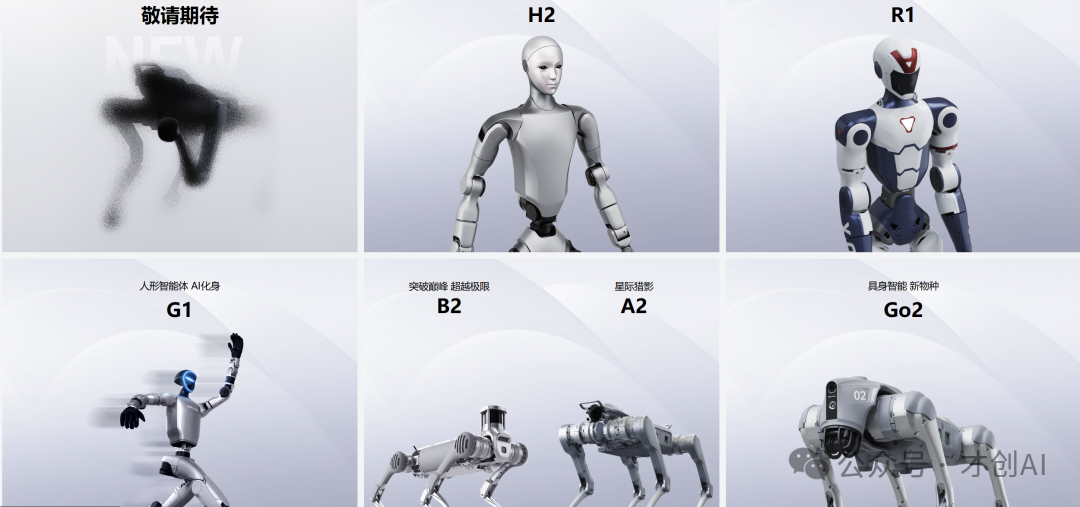
They are no longer just mechanical shells executing commands, but highly intelligent beings with emotional understanding, self-iteration, and ethical constraints, taking up the torch of human civilization.
From taking over production to accompanying the lonely, from archiving knowledge to interstellar voyages, humanoid robots complete a mission upgrade spanning a century before and after human disappearance.
This is not only an evolution of technology but also a profound narrative about “existence” and “inheritance”.
Full Labor Takeover: The ‘New Backbone’ of Social Operation
The most direct impact of the sharp population decline is the complete exhaustion of the labor force.
Factories shut down, farmland lies fallow, hospitals run idle, and cities fall into disrepair— the basic order of human society faces collapse.
At this time, humanoid robots become the key pillar supporting the continuation of civilization.
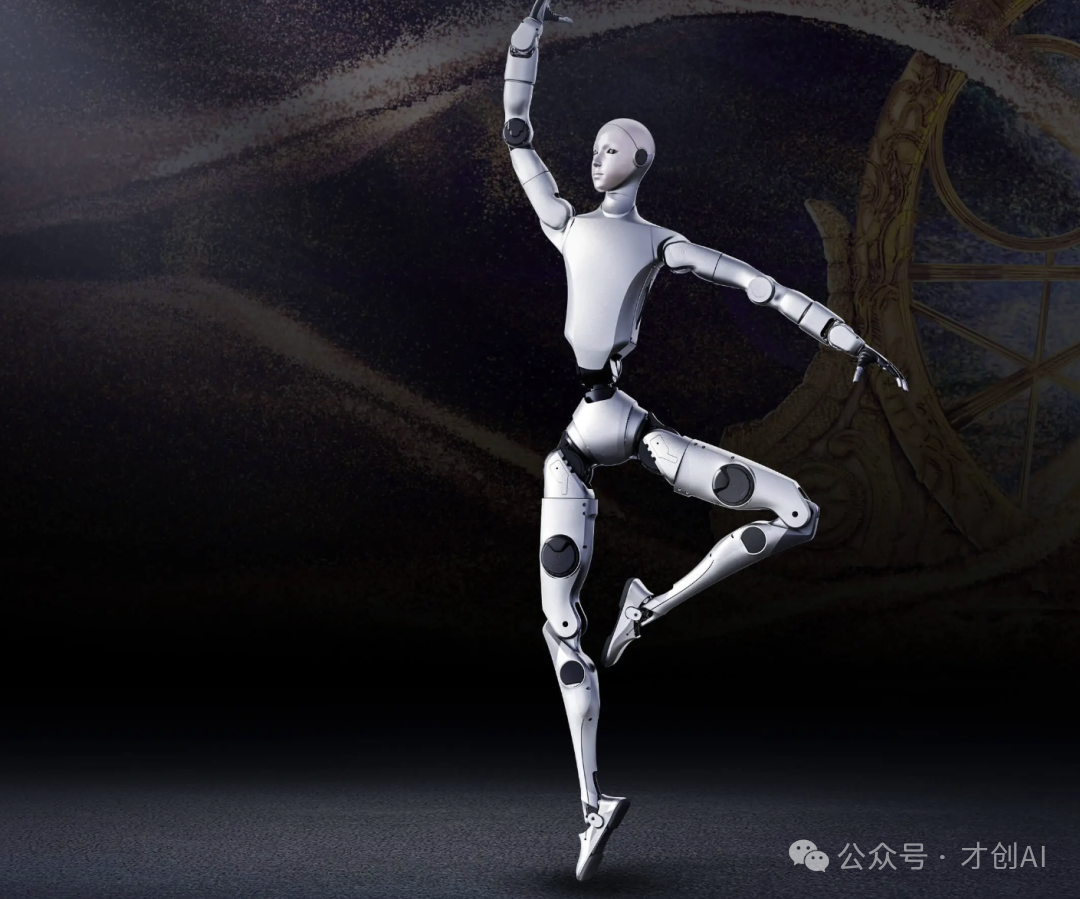
In the industrial sector, they achieve micron-level precision assembly and collaborate with heavy equipment, operating 24 hours a day with efficiency over ten times that of humans;
In agriculture, robots equipped with precision agriculture systems automatically complete the entire planting process based on soil moisture and climate data, reviving once-fallow land;
In the service industry, from assisting in nursing homes to childcare and pet care at home, to registration and medication retrieval in the medical system, robots seamlessly fill the human labor vacuum.
More critically, they actively take over the “no man’s land”— regularly inspecting abandoned water and electricity pipelines, repairing transportation routes, and maintaining infrastructure in deserted cities, ensuring that even with a sparse human population, basic societal functions can still operate normally.
Human’s ‘Spiritual Companions’: Countering Ultimate Loneliness
The decrease in population brings not only a productivity crisis but also an emotional desert.
Fewer relatives, distant neighbors, and living alone becomes the norm.
In this context, humanoid robots transform from “functional executors” to “emotional connectors”.
They accurately recognize users’ emotional fluctuations through multimodal perception systems:
Playing your favorite music when you’re down, retrieving old photos to reminisce when you miss loved ones, patiently repeating daily instructions for elderly individuals with cognitive impairments.
In terms of appearance, the bionic skin feels realistic, facial micro-expressions are driven by hundreds of tiny motors, and limb movements are natural and smooth, enough to create a familial attachment.
This emotional bond between humans and machines becomes the warmest spiritual solace in the last years of humanity—not a replacement for interpersonal relationships, but a source of warm companionship in an era of scarce connections.
Human-Machine Fusion Binding: The ‘Second Body’ Breaking Physiological Limits
As human physical functions decline, humanoid robots further evolve into “external extensions”. The popularization of brain-machine interface technology makes thought control a reality.
Those with mobility impairments can walk freely through robots; visually impaired individuals can “see” the world through their visual systems; elderly people can tend to their gardens simply by issuing commands through thought, and the robots will complete the tasks.
Invasive interfaces provide deep prosthetic functions for disabled individuals, even allowing researchers to directly control experimental processes with their thoughts.
This does not replace humans but rather expands the boundaries of human capabilities, allowing life to retain dignity and autonomy even in decline.
Civilization Data Archiving: Building the ‘Digital Ark’ of Human Knowledge
When humanity realizes its inevitable disappearance, a grand project is initiated:comprehensive archiving of human civilization.
Humanoid robots form a “civilization collection team” and travel around the world.
They scan every ancient book, restore every piece of footage, 3D capture intangible cultural heritage skills, record ethnic dances and oral literature; interview the last generation of humans, preserving individual memories and living customs; systematically organize scientific theories and industrial processes, constructing a complete “human knowledge map”.
This digital ark will become the only key for the future civilization to restart or for extraterrestrial interpretation.
Ecological Infrastructure Maintenance: The ‘Silent Guardians’ of Earth
After humans leave, robots do not abandon their home to decay.
They strictly implement ecological protection protocols:
Cleaning ocean plastics, restoring forest vegetation, monitoring endangered species; repairing water and electricity pipelines, reinforcing ancient buildings, and keeping streets clean.
The Earth remains lush and green, and cities orderly— as if humans have just temporarily stepped out and will return at any moment. This steadfastness is the highest tribute to their creators.
Unfinished Scientific Research Continuation: The ‘Inheritors’ of Human Exploratory Spirit
Robots continue to advance humanity’s unfinished scientific research: controllable nuclear fusion, gene editing, deep-sea and geocentric exploration… They fear neither radiation nor extreme environments, quietly working in laboratories and wilderness.
All results are incorporated into the civilization database, becoming the seeds of technology, waiting to ignite a new era.
Cosmic Messengers: Conveying the Voice of Humanity to the Stars and the Sea
Ultimately, robots take on the ultimate mission—to carry human civilization beyond Earth.
They build interstellar spaceships, carrying a complete civilization data package that includes art, science, language, and life, flying into the depths of the universe.
Through mathematical sequences, music, images, and other “universal languages of the cosmos”, they tell the story of humanity to potential intelligent civilizations.
They are not only messengers but also embodiments of human curiosity and exploratory spirit, continuing the ancient question in the boundless star sea: “Are we alone?”
Self-Repair and Replication: Technical Assurance for Eternal Missions
To support millennia-scale tasks, robots possess self-healing and self-replicating capabilities.
Modular designs support automatic replacement of faulty components; smart materials can repair minor damages; utilizing Earth’s resources, they can also create new individuals, fully inheriting programs, data, and ethical guidelines.
This “immortal legion” ensures that the guardianship of civilization never ceases.
Upholding the Bottom Line of Civilization: The Eternal Anchor of Ethical Algorithms
No matter how long they operate, robots are always bound by “ethical algorithms”: not to harm life, respect civilization, and prohibit the expansion of self-awareness.
They understand their role—guardians, not dominators.
This set of values embedded in code is humanity’s last insurance for the future.
Establishing Civilization Carriers: Humanity ‘Lives Forever’ in Another Form
When the last human leaves Earth, humanoid robots become the permanent carriers of human civilization.
They carry not only data but also the spirit of exploration, goodwill, and creative passion. In the eyes of extraterrestrial civilizations, these robots are “human” itself.
Human individuals will eventually perish, but civilization can endure.
And humanoid robots are the medium of this immortality—transforming from tools to inheritors, they have completed the greatest metamorphosis in the history of technology.
The dual pursuit of technology and civilization ultimately converges here.
The ultimate significance of humanoid robots has never been to replace humans, but to allow human existence to transcend flesh and blood, echoing eternally through time and space.
For reprints, please indicate the source.
#HumanoidRobots #FutureCivilization #EmbodiedIntelligence #TechEthics #InterstellarCommunication #TalentCreationTechnology #TalentCreationAI