
“New Quality Productivity” has become a hot topic at the National Two Sessions. “Vigorously promote the construction of a modern industrial system and accelerate the development of new quality productivity.” This year, the government work report lists accelerating the development of new quality productivity as the top task for 2024. The development of new quality productivity depends on the capacity for technological innovation, especially the ability to break through key technologies. Among them, the progress of the robot industry is expected to accelerate significantly with the support of AI, and this year may be a year of rapid development for humanoid robots.
Liujing, Representative of the National People’s Congress and Chairman of Changhong Holding Group: Suggests Including Home Health Care Robot Products in the Medical Insurance System
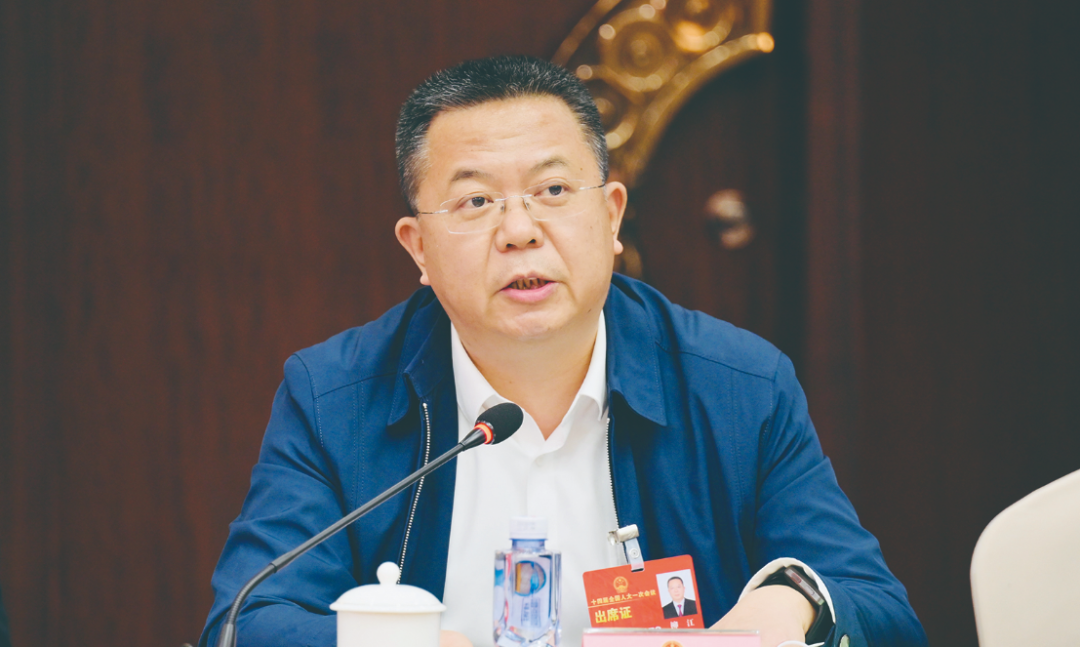
At this year’s Two Sessions, Liujing, the representative of the National People’s Congress and Secretary of the Party Committee and Chairman of Changhong Holding Group, proposed three suggestions involving industrial internet, home service robots, AI large models, and other fields.
Among them, the suggestion is to include home health care robot products in the medical insurance system.
“Home service robots integrate advanced technologies such as artificial intelligence, high-end manufacturing, and new materials, serving as a new engine for economic growth and an important industrial direction for cultivating new quality productivity,” Liujing believes. In the context of a tight supply of domestic service, an increasing elderly population, rising labor costs, and increasingly mature robot technology, accelerating the application of the home service robot industry has significant implications for China’s economic and social development.
Compared to countries and regions such as the US, Europe, Japan, and South Korea, China’s home service robot industry is still in its early stages of development. “The localization rate of core components is less than 30%, and the current focus is primarily on home cleaning robots and entertainment companion robots, which have relatively simple functional applications.”
In Liujing’s view, the industrialization of home service robots in China currently faces issues such as insufficient technology maturity, uncertainty in market demand, and high costs in the industrial chain.
To address this, Liujing suggests focusing on three aspects to accelerate the application of China’s home service robot industry: first, focus on accelerating the development of new quality productivity, strengthening the top-level design of China’s home service robot industrial chain layout; second, focus on the overall upgrade of industrial clusters, encouraging government-industry-academia-research collaborative innovation platforms for home service robots; third, focus on the healthy development of the entire industrial chain, supporting the ecological and market environment construction of the home service robot industrial chain.
Liujing suggests that we can learn from the financial subsidy policy experience that supports the new energy vehicle industry, providing policy subsidies for home service robot products aimed at household chores and elderly care for a certain period; and referencing the model of including telemedicine services in public medical insurance, integrating home health care robot products into the medical insurance system, and including qualifying health care robot products in the reimbursement scope of medical insurance, encouraging families, hospitals, and health care institutions to actively use them.
Zhang Jin, Representative of the National People’s Congress and President of Siasun Robot & Automation Co., Ltd.: Proposes to Establish a National Technology Innovation Center in Northeast China to Promote High-Quality Development of the Robot Industry
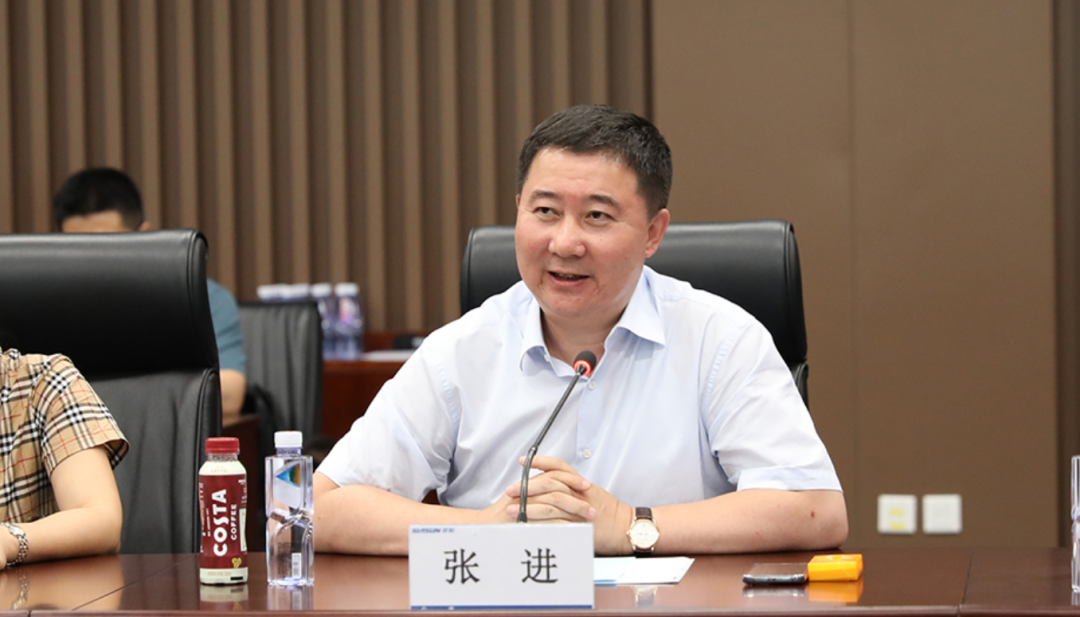
During this year’s Two Sessions, Zhang Jin, the representative of the National People’s Congress and President of Siasun Robot & Automation Co., Ltd., focused on the development of the robot industry and smart manufacturing industry clusters.
“Accelerating the cultivation of new quality productivity and actively seizing new development tracks has reached a consensus across various sectors; the robot industry is a typical representative of new quality productivity,” Zhang Jin introduced. From the “14th Five-Year Plan for Robot Industry Development” to the “Implementation Plan for the Application of ‘Robot+'”, and the “Guidance on Accelerating the Development of Emergency Robots”, a series of top-level policy designs have clarified the acceleration of cultivating the robot industry as a strategic emerging industry and a future industry. Particularly, the Ministry of Science and Technology’s key national R&D programs and the Ministry of Industry and Information Technology’s special projects for industrial foundation reconstruction and high-quality development have played a significant supporting role in accelerating domestic robot industry foundational and core technology breakthroughs, localization of core components, performance enhancements of complete machines, and demonstration applications in typical industries.
Liaoning Province, where Siasun Robot is located, is known as the “Eldest Son of the Republic”. The scale of its defense technology industry, represented by aerospace equipment and shipbuilding, ranks among the top in the country, and the levels of complete equipment such as robots, CNC machine tools, rail transit equipment, and metallurgical mining equipment are also leading domestically. In recent years, Liaoning has continued to increase support for industries such as robots, CNC machine tools, and aerospace equipment.
Liaoning has proposed to vigorously promote technological innovation, focusing on national strategies and the actual needs of economic and social development, actively undertaking the national major productivity layout and strategic technological force layout, and cultivating new driving forces for the development of new quality productivity. It aims to use technological innovation to drive industrial innovation, timely apply technological innovation results to specific industries and industrial chains, transform and upgrade traditional industries, and cultivate and expand emerging industries while planning and constructing future industries.
“In the past year, Liaoning’s economic operation has moved out of a low-speed stagnation pattern, and external expectations for Liaoning continue to improve. As a province rich in science and education and manufacturing, Liaoning has the resources for technological innovation and advantages in industrial technology, bearing an important mission and significant responsibility in accelerating the development of new quality productivity to promote high-quality development,” Zhang Jin said.
Zhang Jin believes that Liaoning should fully leverage its advantages to create a robot and smart manufacturing industry cluster with international competitiveness. The Shenyang robot and smart manufacturing cluster has been selected as an advanced manufacturing cluster by the Ministry of Industry and Information Technology, becoming a national advanced manufacturing cluster that undertakes national missions and represents China in global competition and cooperation. He suggests that relevant national departments should strongly support leading enterprises in key industries (such as new energy vehicles, new energy batteries, semiconductor equipment, aerospace, and shipbuilding) to apply domestic high-end robots and smart manufacturing equipment, and increase policy support for users purchasing domestic equipment, promoting the large-scale application and high-quality development of China’s robotics.
Zhang Jin stated that comprehensive innovation centers are major driving forces for implementing national major regional development strategies, conducting cross-regional, cross-field, and cross-disciplinary collaborative innovation and open cooperation. Currently, the nation has laid out national technology innovation centers in the Beijing-Tianjin-Hebei region, the Yangtze River Delta, and the Guangdong-Hong Kong-Macao Greater Bay Area. He suggests that relevant departments support the establishment of a national technology innovation center in Northeast China to promote the deep integration of innovation chains, industrial chains, capital chains, and talent chains, providing comprehensive and leading support for enhancing the overall development capacity and collaborative innovation ability of the Northeast region.
Xu Lijin, Member of the National Committee of the Chinese People’s Political Consultative Conference and Chairman of Wuhu Robot Industry Development Group: Innovation-Driven High-Quality Development of Humanoid Robot Industry
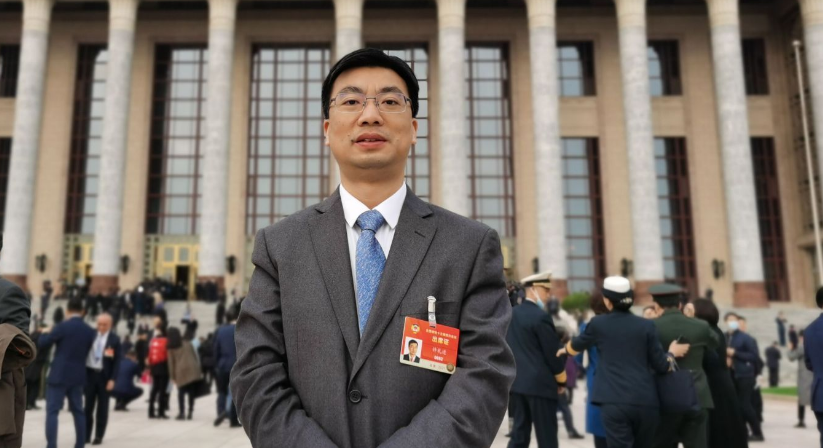
“I continue to focus on the robot industry, and one of my proposals this year is to drive high-quality development of the humanoid robot industry through innovation.” Recently, Xu Lijin, a member of the National Committee of the Chinese People’s Political Consultative Conference and Chairman and General Manager of Wuhu Robot Industry Development Group Co., Ltd., stated in an interview that China’s humanoid robot industry has entered a development window period, and we should seize the opportunity to accelerate industrial development.
Transitioning from enterprise to the public service platform for industrial technology – Wuhu Robot Industry Development Group, Xu Lijin deeply feels the urgency of accelerating technological innovation. This year, he has prepared five proposals calling for further strengthening the management of new-type R&D institutions and legal protection for technological innovation.
Accelerating the development of the humanoid robot industry
“Recently, with leading tech companies like Amazon, Tesla, and OpenAI entering the field, the commercialization of humanoid robots has noticeably accelerated,” Xu Lijin believes that humanoid robots are likely to become another disruptive product after computers, smartphones, and new energy vehicles, entering factories and households.
Xu Lijin introduces that developed countries led by the US have been laying out humanoid robot research for over 50 years. Due to China’s late start in humanoid robot research, there are still common key technologies to be improved in scene innovation and application promotion, high product costs limiting commercialization, and a lack of commercial landing scenarios hindering industrialization.
To address these issues, Xu Lijin proposes three development suggestions:
First, focus on common key technologies in the industry and increase technological innovation efforts. Relying on existing or newly established national-level technological innovation platforms, collaborative innovation around intelligent “brains”, agile “nervous systems”, robust “limbs”, and intelligent “senses” should be carried out to break through basic theories and common key technologies such as humanoid robot dedicated operating systems, intelligent controllers, efficient drive joints, simulation twin platforms, integrated development environments, and humanoid intelligent algorithms, and establish a scene-driven humanoid robot technology pilot base to accelerate the landing and transformation of common key technologies in the industry.
Second, based on the existing industrial foundation, accelerate the integration of supply-side advantageous resources in the humanoid robot industry chain to strengthen collaborative supply capabilities. Various regions should provide a unified humanoid robot computing power center through allocation or government investment, building a super-powerful humanoid robot “smart brain”. Relying on the existing robot industry chain, construct and improve the supply capability of the humanoid robot industry chain, and reduce the overall cost of humanoid robots through large-scale production.
Third, strengthen policy guidance, build an innovative ecosystem for humanoid robot scene applications, support humanoid robot companies in establishing cooperation with application parties at the unformed stage, and encourage initial trials. Support relevant R&D institutions and enterprises in opening the application functional interfaces of humanoid robot products, expanding the range of downstream application scenarios, building application ecological gathering platforms, and encouraging the organization of humanoid robot scene application innovation competitions, to support the exploration and attempts of humanoid robots in their nascent application scenarios, and accelerate the popularization of humanoid robots to quickly form scale effects.
Lin Xiaofa, Member of the National Committee of the Chinese People’s Political Consultative Conference: Accelerate the Development of New Quality Productivity and Seize Opportunities in the Home Robot Industry
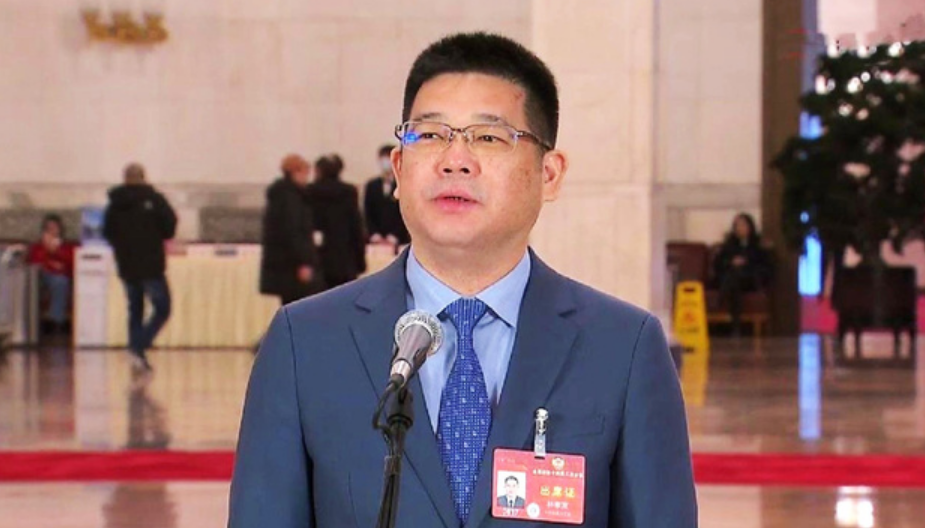
Lin Xiaofa stated that the deep integration of new generation information technology and biotechnology with robot technology has ushered the robot industry into a golden period of leapfrog development, becoming an important driving force for promoting new quality productivity. He believes that smart home robots are the “good helpers” in realizing people’s aspirations for a better life, providing more convenient, efficient, and personalized services, meeting people’s needs in cleaning, entertainment, education, and elderly care.
For this reason, Lin Xiaofa suggests:
First, support the development of smart home robots as a strategic emerging industry and future industry, accelerating the construction process of future industry incubation and pilot zones.
Create regional models for smart home robots, cultivate leading enterprises, and train innovative entrepreneurs, focusing on the four cores of “intelligence, greenness, aesthetics, and health”, accelerating the transformation and upgrading of traditional industries, and laying a solid foundation for the large-scale development of the industry.
Greatly support the development of an innovative capability-strong, industry-environment-friendly, and internationally competitive smart home robot industry ecosystem. Develop the “Robot+” experience model, leveraging industrial, innovative, technological, and talent advantages to build a global source of technological innovation for home robots, application demonstration highlands, and high-end industry clusters.
Second, vigorously promote new industrialization, enhance core competitiveness of the industry, and empower the smart home robot industry to achieve high-quality, efficient, and sustainable development through green technological innovation.
Encourage manufacturing enterprises to undergo digital transformation, achieve deep integration of the real economy and the digital economy, build collaborative innovation carriers for the smart home robot industry, accelerate the promotion of certification systems in the smart manufacturing industry, and establish evaluation standards for intelligent manufacturing with Chinese characteristics.
Using AI, industrial internet, IoT, 5G, big data, and cloud computing as leverage, promote quality, efficiency, and power transformations in manufacturing, support the strengthening of innovation carriers such as key laboratories, and encourage enterprises to form industry-university-research-use alliances with universities and research institutes, and support cross-border joint R&D centers to create world-class research platforms with development potential and industry influence.
Sun Zhiqiang, Member of the National Committee of the Chinese People’s Political Consultative Conference and Chairman of Ruishun Technology: Create Collaborative Mechanisms to Build an Innovative Ecosystem for the Robot Industry
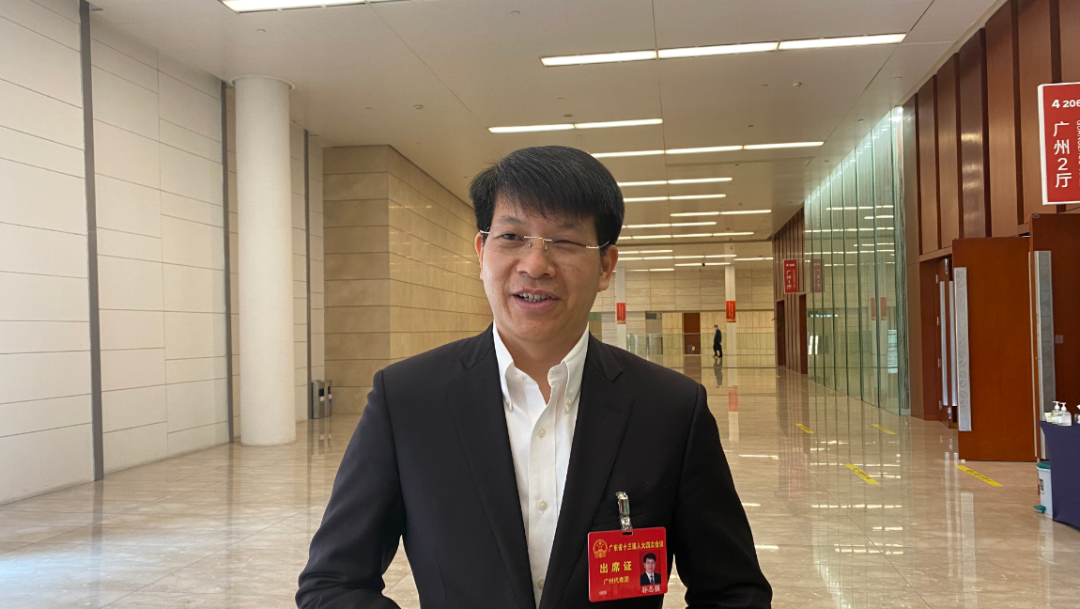
During this year’s Two Sessions, Sun Zhiqiang, a member of the National Committee of the Chinese People’s Political Consultative Conference and Chairman and President of Ruishun Technology, proposed related suggestions around promoting high-quality development of the robot industry, supporting traditional manufacturing to accelerate digital transformation, promoting the application of artificial intelligence in the industrial field, and strengthening the construction of international scientific and technological organization clusters.
In recent years, artificial intelligence has been widely applied in multiple fields. Among them, its application in the industrial field has significant advantages, becoming an important tool for improving production efficiency and facilitating technological innovation.
Specifically in the field of the robot industry, Sun Zhiqiang stated that China’s robot industry is developing rapidly, being the largest consumer and producer of robots globally, and its role and importance in the global robot industry are becoming increasingly significant. He suggests that the “China Robot Association” be established as soon as possible to create a collaborative innovation mechanism encompassing government, industry, academia, research, application, and finance, building a robot industry innovation ecosystem that integrates elements such as technology, talent, platforms, finance, policy, and international cooperation, fostering an innovative cultural atmosphere, breaking down barriers between units, organizations, regions, and industries, leveraging collaborative innovation, forming a high-level, distinctive communication and cooperation platform, and constructing new advantages for China’s robot industry.
Sun Zhiqiang emphasized the importance of leveraging China’s institutional and market advantages, allocating more policies and funds, gathering domestic and foreign innovation resources, and promoting wide-ranging cooperation between enterprises, associations, and researchers, through talent cultivation, result dissemination, and international collaboration, to comprehensively enhance China’s robot technology standards and international discourse power in testing and certification.
“Continuously expand the influence of the ‘China Robot Association’, coordinating unified actions and cooperative efforts among stakeholders, achieving resource integration and optimization,” Sun Zhiqiang suggests. Strengthen long-term domestic and international cooperation, conduct diversified exchange activities, and enhance China’s international standing in the robot industry.
Regarding promoting the transformation and upgrading of traditional manufacturing, Sun Zhiqiang suggests: first, encourage the R&D of advanced applicable technologies and accelerate their promotion and application; second, accelerate the establishment of unified and standardized scene application standards; third, further improve intelligent infrastructure; fourth, create a favorable digital transformation development ecosystem.
End
This article is reproduced from: Industrial Robots
Editor: Zhao Min
Reviewer: Liu Shibo

Follow the Machine Industry Video Account for More Information
For more inquiries, please consult customer service Xiao Ye


Feeling tired? Click “Like” to support us!