1. Definition and Connotation
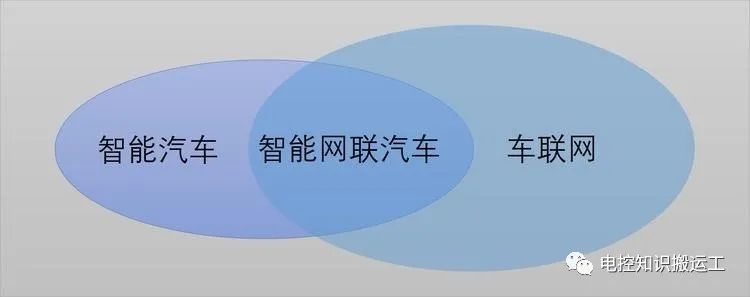
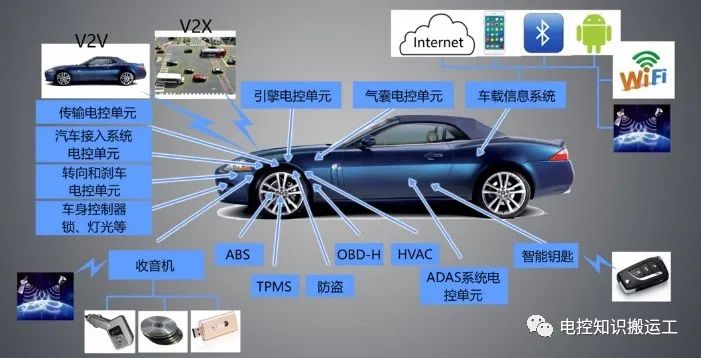
Generally, when we say “autonomous driving” or “driverless driving”, a more universal term is “smart vehicle” (smart car). In fact, “smart car” is a concept similar to “intelligent connected vehicle” as seen in the image below, and there is usually no deliberate emphasis on their differences. Simply put, smart vehicles represent intelligent connected vehicles.
1. Smart Vehicles
The “intelligence” of smart vehicles has two modes:
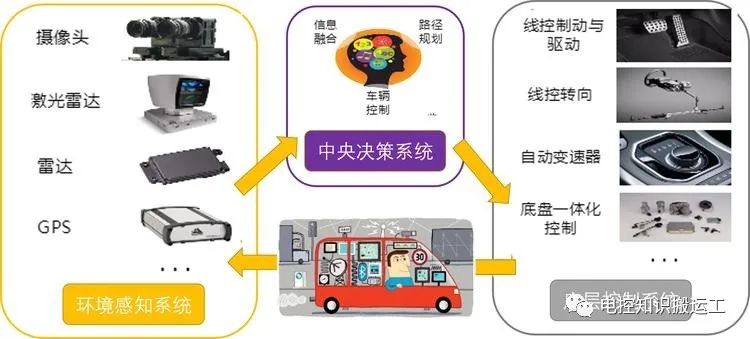
Autonomous Vehicles: These rely on various sensors installed in the vehicle to perceive the surrounding environment, make decisions and control through onboard controllers, and execute commands through the underlying systems to achieve autonomous driving.
Connected Vehicles: These are vehicles that obtain external environmental information through V2X communication, assisting in decision-making and control.
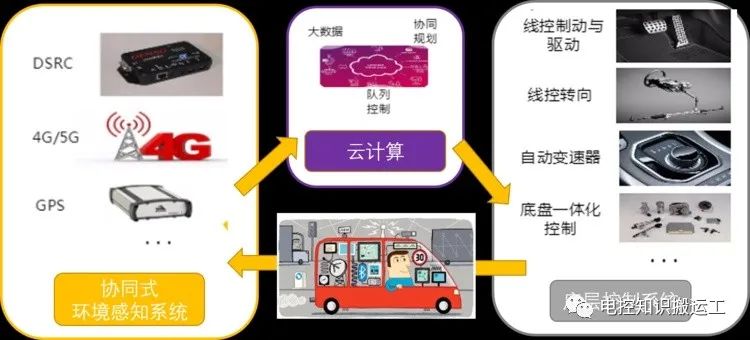
Both modes of intelligence are advancing in their own ways while also integrating, and the result of this integration is the intelligent connected vehicle.
When the terms “intelligent” and “connected” appear together, “intelligent” is generally understood in a narrow sense, referring to “autonomous intelligence”; when “intelligent” appears alone, it is understood in a broad sense, encompassing both “autonomous intelligence” and “connected intelligence”.
Thus, the statement that smart vehicles represent intelligent connected vehicles is valid.
2. Vehicle Networking
Based on in-vehicle networks, vehicle-to-vehicle networks, and vehicle-to-cloud networks, a large system network is established to enable wireless communication and information exchange between vehicles and X (people, vehicles, roads, clouds, etc.) according to agreed communication protocols and data exchange standards. This network can realize integrated functions such as intelligent traffic management, dynamic information services, and intelligent vehicle control.
3. Intelligent Connected Vehicles
By now, you should be clear that intelligent connected vehicles consist of two parts: intelligence and connectivity. Let us now provide a clear definition of intelligent connected vehicles.
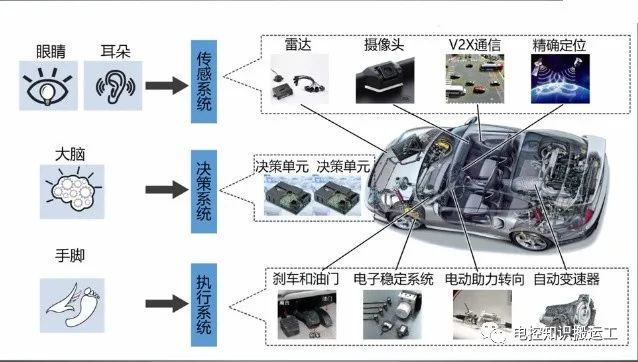
Definition: Vehicles equipped with advanced onboard sensors, controllers, and actuators, integrating modern communication and network technologies. They achieve intelligent information exchange and sharing between vehicles and X (people, vehicles, roads, clouds, etc.), possessing complex environmental perception, intelligent decision-making, and collaborative control functions, enabling safe, efficient, comfortable, and energy-saving driving, ultimately realizing a new generation of vehicles that can replace human operation.
2. Levels
An automobile’s transition from requiring the driver to be fully focused to being able to drive itself is not something that happens overnight; it will undergo several stages.
The most commonly used standard for classifying vehicle intelligence levels in the industry is established by the Society of Automotive Engineers (SAE).
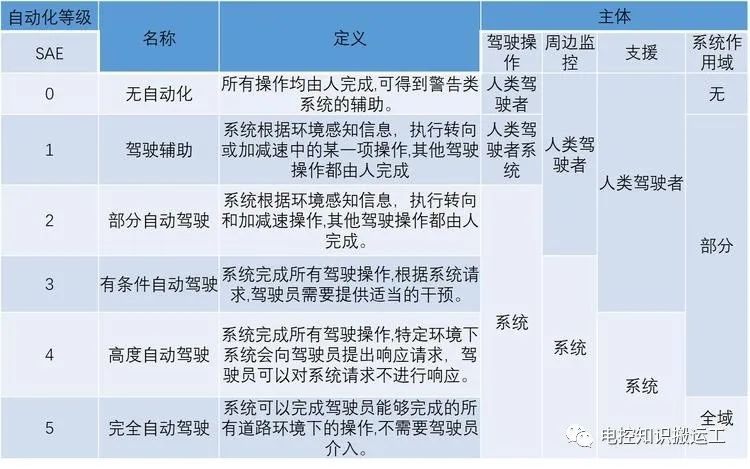
At Level 0, the vehicle has no assistance systems, and the driver must be fully focused, using both hands and eyes.
At Level 1, the vehicle has either lateral or longitudinal assistance systems, but the driver still needs to concentrate, using both hands and eyes.
At Level 2, the vehicle has both lateral and longitudinal assistance systems, and the driver still needs to observe the environment but can temporarily free their hands and eyes.
At Level 3, the vehicle will request the driver to take over in emergency situations, and the driver must maintain takeover awareness while freeing their hands and eyes.
At Level 4, the vehicle will not request the driver to take over even in emergencies (it can handle itself), and the driver does not need to maintain takeover awareness, allowing for hands and mind to be free.
At Level 5, the vehicle can achieve fully autonomous driving without the need for a driver.
Additionally, intelligent connected vehicles can also be classified based on the two dimensions of intelligence and connectivity.
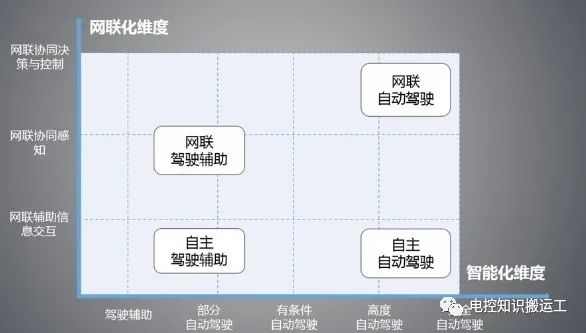
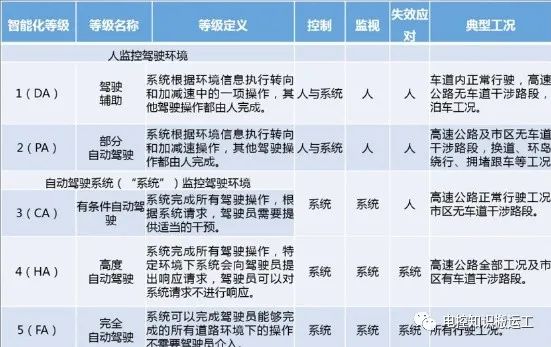
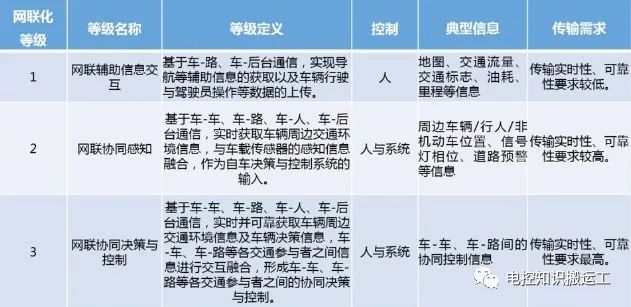
Notably, China classifies vehicles based on both dimensions of intelligence and connectivity.
Intelligence:
Connectivity
3. Development Trends of Technology
1. Overall Development Route
Incremental: Traditional manufacturers, constrained by existing development systems and supply chains, choose a gradual development route focusing on core technologies and terminal products, transitioning step by step from Level 1 to Level 5 mass production.
Leapfrog: Internet companies, unburdened by history and focusing on business models and future industrial ecosystem layouts, choose a differentiated development path compared to traditional manufacturers, directly entering from Level 4/5 and continuously enriching vehicle driving scenarios.
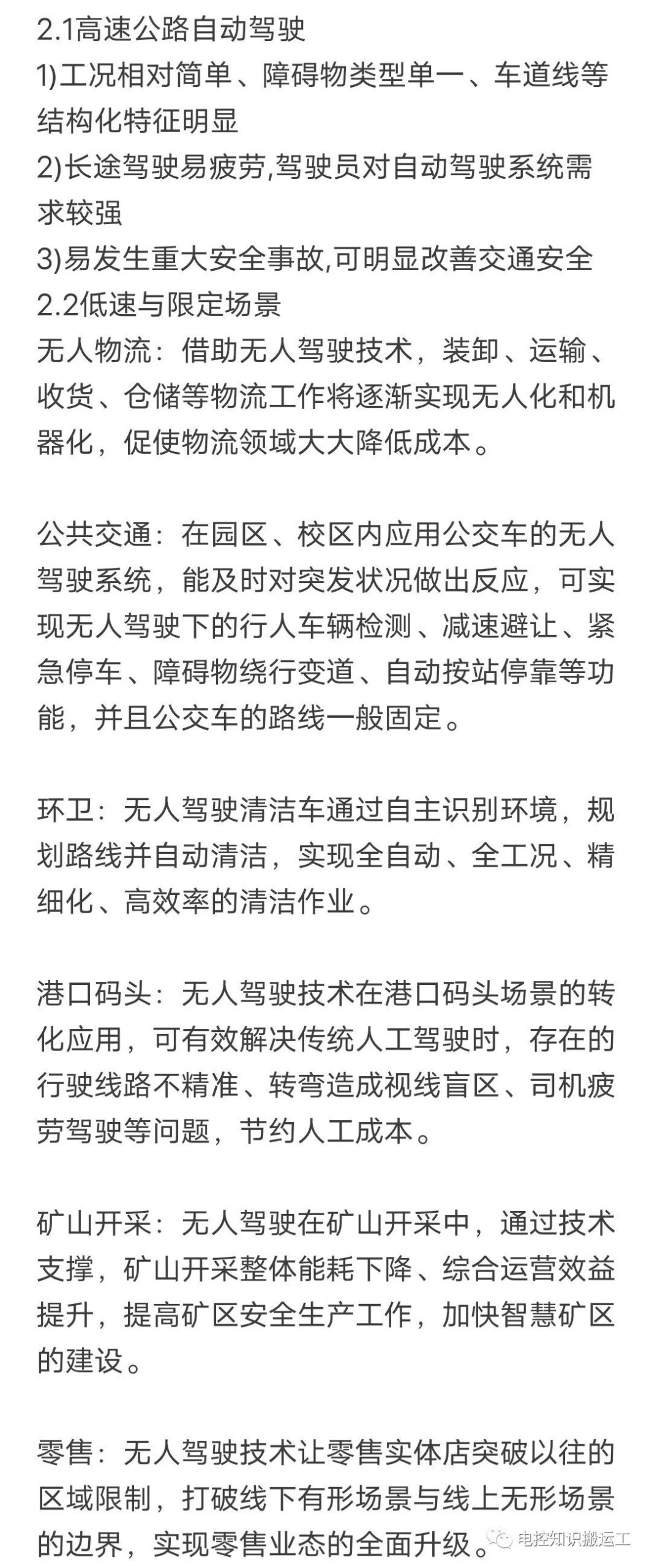
2. Current Application Scenarios
3. Environmental Perception
3.1 Sensor Arrangement
Configuration 1: High-precision map + multi-beam laser radar
High cost, large data volume, suitable for Level 3 and Level 4 intelligent vehicles.
Configuration 2: Millimeter-wave radar + few-beam laser radar + camera + ultrasonic radar
Sensor costs are relatively low, suitable for Level 1 and Level 2 intelligent vehicles.
3.2 Multi-Target Detection Based on Deep Learning
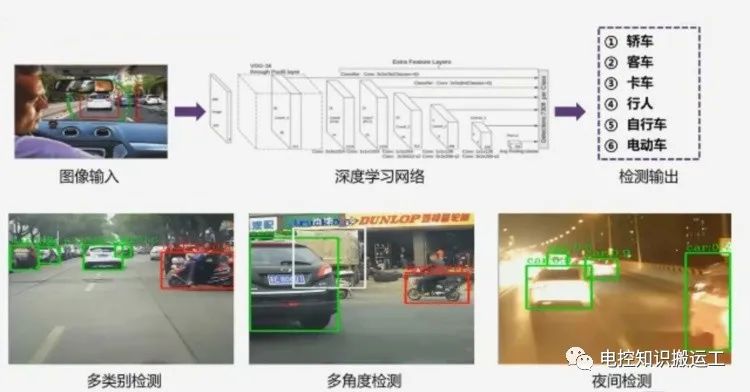
Advantages:
Automatic feature extraction, end-to-end model.
Uncover hidden patterns, higher accuracy.
Driven by big data, hardware development, and algorithms.
Disadvantages:
Requires a large amount of high-quality data as learning samples, placing high demands on data collection and annotation.
Intrinsic mechanisms are unclear, boundary conditions are uncertain, requiring integration with traditional methods to ensure reliability.
Limited by the current processing capabilities of onboard chips, real-time computation under high-speed scenarios cannot be guaranteed.
Vulnerability to adversarial samples: Noise can interfere with precise target recognition.
3.3 Laser Radar
1) The cost of laser radar will further decrease: Many companies claim that after mass production, the price of laser radar will drop to $200-500.
2) Laser radar is evolving towards multi-beam and solid-state laser radar: At the 2018 CES (Consumer Electronics Show), Velodyne showcased two products: the 128-beam laser radar VLS-128 and the solid-state laser radar Velarray.
3) Domestic laser radar will have a place in the market.
3.4 High-Precision Maps and High-Precision Positioning
High-precision maps: Maps will achieve deep information fusion with BeiDou navigation, visual/radar CAN bus, etc. The application of 5G technology will help realize real-time automatic incremental updates of high-precision 3D maps, and the data collection patterns, exchange formats, and physical storage of high-precision map data will gradually standardize.
High-precision positioning: The national BeiDou ground-based enhancement system will be rapidly promoted to provide conditions for low-cost precise positioning of vehicles.
4. Decision Making
4.1 End-to-End Decision Making
Using onboard sensors (cameras and laser radar) as input, and driver operations (accelerator, brake, steering wheel) as output, under the training of deep neural network models, the decision-making process is treated as an indivisible black box. The main issue is that the decision results lack logical interpretability, and it is difficult to cover all scenarios, requiring a large amount of data.
4.2 Decomposed Decision Making
Decomposes the decision-making process into independent simple sub-problems, such as scene recognition, motion prediction, behavior decision-making, trajectory planning, etc., solving each problem independently.
5. Chassis Control System
5.1 Steering
Update the controller based on traditional EPS, rematch motor power, or redesign the steering system to enable active steering functionality.
5.2 Braking
Modify or redesign the braking system based on the original ABS or ESP to enable active braking functionality.
5.3 Driving
On electric vehicles, it is easy to achieve drive-by-wire (VCU’s main function is to calculate torque demand and achieve torque distribution. Thus, simply opening the speed control interface of the VCU can achieve active driving). On traditional fuel vehicles, engine torque control precision is limited, and the transmission needs some modifications.
6. Vehicle Networking
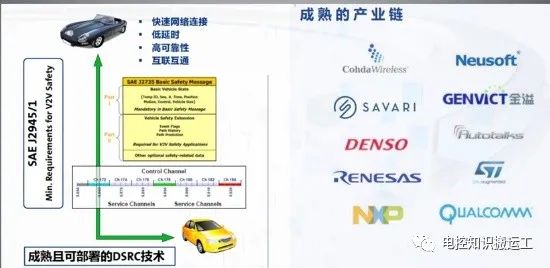
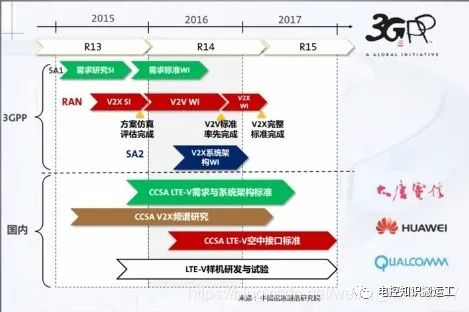
The development of vehicle communication technology has two different paths: DSRC and LTE-V.
DSRC: DSRC technology and standards are relatively mature, and countries such as the US, Japan, and Europe may strongly promote it through mandatory regulations, mainly limited to safety-related fields.
LET-V: This is being accelerated internationally and may become the mainstream vehicle networking communication system in China. Over time, LTE-V technology, due to its smooth transition to 5G, will increasingly pressure DSRC.
7. Information Security
Automobile information security is receiving increasing attention with the rise of vehicle connectivity. To prevent hackers from illegally obtaining data, or even remotely controlling vehicles and other potential threats, it is crucial to prioritize information security measures and establish automotive information security standards and evaluation systems.
8. Testing and Evaluation Technology
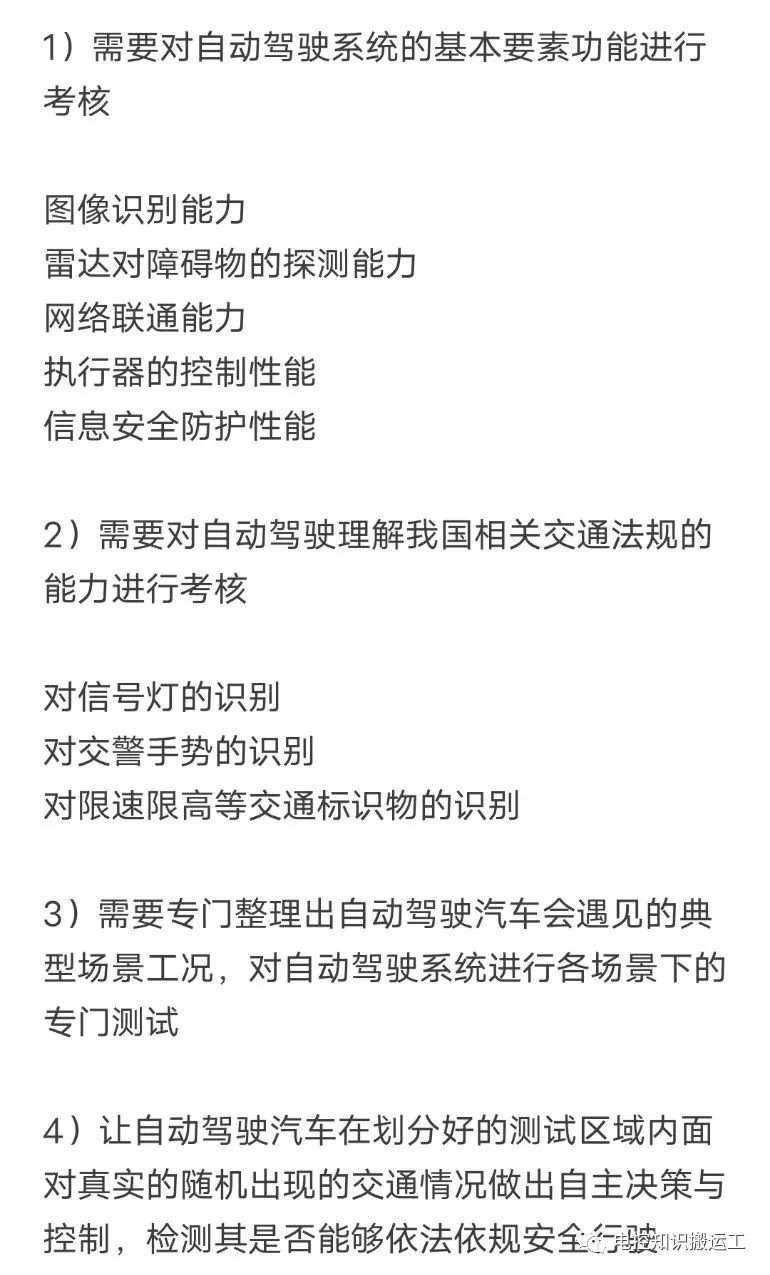
The testing and evaluation methods for intelligent vehicles differ significantly from traditional vehicles, requiring specialized evaluation systems and testing grounds.
For business cooperation, add WeChat: 18008462630. There are dozens of groups related to the automotive industry, including complete vehicles, key parts, new energy vehicles, intelligent connected vehicles, aftermarket, automotive investment, autonomous driving, vehicle networking, etc. To join a group, please scan the administrator’s WeChat (please indicate your company name). There is also a financing group for startups, welcoming angel round and Series A companies to join;