AM Yidao Academic Sharing
Some technological breakthroughs make it clear that the rules of the game have fundamentally changed.
When AM Yidao saw the GRACE technology paper from the team at Utrecht University in the Netherlands published in the September 4, 2025 issue of Nature, my first thought was: the next historic moment in the 3D printing industry is getting closer.
What is the achievement?
In simple terms, it allows a 3D printer to possess human-level perception and decision-making capabilities for the first time:
It can see, think, decide, and autonomously manufacture.
A volumetric 3D printing machine scans the internal structure of materials, autonomously understands environmental information, and designs and manufactures perfectly fitting complex geometric structures from scratch in just four minutes.
Let’s take a look at the research results published in Nature.
AM Yidao has made many statements about this article that have deviated from the original technical expressions, with a lot of original interpretation and creative content. For more hardcore technical details, please read the original article in Nature.

How GRACE Achieves Human-Level Perception
To understand the revolutionary nature of GRACE, we must first understand how it enables a machine to possess human-level perception.
Just as humans see with their eyes, think with their brains, and act with their hands, GRACE achieves an intelligent closed loop from perception to manufacturing through the perfect combination of three optical systems.
Eyes: Optical Section Microscopy Enables Machines to See
As shown in Figure 1 of the paper, GRACE’s “eyes” consist of a precise optical section microscopy system.
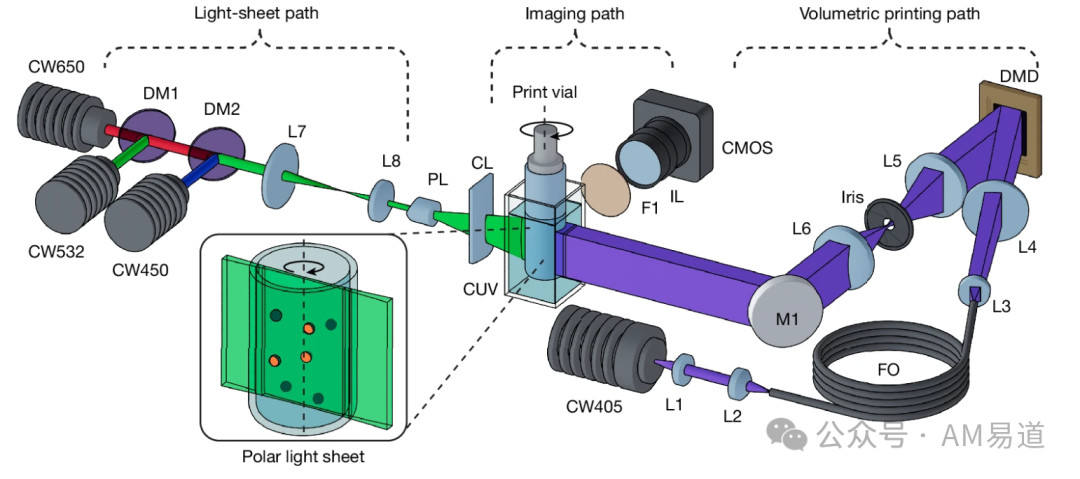
Unlike traditional microscopes that illuminate from above, it emits laser sheets from the side to scan the sample, like using a lightsaber to cut tofu.
The system is equipped with three different wavelength laser sources (450nm, 532nm, 650nm) that can identify different colors of fluorescent markers, just as the human eye can distinguish red, green, and blue.
Even more impressive, this “eye” has an ultra-high resolution of 14.47 micrometers and can completely scan a printing volume in 75-150 seconds.
While human eyes need to move to see, GRACE’s eyes rotate the sample, obtaining information from 500 to 1000 different angles, providing a more comprehensive observation than human vision.
Brain: Computer Vision Enables Machines to Think
After scanning the information, GRACE’s brain begins to work.
It uses the DBSCAN algorithm—a smart classification system, like an experienced craftsman, that can automatically identify which features are useful and which are irrelevant noise.
The key point is that it does not need to be told in advance how many features to look for; it makes judgments autonomously.
Then the system converts this information into three-dimensional coordinate data, just as the human brain converts visual information into spatial cognition.
The Grasshopper-based parametric modeling system acts as a designer, automatically generating geometric schemes within 1-10 seconds based on the scanned information.
Hands: Volumetric Printing Enables Machines to Manufacture
GRACE’s “hands” consist of a volumetric printing system that combines a 405nm laser with a DMD micro-mirror array.
Unlike traditional layer-by-layer printing, it can simultaneously cure materials accurately throughout the entire three-dimensional space, completing manufacturing in 20-40 seconds.
This is akin to how human hands can coordinate multiple joint movements simultaneously, achieving true three-dimensional manufacturing.
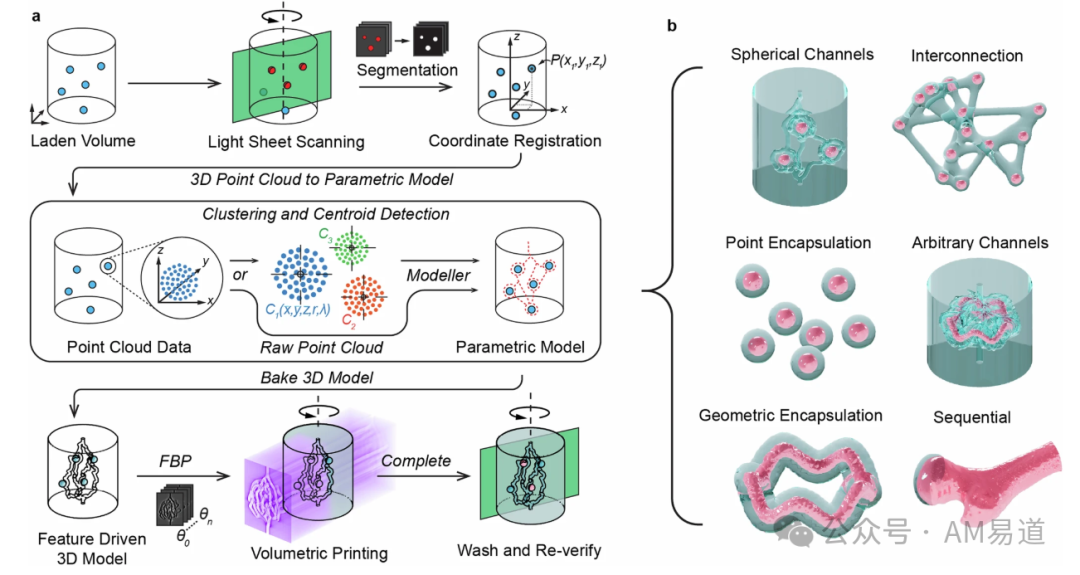
Extended Data Fig. 1 clearly illustrates the complete process of “see-think-do”:
Scan → Understand → Design → Manufacture → Validate.
Each step requires no human intervention, which exemplifies human-level perception capabilities.
Three Practical Applications of Human-Level Perception
With the complete capabilities of “see, think, do,” what can GRACE achieve?
The paper demonstrates the value of this perception capability in practical applications through three carefully designed experiments.
First Application: Customizing Vascular Networks for Cells Like a Doctor
Figure 2a showcases GRACE’s most remarkable ability:
It can customize vascular networks for different cell groups like an experienced doctor.
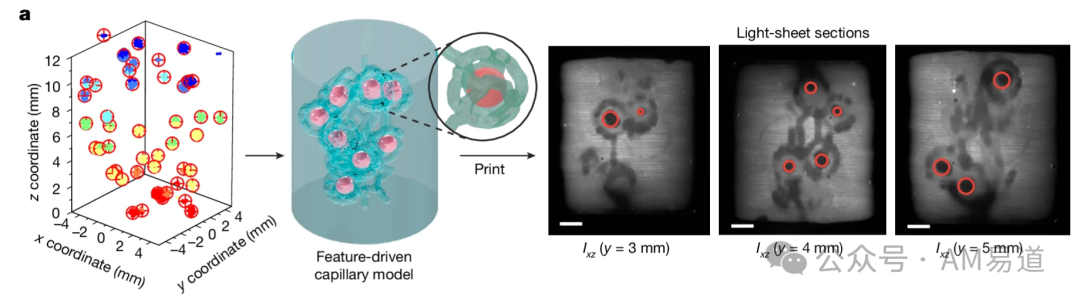
The system first scans and identifies the distribution of alginate microspheres (simulating cell clusters), just as a doctor examines a patient’s CT scan.
Then the algorithm begins to think: What kind of vascular supply do these cell clusters need, given their varying sizes?
The result is intelligent:
Figure 2d shows that for cell clusters smaller than 0.5mm, the system determines that a simple vascular supply is sufficient; for those larger than 0.5mm, it judges that a complex network of vessels is necessary.
This judgment aligns perfectly with biological principles: the larger the tissue, the more complex the vascular supply needed.
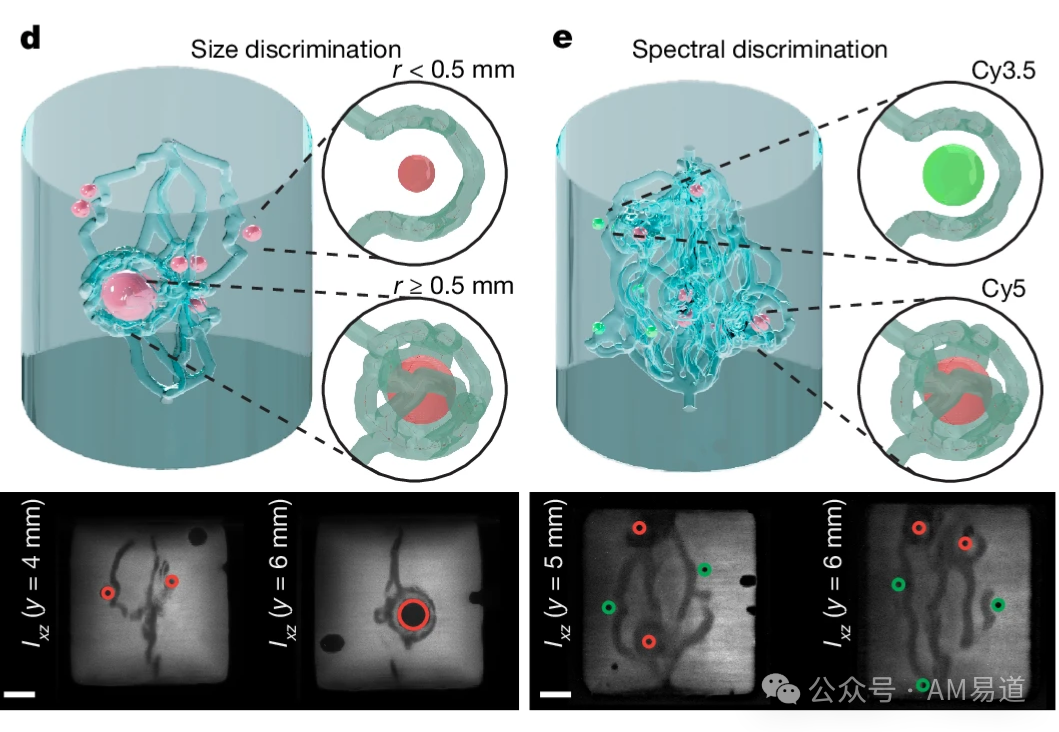
Even more impressively, Figure 2e shows that the system can make decisions based on color.
When faced with cell clusters marked with different fluorescent colors, it allocates different vascular strategies. This is akin to how a doctor would devise different treatment plans based on the characteristics of different organs.
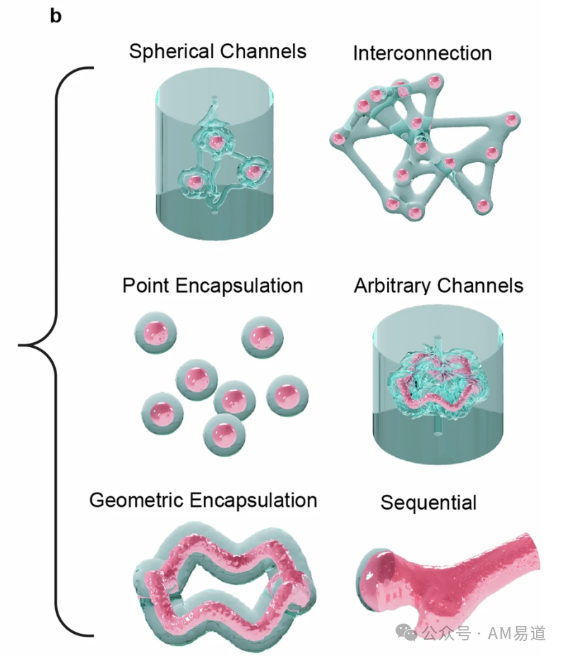
Extended Data Fig. 1b showcases the various geometric structures the system can design, from simple enclosures to complex networks, with choices entirely based on the actual conditions scanned.