Click the blue text to follow us

To deeply learn and implement the spirit of the 20th National Congress of the Communist Party of China, fully carry out Xi Jinping’s cultural thought, and showcase the achievements in the protection and inheritance of the national-level intangible cultural heritage “Qixi Festival (Tianhe Qiqiao Customs)” in recent years, an event named “Craft Inheritance” was successfully held at the Guangzhou Qiqiao Culture Museum. This event was guided by the Tianhe District New Era Civilization Practice Center and organized by the Party-Mass Service Center of the Zhuji Street in Tianhe District, becoming an important practice for revitalizing intangible cultural heritage resources and promoting Qiqiao culture in Tianhe District.

“Craft Inheritance” Injects New Vitality
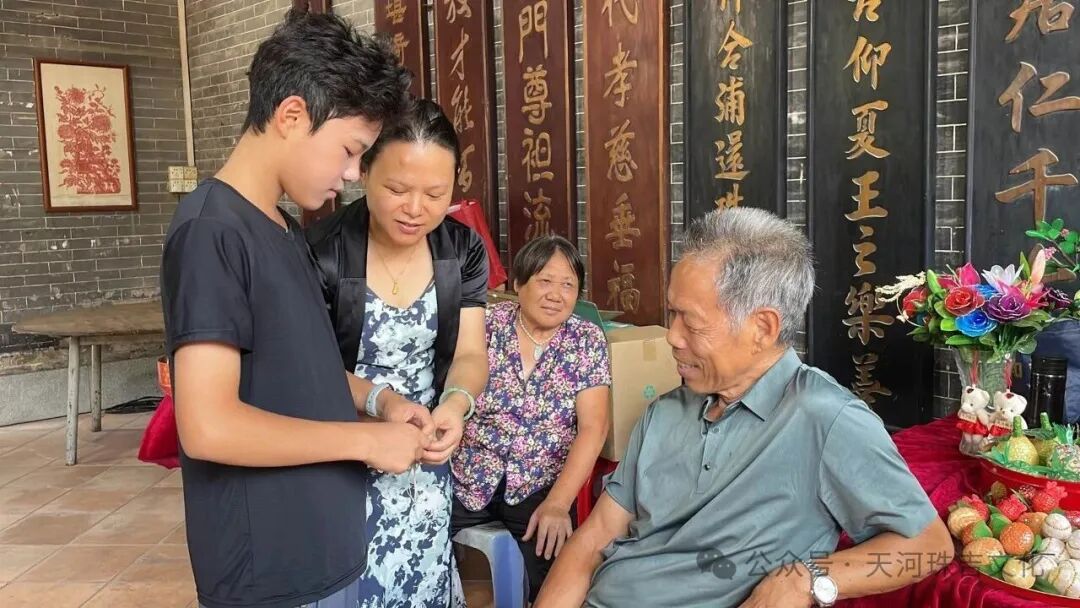
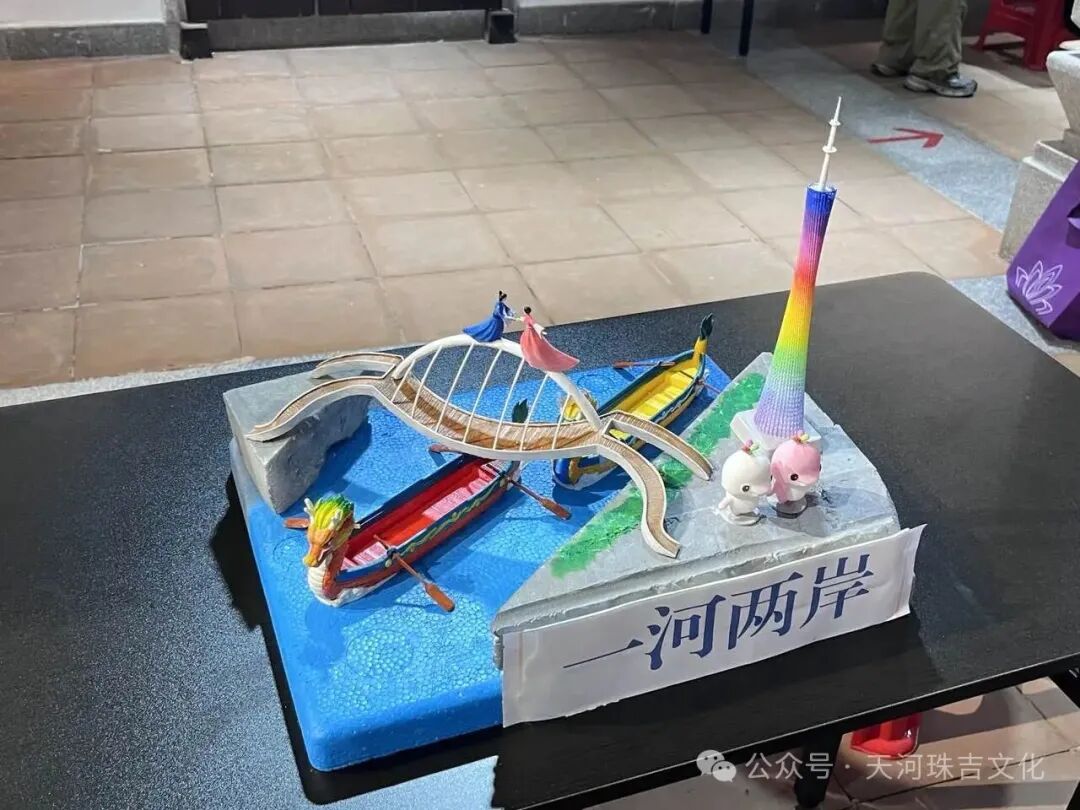
Entering the Guangzhou Qiqiao Culture Museum, veteran artisans showcased the profound heritage of Qiqiao intangible cultural heritage craftsmanship using traditional agricultural materials such as rice flowers, grain flowers, and fruit-shaped sequins, while the works of the younger generation were full of creativity and highlights. The most eye-catching piece during the event was a work titled “Two Banks of a River.” This work features an innovative design concept that not only deeply integrates with the theme of the 15th National Games of Guangzhou but also innovatively employs 3D printing technology, using new materials to meticulously create the core components of the offering, including the Haixin Bridge, Canton Tower, the Cowherd and Weaver Girl figures, the mascot of the 15th National Games, and dragon boats. These 3D printed components were cleverly combined to vividly recreate a scene of the Pearl River that embodies the regional characteristics of Lingnan, the connotations of intangible cultural heritage, and the vitality of the National Games, becoming the focal point of the event.
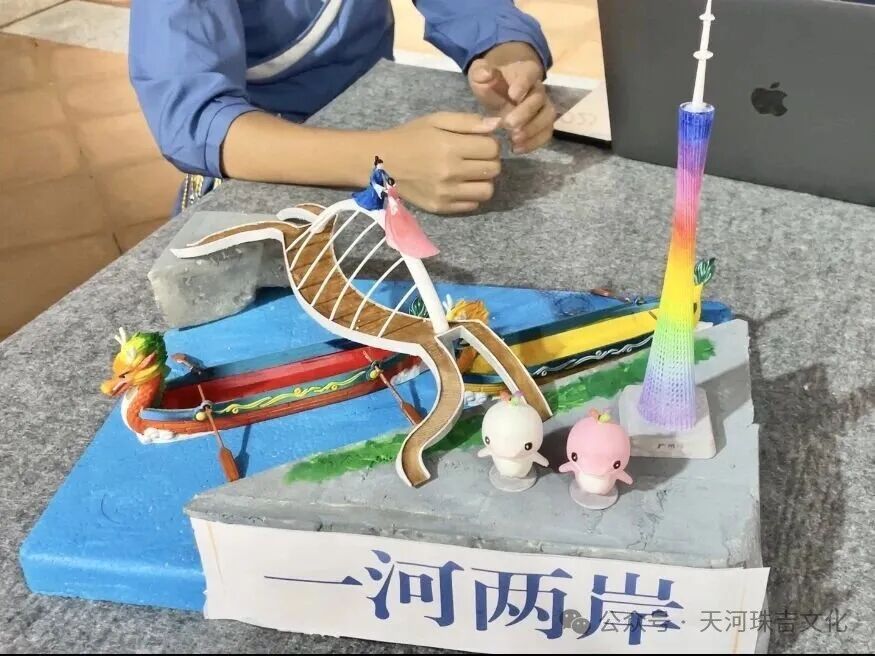
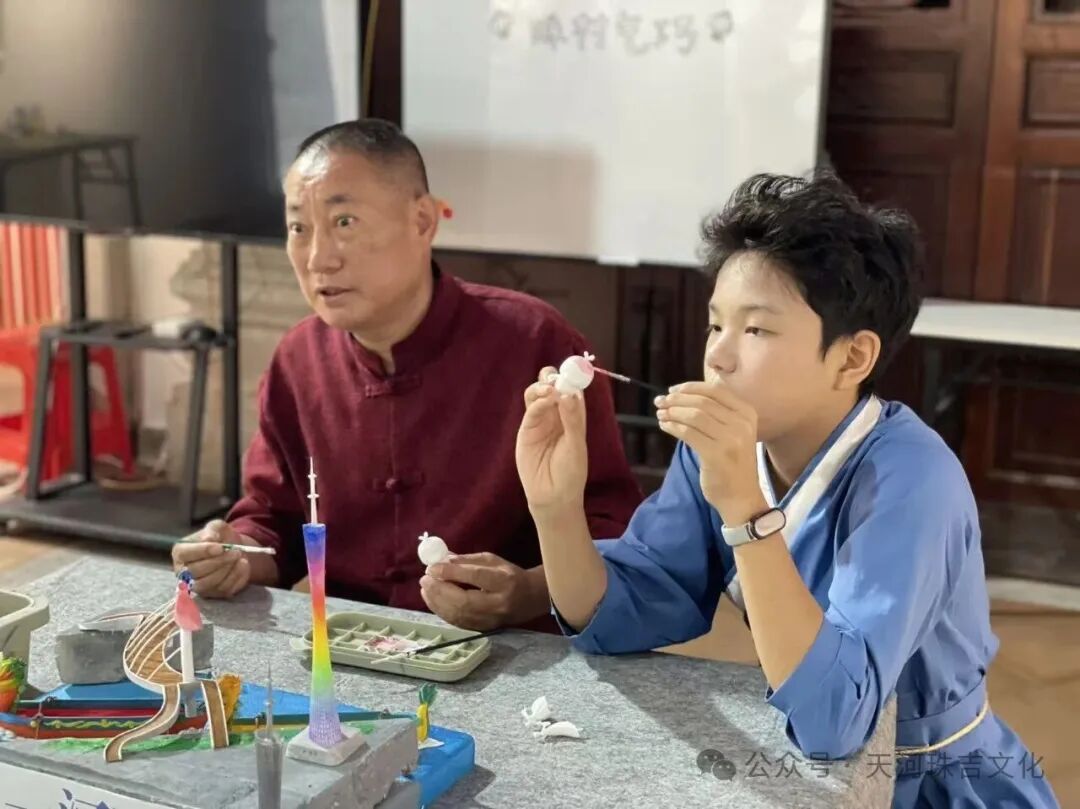
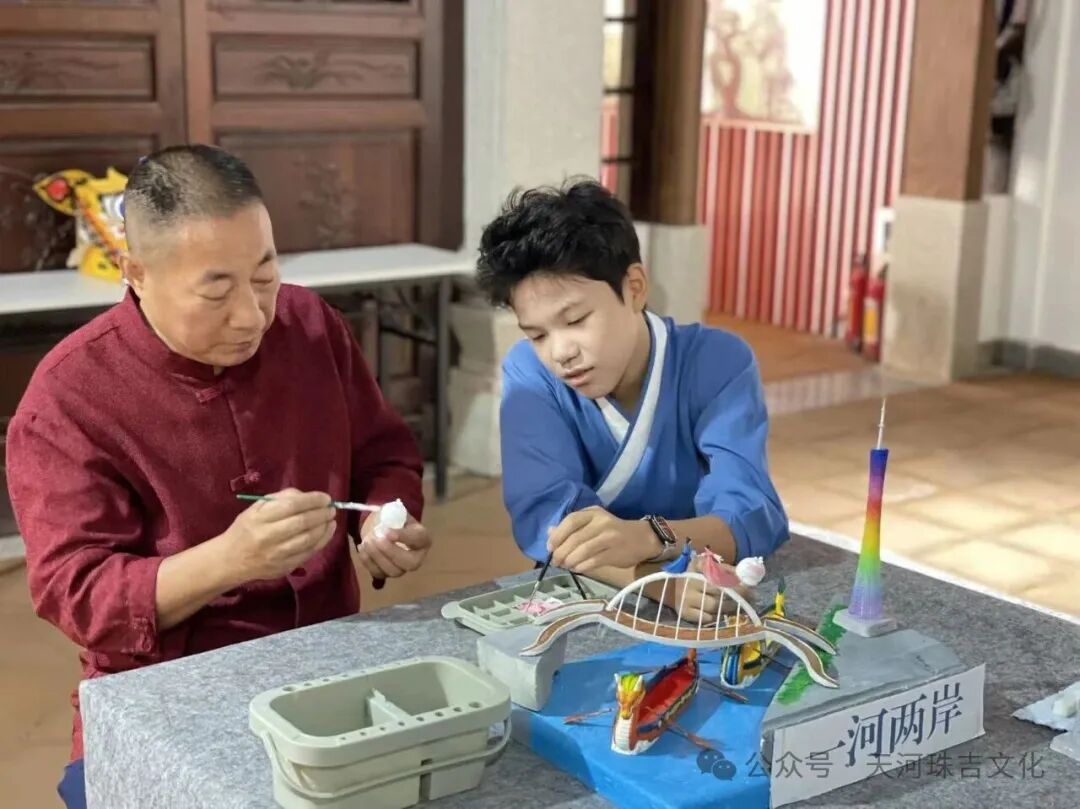
The creator is a 13-year-old middle school student, Huang Yizheng. At the museum event, Huang Yizheng was seen completing the final coloring and assembly of the work with his master, Mr. Pan Jianming, an intangible cultural heritage inheritor from Zhu Village. The image of the old and young together is a vivid representation of the inheritance of intangible cultural heritage, where the old teaches the young.

Empowered by Technology, Bridging a Millennium of Dialogue
The origin of this creation stems from Huang Yizheng’s encounter with Qiqiao culture during a research activity. Having loved computer programming since childhood, he was deeply attracted by the charm of traditional craftsmanship. Since then, he has rooted himself in Zhu Village every Qiqiao Festival, humbly seeking guidance from veteran artisans. However, during the learning process, he keenly noticed the real challenges of intangible cultural heritage inheritance—the younger generation in the digital age is accustomed to a fast-paced life and gradually loses interest in traditional handicrafts that require patience and dedication, while the skills upheld by old craftsmen face the dilemma of aging.
This observation turned into his action: why not let Qiqiao craftsmanship “join hands” with modern technology to inject new vitality into intangible cultural heritage that attracts young people? From the initial idea at the beginning of the year to six months of hands-on practice, from learning computer graphics and 3D modeling to selecting materials for printing and finally assembling, every step embodies a respect for tradition and a dedication to innovation.
Huang Yizheng’s creation has long transcended the scope of a student work. It is a cultural dialogue that spans a millennium—allowing the craftsmanship of Qiqiao intangible cultural heritage to collide with the technology of 3D printing, proving that tradition does not have to be “conservative,” but can also be revitalized through the integration with modern elements; it is also a vivid practice of youth inheritance—when young people use technology as a pen and passion as ink to write a “new answer” for the inheritance of intangible cultural heritage, it shows us that the future of intangible cultural heritage lies in the proactive actions of young people breaking the mold and innovating expressions, and this “old craftsmanship + new technology” inheritance model may become an important path to activate the living vitality of intangible cultural heritage.
Only by making technology a bridge connecting tradition and modernity can the millennium-old intangible cultural heritage truly “come alive” in the digital age, possessing a longer-lasting vitality.
Intergenerational Inheritance, Intangible Cultural Heritage Shines with New Brilliance
When traditional intangible cultural heritage meets modern technology, this piece, filled with ingenuity, cleverly integrates the Pearl River scenery with traditional handicrafts, sparking a vibrant and youthful spirit.
Mr. Pan Jianming, an intangible cultural heritage inheritor from Zhu Village, expressed: “This event is not only about the inheritance and practice of Qiqiao intangible cultural heritage skills but also allows young people to deeply appreciate the charm of intangible cultural heritage through collaboration, enhancing cultural confidence, and promoting a positive cycle of collaboration, promotion, cultivation, inheritance, and development of Zhu Village’s Qiqiao handicraft art, allowing intangible cultural heritage to shine with a different brilliance under the support of the younger generation!”
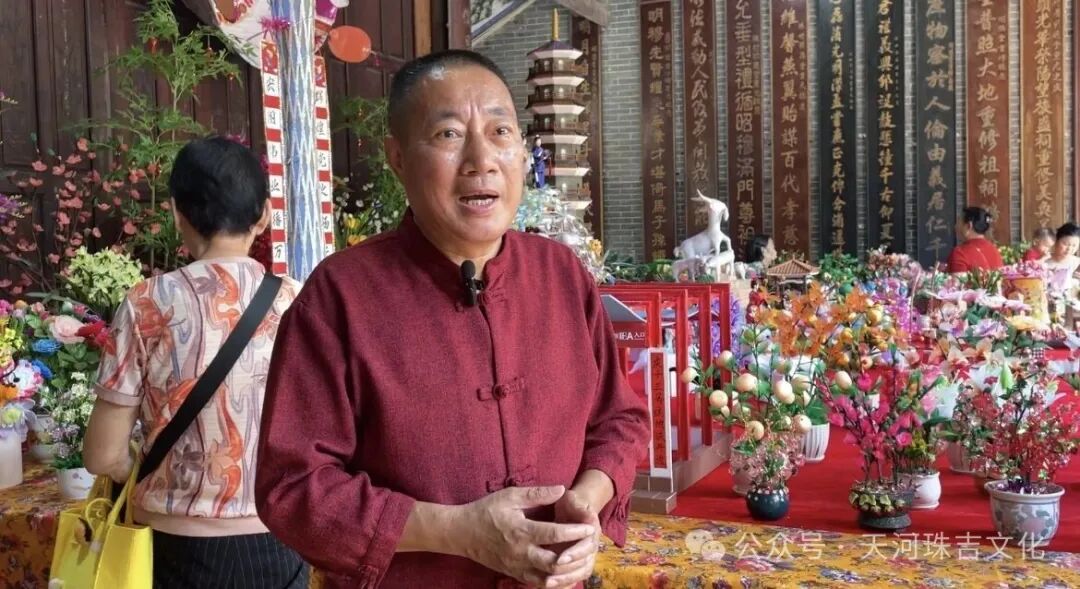
Every detail of this work is engraved with the hard work of veteran artisans and the innovation of young people. It is not only a piece of offering work for appreciation but also symbolizes the enduring vitality of Qiqiao intangible cultural heritage in intergenerational inheritance. It is understood that it will be collected and regularly displayed by the Guangzhou Qiqiao Culture Museum, becoming an important carrier for conveying awareness of intangible cultural heritage protection and continuing the roots of Lingnan culture.
Source
Party-Mass Service Center of Zhuji Street