Click the blue text above to follow us

When mentioning 3D printing, you might think of plastic parts or metal models, but there is a type of 3D printing photocurable transparent material. It combines high light transmittance, precise forming capabilities, and excellent mechanical properties, replicating the clarity of glass while achieving complex structures that are difficult to accomplish with traditional processes. It has now sparked an innovative wave in fields such as medical, electronics, and cultural creativity.
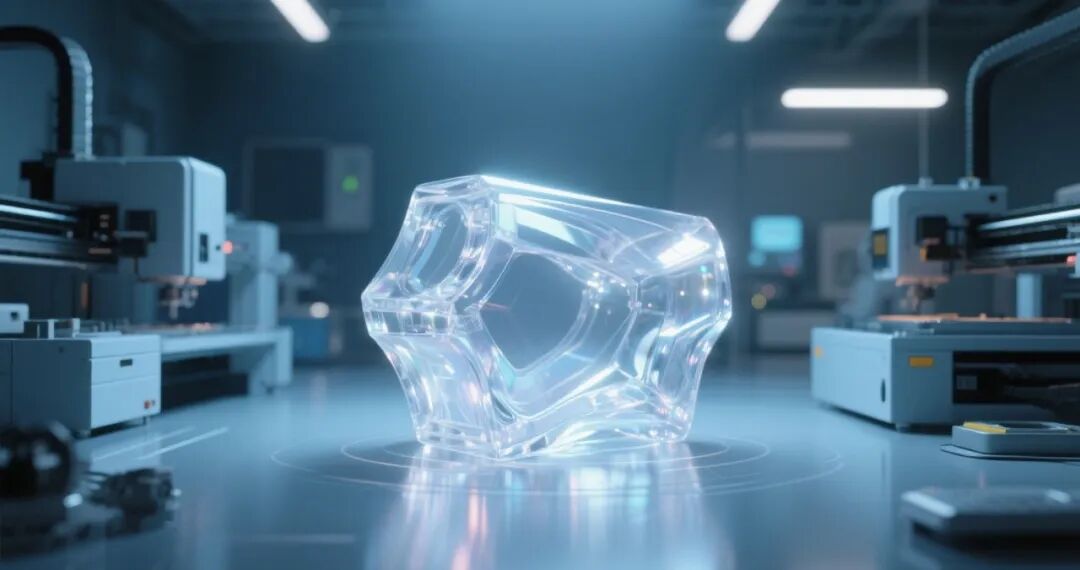
Photocurable transparent materials are based on photosensitive resins, which quickly cure and form under ultraviolet (UV) light. Their performance indicators directly determine the application boundaries. Below are the key data for mainstream materials in the industry:
|
Performance Indicators |
Industry Average Level |
High-End Material Level |
Application Significance |
|
Light Transmittance (400-700nm) |
85%-90% |
92%-95% (close to glass) |
Determines the clarity of optical devices and display models |
|
Tensile Strength |
30-50MPa |
55-70MPa |
Affects the load-bearing and durability of structural components |
|
Bending Strength |
45-65MPa |
70-90MPa |
Suitable for precision parts that require bending |
|
Curing Shrinkage Rate |
2%-5% |
0.8%-1.5% |
The lower the shrinkage rate, the higher the forming accuracy |
|
Heat Deflection Temperature (HDT) |
50-80℃ |
120-150℃ |
Determines whether the material can withstand high-temperature environments |
The light transmittance of high-end photocurable transparent materials has approached that of ordinary glass (about 90%), and through formula optimization, the heat deflection temperature can meet the high-temperature requirements of fields such as electronics and automotive. Additionally, a shrinkage rate as low as about 1% allows for precise printing of structures at the 0.1mm level.
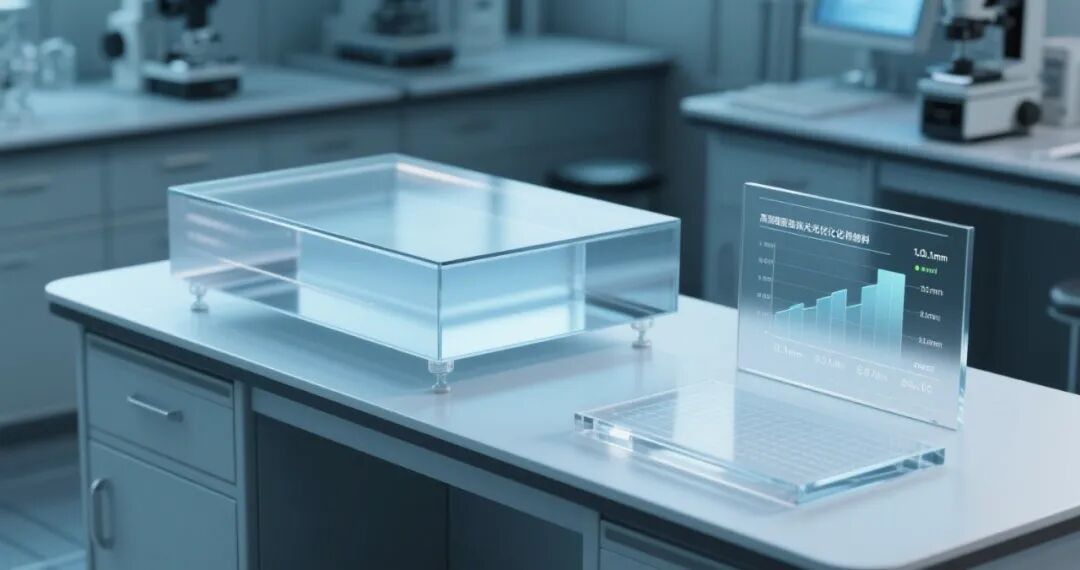
The core advantages of photocurable transparent materials—”transparency + customization + high precision”—have allowed them to establish a foothold in multiple fields that traditional processes find difficult to penetrate. Here are the four most representative application directions:
In the medical field, “transparency” means “observability.” Photocurable transparent materials are becoming a “new choice” for minimally invasive surgical instruments and dental models. For example:
Transparent tubes in minimally invasive surgery: Traditional metal tubes cannot observe the internal flow of liquids, while tubes printed with transparent photocurable materials allow doctors to see the drug delivery situation in real-time, improving precision by over 30%;Dental transparent orthodontic models: By scanning patient dental data, a 1:1 model can be printed with transparent materials, allowing doctors to intuitively plan the fitting path of braces, and the model can be repeatedly sterilized, with a lifespan twice that of traditional resin models.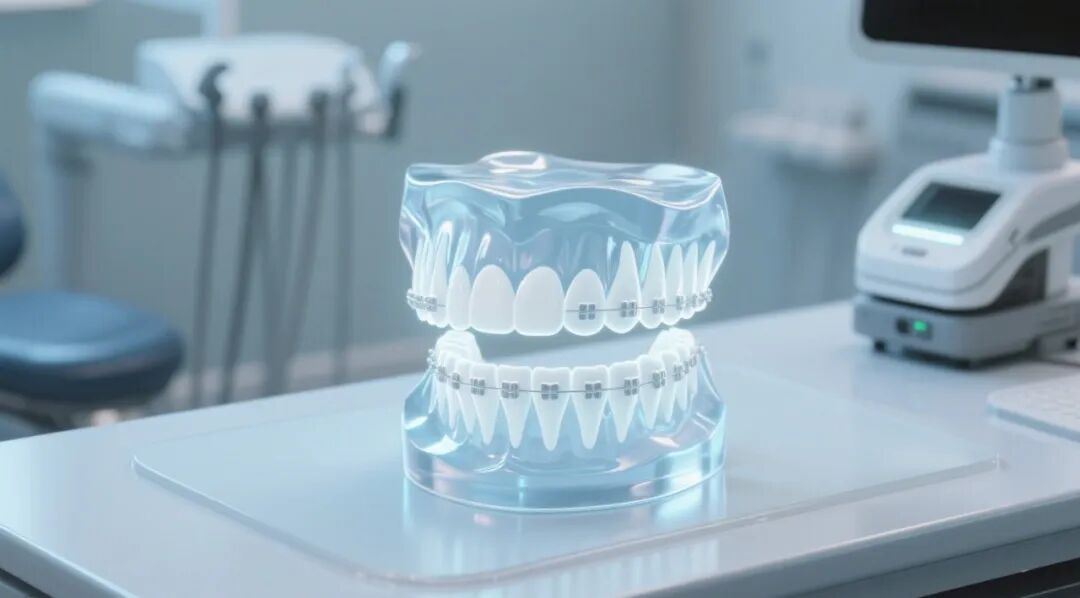
As electronic devices develop towards “miniaturization and integration,” traditional injection molding processes struggle to produce small transparent shells. Photocuring technology can easily achieve this. Typical applications include:
Micro LEDlens arrays: Printing precision can reach 0.05mm, enabling the production of closely arranged lens groups for AR glasses’ display modules, with light transmittance 5%-8% higher than traditional glass lenses, while weight is reduced by 40%.
In the cultural and consumer fields, the “aesthetic + customization” attributes of transparent materials are fully utilized. For example:
Transparent components for figurines and trendy toys: Such as the “crystal wings” and “transparent skirts” of anime figurines, printed with transparent photocurable materials, can present complex effects like gradients and hollow designs, with a detail restoration rate 50% higher than traditional casting processes, and support small-batch customization, allowing production of just one piece;Transparent decorative items for home decor: Such as customized transparent vases and lampshades, which can be printed directly based on user-designed 3D models without the need for molds, reducing costs by 60% compared to traditional hand-blown methods, and shortening production cycles from 15 days to 3 days.
Currently, photocurable transparent materials are still evolving, with two key directions:
Higher performanceResearch and development of “yellowing-resistant” formulas—current materials tend to yellow when exposed to sunlight for extended periods. The latest developed UV-resistant transparent resins show only a 2% decrease in light transmittance after yellowing tests (UV exposure for 1000 hours), which can be used in outdoor electronic devices and architectural decorations in the future;Lower costsBy optimizing the photosensitizer formula, the cost of some mid-to-low-end transparent materials has dropped from 200 yuan/kg to 80 yuan/kg. It is expected that within three years, costs will be on par with traditional transparent ABS plastics, further expanding the application range.
From precise assistance in medicine to micro breakthroughs in electronics, and personalized expression in cultural creativity, 3D printing of photocurable transparent materials is breaking the boundaries of traditional processes with its “transparency” feature. Perhaps soon, when you receive a customized transparent AR glasses or a medical device that allows observation of internal structures, it will be thanks to this technology.
Would you like to know more about the specific applications of transparent photocurable materials in various fields? Feel free to leave a comment!