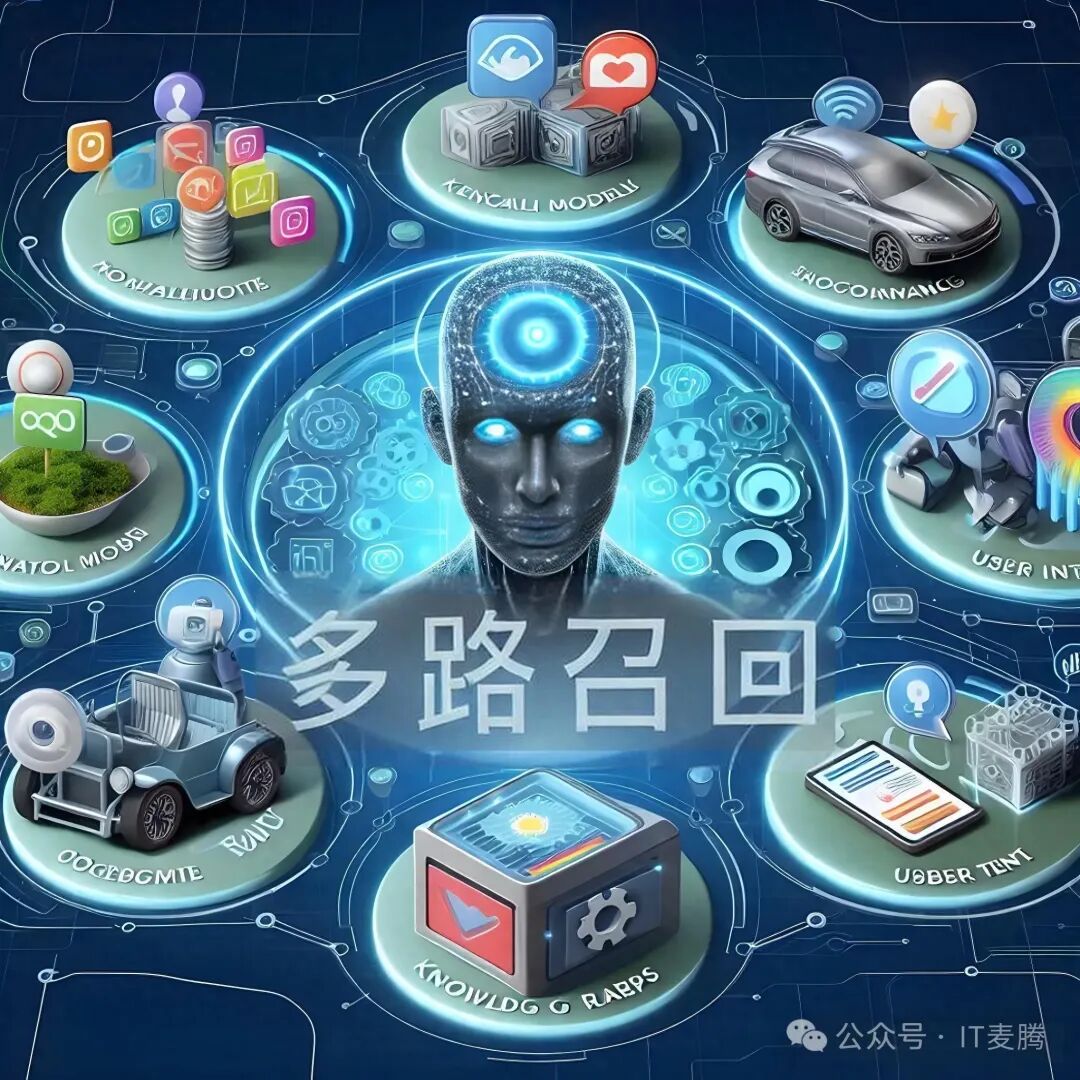
 Multi-channel Recall can be understood as a “broad net, multi-angle” information retrieval strategy. Its core idea is: no longer relying on a single method to find answers or recommend content, but rather using various different methods or channels to collect potentially relevant results, ultimately integrating these results to enhance accuracy and diversity.
What is Multi-channel Recall?
Imagine you are looking for a book in a library; the librarian won’t just use one method to help you find it, but rather:
First Method: Search by book title keywords (e.g., “detective novels”);
Second Method: Filter based on your additional requirements (e.g., “not too gory”);
Third Method: Associate similar themes (e.g., “twist endings”, “deduction”);
Fourth Method: Combine with your past borrowing records (e.g., you love Japanese detective stories).
This is Multi-channel Recall—simultaneously analyzing needs from multiple dimensions to ensure no potentially relevant information is missed.
How Does Multi-channel Recall Work?

Path 1: Keyword Matching
Directly match the literal words input by the user (e.g., searching for “apple” recalls products containing “apple”), but may confuse “fruit” and “phone”.
Path 2: Semantic Understanding
Use AI models to understand deeper meanings (e.g., “affordable and useful phone” will relate to tags like “high cost-performance” and “thousand-yuan phone”).
Path 3: User Behavior Analysis
Combine with user history (e.g., users who bought cat food will recall pet supplies).
Path 4: Real-time Scene Adaptation
Adjust dynamically based on time, location, etc. (e.g., recalling umbrellas on rainy days, gifts during holidays).
Why is Multi-channel Recall Necessary?
Limitations of a Single Strategy:
Relying solely on keywords may miss semantically related content; relying only on user history may overlook new interests.
Advantages of Multi-channel:
More Comprehensive: Different paths complement each other, covering explicit needs and implicit preferences.
More Flexible: Suitable for vague needs (e.g., “gifts suitable for a girlfriend”).
More Intelligent: Think from multiple angles like humans, avoiding mechanical recommendations.
Practical Application Scenarios
1. E-commerce and Product Recommendations
Core Scenario: Quickly filter a candidate set that matches user interests from a vast array of products. For example, when a user searches for “sports shoes”, the system simultaneously recalls brand models (keyword matching), cushioning models (semantic analysis), and commonly purchased colors (historical behavior) as multi-dimensional results.
2. Content Platforms and Information Flow Recommendations
Diversified content distribution: In short video, news, and article platforms, multi-channel recall covers users’ explicit needs and potential interests. For example:
-
User Behavior Analysis: Recall similar films, director works, or related reviews based on viewing history.
-
Multi-modal Fusion: Combine text, image, and video features to recall content, such as Youku recalling celebrity-related video clips through facial recognition.
-
Long-tail Content Mining: Use semantic recall and vector retrieval to supplement long-tail interest points outside of popular content.
3. Intelligent Q&A and Customer Service Systems
Mixed scenario Q&A: For example, the “Xiao Zhi Knows” intelligent assistant from Zhijiang Laboratory supports knowledge Q&A (e.g., policy inquiries) and task-oriented Q&A (e.g., employee workstation inquiries), integrating structured data and unstructured documents through multi-channel recall.
Multi-modal Interaction: Supports various answer formats such as text, images, and charts, while filtering sensitive information through permissions.
Dynamic Knowledge Base Maintenance: Utilize large models to automatically generate Q&A pairs and similar questions, improving knowledge base update efficiency.
4. Advertising and Precision Marketing
Real-time scene adaptation: Combine user real-time behavior (e.g., clickstream, geographic location) and external events (e.g., holiday promotions) to dynamically adjust advertising recall strategies, enhancing click-through rates.
Cross-platform Collaboration: Integrate multi-platform user profiles for joint recall through federated learning while protecting privacy.
Multi-objective Optimization: Balance advertising conversion rates and diversity, avoiding over-reliance on a single strategy that leads to a head effect.
5. Video and Cross-modal Search
Multi-level element recall: Youku’s video search supports complex queries through multi-level indexing (e.g., channel, program, frame-level objects). For example, when a user uploads a video screenshot, the system can recall video clips containing similar faces or scenes.
Multi-turn dialogue integration: In large-screen voice searches, combine context for multi-turn intent recall results, such as “Andy Lau movies” → “movies co-starring Chow Yun-fat” to gradually refine.
6. System-level and Cross-domain Applications
Localized intelligent assistants: For example, Microsoft’s CopilotPC records user operations through local NPU, supporting natural language retrieval of historical behaviors (e.g., “shoes browsed last week”).
Cross-domain interest fusion: Taobao’s browsing feature models user multi-interests through heterogeneous behavior sequences (product clicks + content consumption) to achieve cross-scenario joint recall.
Summary:Multi-channel Recall‘s core is “walking on multiple legs”
By parallel filtering information through multi-dimensional strategies (keywords, semantics, behavior, scenes, etc.), it meets users’ explicit needs while uncovering potential interests. This technology makes AI more like a “thoughtful assistant” rather than a mechanical search tool.
 ❤️ If you are also interested in the current state of AI development and AI application development, please follow me!