

🎓 Course Topic:C Language Series Core Course(Week 10-11)
🕒 Class Schedule:Week 10 (Introduction to Functions and Pointers), Week 11 (Comprehensive Review)
👨🏫 Instructor: Head of the First Development Department
🧠 Programming Advancement Rejects Fragmented Learning!
The core C Language course, personally taught by the Head of the First Development Department, connects core knowledge points of “Basic Syntax → Control Flow → Loop Arrays → Function Pointers” in a professional yet easy-to-understand manner, solidifying foundational logic step by step, completely eliminating “forgetting what was learned and gaps in knowledge points,” effectively doubling the learning outcome!
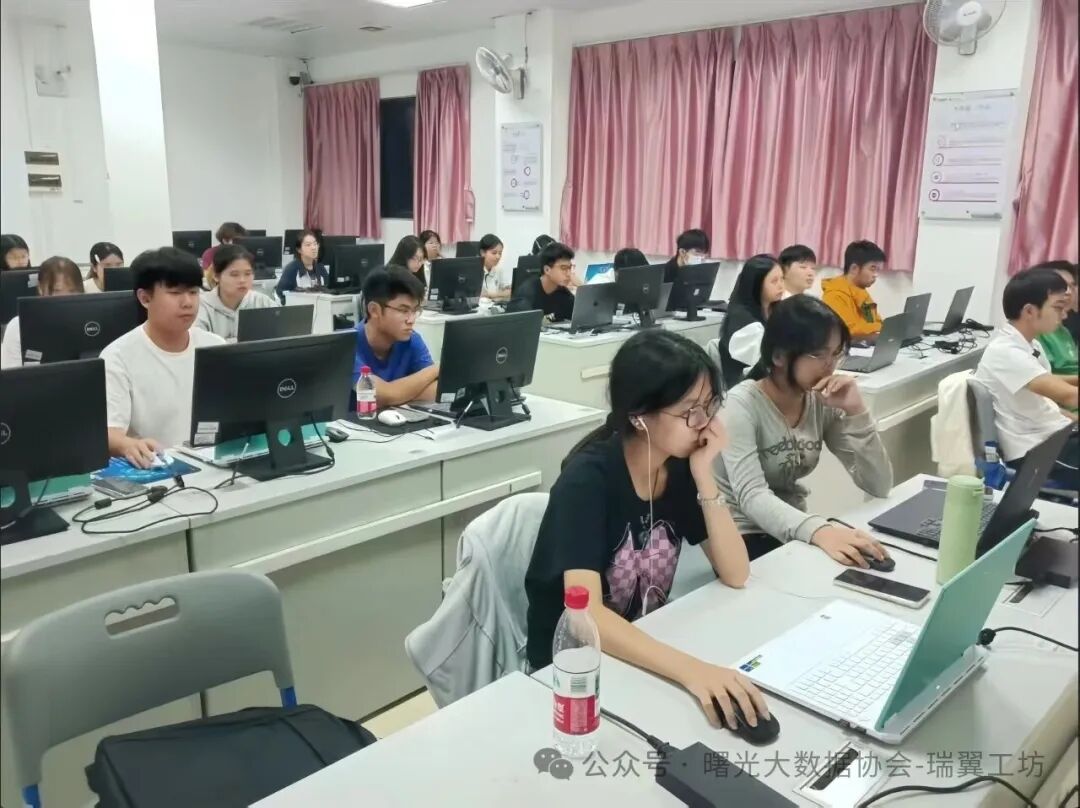
📌 Course Core Overview
Session 1 (Week 11・Review Class)🧱: Basics and Program Structure + Input and Output + Control Flow + Loop Arrays
Strengthening Programming Foundations — Unlocking skills in “Variable Declaration and Usage”, “scanf/printf Input and Output”, “if-else/switch Branch Judgments”, and “while/for Loop Batch Execution”, mastering the program’s “Basic Execution Logic”.
Session 2 (Week 10・Specialized Class)🔍:Introduction to Functions and Pointers
Equipping Programs with an “Efficient Engine” — Mastering “Function Declaration/Definition/Invocation” (Code Reuse) and “Pointer Addressing/Dereferencing” (Direct Memory Operations), mastering “Modular Programming” and “Flexible Data Modification”.
Core of the Course 🌟: From “Writing Simple Programs” to “Efficient Programming”, the two sessions form a complete learning loop, advancing without missing a step!
01
👨🏫 Minister’s Instruction:
Three Highlights to Make Programming Knowledge Come Alive

-
🌰 Contextual Introduction, Bringing Abstract Knowledge to Life
Clarifying the core value of C language through “Operating System and Compiler Low-Level Development”;
Introducing the necessity of functions through the pain point of “repeatedly writing ‘find maximum value’ code”;
Visually explaining the essence of pointers through “visualizing variable memory addresses”, eliminating the fear of “not understanding”!
-
🔍 Logical Breakdown + Pitfall Alerts,Detailing to the Max
Each syntax point is accompanied by “Syntax Structure + Example Code + Common Pitfalls”, with key alerts:
Basic Level: Variables must be declared before use, scanf requires & for ordinary variables (not for strings);
Flow Level: Do not use “=” instead of “==” in if statements, forgetting to write break in switch will cause fall-through;
Loop Level: Forgetting to update variables can lead to infinite loops, array indices start from 0 (do not go out of bounds);
Pointer Level: Uninitialized “wild pointers” will cause errors, do not confuse “& (address of)” and “* (dereference)”.
-
💻 Practical Closure, Rejecting “Can understand by listening, but fails when doing”
Each class has targeted tasks, with the minister overseeing and answering questions throughout:
Basic Class: Write “Hello C” output, use if-else to determine grade levels, use for loop to traverse arrays;
Specialized Class: Encapsulate a function to “find the maximum of three numbers”, swap two variable values using pointers, manipulate arrays with pointers;
Digest knowledge points on the spot, ready to use after learning!
02
🔗 Deep Connection Between Two Sessions:
From “Basic Execution” to “Efficient Advancement”
The minister connects knowledge points with clear logic, ensuring smooth learning without interruptions, with the core connection points as follows:
1
Connection of Knowledge Points:
The foundation is the “base” for advancement
The content of the first session directly paves the way for the second session:
Function “parameter types” (int/float, etc.) depend on the “basic data types” learned in the first session;
Pointer operations on “arrays” (arr[1] is equivalent to *(p+1)) require understanding the “array basics” from the first session;
“Conditional judgments” in loops (e.g., “skip even numbers”) reuse the “if branch logic” from the first session, without needing to rebuild the framework!
2
Practical Connection:
From “Simple Execution” to “Complex Applications”
First session: Focus on “single/basic operations” — for example, “determine the grade level of one score” and “traverse one array”;
Second session: Upgrade to “efficient/complex operations” — for example, “encapsulate the logic of ‘finding the maximum value’ using functions (for repeated calls)” and “use pointers + loops to batch modify array elements”, perfectly connecting previous knowledge.
3
Teaching Logic Connection:
From shallow to deep, without a sense of disconnection
Both sessions consistently follow the rhythm of “knowledge point sorting → syntax breakdown → example demonstration → common pitfalls alert → practical consolidation”:
In the second session (function pointers), the minister will quickly review the core of the first session “loop arrays, branch judgments”, pointing out that “functions are the ‘reuse tools’ for loop logic, and pointers are the ‘flexible means’ for array operations”, ensuring a natural transition.
🌟
Minister’s Extra Points for Connection Small Details

Precise Setup 📌:
At the end of the first session (review class), previewing “In the next class, functions can solve the problem of repeated code, and pointers make operations more flexible”, and assigning “array traversal” homework for warm-up.
Thoughtful Link 🤝:
During the practical session of the second session (specialized class), proactively reminding “the parameter types here must be consistent with the basic data types learned before” and “pointer operations on arrays are related to loop traversal logic”, helping you connect old knowledge.
Application Focus 🎯:
The tasks of the two sessions form a “progressive loop” — from “processing one score” to “using functions + arrays to process the maximum value of multiple scores”, intuitively feeling the value of “programming from ‘single point processing’ to ‘batch problem solving'”!

Learn
Build
Suggestions

Students who missed the live broadcast should quickly catch up on the replay! Following the minister’s rhythm to learn C language, not only can you thoroughly understand individual knowledge points, but also master the logical connections between knowledge, allowing programming novices to quickly grow into practical experts! 🚀

-END-
Copywriter: Wang Xuyi Chen Liting
Editor: Pan Shuting Qiu Xinyao
Reviewer: Li Qiaoxin Lin Minchun