MultiDreamer3D: Multi-concept 3D Customization with Concept-Aware Diffusion Guidance
Paper:https://arxiv.org/abs/2501.13449v1
MultiDreamer3D is a novel multi-concept 3D customization method designed to address the issues of object omission and concept confusion faced by existing single-concept 3D generation methods when dealing with multi-concept scenarios.
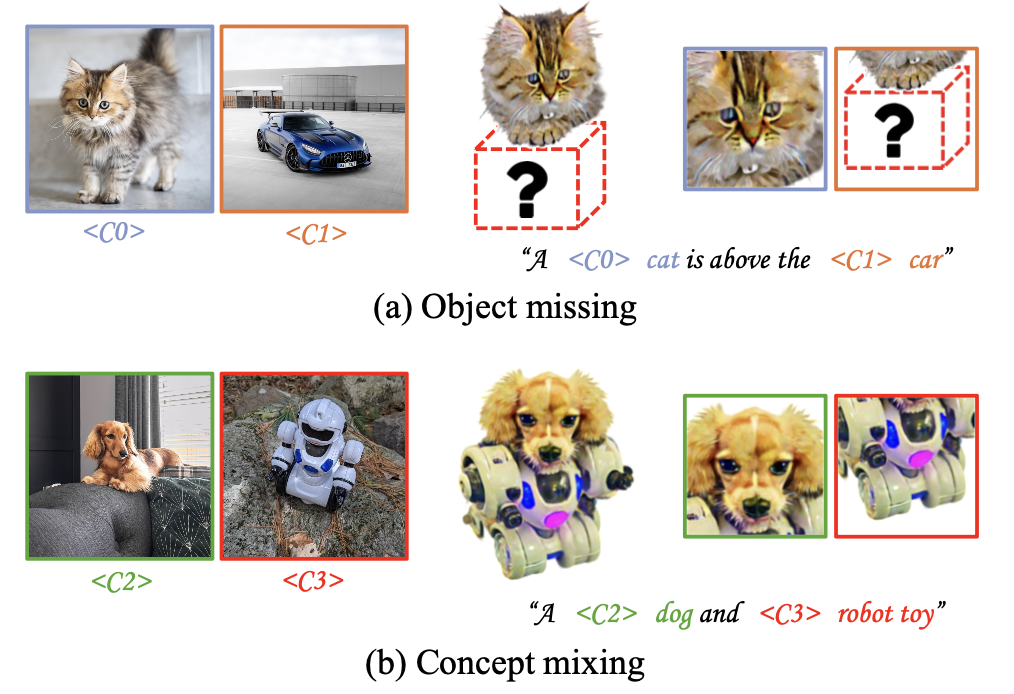 MultiDreamer3D employs a divide-and-conquer strategy, utilizing a large language model (LLM)-based 3D layout generator (LG) to produce 3D bounding boxes and concept point clouds, ensuring the existence of objects and coherence of layouts.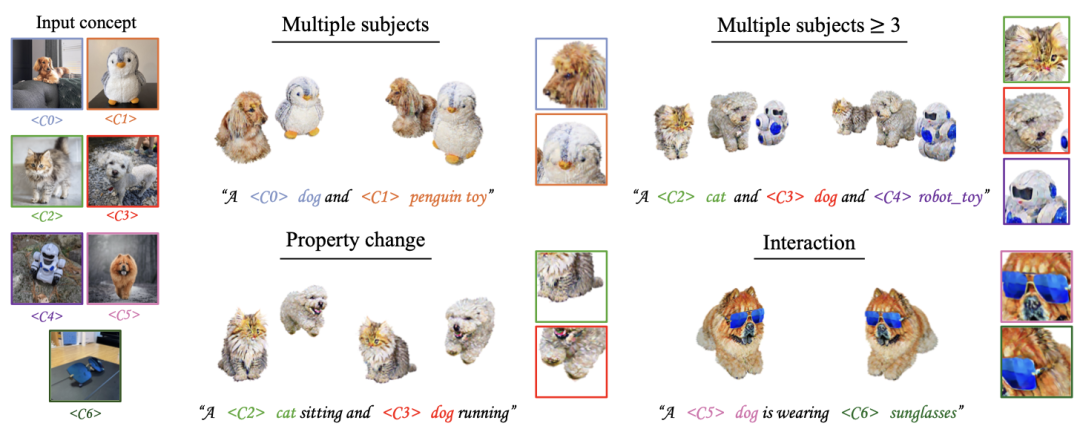
Subsequently, through the Concept-Aware Diffusion Guidance (CDG) module, combined with Regional Concept Attention (RCA) and Concept-Aware Interval Score Matching (CISM) techniques, the 3D Gaussian model is updated, allowing for precise distinction and retention of the independence of each concept during the optimization process. This method performs excellently in complex scenarios involving multiple subjects, attribute variations, and interactions, generating high-quality multi-concept 3D content that significantly outperforms existing baseline methods.
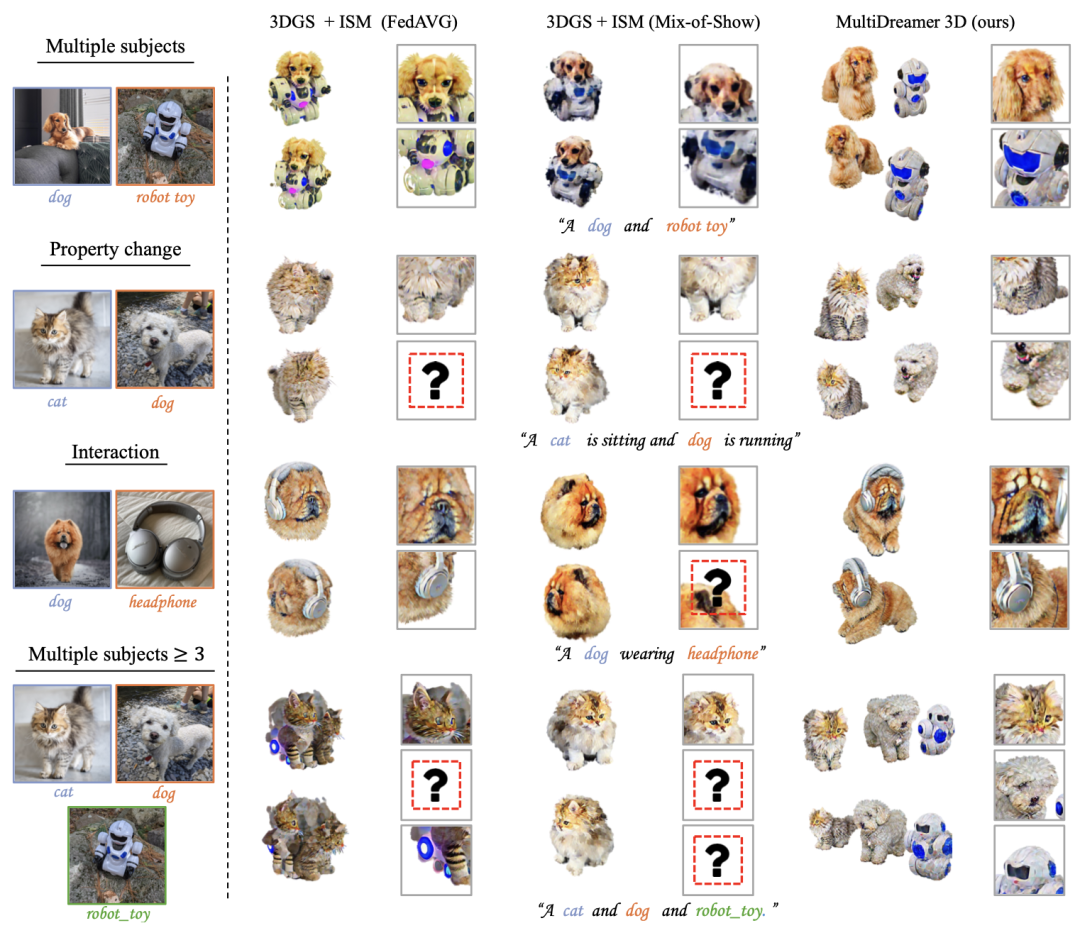
The main features of MultiDreamer3D lie in its innovative two-stage processing approach and modular design. First, the 3D layout generator generates precise 3D layouts using LLM, solving the problem of object omission in multi-concept scenarios; second, the Concept-Aware Diffusion Guidance module introduces Regional Concept Attention and Concept-Aware Score Matching to effectively avoid concept confusion, ensuring the independence and clarity of each concept in the 3D model. Additionally, this method has been validated through user studies and quantitative evaluations, demonstrating its advantages in multi-concept 3D generation and showcasing its strong capabilities in complex scenarios.
Technical Interpretation
MultiDreamer3D is a multi-concept 3D customization method aimed at solving the issues of object omission and concept confusion faced by existing single-concept 3D generation methods when handling multi-concept scenarios. MultiDreamer3D employs a divide-and-conquer strategy, combining two core modules: the 3D layout generator (LG) and the Concept-Aware Diffusion Guidance (CDG), to address the problems of object omission and concept confusion, thus generating high-quality multi-concept 3D content.
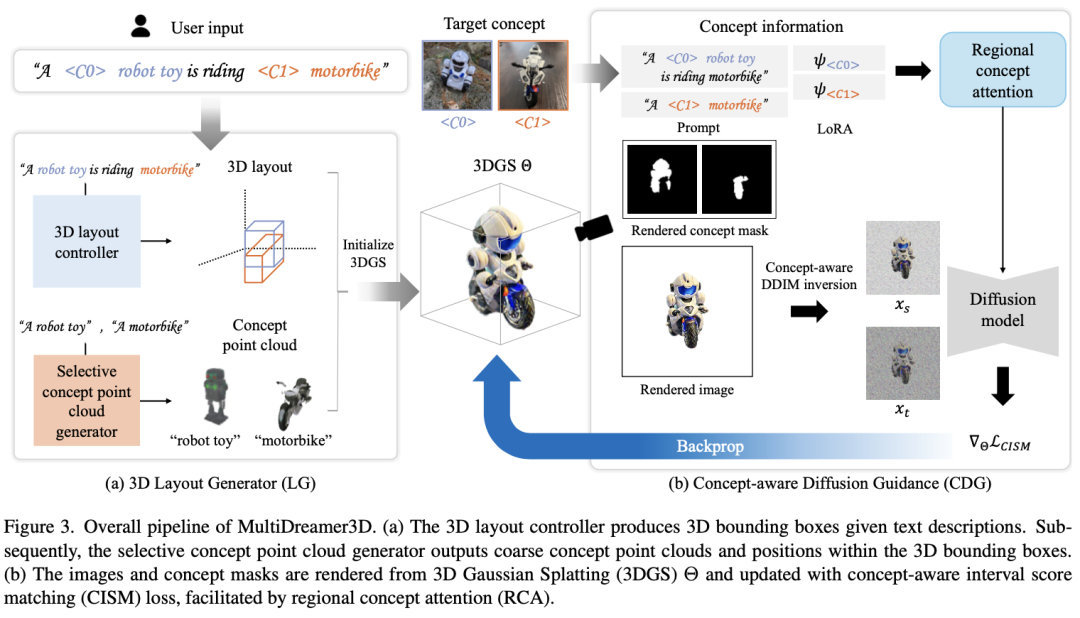
The processing of MultiDreamer3D can be summarized as follows:
- 3D Layout Generator (LG):
- 3D Layout Controller: Utilizes a large language model (LLM) to generate 3D bounding boxes based on text prompts, ensuring the existence of objects and coherence of layouts.
- Selective Concept Point Cloud Generator: Generates rough point clouds for each concept and places them within the corresponding 3D bounding boxes. Initial point clouds are generated using Shape-E, and the point cloud selector filters out point clouds that best match the text description, ensuring the reliability and accuracy of the point clouds.
- Concept-Aware Diffusion Guidance (CDG):
- 3D Gaussian Splatter Initialization: Initializes the concept point clouds as 3D Gaussian splatter and assigns concept labels to each 3D Gaussian for precise identification of concept attribution in 2D projections.
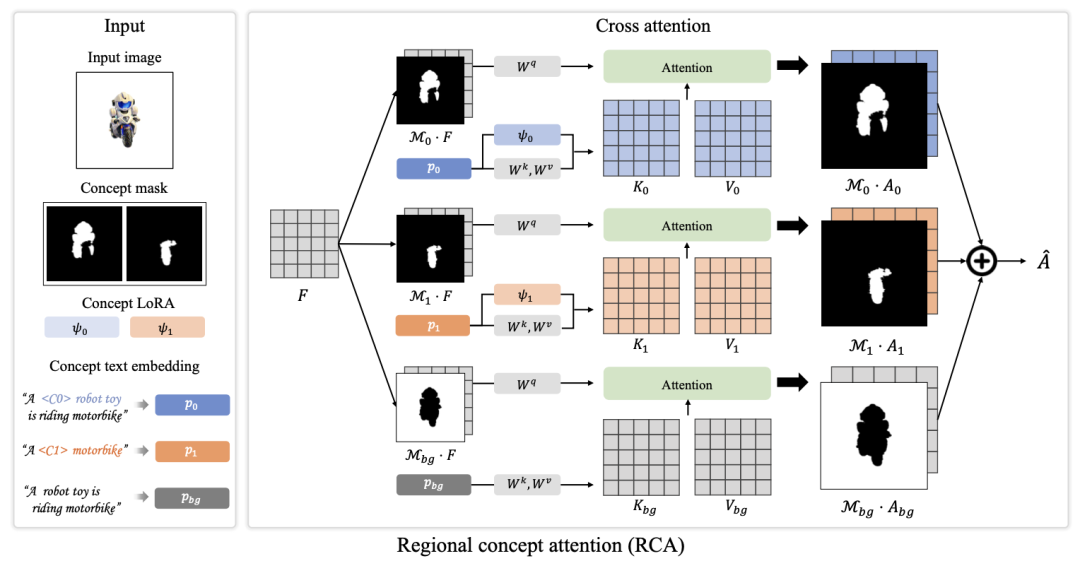
- Regional Concept Attention (RCA): Modulates the cross-attention layers of the diffusion model through the RCA module, computing independent attention features for each concept to retain the independence of each concept when updating the 3D Gaussian.
- Concept-Aware Interval Score Matching (CISM): Updates the 3D Gaussian using the CISM loss function, ensuring the independence and clarity of each concept during the optimization process.
The technical features mainly include:
- Divide-and-Conquer Strategy: Effectively addresses the problems of object omission and concept confusion by breaking down the complex multi-concept 3D generation problem into two stages: layout generation and concept optimization.
- LLM-Driven Layout Generation: Utilizes the powerful language understanding capabilities of LLM to generate precise 3D layouts, ensuring the existence of objects and coherence of layouts.
- Concept-Aware Diffusion Guidance: Ensures the independence and clarity of each concept during the optimization of the 3D model through RCA and CISM techniques, avoiding concept confusion.
- High-Quality Generation: Excels in complex scenarios involving multiple subjects, attribute variations, and interactions, capable of generating high-quality multi-concept 3D content.
As an innovative multi-concept 3D customization method, MultiDreamer3D has significant value and broad application prospects. It not only addresses the limitations of existing methods in multi-concept scenarios but also provides an efficient and reliable solution for generating complex 3D content through precise layout generation and concept-aware optimization. This technology has extensive application potential in fields such as virtual reality, game development, and film production, significantly enhancing the quality and efficiency of 3D content generation, providing users with a richer and more realistic experience.
Paper Summary
Abstract
-
Research Background: Despite research on single-concept 3D customization, multi-concept 3D customization remains underexplored. Existing single-concept 3D generation methods face issues of object omission and concept confusion when dealing with multi-concept scenarios.
-
Research Method: Proposes MultiDreamer3D to generate coherent multi-concept 3D content through a divide-and-conquer approach. This method includes two stages: first, generating 3D bounding boxes and concept point clouds using an LLM-based 3D layout generator; then, updating the 3D Gaussian model through concept-aware diffusion guidance to ensure concept independence.
-
Experimental Results: MultiDreamer3D effectively handles the complexities of multi-concept 3D generation scenarios, including multiple subjects, attribute variations, and interactions. Experiments show that this method not only ensures the existence of objects and the independence of concepts but also performs excellently in multi-concept scenarios.
-
Innovations: The first multi-concept 3D customization method is proposed, addressing the issues of object omission and concept confusion through the 3D layout generator and concept-aware diffusion guidance.
1. Introduction
-
Limitations of Existing Research: Current text-to-3D generation methods mainly focus on the customization of single-concept 3D models, making it difficult to handle complex scenarios with multiple user-defined concepts.
-
Research Goals: Proposes MultiDreamer3D, aiming to generate 3D models containing multiple user-defined concepts while addressing object omission and concept confusion issues.
-
Overview of the Method: MultiDreamer3D employs two modules, the 3D layout generator (LG) and the Concept-Aware Diffusion Guidance (CDG), to address object omission and concept confusion issues, with experimental validation of its effectiveness.
2. Background Knowledge
-
3D Gaussian Splatter (3DGS): An explicit 3D representation method for novel view synthesis, composed of updatable anisotropic 3D Gaussians.
-
Enhancing from 2D Diffusion Models to 3D: Applies the score distillation sampling (SDS) technique to leverage text-to-image diffusion models for 3D model optimization, such as NeRF or 3DGS.
3. Method
-
3D Layout Generator (LG):
-
3D Layout Controller: Utilizes LLM to generate 3D bounding boxes, ensuring object presence and coherence of layout context.
-
Selective Concept Point Cloud Generator: Generates rough point clouds for each concept and places them within the 3D bounding boxes.
-
Concept-Aware Diffusion Guidance (CDG):
-
3DGS Initialization and Concept Labeling: Initializes the concept point clouds as 3D Gaussians and assigns concept labels for identification in 2D projections.
-
Regional Concept Attention (RCA): Modulates the cross-attention layers of the diffusion model through RCA, computing independent attention features for each concept.
-
Concept-Aware Interval Score Matching (CISM): Updates the 3D Gaussians using the CISM loss function, ensuring concept independence.
4. Experiments
-
Dataset: Selected the Custom Diffusion and DreamBooth datasets containing 13 unique objects, designing 47 text prompts to cover multi-concept scenarios.
-
Baseline Methods: Adopted baseline methods based on existing 2D approaches, including 3DGS + ISM (FedAVG) and 3DGS + ISM (Mix-of-Show).
-
Evaluation Metrics: Used CLIP scores to evaluate text-3D and image-3D alignment.
-
Qualitative Results: MultiDreamer3D excels in scenarios with multiple subjects, attribute variations, and interactions, effectively avoiding concept confusion and object omission.
-
Quantitative Results: MultiDreamer3D outperforms baseline methods in both text alignment and image alignment.
-
User Study: Users rated MultiDreamer3D highest for text alignment and image alignment, indicating that the generated 3D models better match text descriptions and real concept images.
-
Ablation Study: Verified the contributions of components like the 3D layout controller, Shape-E, and point cloud selector to the final results.
5. Conclusion
-
Summary: MultiDreamer3D addresses the issues of object omission and concept confusion in multi-concept 3D customization through its 3D layout generator and concept-aware diffusion guidance, with experimental results showing excellent performance in multi-concept scenarios.
-
Contributions: Proposes the first multi-concept 3D customization method, providing a new solution for complex 3D content generation.