
Recently, discussions about the Sony A7V camera sensor have been intensifying within the photography community, with multiple sources providing seemingly contradictory information, casting a veil of uncertainty over the core specifications of this yet-to-be-released full-frame mirrorless camera. Although prototype images have leaked, there are still differing opinions on whether its sensor is optimized based on the A7IV’s 33-megapixel foundation or if it is entirely new.
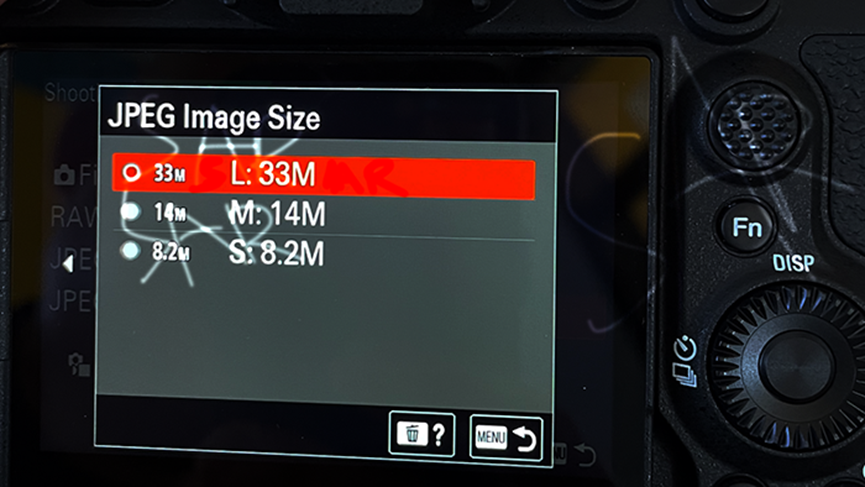
According to three recent informants, their claims vary in focus. The first clearly states that the A7V will feature a “completely new sensor,” but does not provide specific pixel or technical details. The second strongly questions the reliability of the “L:33M” displayed in early interface images, believing it to be merely a software interface placeholder, and is convinced that the actual pixel count will exceed 33 million, although this claim has not been substantiated by any official information. The third informant emphasizes video capabilities, almost certain that the A7V will enhance video shooting performance, which may imply adjustments in sensor readout speed or dual-gain circuit design.
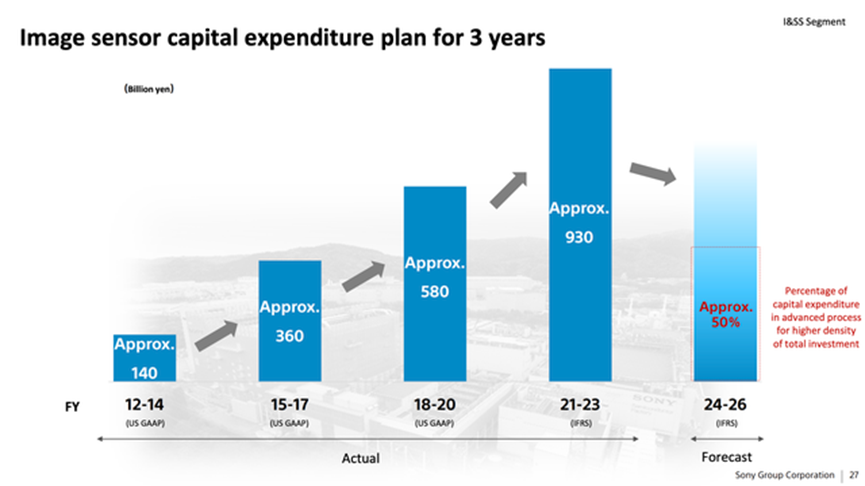
A reader who has long followed Sony’s semiconductor business offers a different perspective from an industry standpoint. According to the investor presentation materials they provided, Sony is in a capital expenditure control cycle until 2026, making large-scale production of a new sensor architecture unlikely.
A more reasonable speculation is that the sensor used in the A7V is an “adjusted and optimized” version based on the existing 33-megapixel foundation, focusing on improving noise performance and achieving more efficient collaboration with the new generation AI processor. This strategy of “optimization rather than revolution” helps enhance overall imaging quality and processing efficiency while controlling costs. The source further indicates that Sony’s imaging division may have completed the design of the next-generation sensor, but large-scale production and application will not commence until around 2027, as new technologies like TRISTA mature.
Based on the existing information, there is insufficient evidence to support that the Sony A7V will adopt a completely new architecture sensor; it is more likely that it will undergo targeted performance enhancements on a mature platform, particularly in noise control, video functionality, and AI processing interaction. However, all rumors remain unconfirmed by Sony, and key specifications such as pixel count and sensor structure still await official release for final confirmation. For users anticipating the A7V, a rational attitude might be to expect a solid “deep optimization” rather than a disruptive “sensor revolution.”
【Follow + Star】 to receive the latest news updates promptlyIf this article has inspired you, feel free tolike,view, and share it with more friends~Your support is our motivation for continuous creation!Previous articles review:GoPro will release new models on the same day as DJI – MAX 2 and Lit HERO, along with the Phoenix gimbalCanon EOS R6 Mark III may be released in early 2026, featuring a new 32-megapixel sensorNikon’s next product direction exposed, Z9II and several new lenses are on the wayTamron’s new 25-200mm f/2.8–5.6 lens appearance first revealed, stronger and more practical wide-angleDJI officially leaked the Osmo Nano action camera, compact design targeting the lightweight marketThe DJI Mini 5 Pro is scheduled for release on September 16, with a 1-inch sensor weighing less than 250 grams, potentially redefining industry standardsRumors of the Sony A7V and FX8 emerge, multiple sources reveal new trends from manufacturersNikon Z6 III C2PA certification exposed major vulnerabilities, multiple exposure modes can bypass authenticity verificationDJI Osmo Pocket 4 spy photos exposed! Dual-camera system may redefine handheld shootingZ6 III similar sensor, no EVF design, Nikon Zr video camera to be released on September 10?2025 Nikon mid-range main model practical recommendations, from Z6Ⅲ to P1100Is it $500 more expensive? What are the secrets behind the upgrade of Nikon Z 24-70mm f/2.8 S second generation?