Click the blue text above to follow us

📋📋📋 The table of contents is as follows: ⛳️⛳️⛳️
Contents
1 Overview
2 Marine Predators Algorithm
3 MATLAB Numerical Experiments
4 Multi-Objective Marine Predators Algorithm (MOMPA) for Solving the Traveling Salesman Problem
4.1 Introduction
4.2 Results
5 References
6 MATLAB Code and Articles


1 Overview
This article presents a multi-objective version of the recently proposed Marine Predators Algorithm (MPA), called the Multi-Objective Marine Predators Algorithm (MOMPA). In this algorithm, an external archiving component is introduced to store the non-dominated Pareto optimal solutions found so far. Based on an elite selection method, a top predator selection mechanism is proposed to select effective solutions from the archive as top predators, simulating the foraging behavior of predators. The performance of the proposed algorithm is evaluated using the CEC2019 multimodal multi-objective benchmark functions and compared with nine state-of-the-art multi-objective meta-heuristic algorithms. Additionally, the effectiveness of the proposed algorithm is further validated using seven multi-objective engineering design problems (car side impact problem, gear system design problem, welded beam design problem, disc brake design problem, two truss design problems, spring design problem, and cantilever beam design problem). The results indicate that the proposed MOMPA algorithm not only provides very competitive results but also outperforms other algorithms. Compared to single-objective optimization, the greatest advantage of multi-objective optimization is the ability to handle multiple conflicting objectives simultaneously and obtain a set of Pareto optimal solutions. The solution set contains more effective information that can provide more reference information for decision-makers. Correspondingly, single-objective algorithms have also developed in relation to multi-objective algorithms. The main reason is that single-objective algorithms face many obstacles in solving complex multi-objective problems. The Marine Predators Algorithm (MPA) is a swarm intelligence-based algorithm recently proposed by Faramarzi et al. This algorithm simulates the prey hunting behavior of marine predators, where predators adopt optimal foraging strategies based on their encounter rates with prey. The MPA algorithm is characterized by fewer parameters, fast computation speed, and high computational accuracy, and currently does not have a multi-objective version, so it can be considered for conversion into a multi-objective version to solve multi-objective optimization problems. Various multi-objective optimization algorithms have been listed in the literature, but according to the NF theorem, it is logically proven that no single algorithm can solve all optimization problems, thus researchers develop new algorithms or enhance the performance of existing algorithms. This theorem applies not only to single-objective optimization algorithms but also to multi-objective optimization algorithms. This is also the motivation for this work. Based on the Marine Predators Algorithm, a new multi-objective optimization algorithm is proposed, namely the Multi-Objective Marine Predators Algorithm (MOMPA).


2 Marine Predators Algorithm
The structure of this article is as follows: 1. The archiving component is integrated into MPA to store the non-dominated Pareto optimal solutions discovered so far. 2. A top predator selection mechanism is proposed to select the solution with the least number of neighboring solutions from the archive and determine it as a guide for group search. 3. Using the above two components, a multi-objective version of MPA is proposed. 4. The performance of MOMPA is evaluated using the CEC2019 multi-objective test suite and seven engineering design problems, and compared with several state-of-the-art multi-objective algorithms. The remainder of this article is organized as follows: Section 2 introduces the basic concepts of multi-objective optimization problems and the relevant research work done in the field of multi-objective optimization. Section 3 introduces the Marine Predators Algorithm and proposes a Multi-Objective Marine Predators Algorithm. Section 4 presents the Multi-Objective Marine Predators Algorithm. Section 5 discusses the results. In Section 6, seven engineering examples are used to test the performance of MOMPA. Furthermore, the experimental results are analyzed in detail in Section 7. Finally, Section 8 summarizes and looks forward to future work.

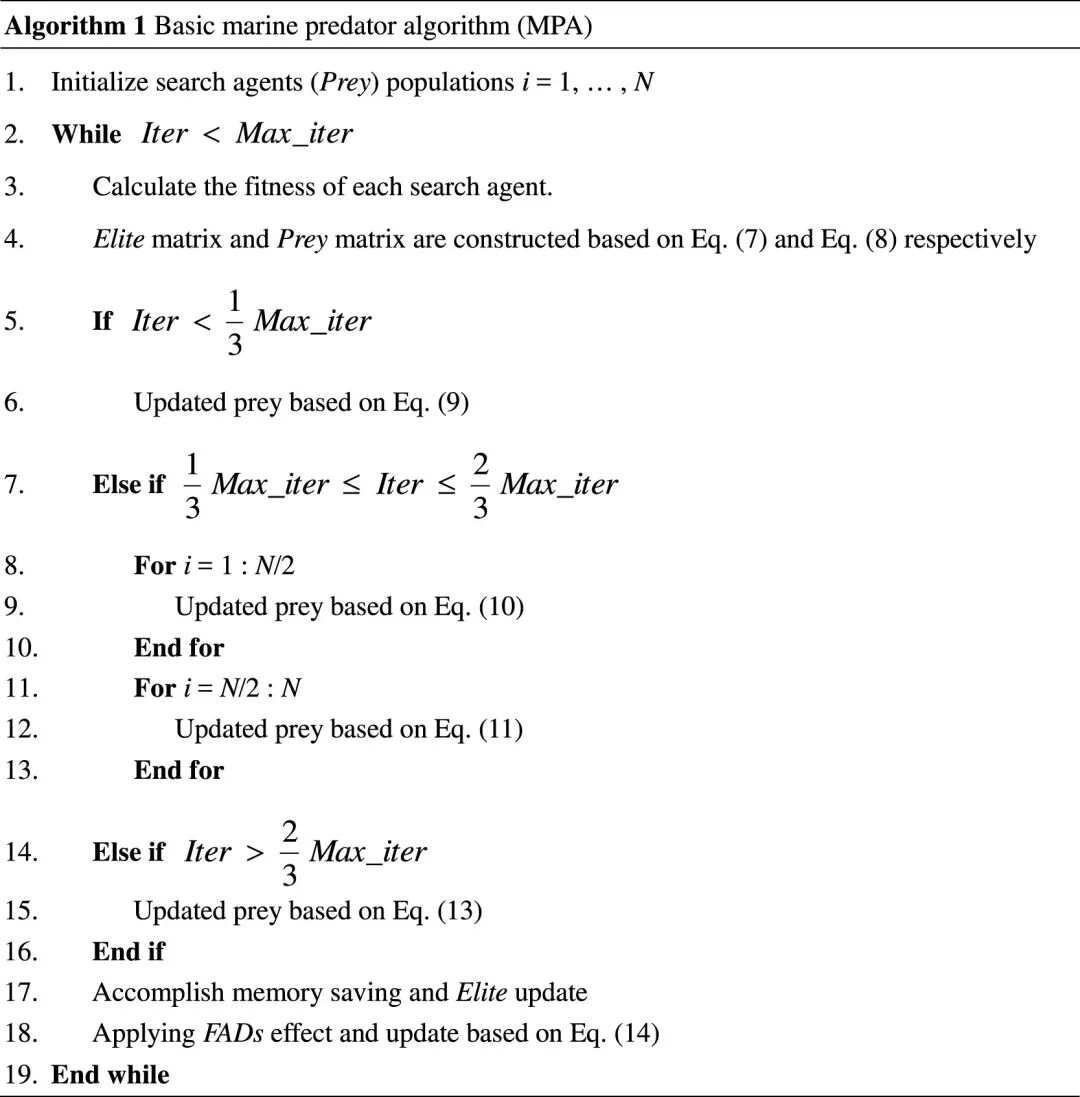
Recently, Faramarzi et al. proposed a new efficient meta-heuristic algorithm called the Marine Predators Algorithm. This algorithm mimics the behavior of marine predators, which use Levy and Brownian motion as their optimal foraging mechanism for hunting prey. The foraging behavior of predators is mainly divided into three stages, categorized based on the speed ratio between the predator and prey, where Levy and Brownian motion alternate during these three stages. Figure 1 shows a schematic diagram of the three-stage foraging of predators. When the speed ratio v between the predator and prey is very small, equal to 0.1, the predator’s optimal foraging strategy is Levy motion, regardless of whether the prey is moving in Levy or Brownian motion. This stage is the exploration phase of the algorithm. When v is approximately equal to 1, the speeds of the predator and prey are equal; if the prey moves in Levy steps, the predator moves in Brownian steps. When the speed ratio v is greater than 10, the predator’s optimal foraging strategy is to remain stationary, regardless of the prey’s step size. Marine predators have strong memory, allowing them to remember the location of each successful hunt. This process is achieved by storing in MPA. After iterations, each solution is compared with the current best solution, and if a better solution exists, it replaces the current best solution. The algorithm flow of MPA is shown in Algorithm 2.

Mathematical Model:

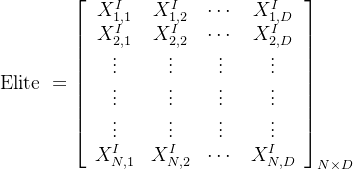
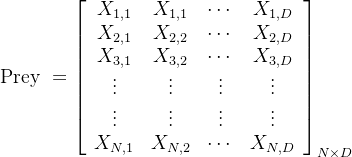
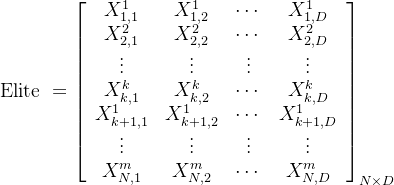
For a detailed mathematical model, see Section 4.


3 MATLAB Numerical Experiments
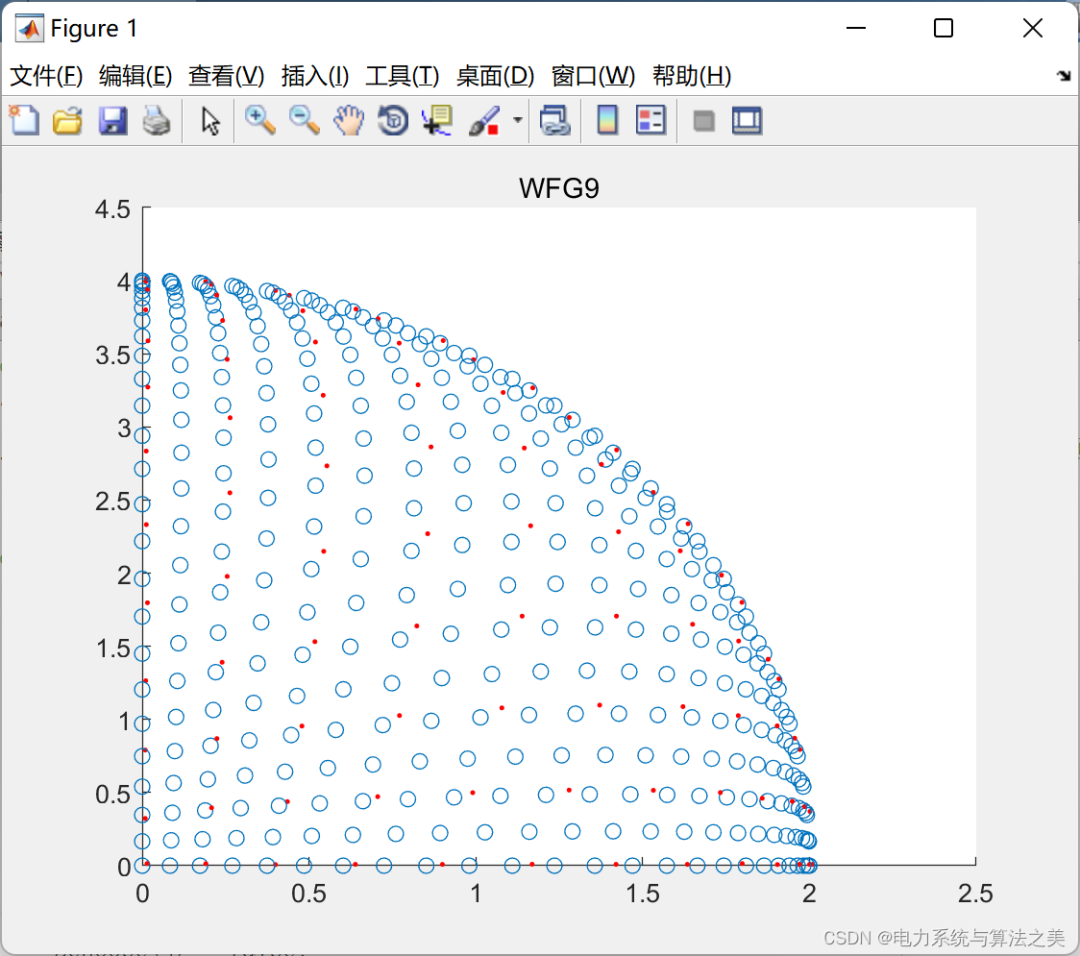

4 Multi-Objective Marine Predators Algorithm (MOMPA) for Solving the Traveling Salesman Problem

4.1 Introduction
Before introducing the Multi-Objective Marine Predators Algorithm (MOMPA) for solving the Traveling Salesman Problem (TSP), let us first briefly understand what the Multi-Objective Marine Predators Algorithm and the Traveling Salesman Problem are. The Multi-Objective Marine Predators Algorithm (MOMPA) is based on the Marine Predators Algorithm (MPA) and is designed to solve multi-objective optimization problems. MPA is a bio-inspired algorithm that simulates the dynamic relationship between marine predators and prey, primarily optimizing by simulating the behavioral strategies of marine organisms in searching for food, hunting, and evading predation. When extending this idea to multi-objective optimization problems, MOMPA can handle multiple optimization objectives simultaneously and seek the best trade-off solutions among these objectives. The Traveling Salesman Problem (TSP) is one of the most typical NP-hard problems, which requires finding the shortest possible route for a salesman to visit each city exactly once and return to the starting city. The Traveling Salesman Problem is usually a single-objective problem, which minimizes the total travel distance. However, in some cases, there may be multiple objectives, such as minimizing costs while maximizing the scenic value of attractions. To solve TSP using MOMPA, especially the multi-objective version of TSP (considering multiple factors such as cost, time, scenery, etc.), the following basic steps need to be followed: 1. **Algorithm Initialization**: Define the problem dimensions (number of cities), initialize a population of predators (solutions), and set algorithm parameters such as population size, number of iterations, etc. 2. **Fitness Evaluation**: For TSP, a fitness function needs to be defined to evaluate the total cost or length of the trip. In the multi-objective case, you may need to calculate fitness for each objective separately. 3. **Search Update**: According to the MOMPA framework, update the solutions by simulating the process of predators (excellent solutions) tracking prey (inferior solutions). This involves position update formulas that consider the distance and direction between the current solution, the best artificial marine predator solution, and the global best solution. 4. **Multi-Objective Optimization Processing**: Use techniques such as Pareto front sorting to handle multiple objectives. This step ensures that the solutions found can balance different optimization objectives well. 5. **Selection, Crossover, and Mutation**: To increase the diversity of the population, select excellent individuals for retention, and then generate new individuals through crossover and mutation operations to enhance the global search capability of the algorithm. 6. **Iterative Update**: Repeat the above steps until the stopping conditions are met (such as number of iterations, quality of solutions, etc.). 7. **Result Extraction**: Extract the optimal solution set from the final Pareto front, which corresponds to the best trade-off solutions for the problem. Conclusion: MOMPA provides a novel and effective method for solving complex optimization problems like TSP by simulating the behavior of marine predators in nature. When dealing with multi-objective problems, it can find balanced solutions among multiple optimization objectives, providing decision-makers with a range of options. It is important to note that the effectiveness of the algorithm largely depends on parameter settings, the design of the interaction mechanism between predators and prey, and the effectiveness of multi-objective optimization strategies.


4.2 Results
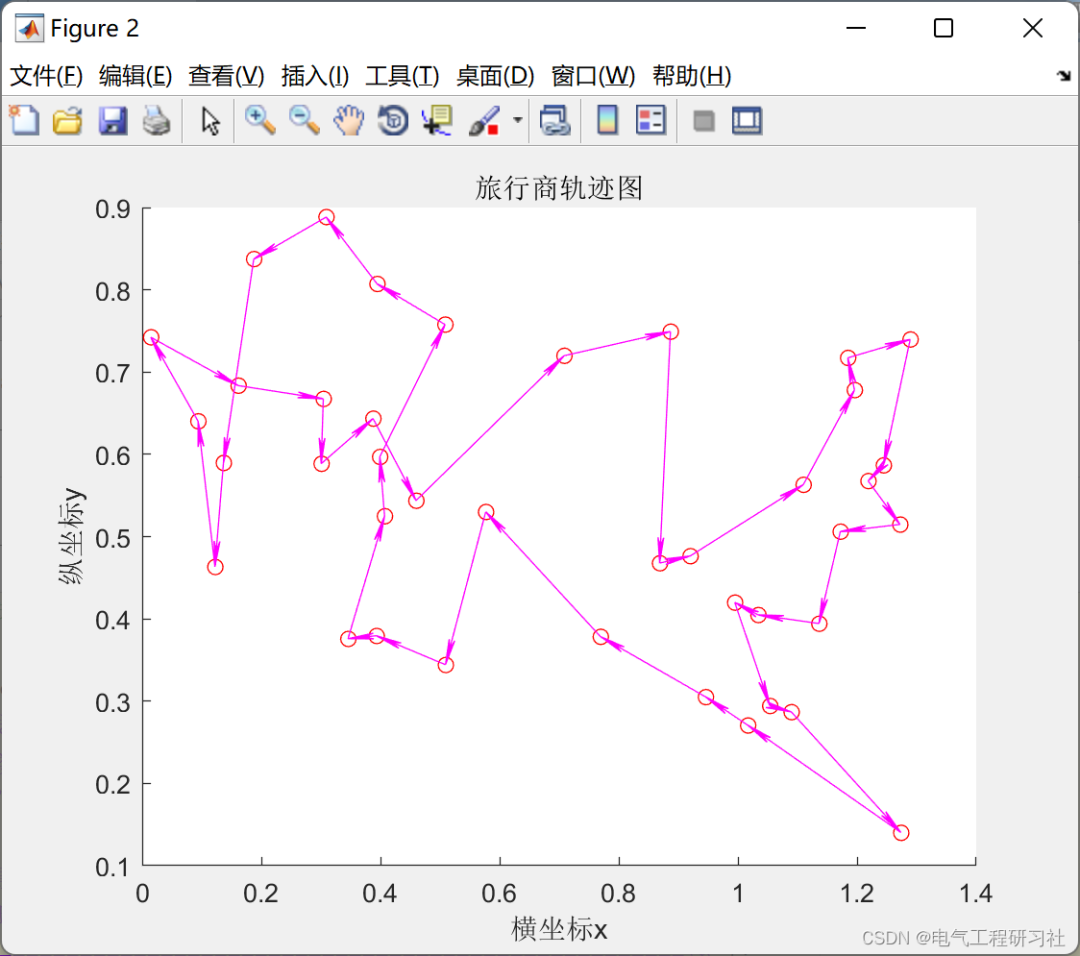
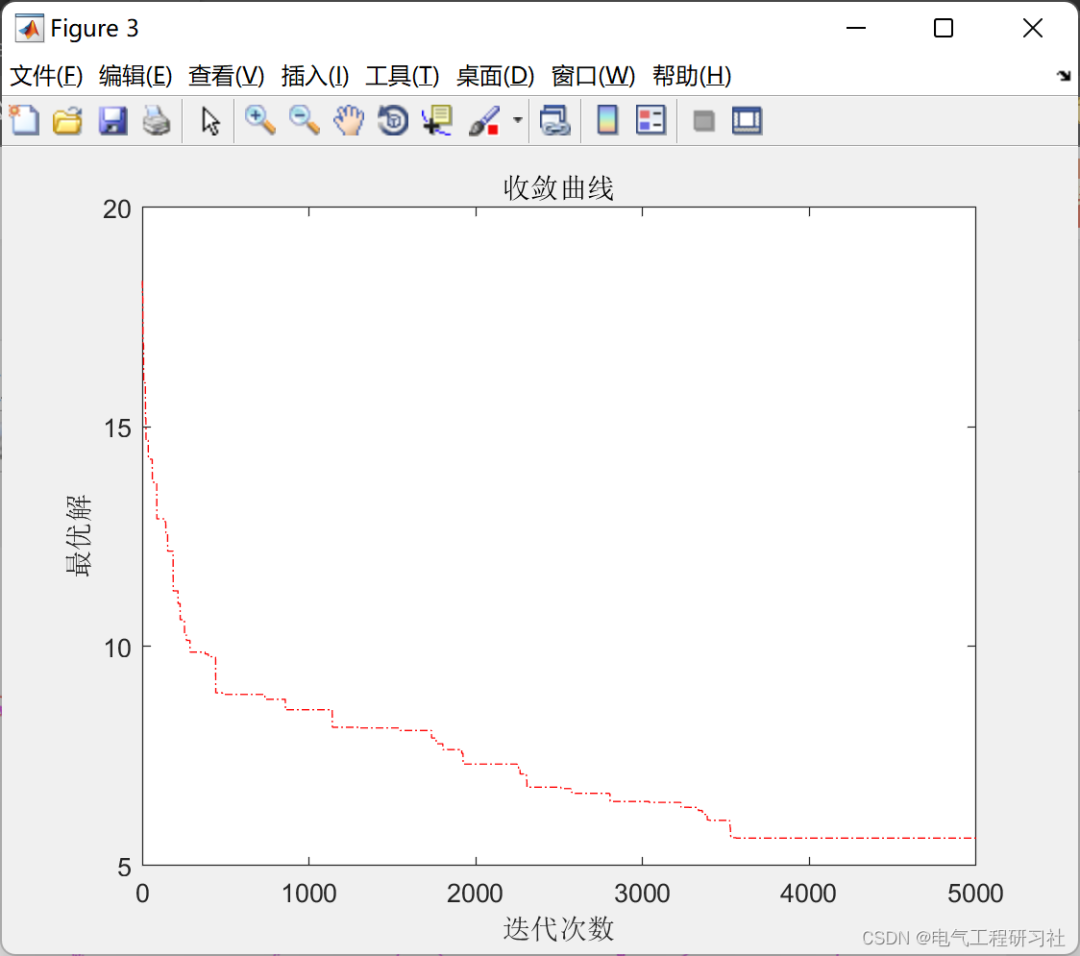
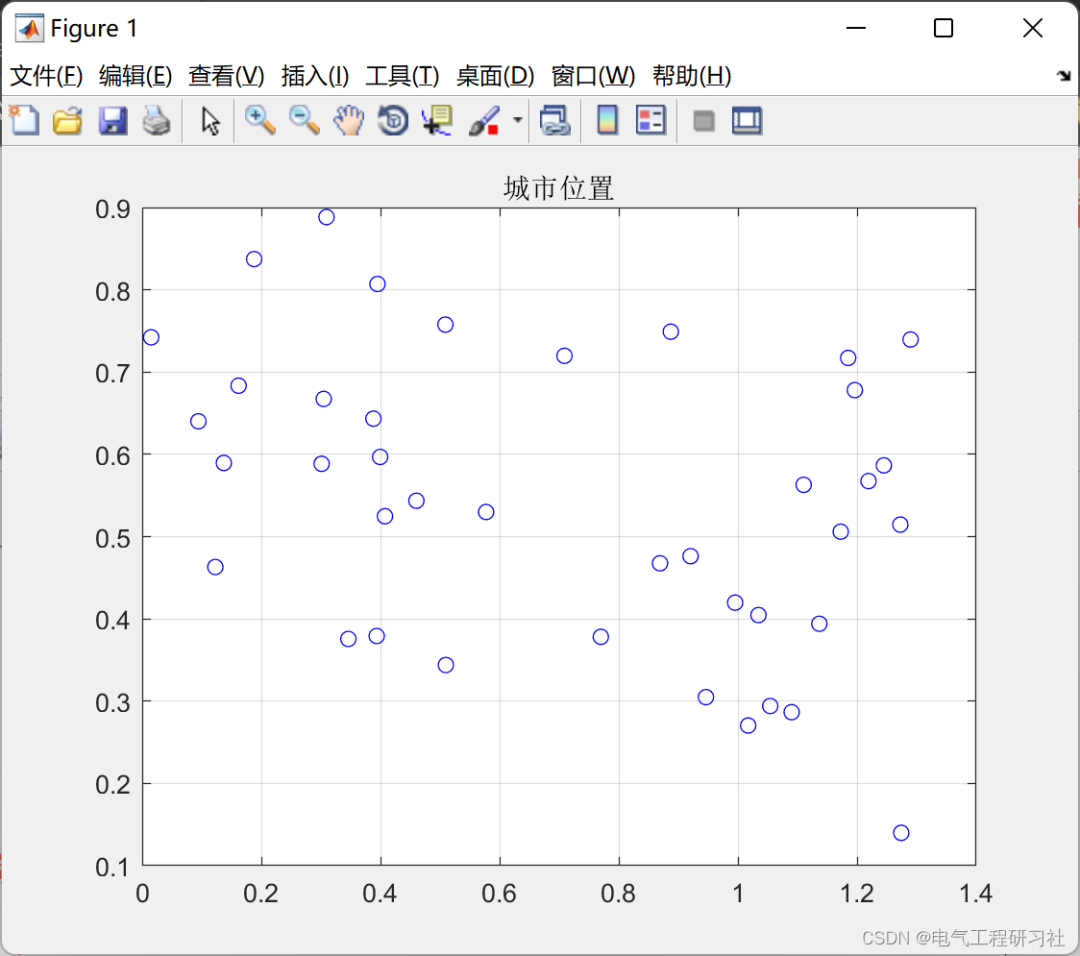
function Draw_Path(Path,X)%{Input: Path to draw Coordinates of cities; Output: Route of the traveling salesman}R = [Path(1,:) Path(1,1)]; % There are n cities, but here R has n+1 values to return to the starting point A = X(R,:); % Store coordinates in order according to R row = size(A,1); % Actually row=n+1%% Plotfigure;hold onplot(X(:,1),X(:,2),'ro') % X(:,1) and X(:,2) represent the X and Y coordinates respectivelyfor i = 2:row [arrowx,arrowy] = dsxy2figxy(gca,A(i-1:i,1),A(i-1:i,2)); % dsxy2figxy coordinate conversion function, record two points annotation('textarrow',arrowx,arrowy,'HeadWidth',3,'color',[1,0,1]); % Connect these two pointsendhold off%% Draw route mapfigure(2);xlabel('X-axis')ylabel('Y-axis')title('Traveling Salesman Trajectory')end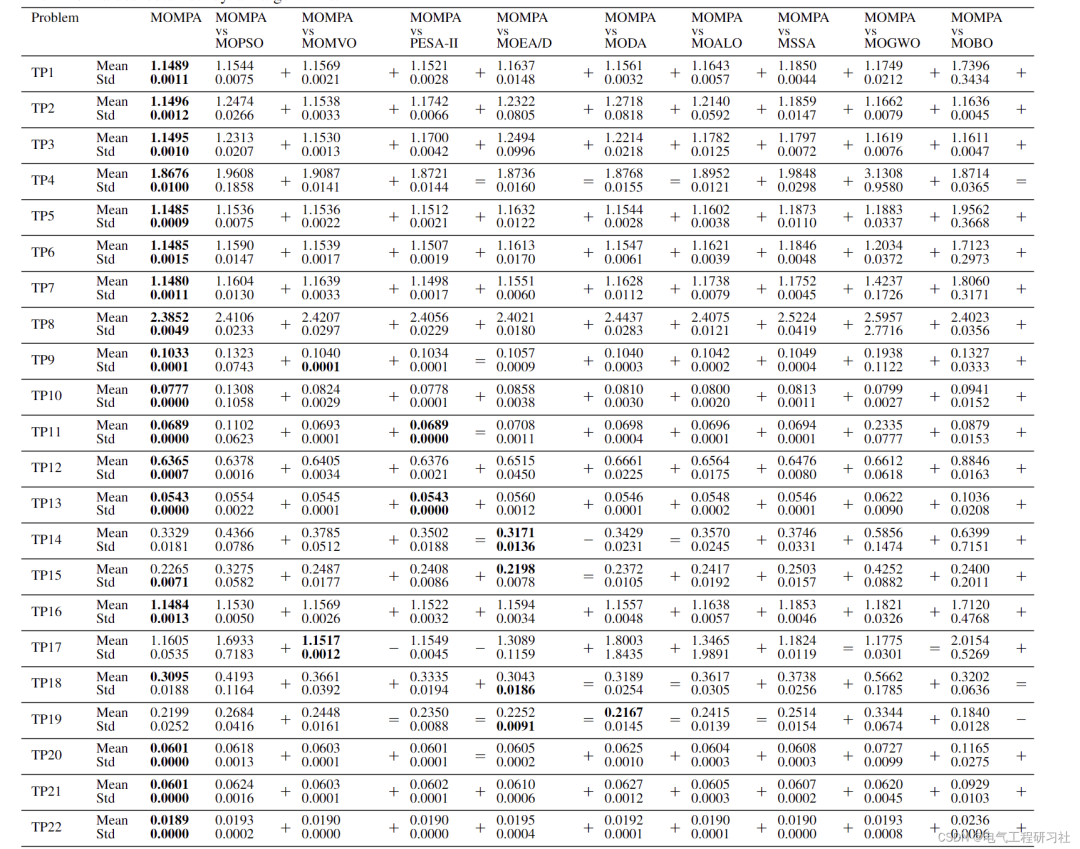

5 References
[1] X. Zhang, Y. Tian, R. Cheng, and Y. Jin, An efficient approach to non-dominated sorting for evolutionary multi-objective optimization, IEEE Transactions on Evolutionary Computation, 2015, 19(2): 201-213.
[2] X. Zhang, Y. Tian, R. Cheng, and Y. Jin, A decision variable clustering based evolutionary algorithm for large-scale many-objective optimization, IEEE Transactions on Evolutionary Computation, 2018, 22(1): 97-112.


6 MATLAB Code and Articles
Public Account Lychee Research Society