Recently, the Ministry of Industry and Information Technology officially launched the commercial trials of satellite IoT services, which will last for two years. The aim is to enrich the supply in the satellite communication market, stimulate the vitality of market entities, enhance industry service capabilities, establish a safety supervision system, and form replicable and promotable experiences and models to support the safe and healthy development of emerging industries such as commercial space and low-altitude economy, thereby serving the construction of a new development pattern.
A “stress test” is coming, as satellite internet and the low-altitude economy once again stand at the forefront. How will companies respond to the opportunities and challenges?
01
Multiple Benefits
Satellite communication companies are “rubbing their hands together”
The satellite IoT service refers to a low-speed data service that connects various IoT devices through satellite communication technology, providing wide-area IoT connectivity for data collection terminals, wearable devices, handheld terminals, and various vehicles such as cars, ships, and aircraft.
Yu Xiaohui, director of the China Academy of Information and Communications Technology, stated that the previous IoT connected objects through ground networks, but many areas could not be reached, such as remote areas, the sky, and the ocean. Satellite IoT has the characteristic of global coverage.
Industry experts believe that the launch of the satellite IoT commercial trials is a key step in supporting the standardized and healthy development of satellite IoT services, in accordance with the requirements of the “Guiding Opinions on Optimizing Business Access to Promote the Development of the Satellite Communication Industry.”
Renowned economist and founding director of the National Research Institute for New Economy, Zhu Keli, stated that the launch of the satellite IoT commercial trials provides policy support and a market-oriented trial-and-error space for industrial development, bringing three major benefits.
Accelerating the Unification of Technical Standards
The fragmented exploration of different companies in terms of communication protocols and data interfaces will gradually be integrated during the trials, reducing collaboration costs in the industry chain.
Guiding Capital to Concentrate on Key Links
Fields such as satellite manufacturing, rocket launching, and ground terminals may see concentrated growth in R&D investment, promoting related technologies from laboratory to large-scale application.
Validating Business Models in Real Scenarios
Whether it is environmental monitoring in remote areas or communication support for maritime shipping, the accumulation of actual operational data will help the industry find sustainable profit paths.
“This impact is not a short-term stimulus, but rather a release of market vitality through institutional innovation, allowing satellite IoT to move from concept to practicality, becoming a new type of infrastructure for the digital economy,” Zhu Keli said.
“Currently, domestic companies like Tianqi and Geely have relatively complete constellation construction and have officially started operations. Other entities like Aerospace Science and Industry may have smaller constellation scales or are not focused on IoT services, but are all within the application scope and can actively prepare.” An industry insider revealed that most companies hope to participate in the commercial trials to broaden application scenarios and enrich profit channels, but face two major challenges: first, IoT trials require continuous funding and professional operational support; second, policy requirements state that applying companies must possess constellation, software platform, scenario, and operational capabilities. “As a satellite R&D and manufacturing company, we did not deploy in advance but also want to participate. We are currently planning to collaborate with research institutes and related companies to jointly apply.”
02
Trillions Await
The Low-Altitude Economy Stands at a New Frontier
“After the successful trials, vehicle networking, low-altitude economy, and equipment management in remote areas will become the first scenarios to explode,” said Yang Guang, chief senior analyst at Omdia. Currently, satellite IoT has become a key link connecting commercial space and low-altitude economy, promoting deep coupling and collaborative efforts between the two, providing vast development space for related enterprises in the industry chain.
China Galaxy Securities pointed out that the satellite IoT commercial trials will promote the extension of China’s commercial space industry chain from upstream manufacturing to downstream application, marking a new phase where the commercial satellite industry will enter a dual-force stage of demand-side traction and supply-side support, with the industrial closed loop expected to take shape. Relying on space-based networks, satellite IoT can achieve global real-time tracking and data transmission for low-altitude aircraft, accurately filling the communication gaps in the low-altitude economy.
Zhu Keli stated that the launch of these commercial trials will help the low-altitude economy improve operational efficiency and broaden application boundaries. The trials will promote the miniaturization of satellites, reduction of launch costs, and enhancement of communication bandwidth, thereby lowering the networking costs for low-altitude devices and accelerating the implementation of specific scenarios such as remote inspection of drones and precise route planning for urban air taxis. At the same time, the wide-area coverage capability of satellite IoT can extend low-altitude services to remote areas for medical supply transport and forest fire monitoring, which are difficult to reach with traditional ground networks.
However, it is important to be cautious as the development of the industry needs to address issues such as spectrum resource allocation and space-air coordination management. Only through simultaneous advancement of technological progress and institutional innovation can satellite IoT truly become the underlying support for the low-altitude economy, unlocking a trillion-level market space.
In the face of the commercial trial opportunity, low-altitude economy-related companies should actively participate in the formulation of technical standards, promote the integration of satellite communication modules with low-altitude device hardware, such as pre-installing satellite signal receiving terminals on drone vehicles; strengthen data collaboration with satellite operators, and jointly develop specific scenario solutions that combine satellite positioning with low-altitude traffic management systems to enhance flight safety; and also need to plan ahead for talent reserves, cultivating a composite team that understands both low-altitude flight and satellite communication, in order to seize opportunities in industrial integration.
-END-
 Recommended Reading
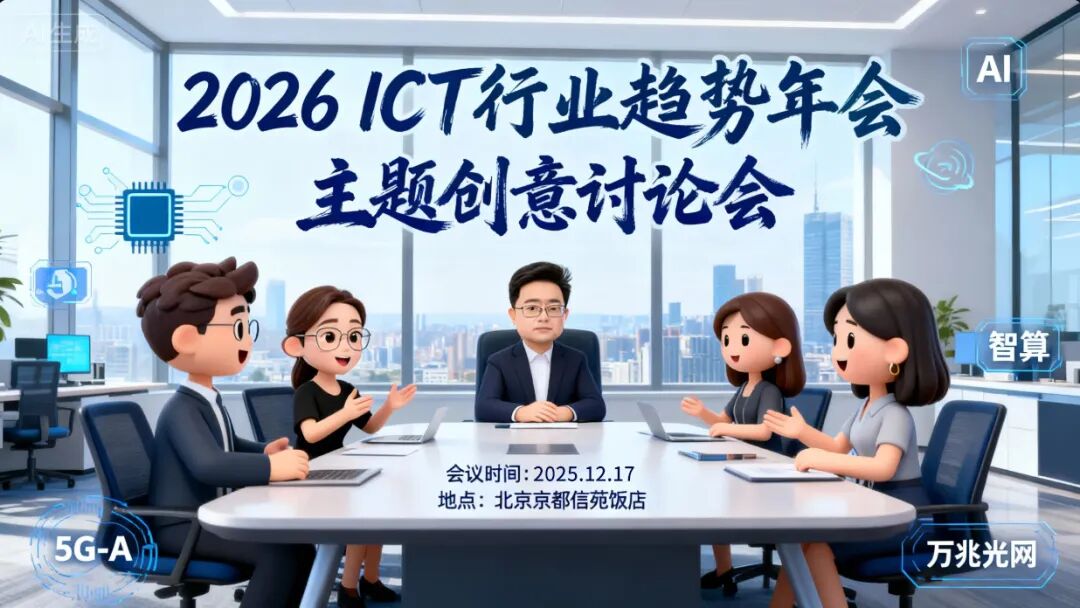
 12.17! 2026 ICT Industry Trend Conference Invites You to Discuss the Future of the Industry
After 40 Days of Turmoil, Where is the “Safety Boundary” for Chinese Enterprises Going Abroad?

Decoding the Network Innovation Code Behind “Chuan Chao”
Author: Zhu Wenfeng
Editor/Layout: Wang Yurong
Proofread: Wang Tao, Mei Yaxin
Supervisor: Liu Qicheng
 【New Media Matrix of Communication World】
Central Video | Microsoft MSN | Video Number | Weibo | Today’s Headlines | Baijia Number | NetEase Number | People’s Number | Tencent News
Sohu | Sina Kuaidiao | Xueqiu Number | Douyin | Kuaishou | iQIYI | Zhihu | Bilibili | Migu Video | CSDN
【New Media Team】Supervisor|Liu QichengProofreader|Wang Tao, Mei Yaxin, Zhang PengEditor|Wang YurongVideo Production|Jiang Yali Huang Yangyang Share
Share Save
Save View
View Like
Like