Introduction
Antibody-drug conjugate (ADC) therapy has rapidly developed over the past few decades, with 14 products approved globally and over 140 ADCs currently in clinical trials. By 2030, the ADC market is expected to exceed $15 billion. The basic principle of ADCs: by combining the specificity of monoclonal antibodies with the cytotoxicity of effective small molecule drugs, ADCs can precisely deliver toxins to tumors while sparing normal tissues, thus increasing the therapeutic window of the drugs.
Preclinical data indicate that conjugating drugs with antibodies can lower the minimum effective dose (MED) and increase the maximum tolerated dose (MTD). However, increasing clinical evidence suggests that the tolerated dose of ADCs does not significantly differ from that of related small molecules. After standardizing the content of cytotoxins, the MTD of ADCs is roughly the same as that of the corresponding small molecules in humans. Therefore, the general understanding of the therapeutic window of ADCs may be inaccurate. Here, we explore several questions regarding the therapeutic window of ADCs, hoping to provide some insights that can help improve the design of next-generation ADCs.
Can ADCs Really Achieve Higher MTDs Than Small Molecules?
The MTD of a drug is defined as the highest tolerated dose without serious side effects (dosing-limiting toxicity). In the past, determining the MTD was the primary goal of phase I tumor trials. Recently, particularly for new targeted therapies (including ADCs), the focus has shifted to determining the recommended phase II dose (RP2D), which better observes chronic toxicities and certain grade 2 side effects that arise after multiple treatment cycles.
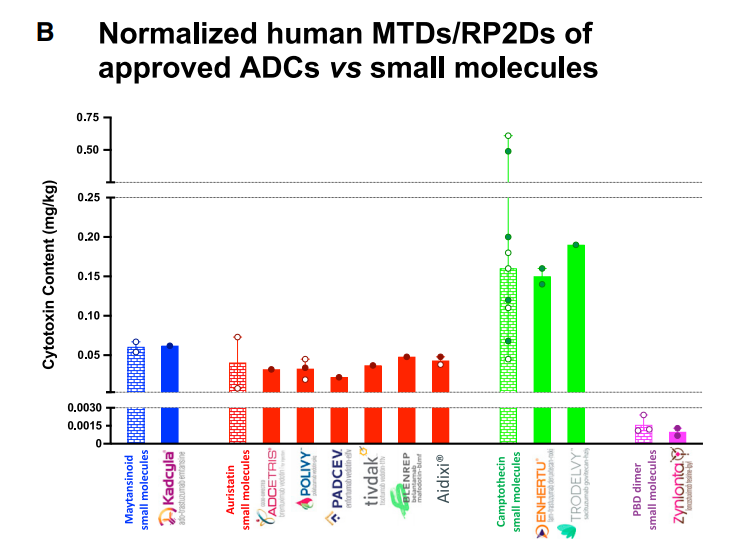
The above figure summarizes the MTD/RP2D values of 10 approved ADCs. By converting the doses of ADCs and small molecules into common units, it is possible to standardize molecular weight and drug-antibody ratio, allowing for a more accurate comparison of the therapeutic window between ADCs and effective payload small molecules. The results are clear: ADCs do not significantly increase the MTD of their effective payloads. This understanding may help to clarify several existing observations in the field:
(1) ADCs with common effective payload-linkers typically encounter similar MTDs because the platform toxicity associated with the effective payload is independent of the target antigen. This highlights that most non-targeted adverse events are unrelated to the antibody.
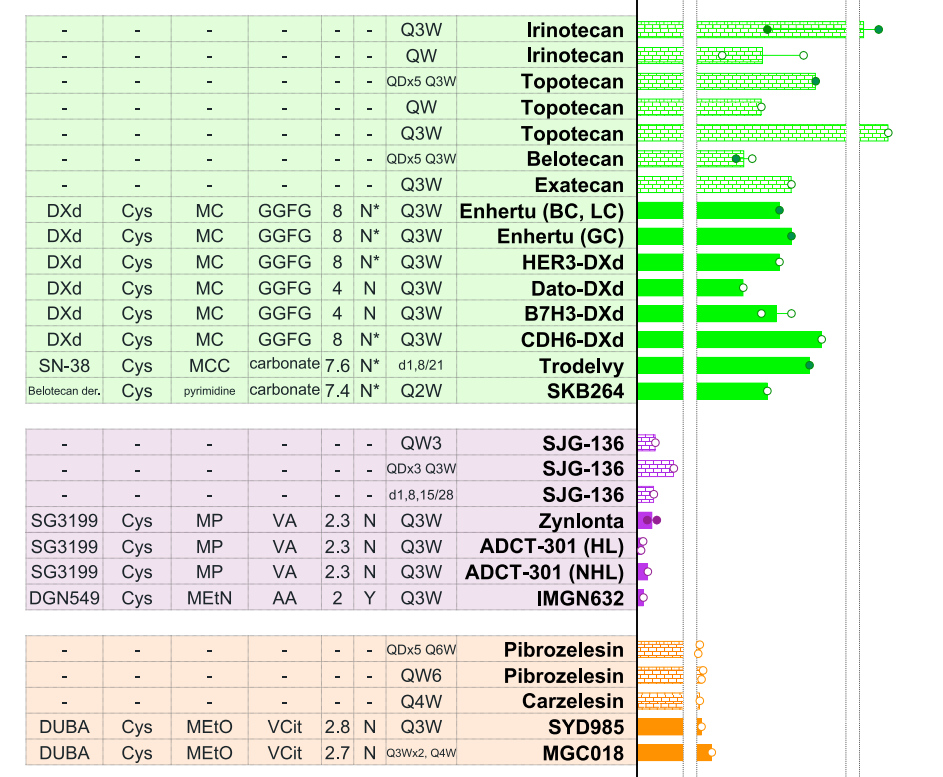
(2) Targeted non-tumor toxicity arising from antibody-targeted binding in normal tissues is relatively common. In such cases, the MTD may be lower than that of other ADCs with the same effective payload-linker. For example, Dato DXd (the DAR4 DXd ADC targeting TROP2) failed to achieve the same cytotoxic dose as other DXd-containing ADCs (T-DXd, HER3-DXd, B7H3-DXd, and CDH6-DXd), possibly due to drug-related adverse events (rash, stomatitis, and mucositis) caused by TROP2 expression in normal tissues. Similar toxicities to the skin and oral mucosa were also observed in patients treated with other TROP2 ADCs.
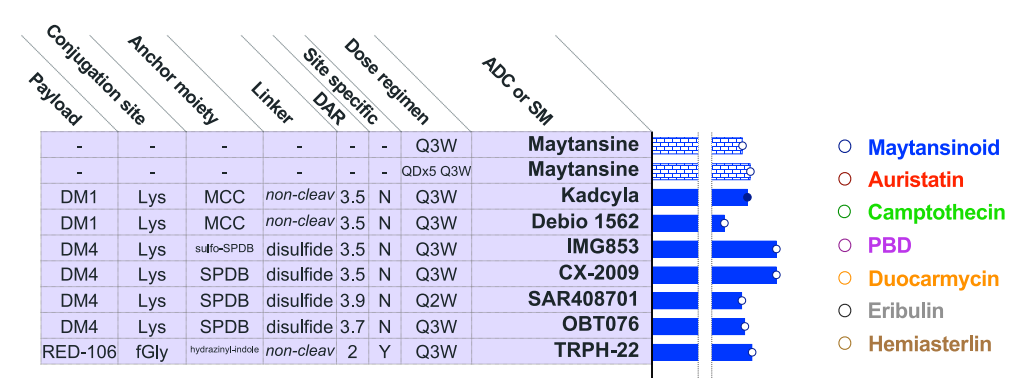
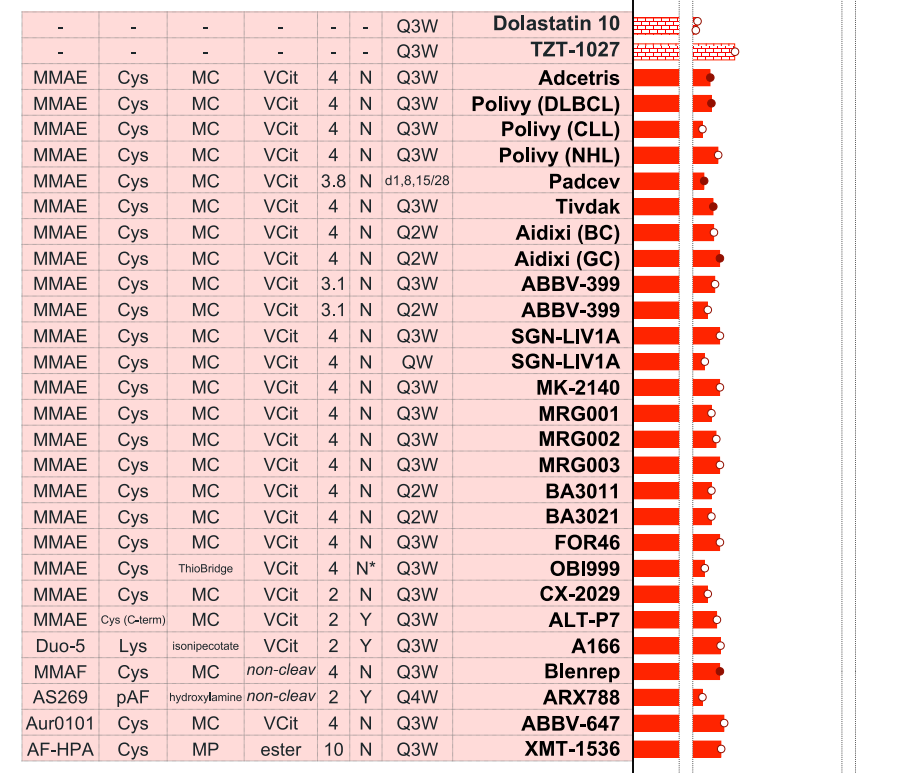
(3) Engineering ADCs designed to limit binding to normal tissues (e.g., CX-2009, CX-2029, BA3011, BA3021) did not improve MTD compared to conventional ADCs with the same effective payload-linker.
(4) In some cases, reducing the DAR of ADCs leads to a proportional increase in the tolerated dose of the ADC, but there is little improvement after standardizing the amount of cytotoxin. For example, compared to other DAR4 MMAE ADCs, ALT-P7 (DAR2 MMAE ADC) has a similar MTD. Correspondingly, B7H3 DXd (DAR4) shows no difference compared to other DAR8 DXd ADCs.
While it is somewhat surprising, ADCs were previously widely believed to broaden the therapeutic window of their effective payloads, but clinical data clearly show that the MTD has not increased. This is also confirmed by clinical data from nearly 40 active ADCs.
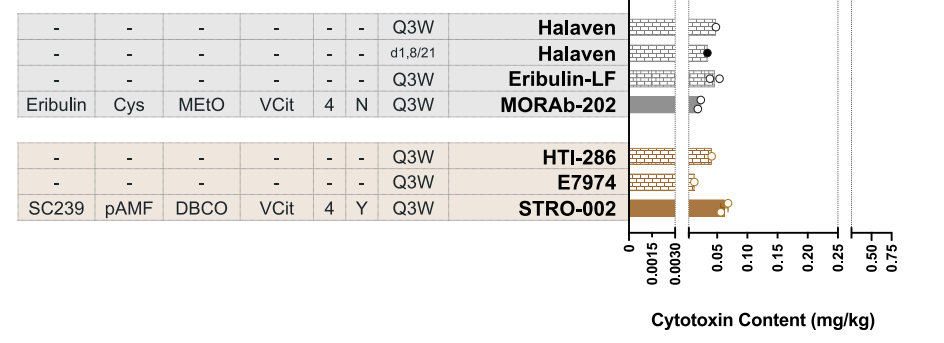
Why Is There No Significant Change in the MTD of Effective Payloads and ADCs?
The reasons why ADCs have failed to improve the MTD of their effective payloads remain unclear. One possible explanation lies in the critical role antibodies play in protecting the effective payload from clearance and metabolism. The effective payload “full dose” attaches to the antibody until ADC-mediated targeted and non-targeted cellular uptake occurs, leading to the metabolic release of free effective payloads or effective payload metabolites, which are then cleared through traditional small molecule pathways.
ADC effective payload-linkers can also undergo extracellular cleavage in plasma or the tumor microenvironment, thus providing a direct source of effective payload in circulation without the need for endocytosis. While newer ADCs use more stable linkers than previous generations, some effective ADCs (including approved ADCs) are constructed using linkers with relatively short half-lives in plasma.
Moreover, ADCs prepared through thiol-maleimide chemistry, including most currently approved or in-development ADCs, can decouple the entire effective payload-linker from the antibody, a process known as the reverse Michael reaction. For example, T-DXd and other deruxtecan ADCs, vedotin ADCs, and many ADCs in development. For these ADCs, up to 50%-75% of the effective payload-linker is decoupled after about 7 days, and the decoupled effective payload-linker rapidly reacts with plasma molecules containing thiols (mainly albumin), forming new conjugates. Albumin has a long half-life in humans, so the effective payload is not immediately released into circulation but remains in the blood until the albumin conjugate is degraded. This transfer of effective payload-linker from ADC to albumin may produce certain toxicities through the nonspecific deposition of albumin conjugates and increased effective payload half-life. On the other hand, it may also contribute to the anti-tumor effect by directly being absorbed by tumors from the albumin conjugates. However, due to the biological characteristics of albumin in preclinical models being very different from humans, assessing the role of albumin in the toxicity and efficacy related to effective payload-linker decoupling remains challenging.
Does ADC Efficacy Exceed That of Its Effective Payload?
To date, the 14 approved ADCs have demonstrated the significance of ADC therapies, with the latest data from DESTINY-Breast03 and DESTINY-Breast04 highlighting the potential of T-DXd to change the treatment paradigm for breast cancer. On the other hand, over 100 terminated ADC projects also illustrate the challenges of selecting the correct combination of antibody, target, effective payload-linker, DAR, and indications.
In the 1970s, FDA cancer drug approvals were primarily based on objective response rates (ORR), but from the early 1980s, approvals have been based on more direct clinical efficacy evidence, including improvements in progression-free survival (PFS) and overall survival (OS). Because ORR is directly attributed to the drug effect, it is also the most common surrogate endpoint supporting FDA accelerated approval. Given that ORR is often used as the primary endpoint in early ADC trials, a comparison of ORR for small molecules and ADCs in treating similar patient populations is provided here.
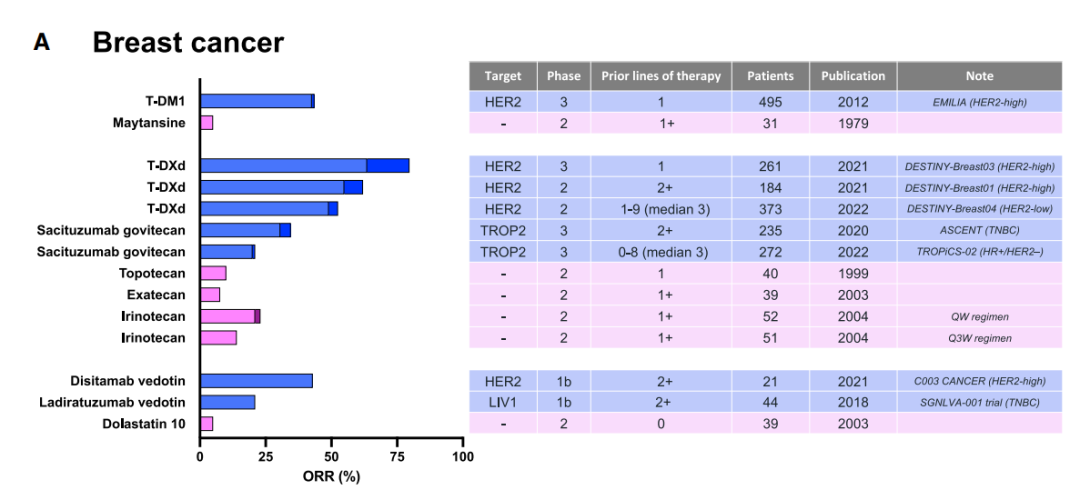
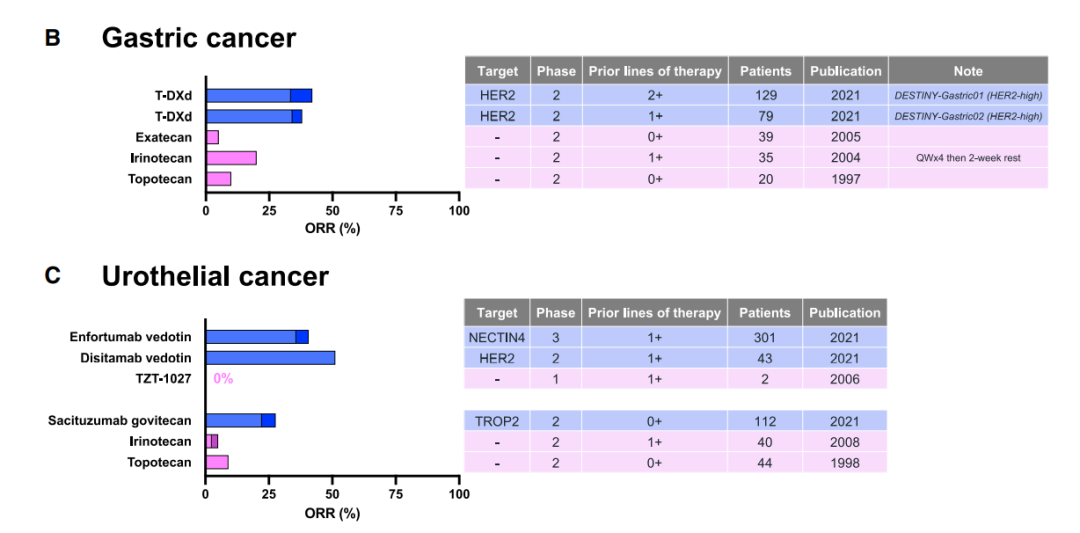
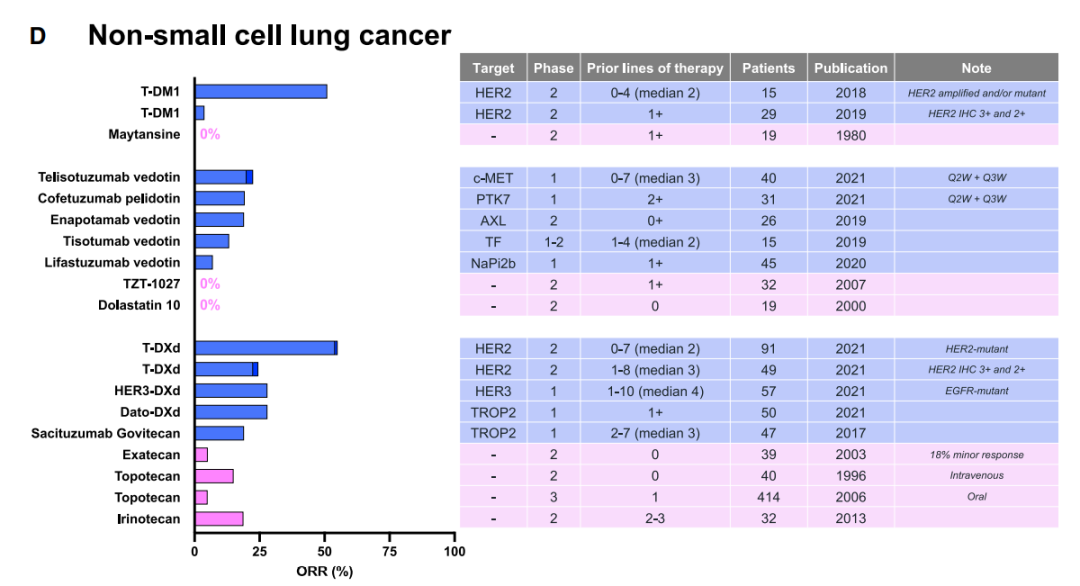
So far, there have been no direct head-to-head randomized clinical trials comparing ADCs with their effective payloads. The closest example is the T-DXd in the DESTINY-Gastric01 trial used in the physician’s choice group with irinotecan (the same drug class as DXd, a topoisomerase I inhibitor): the ORR for the T-DXd treatment group was 42%, while the physician’s choice group was 12.5%. There is sufficient clinical data to conclude that multiple ADCs demonstrate better ORR than related small molecule therapies.
What Mechanisms Contribute to ADC Success?
The pharmacokinetics (PK) of small molecules fundamentally change when conjugated to antibodies. ADCs extend the half-life of cytotoxins, including protecting them from renal clearance. On the other hand, ADCs face similar issues as other biological agents, including significant non-tumor-targeted uptake and nonspecific clearance, limited extravasation due to capillary wall constraints, low diffusion within tumors due to increased interstitial fluid pressure, and the “binding site barrier” phenomenon (the speed at which antibodies bind to their targets exceeds their diffusion rate, preventing deeper penetration). For monoclonal antibodies, some of these obstacles can be overcome by increasing the dose, but this strategy does not apply to ADCs because the conjugated cytotoxin determines the MTD. In fact, it has been reported that less than 1% of ADCs reach human tumors, with the rest potentially causing unnecessary toxicity. Therefore, relying solely on ADC tumor targeting may not explain the observed efficacy increase compared to related small molecules.
Thus, ADCs may depend on other mechanisms to enhance efficiency, such as effectively prolonging the release of the effective payload in circulation. Antigen expression and ADC characteristics influence ADC PK and metabolism, regulating the rate and location of effective payload release, which in turn affects the plasma levels of free effective payloads and local tumor concentrations. Among these, the degree of bystander activity of the effective payload, conjugation chemistry, and linker type are key design parameters.
Moreover, recent clinical results from patients with varying tumor antigen expression levels support the notion that circulating effective payloads can generate baseline anti-tumor effects. For example, many ADCs show efficacy in patients with low or negative tumor antigen expression. The antibody portion can enhance the baseline activity potency provided by free cytotoxins, particularly in tumors with high antigen expression.
By comparing trial data of trastuzumab, T-DM1, and T-DXd in patients with brain metastases of HER2+ breast cancer, it was found that in the subgroup analysis of DESTINY-Breast03, the intracranial ORR for T-DXd and T-DM1 was 64% and 33%, respectively, while trastuzumab alone did not produce an objective response in separate trials. The intact blood-brain barrier (BBB) prevents antibody penetration but does not restrict small molecules, depending on their physicochemical properties. The tendency of T-DXd (which easily penetrates) and T-DM1 (which does not easily penetrate) to circulate cytotoxic metabolites may provide the best explanation for the observed differences in anti-brain metastasis activity compared to trastuzumab.
Conclusion
The success of ADCs demonstrates that combining the right target, antibody, conjugation method, DAR, linker, effective payload, and disease indications can yield significant clinical benefits. However, despite the wide diversity, current ADCs have not significantly increased the MTD of their effective payloads across various tumor disease states. Therefore, better understanding the mechanisms of clinical active ADCs, such as antibody-targeted delivery, sustained free drug concentrations in circulation, albumin transfer or a combination of multiple mechanisms, as well as the interplay between ADC structural components and their PK/PD, is crucial for designing the next generation of ADCs.
References:
1. The therapeutic window of antibody drug conjugates: A dogma in need of revision. Cancer Cell. 2022 Oct 10; S1535-6108(22)00445-7
Disclaimer
The content shared by the “YaoDu” public account is sourced from other public account platforms, primarily aimed at sharing industry-related knowledge and conveying the latest information. The copyrights of images and articles belong to the original authors. If there is any infringement, please inform us promptly, and we will delete the relevant information within 24 hours.