Reporter: He Yuankai
“Bang bang bang…” Recently, the reporter visited the North Kindergarten in Kaijiang County, where a series of rhythmic banging sounds were coming from a classroom on the first floor. Following the sound, the reporter found a group of children sitting in a circle, their small hands tightly gripping wooden pestles as they vigorously pounded something. “This is a craft activity for the toddlers today, using dried osmanthus flowers collected in autumn to make incense sticks,” explained the principal of the kindergarten. Under the guidance of their teacher, the children crushed the dried flowers in a mortar, sifted out the coarse residue, and mixed in spices… One by one, the osmanthus incense sticks, capturing the essence of autumn, gradually took shape in the children’s hands.
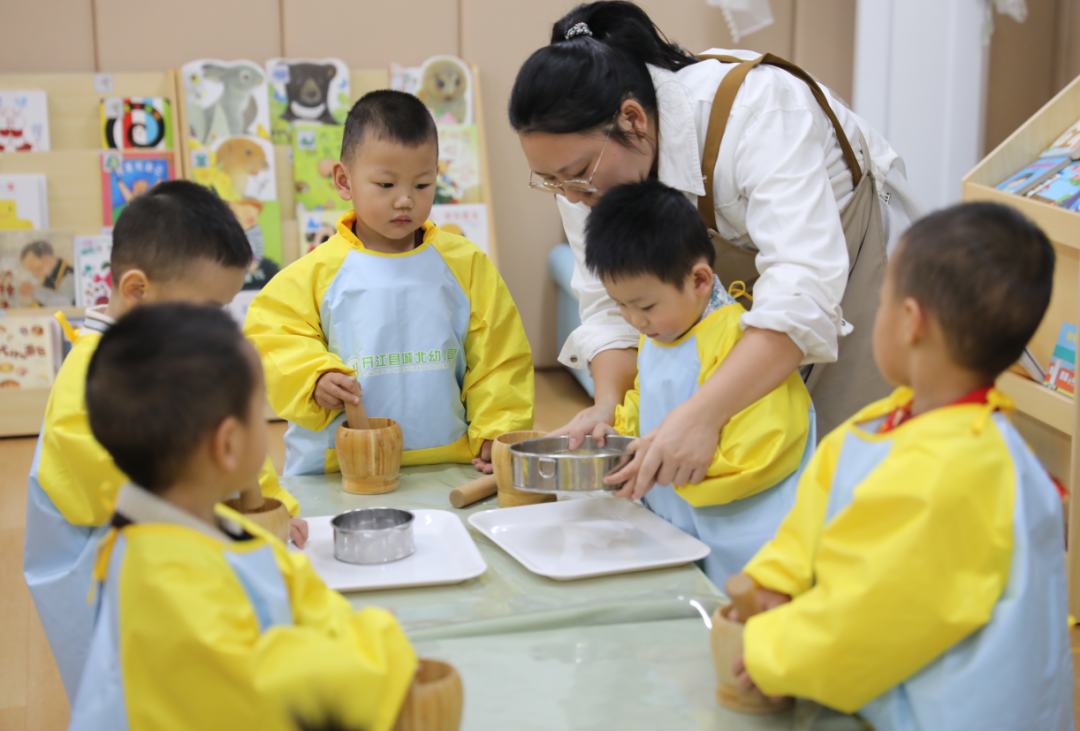
Making incense sticks, planting fruits and vegetables, making pickles, sensory integration training… The lives of the toddlers in the class are rich and varied. Behind this is Kaijiang County’s exploration to solve the issues of “difficulty in enrollment, high costs, and challenges in childcare.” Since last year, the local government has focused on the urgent needs of parents and actively explored an integrated development model for childcare and education, making public kindergartens the “main force” in providing affordable childcare services.
However, running childcare services in kindergartens is not as simple as it sounds. The primary challenge is the institutional and regulatory barriers—education departments manage kindergartens, while health departments oversee childcare, leading to a disjointed approval process. Public kindergartens want to provide childcare services but lack the necessary credentials.
How to overcome this? Kaijiang County has provided an innovative solution: led by the county’s reform office, they integrated resources from the personnel office, education, and health departments to innovatively “embed” childcare service qualifications into the legal entity certificate of public kindergartens. This “pass” effectively removed policy bottlenecks and cleared obstacles for public kindergartens to provide compliant childcare services. From 2024 to 2025, the county plans to complete the qualification embedding in six kindergartens in two batches, adding a total of 180 new affordable childcare spots.
Running a childcare class is not merely about “watching children.” Toddlers require more detailed safety care and dedicated learning spaces. Entering the toddler area of the North Kindergarten, every detail reflects careful consideration: all furniture corners are wrapped in soft bumpers, and the walls and floors have been soft-furnished for safety. Notably, the kindergarten has also created a sensory integration training room specifically for these young children, equipped with facilities like balance beams to effectively train their brain and body coordination.
To run a good toddler class, hardware is fundamental, but qualified staff is even more critical. At the North Kindergarten, the toddler class is staffed with caregivers at a ratio of 1:5. To address the standards of care, the kindergarten collaborated with the county’s education and health bureaus to develop the “Kaijiang County Childcare Guidance Manual,” which not only resolves inconsistencies and disparities in standards among its own teachers but also provides valuable references for other kindergartens to implement childcare services.
This scientific approach to care has deeply impressed parents. Li Lili, a middle school teacher, whose husband often travels for work, relies on her parents to help with her two children. In September, she decided to try sending her eldest child to the North Kindergarten’s toddler class. “At first, I was worried that my child wouldn’t adapt, but there was a big change in just a week—previously, I had to chase after him to feed him, but now he eats by himself at the kindergarten and has even learned to dress himself,” Li Lili said. The toddler teachers also often guide parents, encouraging children to do things independently whenever possible.
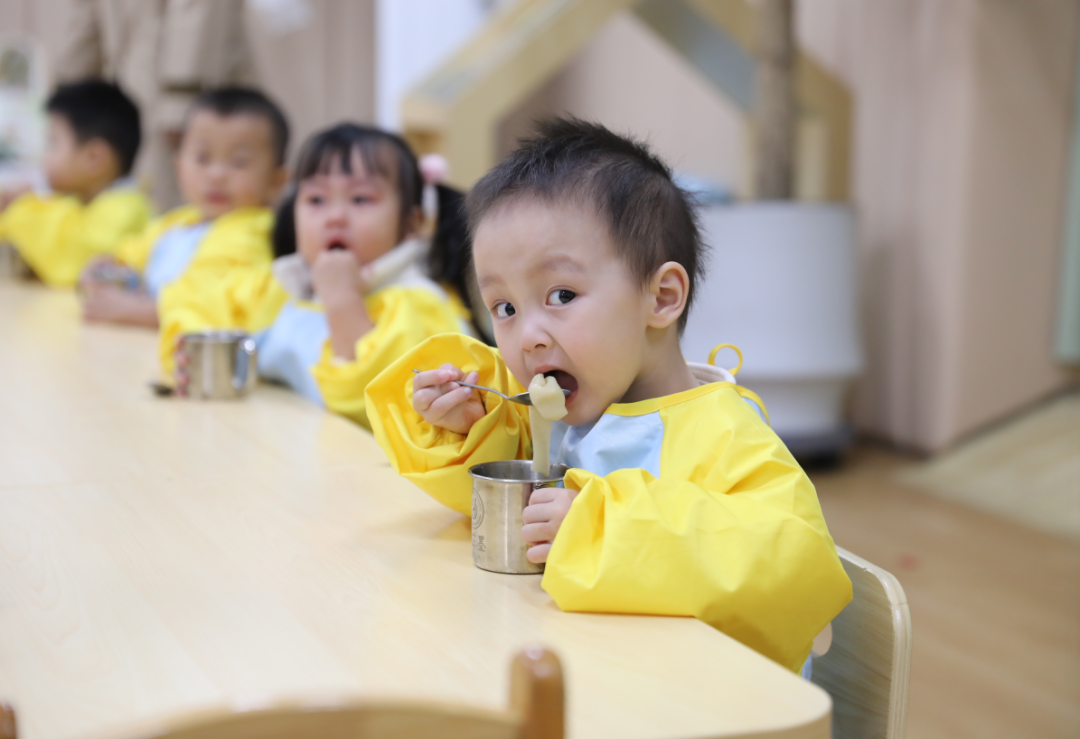
As Li Lili mentioned, the reporter observed at the North Kindergarten that on the day of the nap, the children who had just started attending the toddler class were able to dress themselves after waking up; during snack time, the teacher placed a thermos filled with dumplings on the table, and the children each took what they needed, returning their bowls and spoons neatly to the recycling area after finishing.
What impressed Li Lili even more was the teachers’ dedication. One time, she brought sugar oranges for the children, and the vice principal, Shen Jiangxia, immediately thought to incorporate them into a craft lesson, teaching the children how to peel oranges and dry the peels. On another occasion, she brought pomelos to share, and the day’s activity turned into making honey pomelo tea. The teachers even created a dressing rhyme that the children learned quickly and now teach to their grandparents at home. Li Lili happily noted that the kindergarten’s toddler class is affordable and offers great value, and she plans to enroll her second child there when he turns two next year.
Parent Wu Xingxing, who initially chose half-day care, is also planning to switch to full-day care. Her husband works out of town, and her parents often let the child watch TV. “After just two weeks of attending, my child now takes a spoon to eat by himself without needing to be fed, and he even talks to me about his friends at kindergarten,” Wu Xingxing said, as she prepares for her second child. “With such childcare services, I feel much more at ease.”
Currently, the pilot kindergartens in Kaijiang County offer various service models, including full-day care, half-day care, and temporary care, and they conduct activities like “Parent Open Days” and “Experience Before Enrollment” to create a service loop of “Observation—Trial Care—Customization.” In the next step, the county plans to add 80 more childcare spots by the spring of 2026, continuously expanding the diverse and affordable childcare service supply, striving to create more high-quality childcare points within the community.
Disclaimer: All works in this WeChat public account are for communication, learning, and public welfare purposes only. Copyright belongs to the original author. If the source is unclear or infringes on your rights, please inform us for deletion.
Welcome to submit: [email protected]
 Source:Education Guide
 Reviewed by:Zhu XiaoyongProofread by:Zhang ZhengyongEdited by:Wei Sisi