The content of this report represents personal opinions and is for reference only. Any investment based on it is at your own risk.
Hello everyone, I am Hui Fu, here to share popular research report materials.
In the technological landscape of the digital age, there is a low-profile yet crucial role that supports the operation of all electronic devices: the printed circuit board (PCB).
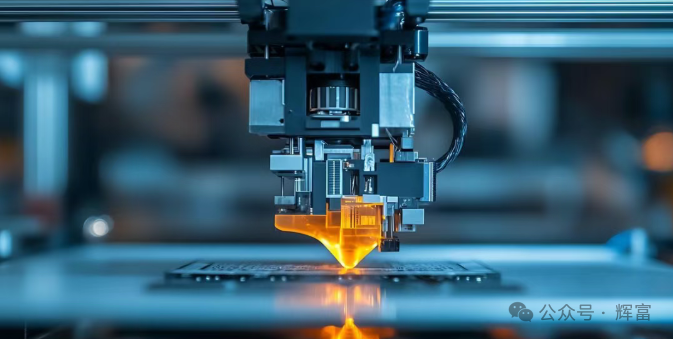
Unlike the spotlight on chips, PCBs build “collaborative channels” for electronic components with densely woven circuits, allowing current and signals to flow precisely within devices, making them the “invisible veins” of the electronic world.
What exactly is a printed circuit board (PCB)?
In simple terms, it is a board made of insulating material, which forms conductive pathways through pre-designed circuit patterns using printing or etching methods, and then fixes electronic components such as resistors and capacitors onto it, ultimately achieving circuit connections for electronic devices.
Without this “vein”, even the most advanced chips are just isolated parts, unable to form a complete functional system.
With the widespread coverage of 5G networks, the popularity of AI terminals, and the explosive growth of IoT devices, electronic devices are rapidly iterating towards being “smaller, smarter, and more integrated”.
This trend presents new requirements for PCBs: higher circuit density to accommodate miniaturized devices, faster transmission speeds to meet high-frequency signal demands, and flexible designs to adapt to new scenarios such as wearable devices.
These demands are driving the PCB industry to accelerate upgrades towards high-density interconnection, high-frequency and high-speed, and flexible designs.
The transformation in the automotive electronics sector has particularly brought explosive demand for PCBs. The battery management systems of new energy vehicles and the radar and camera modules for intelligent driving require highly stable PCBs to ensure operation.
The stable operation of industrial control equipment in complex environments such as high temperatures and vibrations, as well as the extreme environmental tolerance of aerospace equipment, also relies on the technical support of high-end PCBs.
Meanwhile, domestic PCB companies continue to break through technical bottlenecks, steadily increasing their market share in the global market, and enhancing their competitiveness in high-end fields, with the overall industry scale expected to continue expanding.
Below, we summarize several representative companies in the PCB and related fields for industry research reference.
1. Si Hui Fu Shi is a PCB listed company that has grown locally in Si Hui. It not only leads industry development through technological innovation but also drives local employment and economic growth. The company focuses on the R&D and production of PCBs, with products widely used in automotive electronics, AI communications, etc. Currently, a project to expand the annual production capacity of 1.5 million square meters of high-reliability circuit boards is progressing in an orderly manner, and after capacity enhancement, it will further consolidate its market position.
2. Jin An Guo Ji is a leader in the copper-clad laminate field, with its high-frequency and high-speed products showing significant growth after being certified by NVIDIA.
Copper-clad laminate is the core substrate of PCBs, and the company has outstanding technical strength in this business. Its high-frequency and high-speed copper-clad laminates have successfully broken the monopoly of overseas companies, becoming key supporting materials for AI servers, switches, and other devices. Although the PCB business accounts for only 4.37% of the company’s revenue, its growth potential is worth noting.
3. Ding Tai Gao Ke is a global leader in the PCB drilling needle market, with significant advantages in cost control due to its self-developed production equipment, and its market share is increasing year by year.
The company’s customer base includes leading companies such as Peng Ding Holdings, and drilling needles and milling tools contribute over 70% of its revenue, making it an indispensable supplier in the PCB manufacturing process.
4. Yi Hao New Materials has successfully entered NVIDIA’s supply chain through technological breakthroughs with its HVLP5 copper foil, while also establishing a complete industrial chain layout of “copper foil – aluminum-based copper-clad laminate – PCB”.
Among them, the company’s 60μm ultra-thin insulating layer aluminum-based copper-clad laminate has passed mass production verification for TCL MiniLED backlight modules, establishing a foothold in the new display field.
5. Dongcai Technology is a leader in the high-frequency and high-speed resin materials field, with its BMI resin achieving a 100% market share in the domestic market and showing rapid growth.
As one of the only three companies in the world capable of mass-producing bismaleimide (BMI) resin, this material is the core raw material for high-frequency and high-speed PCB substrates, widely used in AI servers, 5G communications, and other fields.
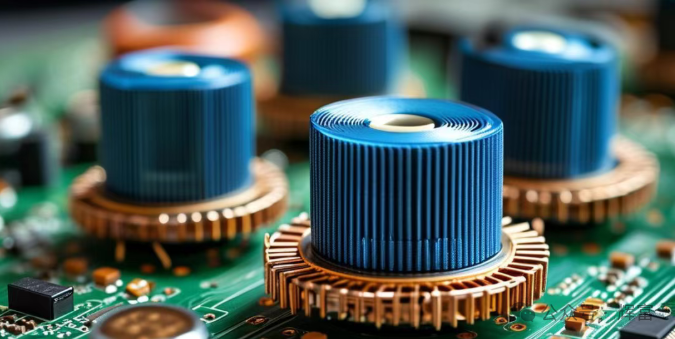
6. Fang Zheng Technology ranks among the top in PCB business scale among domestic enterprises, with a good brand reputation, providing products for core customers such as Huawei for a long time.
The company’s products cover multiple categories including HDI boards, multilayer boards, and rigid-flex boards, providing customized solutions in the communications equipment and consumer electronics fields, consistently ranking upstream in the industry for many years.
7. Zhongnan Culture focuses on providing integrated solutions for precision electronic components, with its FPC (flexible circuit board) business performing outstandingly in the industry. The company’s products cover various fields including consumer electronics FPC and power battery management system FPC, forming a differentiated competitive advantage in the flexible circuit field.
8. The last company has a leading advantage in PCB technology, with a diversified business layout, especially showing great development potential in the field of humanoid robot electronic components.
The company’s products cover multiple fields including communication equipment, industrial control, and automotive electronics, mastering advanced technologies such as high-density interconnection (HDI), rigid-flex boards, and thick copper boards, with a strong technical reserve.
Finally, the last company, selected by the leading selection strategy, is the most authentic potential leader in the “PCB” concept!
 Click the box below