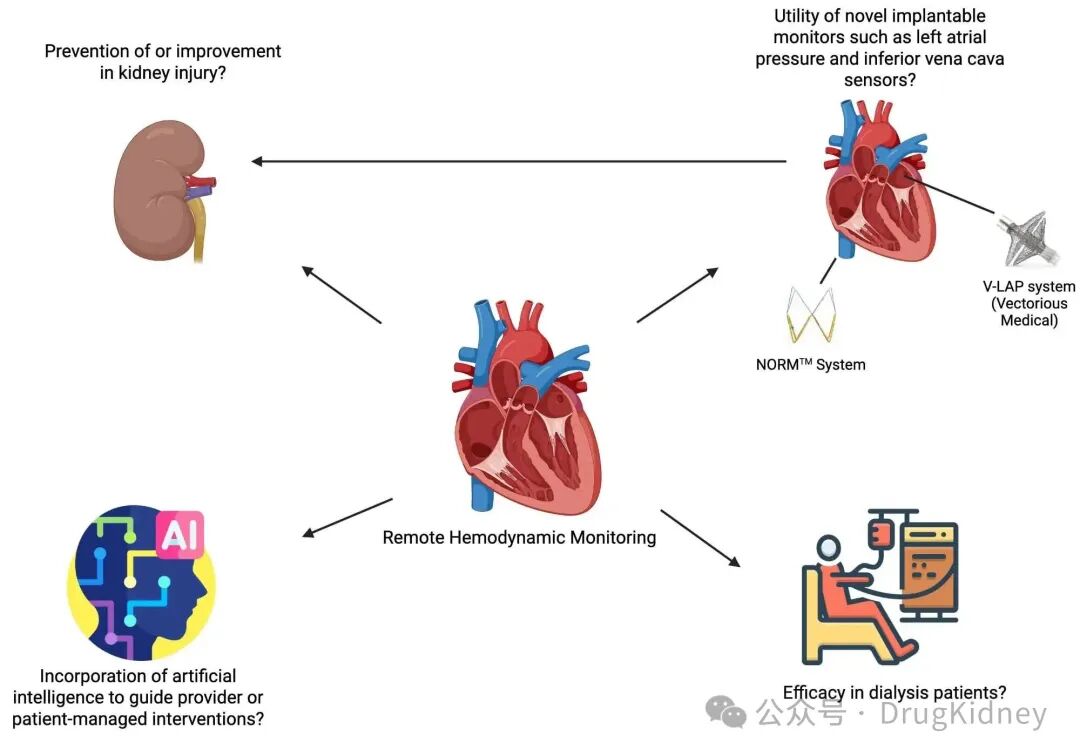
Implantable hemodynamic sensors can provide early warnings of worsening conditions in heart failure patients before symptoms appear, assisting doctors in intervening early and reducing hospitalization rates.
As a nephrologist, I often face the management challenges of heart failure. The current model resembles “firefighting” rather than “fire prevention.” After discharge, we advise patients to weigh themselves daily and monitor for swelling in their feet and difficulty breathing. However, these are lagging indicators. When a patient calls for help after gaining 5 kilograms, their lungs are often already congested—just one step away from readmission.
This article published in the Journal of the American Society of Nephrology (JASN) discusses methods aimed at changing this passive situation. The core of the approach is the implantable hemodynamic sensor.
The working principle is as follows: a doctor implants a miniature wireless sensor (such as CardioMEMS) into the patient’s pulmonary artery through a minimally invasive procedure. The choice of this location is crucial because pulmonary artery pressure reliably reflects the left atrial filling pressure, revealing fluid overload earlier than weight or symptoms. Afterward, the patient simply lies on a special pillow at home each day, which collects data from the sensor and wirelessly transmits it to the hospital team.
This allows clinicians to obtain specific, continuous pressure values, replacing the previous vague “discomfort” or fluctuating weight. Doctors can set a pressure threshold. When the system detects that a patient’s pulmonary artery pressure has been rising for several consecutive days, even if the patient is unaware, the team can predict that their condition is heading towards decompensation. At this point, a phone call guiding the patient to adjust their diuretic dosage can control the condition before symptoms appear, thus avoiding an emergency and hospitalization.
This method is even more valuable for patients with concurrent kidney disease. Heart failure and kidney disease often form a vicious cycle known as Cardiorenal Syndrome. As heart failure worsens, blood supply to the kidneys decreases, leading to functional deterioration; poor kidney function obstructs fluid removal, further burdening the heart. For these patients, the window for fluid management is narrow, and any misstep can lead to problems. Traditional monitoring methods are too crude, while the precise data provided by the implantable sensor allows doctors to achieve a level of precise control that was previously unattainable.
Existing clinical research data also supports this direction. Multiple trials have shown that adopting this active monitoring model can reduce hospitalization rates for heart failure patients. Of course, this technology also faces challenges, such as the initial implantation costs, effective management of data flow, and long-term device stability. However, it represents a significant shift in chronic disease management: from a passive response based on symptoms to an active intervention based on data.
📜Title: Remote Measurement of Volume Status in Heart Failure
📜Paper: https://kidney.pub/JASN0843