In low-voltage control circuits, stop and emergency stop buttons are generally designed with normally closed contacts. However, in PLC control, many colleagues dismiss this, thinking, “It doesn’t matter whether we use normally open or normally closed contacts; both can achieve the same result.” This mindset often leads to significant losses.
For example, in a simple PLC motor control scenario: if the stop button uses normally closed contacts and the button has poor contact, it will still ensure that the motor remains in a stopped state, which is safe for both the equipment and personnel. Conversely, if the stop button uses normally open contacts and the button has poor contact, there is no guarantee that the motor will stop immediately when needed, which poses a safety risk.
What I mentioned above pertains to input points; now let’s discuss output points.
I once worked on a dust control system for a metallurgy industry where the dust removal fan was driven by a 10KV rated voltage motor through a hydraulic coupler. The motor had several protections in place: vibration, front and rear bearing temperatures, stator temperature, cooling water temperature, etc. Our control system collected these signals and compared them with preset alarm values. If the values did not meet the requirements, the system would not send a “run permission” signal to the motor; if they did, the signal would be sent.
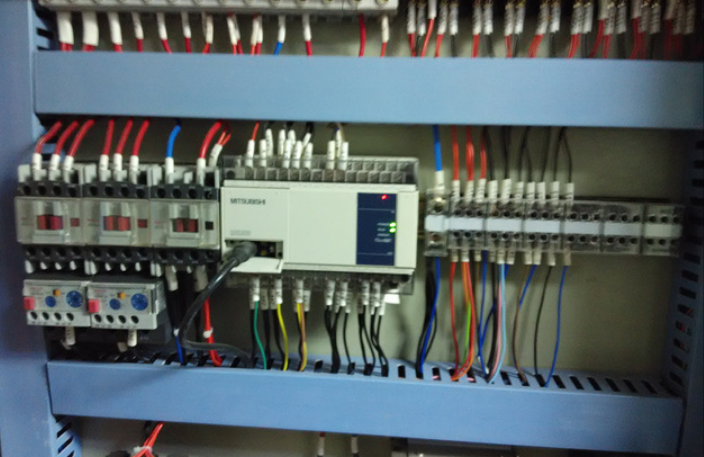
In practice, the PLC output controlled a relay, and the relay’s contacts were wired into the motor’s control circuit. For debugging convenience, we used the normally closed contacts of the relay, thinking that even if the PLC was not operational, it would not affect the motor’s startup (as the PLC programming was not yet complete, and the owner had already called the motor manufacturer to the site for testing). As a result, a technician from the motor manufacturer (a company based in Dalian) discovered this issue. He shared a recent experience where, during debugging at another factory, they observed that the bearing temperature was clearly exceeding limits, yet the motor continued to run, resulting in the destruction of bearings worth hundreds of thousands.
Upon inspection, it turned out that normally closed contacts had been chosen, and the PLC had not been activated, leading the owner and the technician to insist that we must use normally open contacts!
Think about it: if normally open contacts are chosen, the motor will not be allowed to start if the PLC is not operational. Once the PLC is running, if all collected data meets the requirements, power is supplied to the relay, the normally open contacts close, and the motor control circuit is connected, allowing the motor to run. If the collected data does not meet the requirements, the relay loses power, the normally open contacts remain open, cutting off the motor’s control circuit and ensuring that the motor stops running.
This incident left a profound impression on me, making me cautious about the choice between normally open and normally closed contacts in future projects!