RISC-V, as an open instruction set architecture standard, has many advantages but also faces some challenges and criticisms. One of the main criticisms is its immature software ecosystem and the lack of high-performance applications. Compared to ARM and x86, RISC-V’s performance in high-performance computing is somewhat lacking. Although it performs excellently in embedded applications, its performance still needs improvement in scenarios requiring complex calculations (such as data centers and high-performance servers). However, this shortcoming is about to be addressed!
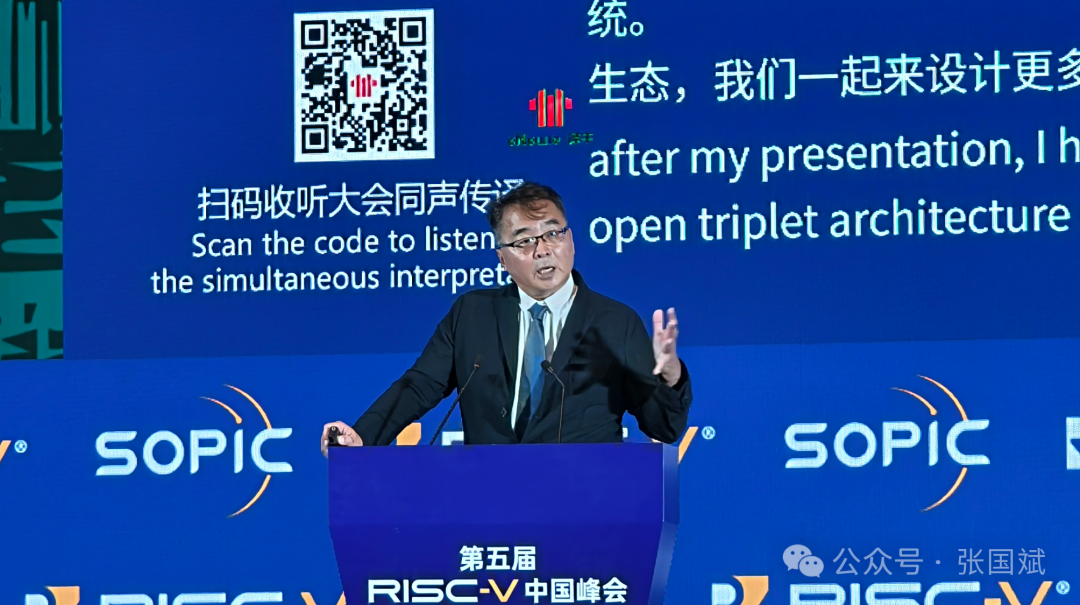
At the opening of the fifth RISC-V China Summit today, Tenstorrent’s Chief Architect Wei-Han Lien revealed in his speech that Tenstorrent will launch the world’s fastest RISC-V CPU in 2027! RISC-V will no longer be synonymous with low-end processors and will play a significant role in the AI era.
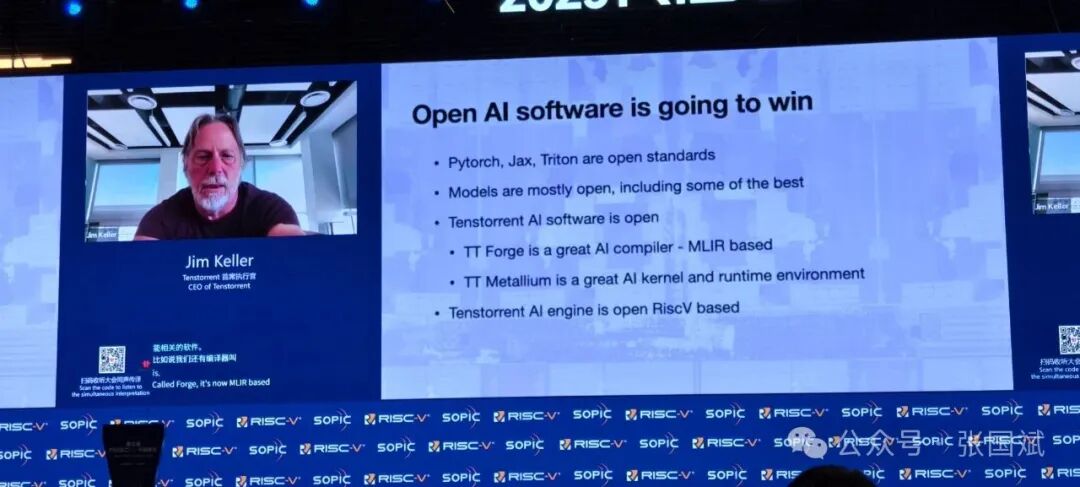
In the morning keynote, Silicon Valley chip guru and Tenstorrent CEO Jim Keller delivered a video speech, emphasizing the need to focus on the next round of the trend of “integrated computing and opening up the future“. He stated that today is a very suitable time for this. Tenstorrent chose RISC-V because it is a very open CPU architecture that allows everyone to build at any time, in any place, and in any way they want. More and more people are joining in to innovate and create, gaining support from many scholars and experts. Through this approach, we can make RISC-V more accessible, even to university students. We believe that in the next five years, there will be more changes than in the previous ten years, which is why we hope to leverage the flexible and open-source RISC-V architecture to build software stacks and improve our work. I am very happy and honored to see RISC-V becoming increasingly inclusive, and we are also building faster CPUs globally, hoping to further enhance performance and continue to make progress in this area.
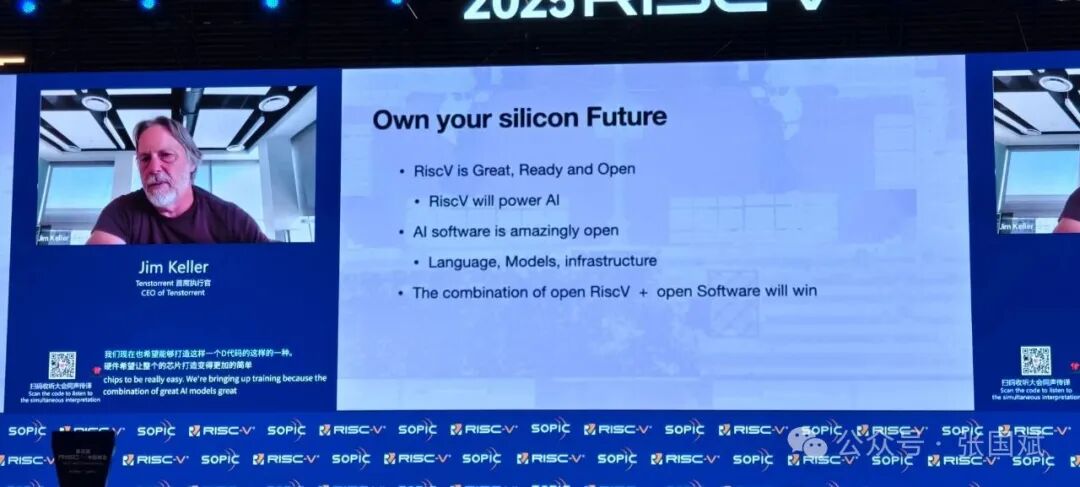
He pointed out that Tenstorrent has done very well in resource support, and has conducted extensive testing architecture configurations, even building RISC-V architecture stations. In the rapidly developing field of artificial intelligence, it can be seen that the entire language is open-source, and all programming languages are very helpful for further programming, including excellent models and some cutting-edge models that can be continuously released for everyone to use.
Tenstorrent will use small operational techniques and related processors to help us create applications in chip development, all based on the RISC-V architecture. Tenstorrent believes that through this approach, we can innovate to make it smaller and more powerful, and Tenstorrent also hopes to continuously adhere to relevant standards, thereby improving the entire architecture in a compliant manner. This will further empower all developers, allowing them to enjoy the process.
He emphasized that we believe that the development of CPUs, AI, and related software and hardware is very important. We see that AI has become an accelerator, and we are now focusing on artificial intelligence computing. We also need to see what can be achieved in the entire processor area, whether we can achieve better interaction, and whether the entire operating system can be further improved. Are the interactions between CPUs better? We have already seen that AI will generate more code, and we can use AI for various programming, coding, monitoring, testing, and certification. We can even use artificial intelligence for related RTL and hardware. I believe we can develop more rapidly, and I also believe that such a project can help us better create related RISC-V software, hardware, and products in the AI era.
“Because RISC-V is open-source, we can freely use it to better serve our projects. I know everyone wants to talk about RISC-V today. A few years ago, some people thought RISC-V was just a software tool, but I want to say: RISC-V is more of a good architectural instruction set that allows us to use this tool and technology to solve more real-world problems, especially when the problems have not yet evolved into a very mature state, we can use RISC-V to address them. Another important point is that we also hope to create low-code hardware, making the entire chip development process simpler. We will also integrate various training, education, and different training modules together. Here, we also hope to merge AI processing and RISC-V software into one, only in this way can we create open-source and open solutions,” he pointed out.
From his speech, it can be felt that in the new era of diversified and customized AI chip design, Tenstorrent is fully promoting the popularization of the RISC-V architecture through its concept of “openness equals innovation” and building a more efficient and inclusive AI computing ecosystem.
Wei-Han Lien then shared in-depth insights into Tenstorrent’s future product strategy and strategic layout in the RISC-V field. He stated that the rapid development of the AI industry has driven an urgent demand for customized, high-performance, and low-power processors. Traditional x86 and ARM architectures face various limitations, and the open RISC-V is increasingly favored. “Chip design has entered a golden age of diversity and symbiotic integration,” he pointed out. This trend is also reflected in: the increasing threshold for AI computing power: basic computing power has become the core bottleneck for AI implementation. The rise of chiplet architecture: Chiplet design can reduce costs and accelerate heterogeneous integration. The growing demand for open-source: AI democratization needs to be built on open software and hardware platforms.
“If you want to democratize AI, the so-called “democratization” means that everyone can use it. Tenstorrent aims to create the most optimized and user-friendly AI architecture, which requires openness. Therefore, many of Tenstorrent’s technologies are focused on “open-source”. The future chip design actually includes not only chip design but also software, open-source software systems, development systems, motherboards, and everything else that makes chip prices very expensive. Now, a chip design can cost nearly 1 to 2 billion dollars, which requires everyone to collaborate, and the method of collaboration must go through open-source and open systems,” he explained.
In this context, Tenstorrent’s strategy is not only forward-looking but also aligns with the technological evolution path for the next five to ten years.
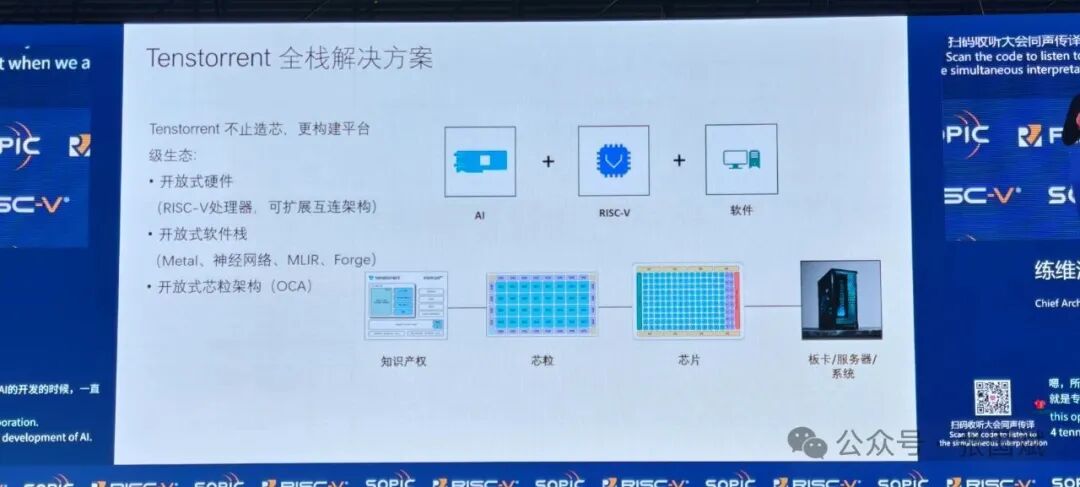
Wei-Han Lien stated that Tenstorrent’s core investments in the RISC-V ecosystem include:
1. Building a complete CPU architecture stack: self-developed high-performance CPUs based on RISC-V, such as Ascalon and Calandor.
2. Providing AI hardware and software integration support: including compilers (supporting PyTorch), code performance optimization tools, and AI model support.
3. Empowering the developer ecosystem: creating training modules, low-code hardware development platforms, and educational solutions to lower technical barriers.
These layouts aim to build an “AI operating system” based on RISC-V, making AI chip development simpler and more sustainable.
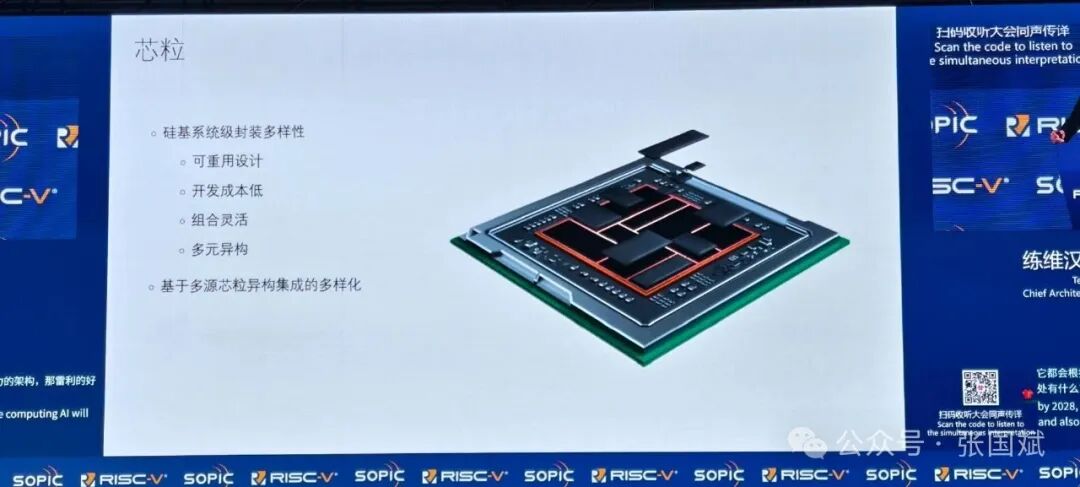
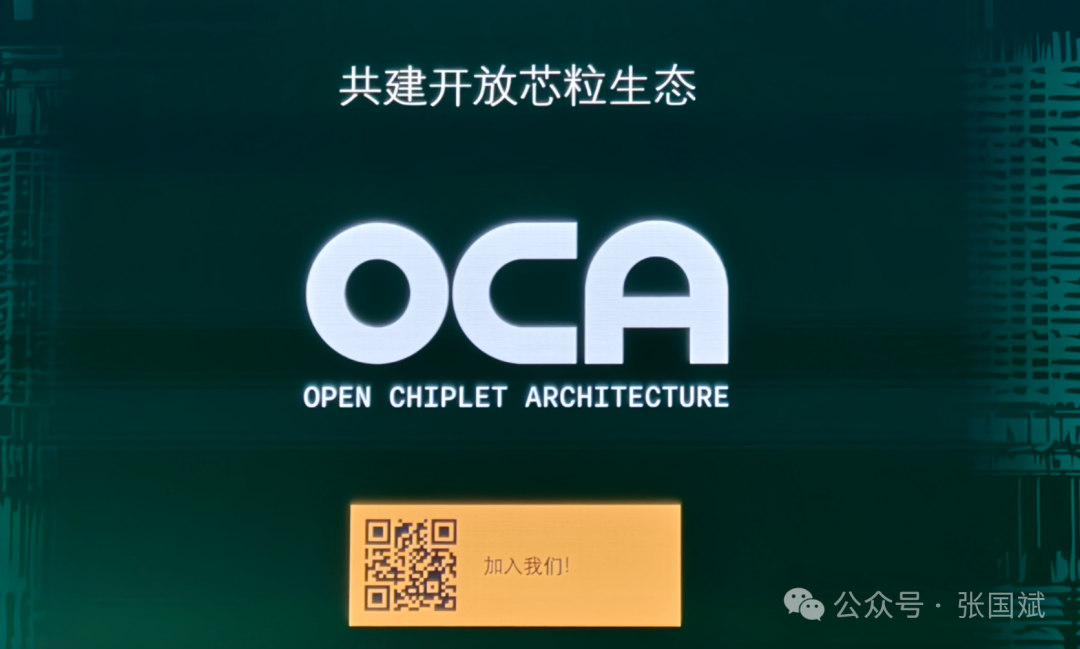
So what is Tenstorrent’s product strategy? Wei-Han Lien stated that it is a strategy from Chiplet to Open Chiplet Architecture (OCA). He mentioned that Tenstorrent’s biggest innovation lies in its “Open Chiplet Architecture (OCA)” aimed at solving the pain points of high-performance chip design costs and complex integration.
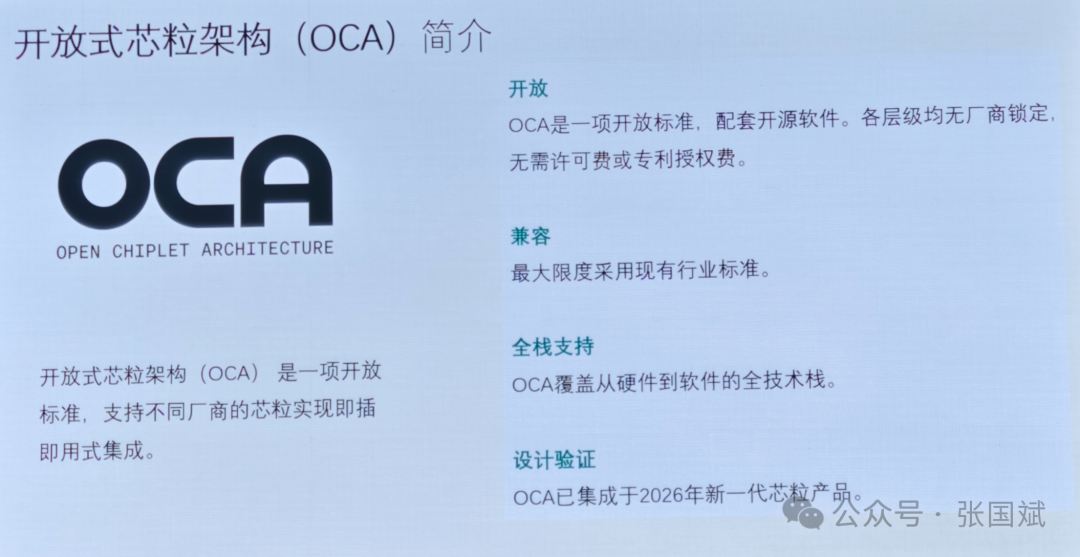
“By 2028, 60%-80% of high-performance AI will be based on chiplet architecture,” he stated. The benefits of chiplets include reduced R&D costs, usability, and flexible combinations, allowing collaboration with others. We spent two and a half years researching this, and after two and a half years, we plan to release something by the end of this year. We are willing to share the technology we have learned over the past two and a half years to create an open chiplet architecture and hope everyone can collaborate to create chips that meet the increasingly diverse AI demands. What we are preparing to launch is the “Open Chiplet Architecture (OCA),” which is different from previous architectures in that all the main components are open-source, including the software. We will not include anything that requires fees; this is entirely an open-source system. Our design encompasses everything from the physical abstraction layer to the software layer, which is what sets it apart from all other open chiplet architectures,” he explained.
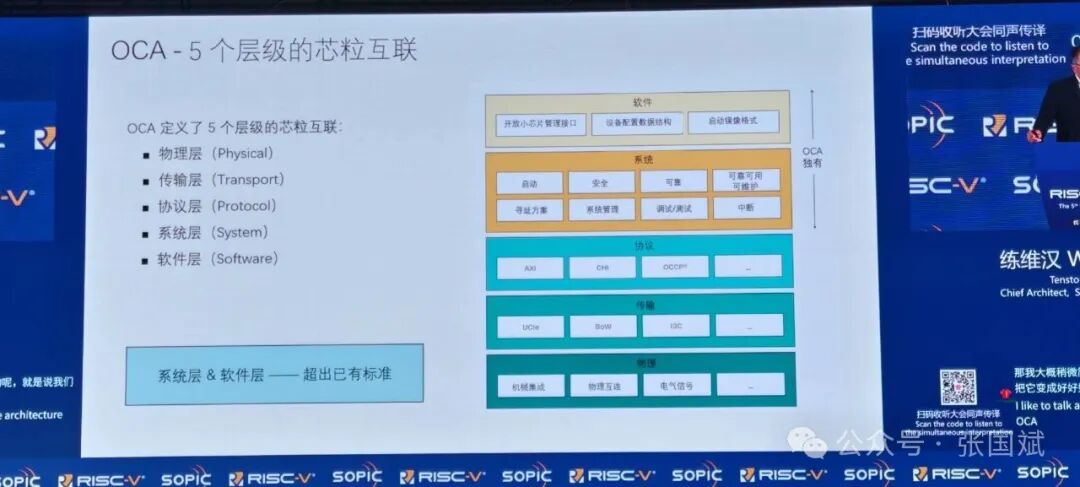
He pointed out the core advantages of OCA: full-stack openness from the physical layer to the software layer, including five major abstraction layers: physical, transmission, protocol, system, and software. It supports cross-vendor and cross-domain collaboration: enterprises and research institutions can focus on their core IP development, avoiding redundant efforts. It enhances customization and flexibility: various AI processing units can be flexibly combined to adapt to diverse scenarios such as autonomous driving and industrial AI. It reduces costs and increases accessibility: modular reuse lowers SoC development costs, supporting the strategy of AI democratization.
He stated that in the future, OCA may become the “Android system” of AI chip design, promoting a collaborative and shared computing ecosystem.
Building the world’s fastest RISC-V CPU
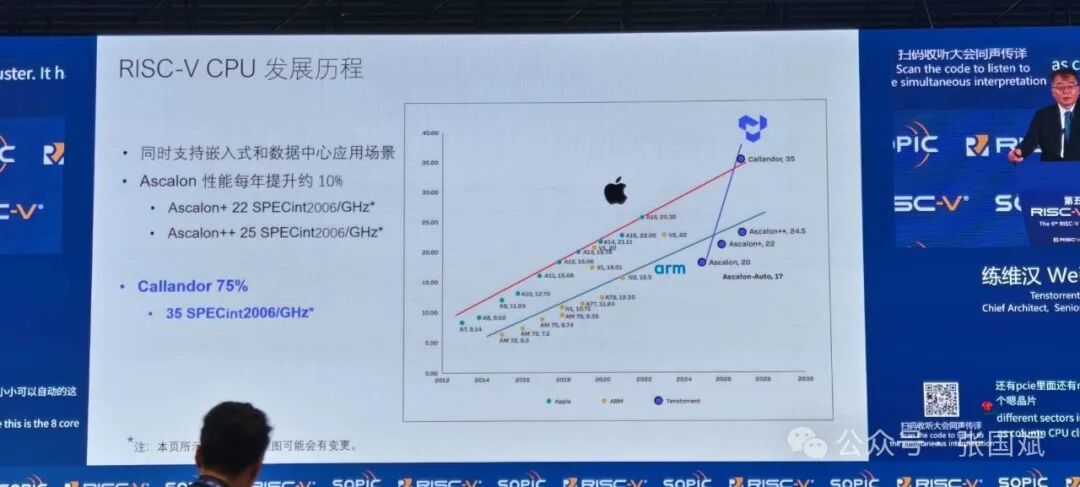
He shared Tenstorrent’s product roadmap, which shows a clear growth logic: Ascalon series: a 10% annual performance increase, focusing on high versatility in AI computing. Calandor (expected to be released in 2027): aims to become the “world’s fastest CPU,” emphasizing instruction width, compiler optimization capabilities, and AI adaptability. Athena chiplet: an 8-core architecture that provides basic components for OCA, suitable for general and edge scenarios.
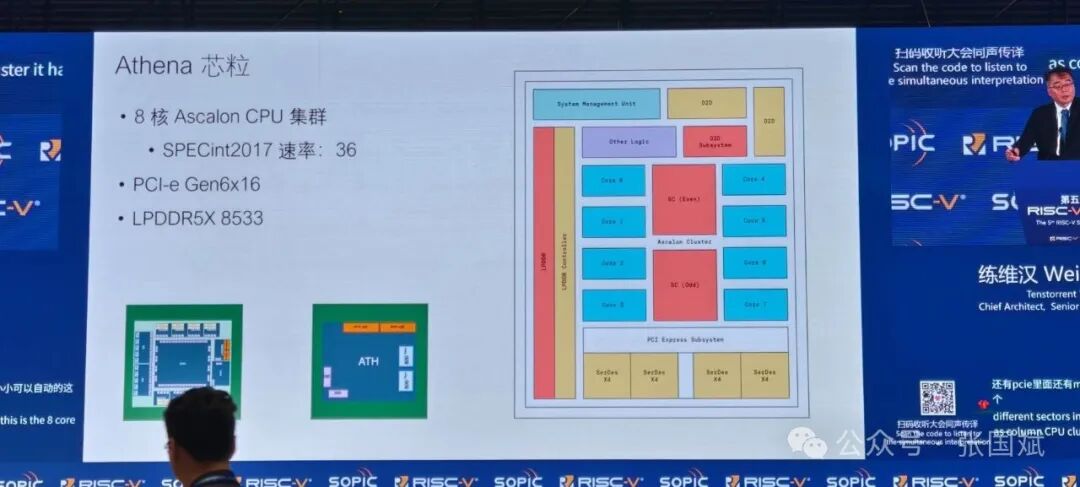
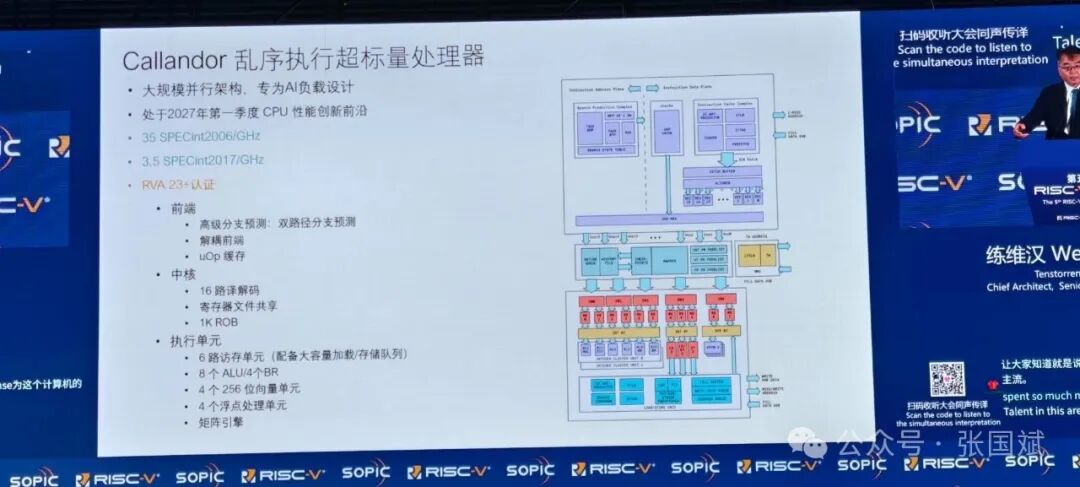
These products are backed by Tenstorrent’s profound engineering capabilities, belief in the open-source ecosystem, and accurate predictions of the future CPU’s “diversification + modularization + intelligence”.
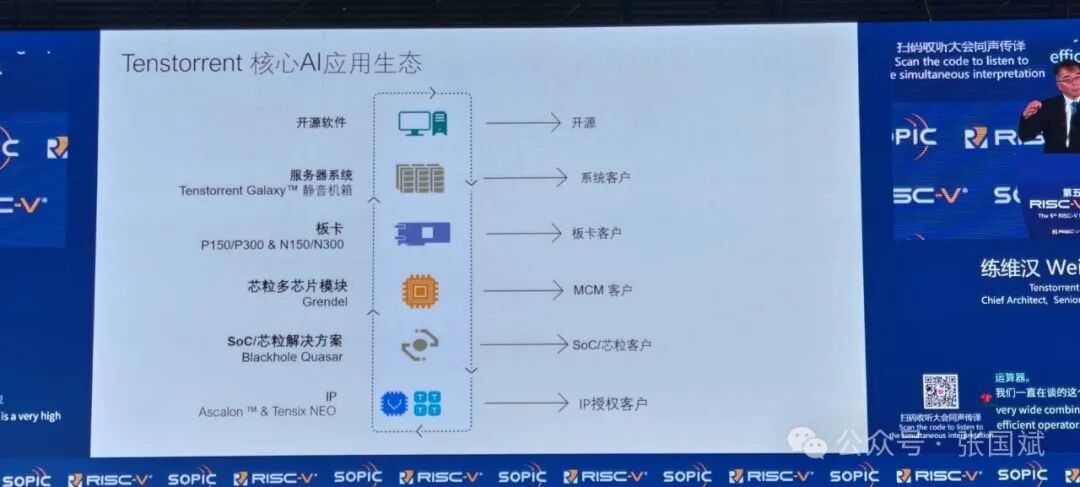
Wei-Han Lien stated that Tenstorrent is not merely building a chip but is reconstructing the entire paradigm from chip design, software stack to ecosystem collaboration. What they are building is: an open architecture system centered on RISC-V; a heterogeneous collaboration model linked by OCA; a computing revolution mission aimed at AI democratization. “When we view technological growth with an open mindset, adhering to the spirit of sharing and collaboration allows wisdom to sprout, grow, and illuminate a better future. “Integrated computing” represents the fusion and unification of current AI CPUs, “opening up” resonates with the spirit of openness and open-source, and “enlightening the future” signifies that we pursue not only the enhancement of computing power but also the era of wisdom and intelligence advancing hand in hand. Our company firmly believes that the future of open intelligent computing belongs to those who can always maintain an open mindset and are brave enough to innovate through integration,” he pointed out.
As Jim Keller said, “The next five years will see more drastic changes than the past ten years.” Tenstorrent is writing a new blueprint for global AI computing architecture with technology as a tool and open-source as a culture in this change.
“We must have an open mindset and be brave in integrating innovation; the future world of computing power belongs to such individuals. Our company also places great emphasis on the development of open systems and open-source software. I hope everyone can take a look at the open beautiful system ecosystem we are jointly developing, and let’s design more chips together to make AI more accessible, and lower the prices of AI and hardware,” he concluded.
This RISC-V China Summit is the largest RISC-V summit to date, with many major companies participating, such as NVIDIA, Synopsys, and more local manufacturers launching their unique products in computing power, IoT, audio processing, video processing, and automotive applications, all showcasing the influence of RISC-V. For more details, see “Highlights from the 2025 RISC-V China Summit“. Lao Zhang believes that after 15 years of development, RISC-V is about to experience a major explosion! What do you think? Feel free to leave comments for discussion!
Recommended Exciting Articles
1. Is another semiconductor giant in Shanghai about to “fall”? Huawei and BYD have invested in it.
2. Why did Huada Jiutian terminate the acquisition of Chip and Semiconductor?
3. Starting from Plato’s Allegory of the Cave, how does Honor Magic V5 reconstruct the narrative of technology and humanities in the AI era?
4. History! World-leading! The unmanned mining truck based on the Dapeng Liyang TerraSight chip successfully demonstrated.
5. How should China’s EDA break through?
6. Breaking news! Unisoc is about to go public!
7. Who is the real competitor of Hongmeng Zhixing?
8. Foldable phones have reached their limits; it’s time to focus on enhancing the experience.
9. Breaking the monopoly of ADI and TI! The first domestically produced, internationally leading, Chengdu Huami releases a new generation of high-speed, high-precision RF direct sampling ADC!
10. In response to the US’s supply cut of EDA and IP, the “Enlightenment” system released by the Chinese Academy of Sciences has shocked American netizens, saying, “Another market is lost!”
11. Taiwan Province of China has surprisingly listed Huawei and SMIC on the export control list!
12. Smart glasses are selling like hotcakes! Revealing the smart glasses industry chain!
13. Foreign media: Ren Zhengfei said that with open-source and chip packaging technology, China can cope with US technology restrictions.