A specialty battery is designed and manufactured for specific devices or purposes. Compared to regular batteries, specialty batteries typically have higher energy density, longer lifespan, and more stable performance. They usually have specific voltage, capacity, and size requirements to meet the needs of particular devices. Specialty batteries are widely used in various fields, such as mobile communications, medical devices, military equipment, and aerospace.
Introduction to Main Product Types in the Specialty Battery Market
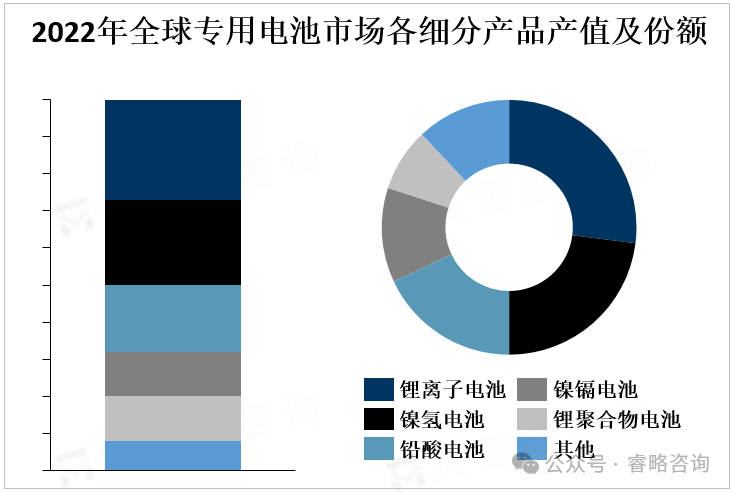
Lithium-ion batteries (Li-ion): This is currently the most common and popular type of specialty battery, widely used in mobile communication devices, laptops, drones, power tools, and more.
Nickel-metal hydride batteries (NiMH): These batteries have a higher energy density and longer lifespan, commonly used in digital cameras, handheld game consoles, cordless phones, and other devices.
Lead-acid batteries: These batteries have a lower energy density but a higher load capacity, often used in automotive starting batteries, UPS power supplies, and other fields.
Nickel-cadmium batteries (NiCd): These batteries have a high cycle life and a wide operating temperature range, commonly used in emergency lighting, wireless communication devices, and more.
Lithium polymer batteries (Li-poly): These batteries have a high energy density and thin dimensions, commonly used in slim mobile devices, smartwatches, and more.
Value and Share of Global Specialty Battery Market Segments in 2022
Analysis of the Specialty Battery Supply Chain
Raw material supply: The manufacturing of specialty batteries requires various raw materials, such as lithium, nickel, cobalt, and manganese. These raw materials typically come from mines or suppliers and are refined and processed before being supplied to battery manufacturers.
Battery manufacturing: In this stage, raw materials are used to produce components such as positive and negative electrode materials, electrolytes, and separators. Battery manufacturers assemble these materials together, charge, and package them to produce finished batteries.
Component manufacturing: Specialty batteries often need to be used with specific devices or systems, so the supply chain also includes component manufacturing. These components may include battery management systems (BMS), battery packs, connectors, and more.
Device manufacturing: Specialty batteries are ultimately applied in various devices, such as mobile communication devices, medical equipment, military gear, etc. Device manufacturers combine specialty batteries with other components to produce the final device products.
Sales and distribution: The sales and distribution of specialty batteries are crucial for bringing products to market. This includes collaboration with device manufacturers, distributors, and retailers to ensure products can smoothly enter the market and meet demand.
After-sales service: After-sales service for specialty batteries is also part of the supply chain. This includes battery maintenance, replacement, and recycling to ensure users have a good experience and support.
Overview of the Global Specialty Battery Market
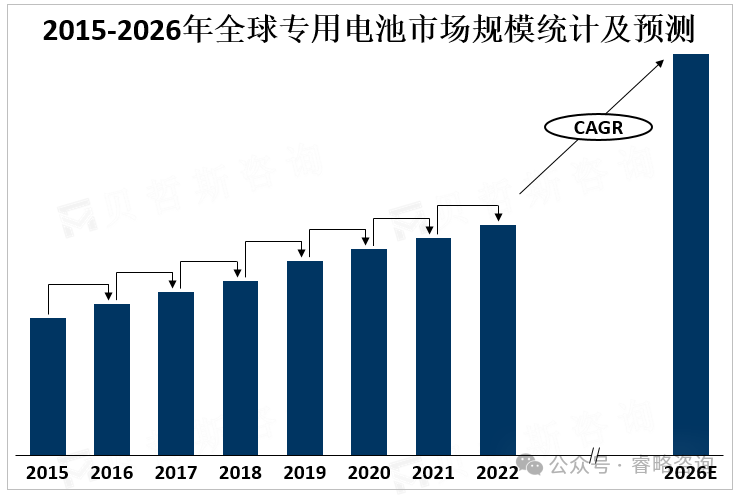
Market size: The specialty battery market has shown a stable growth trend over the past few years, primarily driven by increased demand in mobile communications, power tools, medical devices, drones, and more.
Statistics and Forecast of Global Specialty Battery Market Size from 2015 to 2026
Market segmentation: The specialty battery market can be segmented based on different application fields. Among these, mobile communications and consumer electronics are the largest market segments, dominating the market. Other fields such as medical devices, military equipment, and aerospace are also continuously growing.
Technological development: With advancements in technology, specialty battery technology is also continuously evolving. Lithium-ion batteries are currently the mainstream technology, with high energy density, fast charging speed, and long lifespan making them the dominant technology in the market. Additionally, new battery technologies such as solid-state batteries and sodium-ion batteries are also under continuous research and application.
Market competition: The specialty battery market is highly competitive, primarily dominated by several large multinational companies and local enterprises. These companies have competitive advantages in technology research and development, production capacity, and brand influence. At the same time, there are also some small and medium-sized enterprises and emerging companies competing for market share through technological innovation and differentiation strategies.
Market trends: Future development trends in the specialty battery market include: increased energy density, faster charging speeds, enhanced safety, and higher environmental protection requirements. Furthermore, with the development of emerging fields such as electric vehicles, wearable devices, and the Internet of Things, the specialty battery market will face more opportunities and challenges.